



17th Century Plank Chest
A 17th century plank chest provides robust timber storage, carrying centuries of domestic utility in solid boards.
17th Century Plank Chest
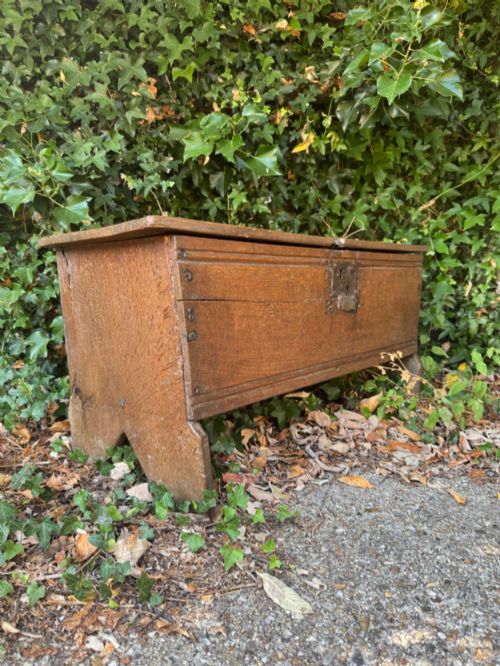
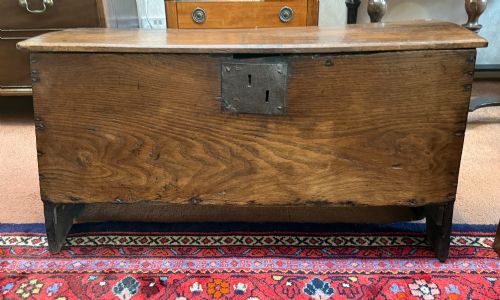
A 17th century plank chest is a primary storage vessel constructed from thick vertical boards joined at the edges. Buyers seeking this form encounter robust domestic boxes designed to hold valuables, documents, or household provisions.
The items seen here span the Jacobean and vernacular traditions, originating from regional workshops across Britain. Oak and elm predominate, forming simple rectangular bodies often described as six-plank coffers or sword chests.
Many examples date to the seventeenth century itself, while later pieces from the eighteenth and nineteenth centuries emulate the board construction of the earlier period. These regional country pieces reflect utilitarian construction methods unaltered for generations.
Assessing quality and proportion
Proportion and scale dictate the visual weight of a plank chest, with narrower or smaller dimensions commanding greater interest. The thickness of the original boards and the survival of unreduced heights distinguish superior survivors.
Surface preservation marks the distinction between untouched timber and heavily restored examples. Retaining original ironwork, feet, and lid boards elevates the integrity of the piece significantly.
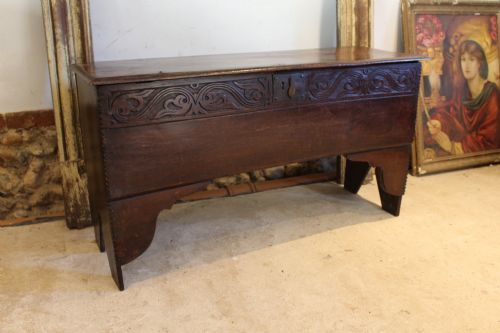
Regional quirks, such as the specific grain pattern of West Country elm or carved detailing along the front board, separate standard utility boxes from distinctive vernacular specimens.
Several narrow coffers retain enough internal length to store an unexpected blade.
The 17th Century Plank Chest Glossary
- Six-plank coffer
- A chest constructed from six individual boards forming the front, back, bottom, ends, and lid. This method represents the simplest form of boarded furniture.
- Sword chest
- A narrow, elongated coffer specifically proportioned to accommodate blades and weaponry. These pieces often feature shallow interior dimensions.
- Boarded construction
- A method of joining flat planks directly at the edges using nails, dowels, or V-joints without an internal frame. It forms the structural basis of early vernacular chests.
- Patina
- The surface sheen and colour acquired by wood and iron over decades of exposure and handling. This condition develops naturally through age and use.
- Vernacular country
- Furniture made by local tradesmen for regional use, following traditional patterns rather than metropolitan fashions.
17th Century Plank Chest: Frequently Asked Questions
What were plank chests used for?
Households utilised these heavy chests to store textiles, valuable documents, and personal belongings safely away from damp floors. Their sturdy board construction offered security and mobility for portable possessions.
In specific regional contexts, narrower versions served to hold weapons such as swords and muskets for local defence.
How do I spot a replacement lid?
Examine the timber grain, colour, and board thickness where the lid meets the top edge of the chest body. Mismatched patination or modern hinge screw holes often indicate a later replacement.
Original lids typically exhibit matching wear patterns and identical tool marks to the side boards.
Are all these chests made of oak?
While English oak forms the majority of surviving examples, native elm appears frequently in regional pieces, particularly from the West Country and Welsh borders. Elm boards provide a distinct, highly figured grain pattern.
Both timbers were chosen for local availability and toughness in daily service.
How should I care for the timber?
Keep the chest away from direct heat sources and sudden humidity changes to prevent the thick boards from splitting. Apply traditional beeswax sparingly to nourish the dry wood surface.
Avoid modern silicon polishes that interfere with the historic patina.