

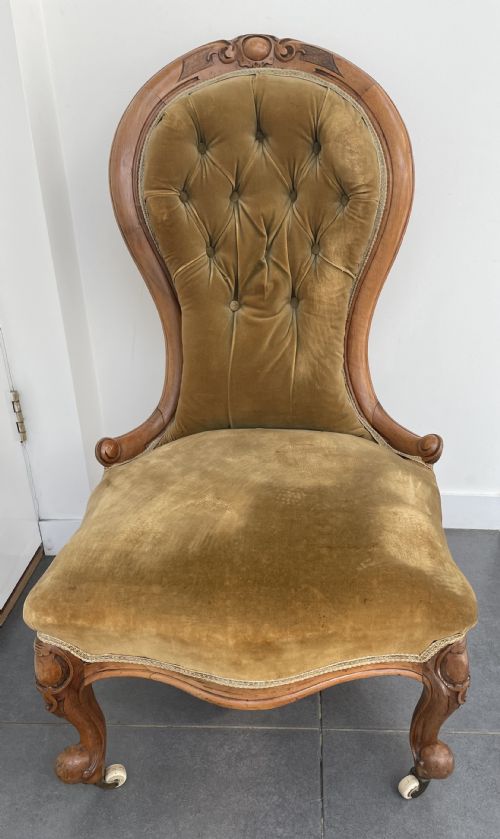
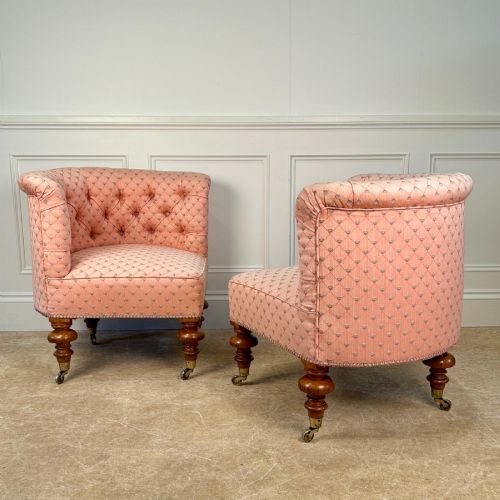
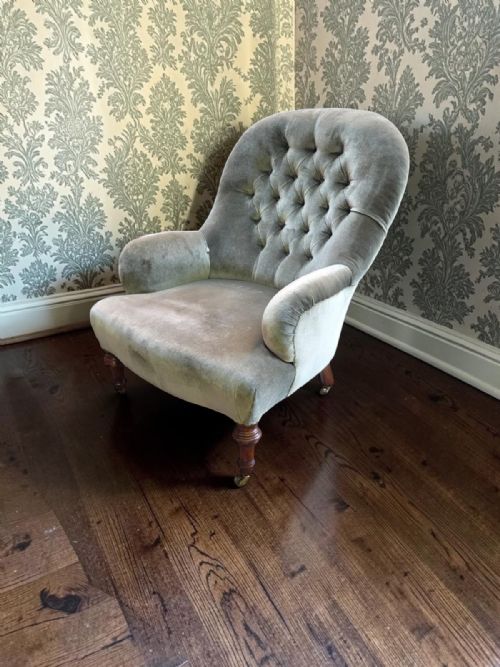
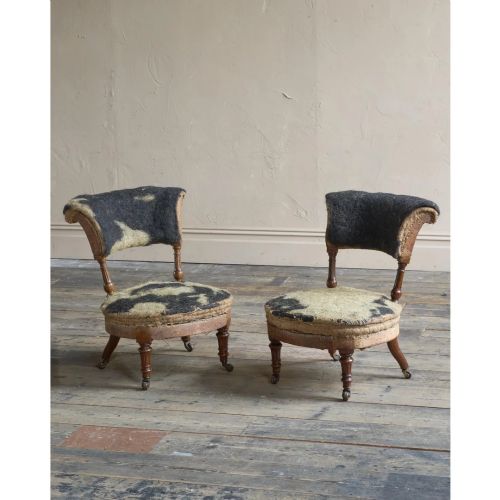
Low Seat Bedroom Chair
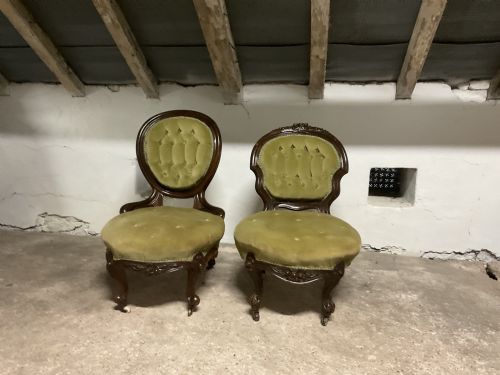
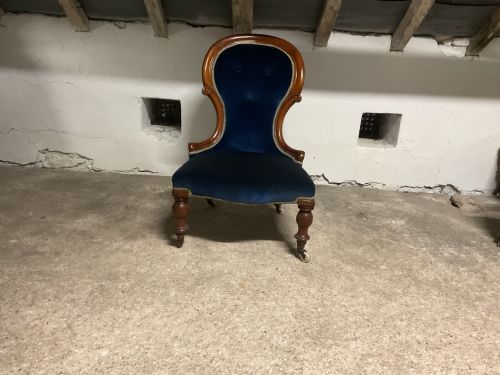
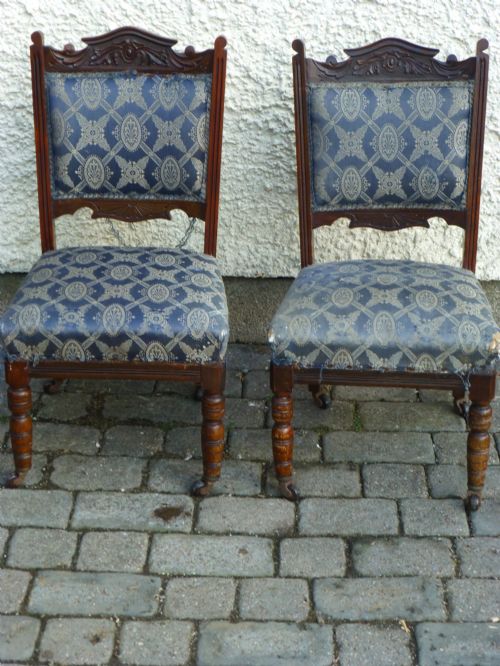
These low seat bedroom chair examples span the nineteenth and early twentieth centuries, offering compact proportions and comfortable upholstered seating for private chambers.
Low Seat Bedroom Chair
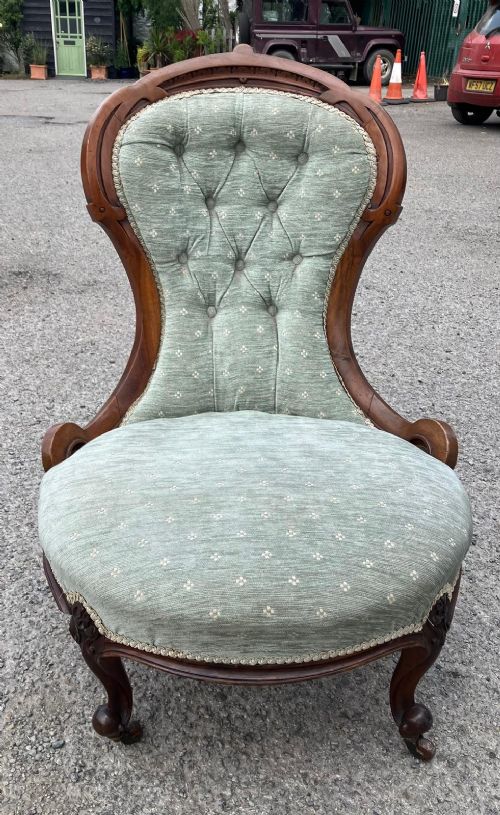
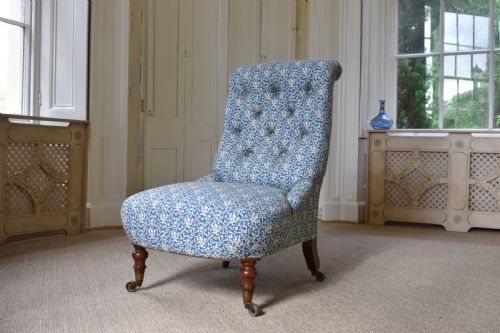
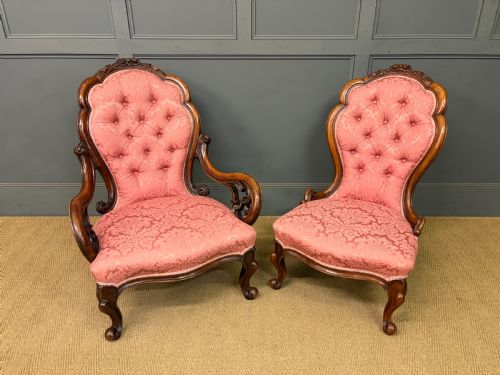
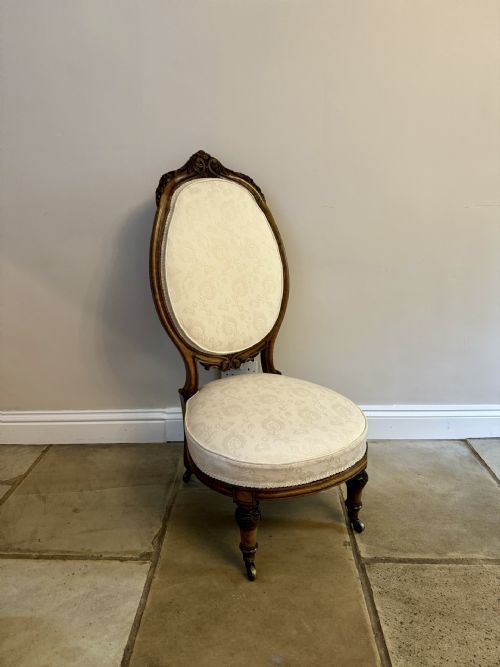
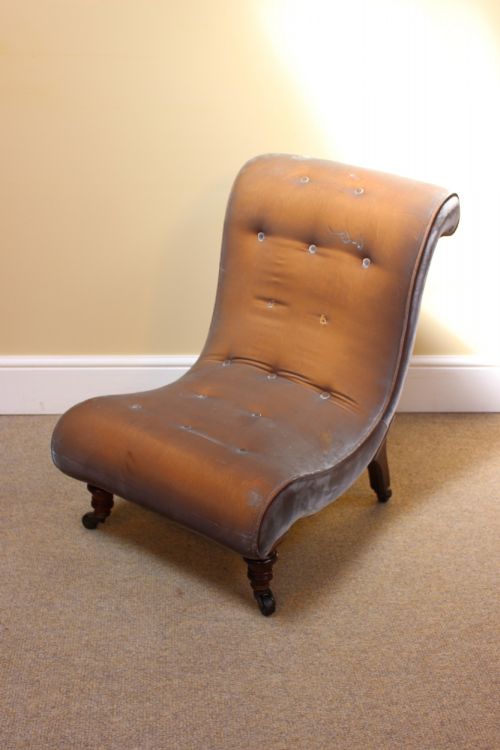
A low seat bedroom chair is typically encountered as a nursing chair, slipper chair, or small occasional seat designed for domestic chambers during the nineteenth century and the Edwardian period. These pieces generally feature reduced heights to accommodate historical dressing customs and intimate seating arrangements.
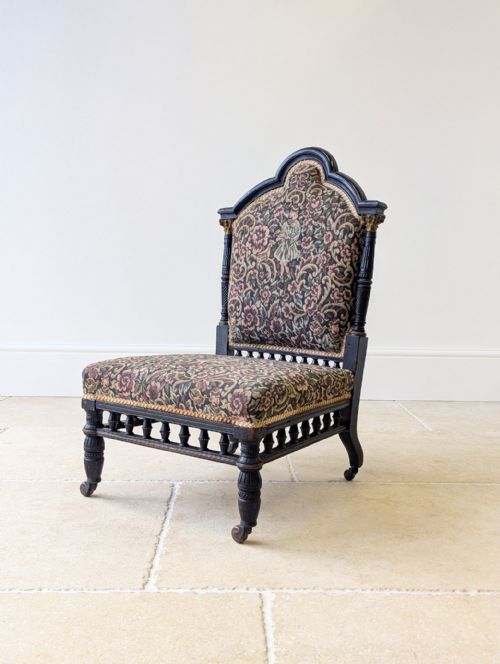
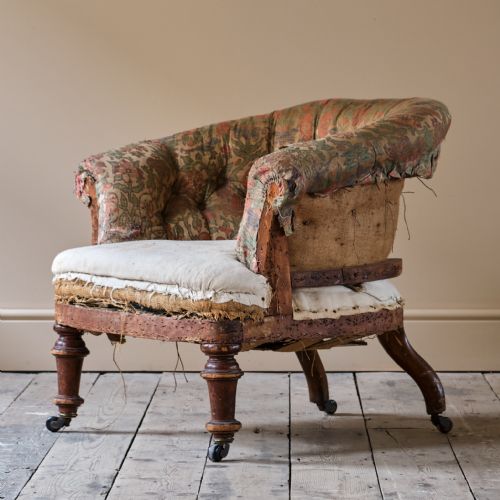
The selection ranges from Victorian walnut and mahogany examples to Edwardian button-backed armchairs and Aesthetic Movement designs. Variations include round seats, tub backs, and specific forms intended for dressing tables or private boudoirs.
Materials and Construction
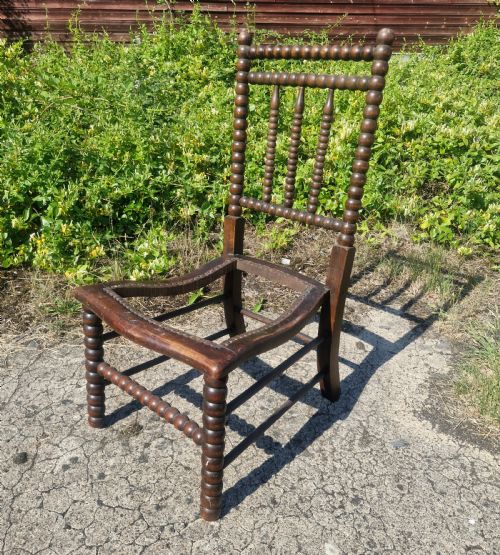
Frames are constructed primarily from native and imported timbers including walnut, mahogany, oak, rosewood, and beech, alongside ebonised finishes and giltwood details. Structural support frequently incorporates turned wooden elements, such as bobbin or barley twist framing.
Upholstery historically relies on textile coverings like velvet and fabric, often featuring button backs, fringes, and traditional stuffing techniques. Metal components like brass appear in castors and structural fixings.
Frame materials catalogued across the pieces include walnut, mahogany, oak, beech, rosewood, brass, and gilded metal.
Craftsmanship and Proportion
The distinction between standard and superior pieces rests upon the crispness of timber carving, the elegance of turned framing, and the integrity of structural joinery. Walnut and mahogany examples from notable workshops display refined execution in their spoon backs and scrolled supports.
Proportion and scale dictate the visual success of the piece, where shorter frames maintain harmonious balance rather than appearing awkward. The sophistication of the original frame design elevates an individual piece above mass-produced domestic seating.
Howard and Sons·Hindley and Sons·Gillows
The Low Seat Bedroom Chair Glossary
- Nursing chair
- A low-seated chair historically designed to allow women to nurse infants comfortably while sitting near a hearth. These pieces feature compact dimensions and upright backrests.
- Slipper chair
- An upholstered chair standing low to the floor, traditionally kept in a bedroom for changing shoes or stockings. They frequently lack arms to accommodate voluminous historical garments.
- Button back
- An upholstery technique where indentations are formed by pulling stitches through padding and securing them with fabric-covered buttons. This method creates a geometric diamond pattern across the backrest.
- Aesthetic Movement
- A late nineteenth-century design style emphasising visual beauty over narrative or moral function. Pieces from this movement often utilise ebonised wood and gilded highlights.
- Bergere
- An enclosed upholstered armchair with exposed wooden framing and woven cane panels along the sides and back. This French-inspired form offers lighter visual weight than fully padded seats.
Low Seat Bedroom Chair: Frequently Asked Questions
Where were low seat bedroom chairs used?
These seats were positioned in private chambers, dressing rooms, and boudoirs where compact furniture suited intimate domestic routines.
Their reduced height made them practical for personal grooming, nursing, and resting away from formal reception rooms.
How do I identify a Victorian example?
Victorian pieces typically display dense timbers like walnut or mahogany, often with spoon backs, button upholstery, and turned wooden legs.
Stylistic markers range from mid-century curves to later Aesthetic ebonised finishes and elaborate carved details.
Why are many offered for reupholstery?
Original textiles from the nineteenth and early twentieth centuries frequently suffer from wear, fading, or structural degradation over decades of use.
Offering frames ready for recovering allows buyers to select contemporary fabrics that suit modern domestic interiors.
What is the difference between a nursing chair and a slipper chair?
Nursing chairs generally feature taller, more supportive backrests designed for sitting upright while holding infants.
Slipper chairs are typically armless and sit exceptionally low to the floor to facilitate dressing and changing footwear.