



Blue Upholstered Slipper Chair
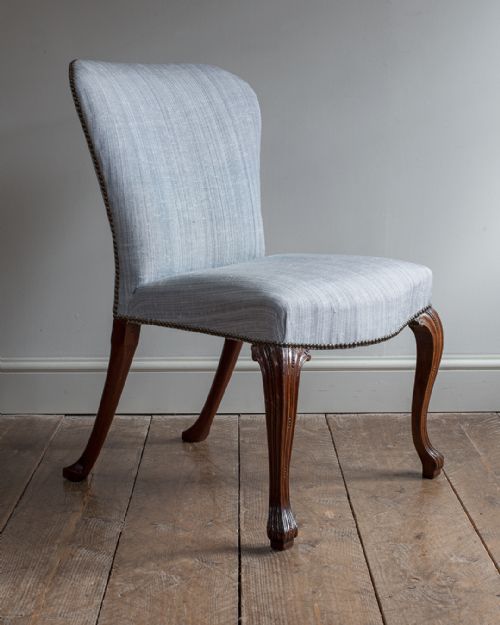
A blue upholstered slipper chair is a low-slung, compact seat designed for comfort and ease, offering both rich colour and period charm.
Blue Upholstered Slipper Chair
When you search for a blue upholstered slipper chair, you encounter low bedroom chairs, nursing seats, and compact fireside seating originating from the Regency period through to the Art Deco era. The selection spans the nineteenth century, including Victorian examples alongside earlier Regency forms and later twentieth-century pieces.
These seating options take various forms in the listings, appearing as slipper chairs, nursing chairs, bedroom chairs, and occasional armchairs. The most common manifestations on this page are nineteenth-century Victorian designs and distinct low-profile seating upholstered in vibrant shades of blue.
Makers such as Howard and Sons emerge in the evidence, offering bedroom and slipper chairs with deep seats. Alongside these, country house iron-back buttoned armchairs and carved walnut ladies chairs provide variety within the broader category of low upholstered seating.
How they were made
Makers constructed the frames of these chairs using timber such as mahogany, walnut, and general wood, often incorporating iron for structural support in iron-back armchair variants. Brass components appear alongside the timber framework to finish or support the construction.
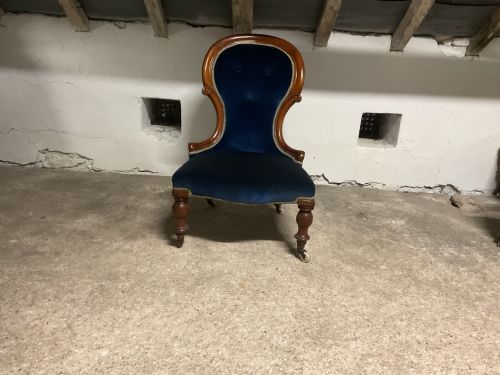
Upholstery defines the character of these pieces, utilising fabrics including velvet and cotton to cover the deep-seated or button-back frames. Detailing such as gold piping complements the primary blue textile coverings found on twentieth-century and Victorian examples.
Blue Upholstered Slipper Chair Retail Price Guide 2026
Typical asking prices for blue upholstered slipper chair among the pieces listed under this phrase on Sellingantiques today, from the lower quarter to the upper quarter. They describe what is for sale here now, not the wider market.
Some chairs sport electric blue velvet paired with gold piping, proving that Victorians and early twentieth-century makers loved a bold hue just as much as we do.
What varies in quality
The sophistication of the timber carving and the integrity of the frame construction distinguish finer examples from simpler workshops. Pieces bearing the stamp or attribution of established makers display a higher degree of refined proportions and durable joinery.
The choice and execution of the upholstery material heavily influence the overall character, where plush velvet with fine piping sits apart from standard cotton coverings. Frame design also dictates quality, ranging from modest iron-backed country house seating to elaborately carved walnut frames.
Howard and Sons
The Blue Upholstered Slipper Chair Glossary
- Slipper chair
- A low-to-the-ground upholstered chair traditionally used in bedrooms for dressing. These pieces lack arms and feature compact dimensions.
- Nursing chair
- A low-seated Victorian chair designed originally for mothers feeding infants. They often feature buttoned backs and generous padding.
- Button-back
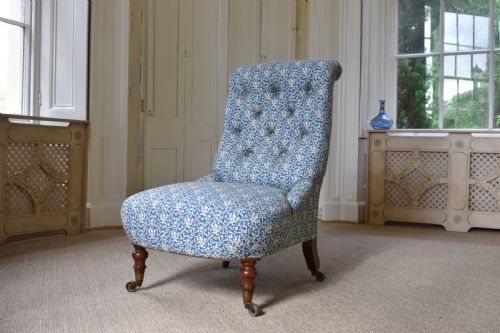
- An upholstery technique where buttons are pulled deep into the padding to create a quilted, diamond pattern. This method secures the filling and adds visual texture.
- Regency
- An English design period spanning the early nineteenth century. Furniture from this era draws inspiration from neoclassical motifs.
Blue Upholstered Slipper Chair: Frequently Asked Questions
What is a blue upholstered slipper chair used for?
These low-seated chairs served historically as dressing room or bedroom seating where individuals could comfortably sit to put on shoes or garments. Today they function well as compact accent chairs in living rooms or bedrooms.
Their low profile allows them to fit beneath windows or in smaller corners where standard armchairs would overwhelm the space.
How do I identify a Victorian slipper chair?
Victorian examples frequently display mahogany or walnut frames combined with buttoned upholstery and deep padding. They often carry labels describing them as bedroom, nursing, or fireside chairs.
Looking at the turned wooden legs and the method of buttoning helps distinguish these nineteenth-century pieces from later revivals.
What materials are used in these chairs?
The structural frames rely on timbers such as mahogany and walnut, alongside iron elements in specific country house models. Brass fittings and details also appear on selected pieces.
Upholstery materials consist predominantly of fabrics including cotton and velvet, sometimes finished with contrasting piping.
Are these chairs comfortable for daily use?
Many examples feature deep seats and padded backrests designed for sustained relaxation despite their low stature. Victorian and Edwardian iterations prioritize generous cushioning.
Their compact scale means they suit lounging or reading spaces where a full-sized armchair is impractical.