
Tufted Back Accent Chair
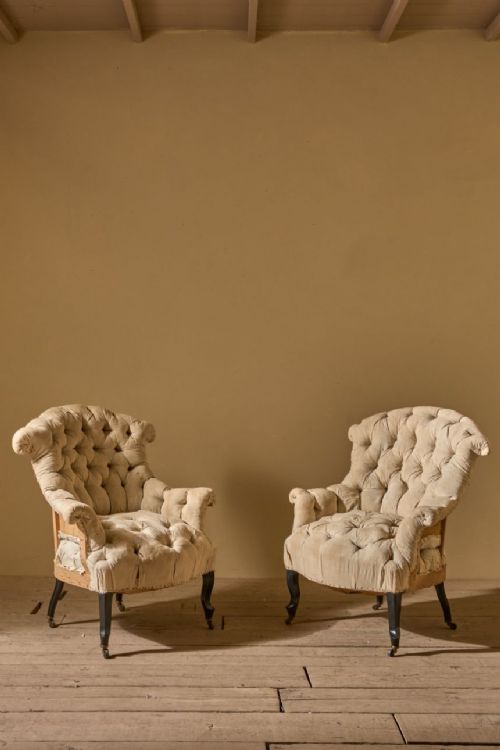
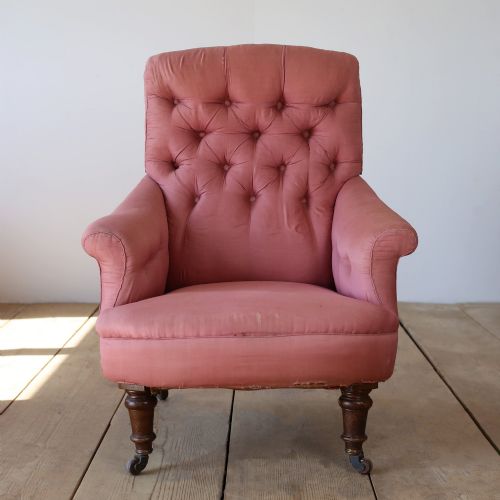
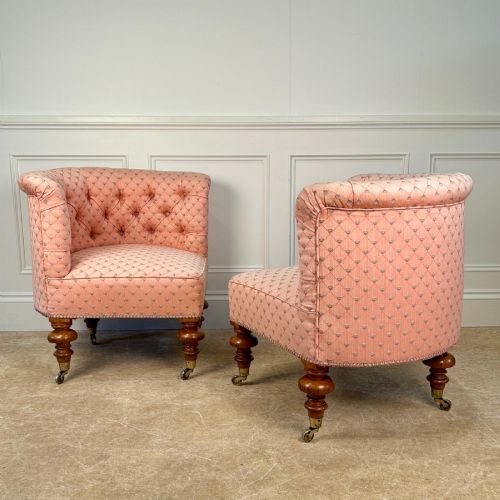
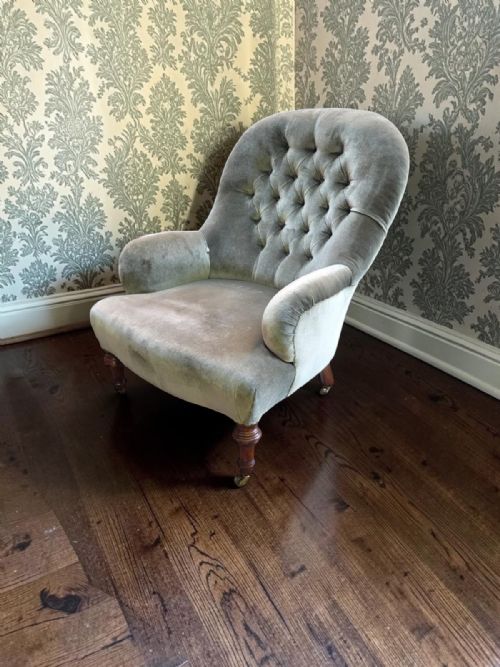
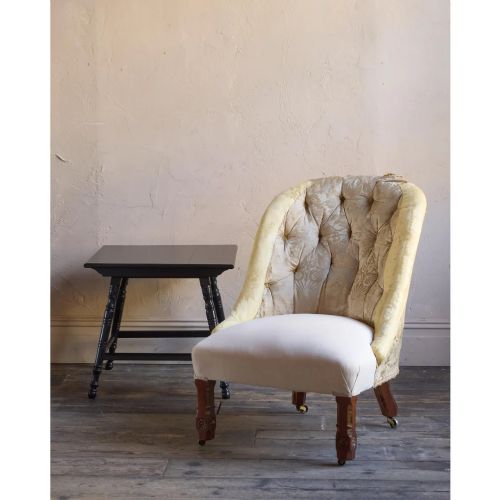
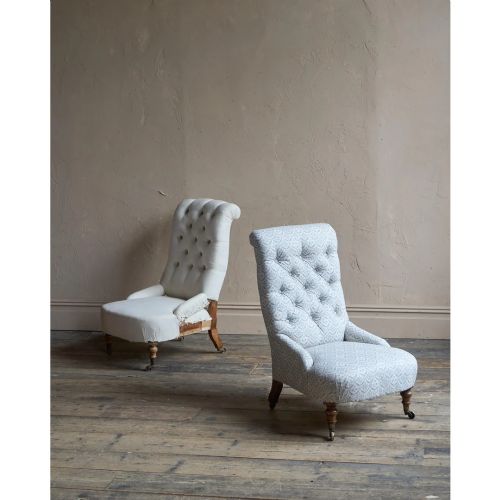
A tufted back accent chair brings deep buttoning and upholstered comfort from the nineteenth and early twentieth centuries into a room.
Tufted Back Accent Chair
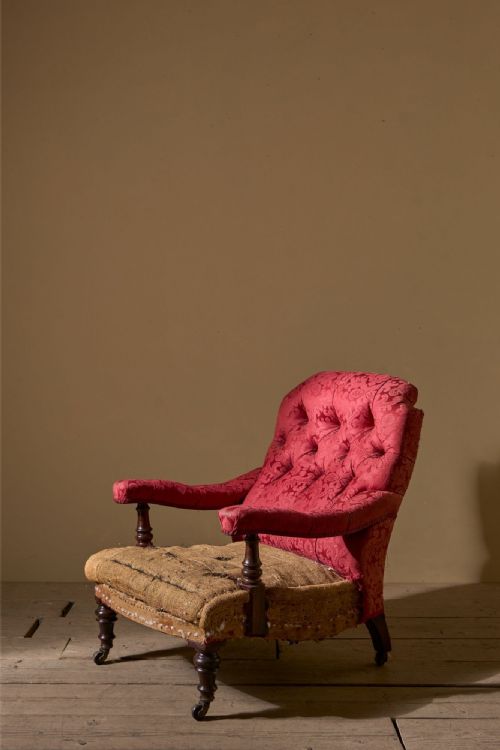
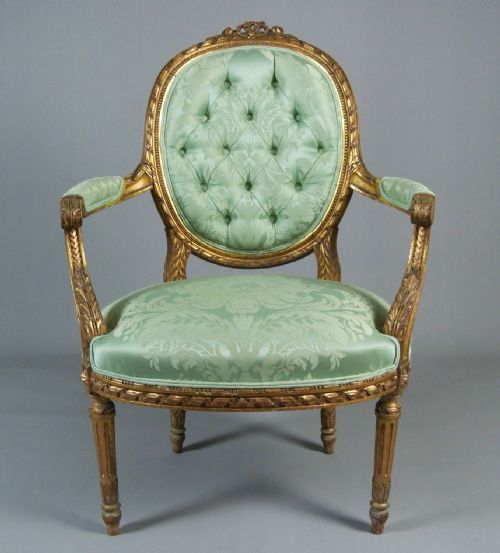
A tufted back accent chair draws upon Victorian, Edwardian, and nineteenth-century traditions to provide seating in forms such as slipper chairs, library chairs, and nursing chairs. These pieces originate from English country houses and French workshops, utilising low profiles or grand proportions depending on their intended rooms.
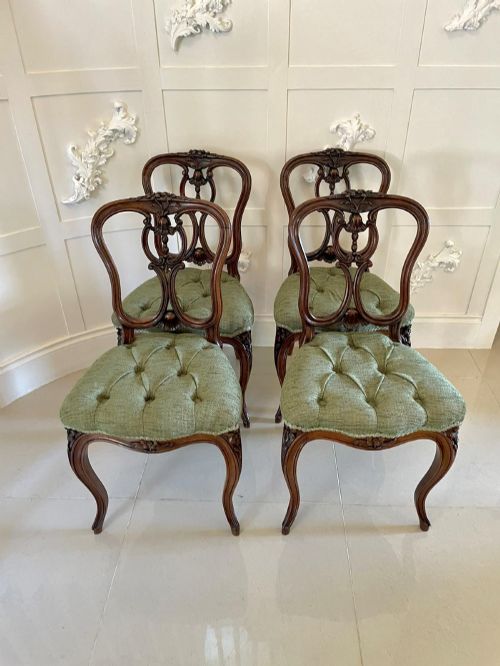
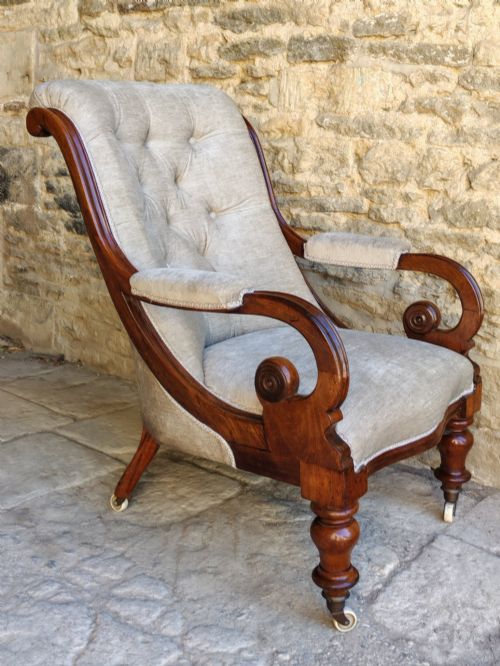
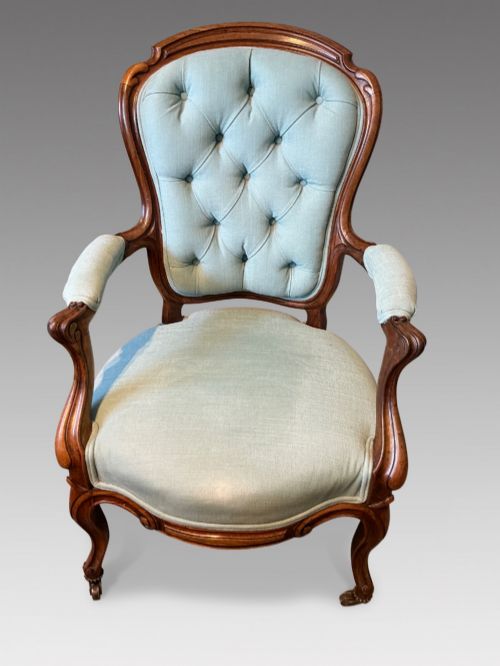
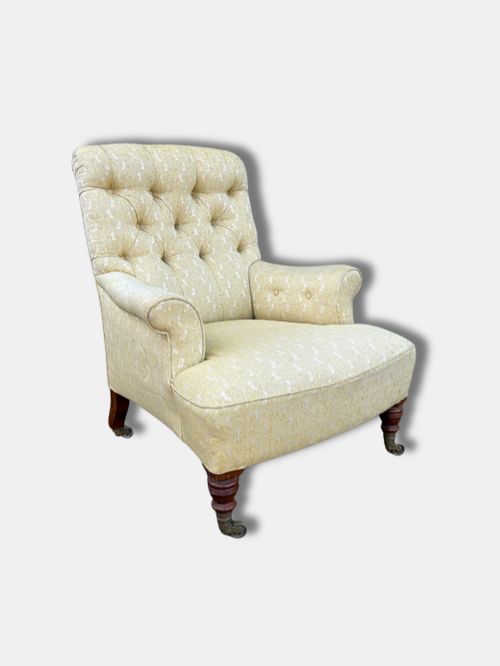
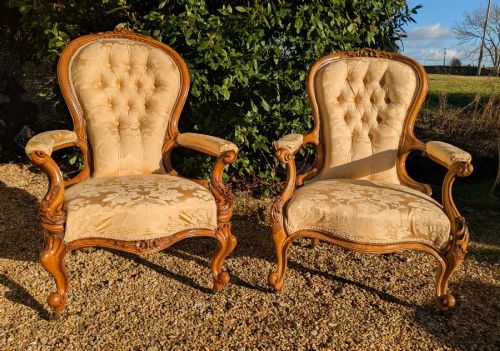
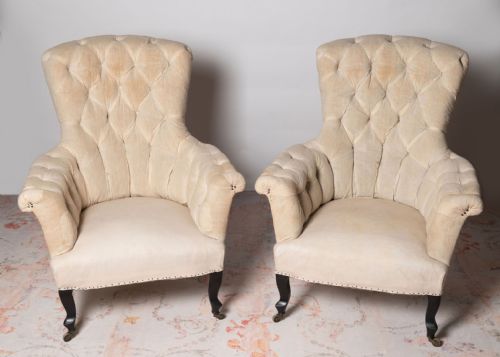
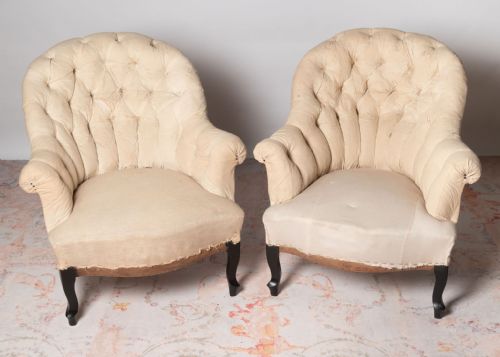
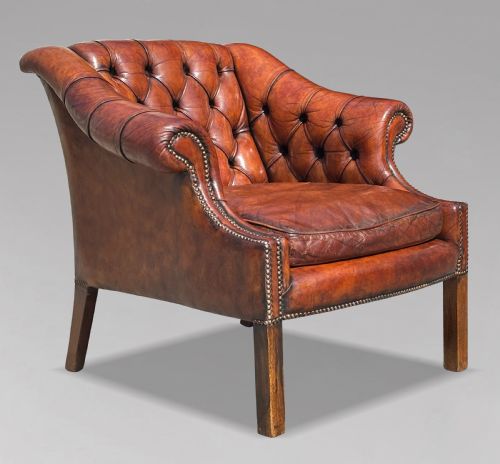
The buyer meets numerous variations on this page, ranging from walnut spoonback armchairs to leather club armchairs and low occasional seating. Periods span from mid-Victorian walnut examples to Edwardian wing and barrel back designs.
Makers such as Howard and Sons and Gillows appear alongside French Napoleon III pieces, showing that these chairs served both formal drawing rooms and private bedrooms with equal distinction.
Materials and construction
Frames employ hardwoods including mahogany, walnut, oak, rosewood, and giltwood, carved into cabriole legs, barley twists, or exposed showwood frames. Joinery supports deep upholstery structures shaped by buttoning and springs.
Upholstery relies on velvet, leather, linen, and textile coverings secured with traditional methods. Brass fittings and fringing often finish the lower sections of nineteenth-century slipper and lounge chairs.
Listings feature walnut, mahogany, oak, rosewood, and giltwood frames combined with velvet, leather, linen, and textile upholstery across the nineteenth and early twentieth centuries.
Evaluating quality and proportion
Quality rests upon the crispness of the timber carving, whether walnut, rosewood, or giltwood, and the integrity of the showwood frame. Superior examples display balanced proportions, such as large aesthetic bedroom chairs or substantial library seating.
The execution of the buttoned upholstery dictates the refinement of the piece. Precise folding and durable textile or leather selection separate standard seating from exceptional cabinetmaker work.
Thomas Chippendale·Howard and Sons·Gillows
The Tufted Back Accent Chair Glossary
- Button back
- Upholstery pulled deep into the padding and secured with stitches or buttons to form a diamond pattern. This technique provides both structural firmness and decorative texture.
- Showwood
- Timber framing left visible around the upholstered portions of a chair. It highlights the polished grain of walnut, mahogany, or rosewood.
- Slipper chair
- A low-seated upholstered chair originally designed for bedrooms to assist with putting on footwear. These pieces lack arms and sit close to the floor.
- Spoonback
- An upholstered chair back shaped in a concave oval resembling the bowl of a spoon. It is frequently seen on Victorian walnut nursing and drawing room chairs.
- Cabriole leg
- A furniture leg that curves outward in a convex arc and tapers inward in a concave arc to a pad or scroll foot. This form derives from classical furniture design.
Tufted Back Accent Chair: Frequently Asked Questions
What is a tufted back accent chair?
A tufted back accent chair is an upholstered seat featuring deep buttoning across the backrest, originating primarily from Victorian and Edwardian periods. These chairs encompass forms like slipper chairs, library chairs, and nursing chairs.
They combine timber frames of walnut, mahogany, or oak with tactile coverings such as velvet, leather, and linen. Each piece provides functional seating while serving as a decorative focal point in a room.
How were these chairs used historically?
Historically, these chairs served diverse domestic spaces ranging from formal drawing rooms to private bedrooms and libraries. Low slipper chairs were placed in bedrooms for dressing, while sturdy leather club chairs furnished studies.
Larger armchair variants provided comfort by fireplaces in English country houses and French chateaux. Their varied proportions allowed them to adapt to both social gatherings and private repose.
How do I live with antique upholstered chairs?
Living with antique upholstered seating involves placing them away from direct sunlight to protect textiles like velvet and leather from fading. Regular gentle care preserves the integrity of the historic fabric and padding.
These chairs integrate easily into contemporary interiors as statement seating. Their traditional wood frames and deep buttoning add textural contrast to modern rooms.
How do I tell Victorian and Edwardian chairs apart?
Victorian chairs often feature denser timbers like rosewood and walnut, with ornate carving, spoonbacks, cabriole legs, or barley twist supports. Their upholstery frequently utilises rich velvet or buttoned leather.
Edwardian examples tend to introduce lighter woods, barrel backs, or wingback forms with deep buttoning. Their proportions often reflect a shift toward simpler, more relaxed country house aesthetics.