


Antique Platform Rocker
An antique platform rocker offers a mechanical suspension for a smooth gliding motion, combining nineteenth-century comfort with robust domestic craftsmanship.
Antique Platform Rocker
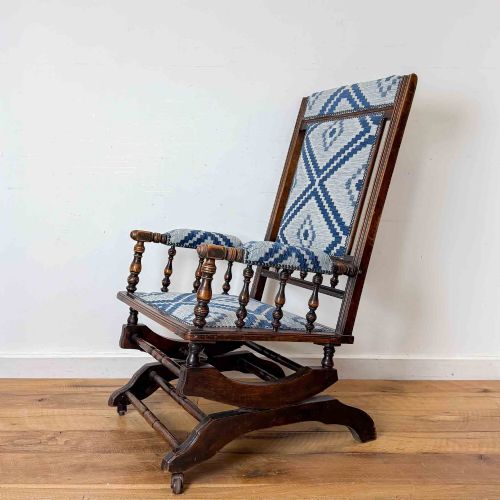
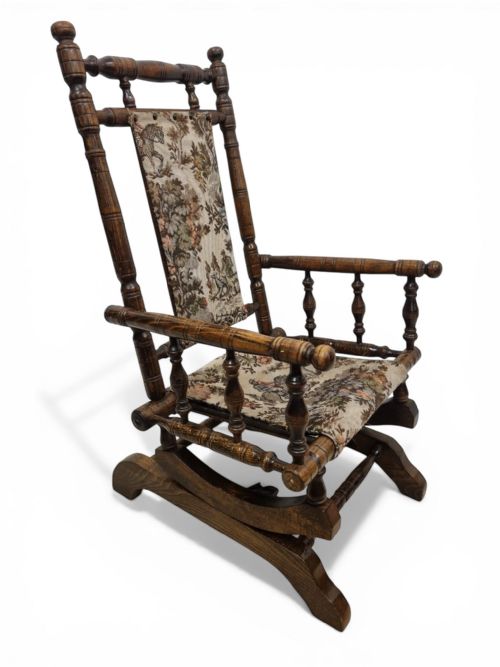
An antique platform rocker is a specialised seating form designed for domestic repose, featuring a mechanism mounted on a stationary base rather than traditional curved runners. This arrangement keeps the chair fixed in place on the floor while the upper seat assembly moves back and forth.
The selections available include full-sized armchairs alongside smaller children's variants and nursing chairs. Examples span the nineteenth century, the Edwardian period, and around nineteen twenty, drawing on Victorian, Edwardian, and traditional American styles.
How they were made
Frames are constructed from timbers such as oak, walnut, mahogany, beech, and fruitwood, paired with steel, brass, and metal components for the internal suspension mechanisms. Solid wood construction forms the structural core of the chairs.
Upholstery techniques involve fabric, leather, tapestry, and button-backed padding, while other examples utilise moulded panelled seats and bentwood methods seen in pieces associated with Thonet.
Children's versions scaled down the soothing mechanics of adult chairs, offering tiny occupants their own dedicated vessel for vigorous nursery motion.
What varies in quality
The grade of an antique platform rocker rests upon the selection of timber and the sophistication of its mechanical suspension. Denser hardwoods like walnut and mahogany command attention for their durability and grain, whereas secondary timbers indicate simpler utility.
Quality also shows in the execution of the upholstery and the integrity of the frame joints. Hand-finished details, button-backed padding, and intact metal or steel mechanisms distinguish finer workshop production from standard domestic seating.
The Antique Platform Rocker Glossary
- Platform rocker
- A rocking chair mounted on a stationary base using springs or links to create movement. This design protects floor coverings from the wear caused by traditional curved runners.
- Bentwood
- Wood softened by steam and bent into curved structural shapes. This technique creates lightweight and resilient chair frames without heavy joinery.
- Button back
- An upholstery style where buttons are pulled deep into the padding to create a diamond pattern. This method secures the internal stuffing while providing decorative detail.
- Nursing chair
- A low-seated chair designed originally for feeding infants. The compact height allows the sitter to rest comfortably with feet flat on the floor.
- Fruitwood
- Timber taken from fruit-bearing trees such as pear or apple. Cabinet makers valued these dense woods for turning and detailed carving.
Antique Platform Rocker: Frequently Asked Questions
How does a platform rocker work?
A platform rocker sits upon a stationary wooden base that remains planted firmly on the floor during use. Internal steel springs or pivot links suspend the upper chair frame, allowing the seat to glide smoothly back and forth.
This mechanical arrangement prevents the chair from creeping across the room as it rocks. It also protects carpets and floorboards from the friction generated by traditional curved wooden rockers.
What periods do these chairs date from?
The examples on this page span the nineteenth century, the Victorian era, the Edwardian period, and around nineteen twenty. Traditional American styles and British domestic forms both appear across these decades.
Construction details, timber choices, and upholstery styles help establish the date of manufacture. Victorian and Edwardian examples often display distinct decorative flourishes compared to later nineteenth-century utility pieces.
Are these chairs suitable for daily use?
These chairs were built for domestic comfort and remain practical for everyday seating when the frame and mechanism are sound. The upholstered backs and supportive seats provide ergonomic relief for modern living spaces.
Buyers should inspect the internal springs and joints to ensure they can handle regular motion. Periodic maintenance of the metal components keeps the gliding action smooth.
How do I identify a nursing chair?
Nursing chairs feature lower seats than standard armchairs, designed to keep the sitter close to the ground. This reduced height provided comfort and stability when holding infants or attending to household tasks.
They frequently incorporate upholstered backs and compact frames. Their scale makes them particularly useful in smaller rooms or bedrooms today.
What woods were used for the frames?
Cabinet makers utilised a variety of hardwoods including oak, walnut, mahogany, beech, and fruitwood. Oak and walnut provided robust framing for larger chairs, while beech and fruitwood served for turned spindles and smaller child-sized variants.
Timber selection usually reflects the intended purpose and status of the chair. Finer woods received polished finishes, while secondary woods were often painted or stained.