
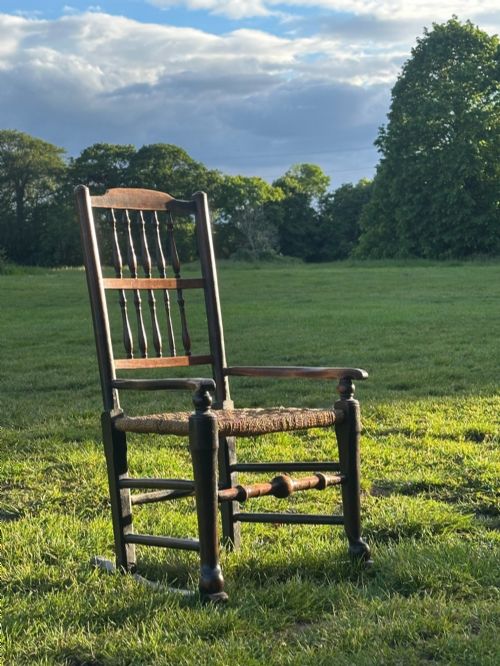


Dark Wood Nursing Chair
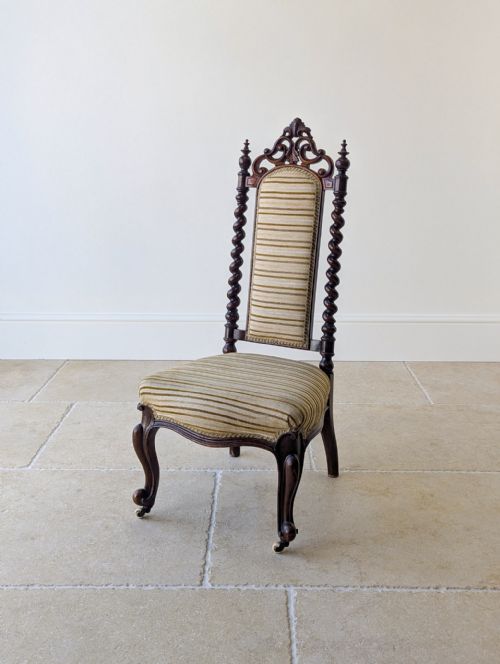
A dark wood nursing chair brings low seating and rich timber tones to a bedroom, offering a compact footprint designed for comfort.
Dark Wood Nursing Chair
When you search for a dark wood nursing chair, you encounter a selection spanning the Victorian and Edwardian periods, alongside earlier examples. These forms range from low-slung occasional seats to high-back parlour chairs and prayer seats.
The versions most commonly met on this page date from the Victorian era and utilise rich timbers like rosewood, walnut, and mahogany. They frequently feature low seats designed for sitting close to a hearth or tending to an infant.
How they were made
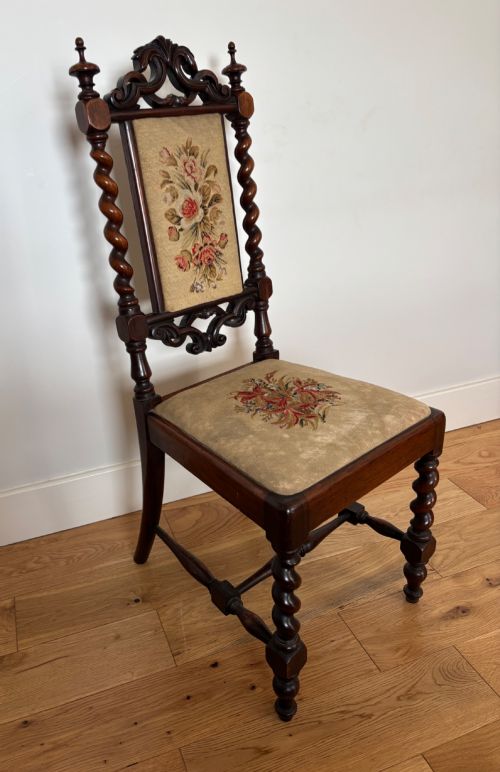
Cabinet makers utilised dense hardwoods such as rosewood, walnut, mahogany, and oak to construct sturdy frames that could withstand daily domestic use. These timbers were often turned, carved by hand, or fitted with brass castors.
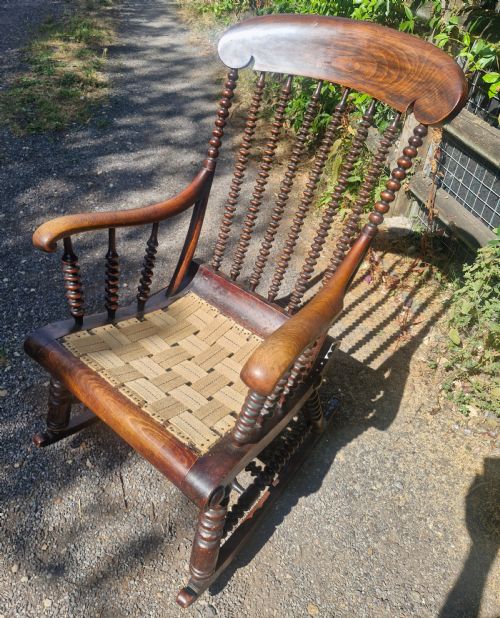
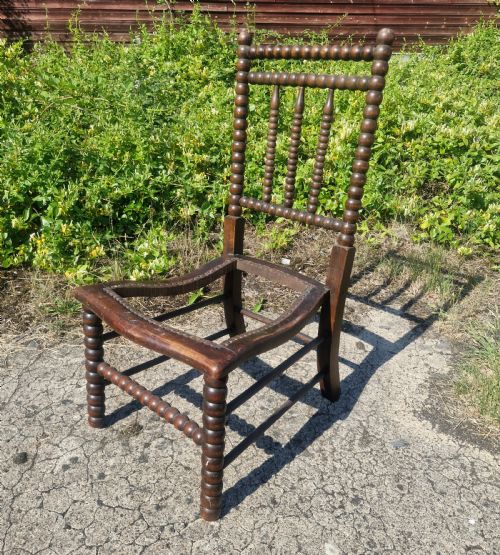
Upholstery played a central role, employing materials like velvet and fabric stretched over button-backed or padded frames. Bobbin framing and barley twist turnings also appear across the surviving pieces.
What varies in quality
The standard of carving and the selection of timber dictate the distinction between simpler vernacular items and finer parlour pieces. Dense rosewood and walnut with intricate hand-carved backs sit at the upper end of the scale.
Original upholstery methods and the integrity of turned elements such as bobbin framing or cabriole legs influence the overall character. Finer examples display careful attention to structural joinery within the hardwood frame.
Wheeler
The Dark Wood Nursing Chair Glossary
- Nursing chair
- A low-seated chair historically designed for feeding infants or personal grooming, featuring a compact frame.
- Prie Dieu
- A devotional or prayer chair with a high back, sometimes incorporating a shelf or ledge for kneeling.
- Bobbin framing
- A style of turned woodwork resembling a string of wooden bobbins or spools, popular in the nineteenth century.
- Cabriole leg
- A furniture leg that curves outward and then tapers inward, ending in a pad or foot, seen on Victorian seating.
Dark Wood Nursing Chair: Frequently Asked Questions
How do I date a nursing chair?
Dating relies on observing the timber, upholstery style, and structural turning techniques present in the piece. Victorian examples often incorporate rosewood or walnut with button backs, while Edwardian versions frequently utilise beech or oak with lighter inlay.
Construction methods and leg styles, such as cabriole legs or bobbin turnings, provide further clues to the decade of manufacture.
How were these chairs used originally?
These seats served primarily in bedrooms or nurseries for nursing infants, dressing, and personal grooming. Their low profile allowed the user to sit comfortably close to a fireplace or child's cradle.
Over time, many transitioned into occasional chairs or parlour seating within Victorian and Edwardian homes.
Where do I place one today?
A dark wood nursing chair fits well in a bedroom, dressing room, or a quiet corner of a living space. Their compact size allows them to function effectively as accent or occasional seating.
Pairing them with traditional or eclectic interiors highlights their rich timber tones and textile upholstery.