


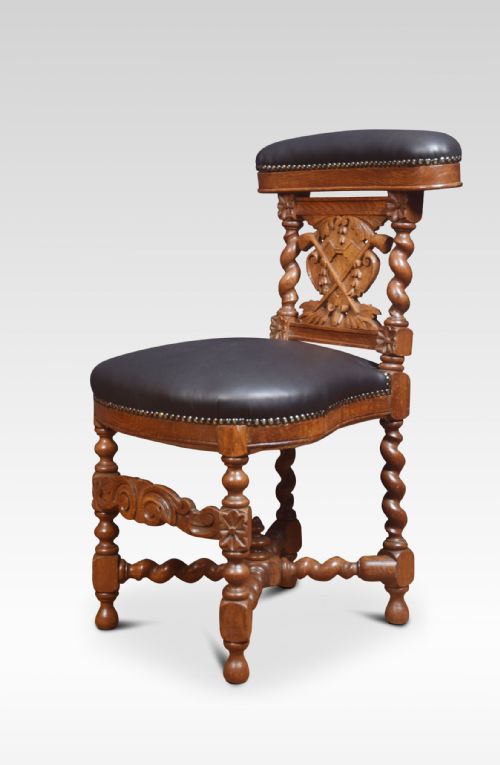


Carved Oak Prie Dieu
These carved oak prie dieu examples are devotional seats and prayer desks built for personal worship, offering solid craftsmanship and enduring historical character.
Carved Oak Prie Dieu
A carved oak prie dieu is a devotional piece designed for prayer, combining a kneeling platform with an upper ledge or desk. Buyers searching this phrase look for authentic ecclesiastical furniture that brings historic craft into domestic spaces.
The versions most commonly met on this page span the Victorian and Gothic Revival periods, often appearing as prayer desks, devotional chairs, and hall seats. These forms reflect centuries of religious and domestic woodworking traditions across Britain and Europe.
Alongside dedicated prayer desks, the selection includes related seating such as side chairs, reception furniture, and lecterns. Each piece demonstrates the heavy timber construction and decorative carving typical of early church and domestic interiors.
Materials and Construction
Solid oak serves as the primary structural material, chosen for its durability and suitability for deep, intricate carving. Artisans shaped this dense timber using traditional joinery methods to build sturdy frames capable of supporting kneeling platforms and writing ledges.
Secondary materials such as brass, leather, needlepoint, and tapestry fabric appear across cushions, upholstery, and fittings. These elements complement the dark timber surfaces and add texture to the devotional seating.
Surface decoration relies heavily on Gothic Revival, Arts and Crafts, and Jacobean styles. Carvers applied relief work, fretted tops, and sculptural details directly into the solid wood to create distinct architectural profiles.
Carved Oak Prie Dieu Retail Price Guide 2026
Typical asking prices for carved oak prie dieu among the pieces listed under this phrase on Sellingantiques today, from the lower quarter to the upper quarter. They describe what is for sale here now, not the wider market.
The selection spans Victorian, Regency, and Pre-16th century eras, encompassing diverse styles from Gothic Revival to Arts and Crafts.
Assessing Quality and Character
Quality in these pieces rests upon the depth and precision of the timber carving and the integrity of the original construction. Superior examples display crisp relief work and well-balanced proportions that reflect careful design by skilled makers.
The choice of secondary materials, including period upholstery like needlepoint or tapestry fabric, influences the overall character of a piece. Finer items retain integrated hardware and harmonious textiles that complement the aged oak frame.
The Carved Oak Prie Dieu Glossary
- Prie-dieu
- A devotional desk or chair designed specifically for kneeling in prayer, featuring a lower ledge for the knees and an upper shelf for books.
- Gothic Revival
- An architectural and decorative style popular during the nineteenth century that revived medieval forms, pointed arches, and heavy tracery.
- Needlepoint
- A type of canvas work embroidery often used for upholstery on historic seat pads and kneelers.
- Jacobean Revival
- A later style imitating the heavy, rectilinear furniture and geometric ornamentation characteristic of early seventeenth-century English design.
Carved Oak Prie Dieu: Frequently Asked Questions
What is a prie-dieu used for?
A prie-dieu functions primarily as a personal prayer desk or devotional seat. It allows the user to kneel on a lower platform while resting arms or devotional texts on an upper shelf.
Historically placed in private chapels or bedrooms, these pieces support daily spiritual observance. Today, they serve equally well as decorative architectural furnishings in modern homes.
How do I date a carved oak prie dieu?
Dating relies on examining the construction methods, stylistic markers, and timber characteristics. Pieces displaying Gothic Revival or Victorian traits typically date from the nineteenth century.
Comparing the decorative motifs, such as tracery or turned spindles, against known period styles helps narrow the origin. Secondary materials like tapestry fabric and brass fittings also provide clues to the era of manufacture.
Are these pieces comfortable for daily seating?
Many examples function primarily as kneeling desks or decorative chairs rather than standard lounge seating. Their upright proportions and rigid wooden frames reflect their ecclesiastical origins.
Some variants include padded kneelers or upholstered seat pads covered in needlepoint or fabric. Buyers often use them as accent chairs in hallways or reception spaces.
How do I care for antique oak furniture?
Maintaining antique oak involves keeping the timber away from direct heat sources and excessive moisture. Regular dusting with a dry, soft cloth preserves the natural finish of the wood.
Avoiding harsh chemical polishes ensures the historic patina remains undisturbed. Leather and fabric elements benefit from gentle, specialist cleaning suited to antique textiles.