



Nineteenth Century Slipper Chair
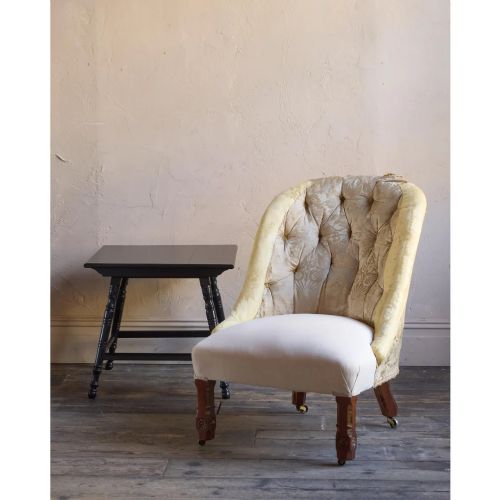
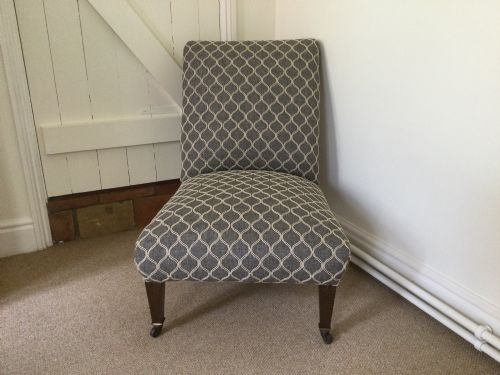
These nineteenth century slipper chair examples are low-slung seating pieces offering comfortable fireside and bedroom lounging.
Nineteenth Century Slipper Chair
When buyers search for a nineteenth century slipper chair, they find low-seated upholstered chairs designed originally for dressing rooms and bedrooms. The pieces listed on this page span Victorian and nineteenth century periods, incorporating related forms such as nursing chairs, salon chairs, and fireside chairs.
Most examples originate from English and French workshops, taking the form of deep-seated chairs with low frames intended for comfortable lounging near the hearth or bedroom dressing table. Makers built these pieces with compact proportions, low seats, and upholstered backs suited to period domestic interiors.
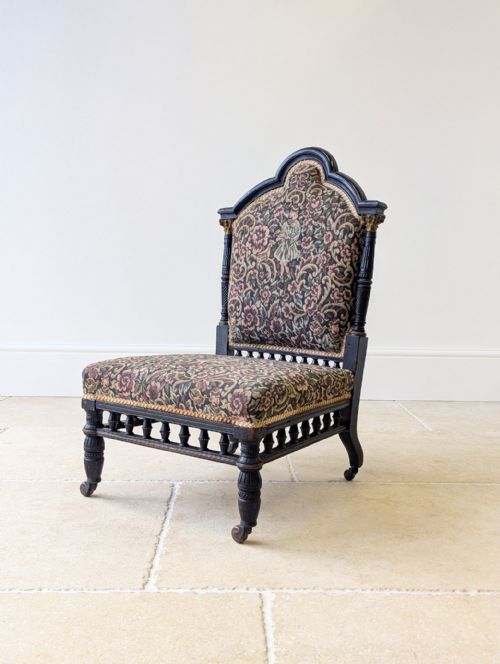
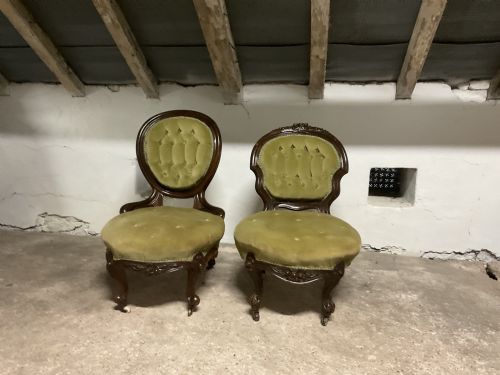
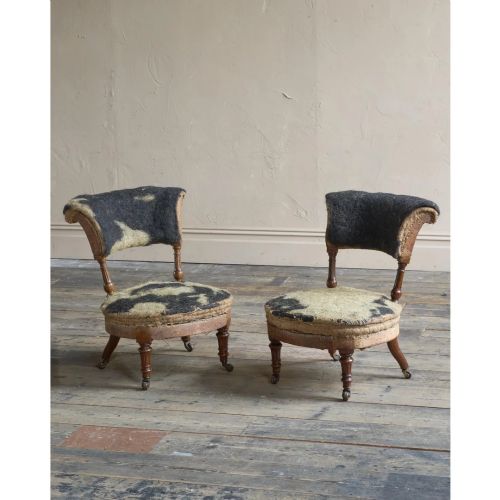
The selection includes specific variants like button-backed bedroom chairs, ebonised Aesthetic Movement pieces, and walnut show-wood designs. Buyers encounter both single chairs and matched pairs, often featuring turned wooden legs fitted with brass castors.
How they were made
Cabinet makers constructed the foundational frames of these low chairs using hardwoods such as mahogany, walnut, and ebonised wood. Workshops relied on traditional joinery methods to shape the show-wood frames, leaving polished wooden elements visible around the upholstered padding.
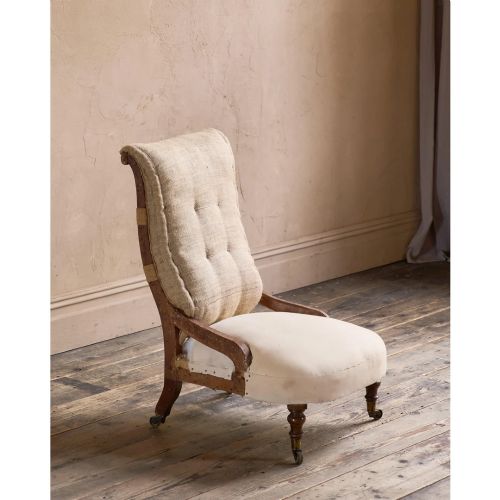
Upholstery techniques involved internal stuffing secured over hessian foundations, finishing with outer coverings in fabric, velvet, or rexine. Many pieces incorporated deep buttoning across the backrests to hold the interior padding firmly in place.
Undercarriages frequently featured turned wooden legs supported by brass castors, allowing the low chairs to move easily across bedroom and drawing room carpets.
Nineteenth Century Slipper Chair Retail Price Guide 2026
Typical asking prices for nineteenth century slipper chair among the pieces listed under this phrase on Sellingantiques today, from the lower quarter to the upper quarter. They describe what is for sale here now, not the wider market.
The listings show walnut and mahogany as the primary framing timbers, alongside ebonised finishes applied during the Aesthetic Movement.
What varies in quality
The standard of frame construction separates ordinary examples from superior pieces, particularly in the carving of walnut or mahogany show-wood and the integrity of the underlying joinery. Workshops belonging to notable makers achieved greater refinement in the proportions and structural stability of the low frame.
The execution of the upholstery work also determines the finish, where traditional stuffing methods and buttoning create a more harmonious profile than later re-recoveries. The choice of secondary materials, such as heavier brass castors and dense timber frames, distinguishes higher grade seating from simpler bedroom chairs.
Howard and Sons
The Nineteenth Century Slipper Chair Glossary
- Show-wood
- Exposed wooden framing left visible around the upholstered portions of a chair. This timber is typically polished walnut or mahogany.
- Ebonised wood
- Timber treated with a dark stain or finish to imitate ebony. This treatment appears frequently on Aesthetic Movement pieces.
- Hessian
- A coarse woven fabric utilised as a foundational layer beneath the final upholstery stuffing. It provides structural support for the internal padding.
- Rexine
- A leathercloth material utilised for upholstery on certain utility and fireside seating. It offers a durable, wipe-clean surface.
- Castor
- A small wheel fitted to the base of furniture legs to aid movement. Nineteenth century examples typically utilise brass fittings.
Nineteenth Century Slipper Chair: Frequently Asked Questions
How were these chairs used historically?
Owners placed these low seats primarily in bedrooms, dressing chambers, and intimate drawing rooms. Their modest height made them practical for dressing areas and firesides.
They served as comfortable lounging seats for ladies attending to their toilet or resting in private quarters.
How do I care for antique upholstery?
Preserving the fabric requires gentle vacuuming with a soft brush attachment to remove dust without stressing old textiles. Direct sunlight should be avoided to prevent fading on velvet and woven coverings.
Exposed wooden frames benefit from occasional application of appropriate furniture wax to nourish the timber.
How do I distinguish between periods?
Early Victorian examples often display robust walnut or mahogany frames with straightforward turned legs. Pieces from the later nineteenth century frequently incorporate ebonised finishes and decorative elements associated with the Aesthetic Movement.
Construction details and secondary woods help clarify the specific manufacturing decade.