



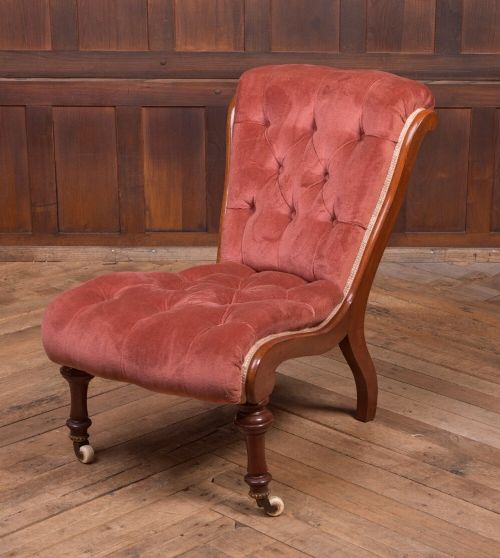

Armless Bedroom Armchair
An armless bedroom armchair offers low seating for private dressing rooms, combining compact dimensions with upholstered comfort.
Armless Bedroom Armchair
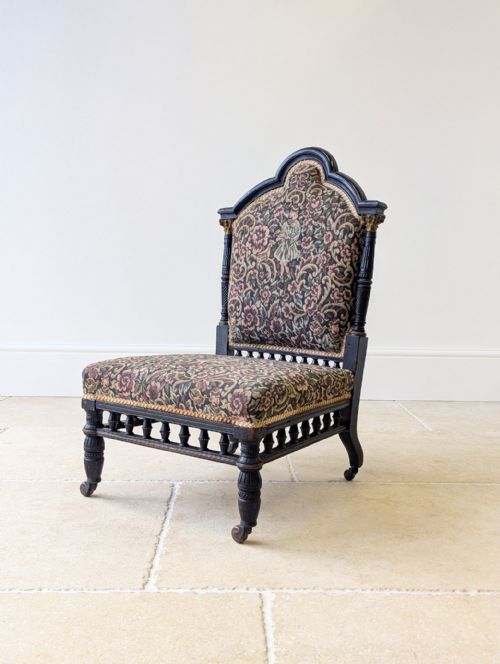
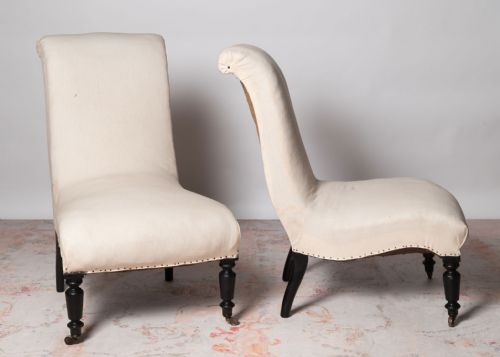
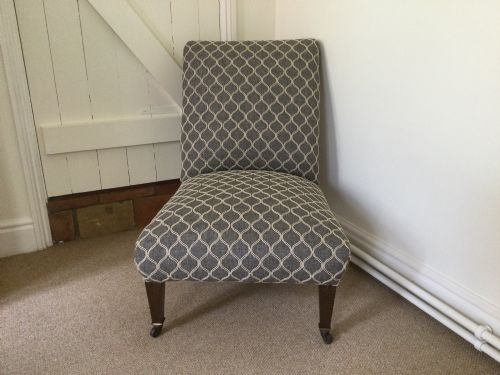
An armless bedroom armchair is designed for intimate private spaces, taking forms such as slipper chairs, low salon chairs, and accent chairs. These seats sit low to the ground to allow ease of movement during dressing.
Most examples found here date from the nineteenth century, including Victorian pieces and French designs. Makers shaped these low chairs to fit smaller chambers without obstructing garments or movement.
Materials and construction methods
Frames rely on hardwoods like walnut, mahogany, and ebonised wood, which provide sturdy foundations for heavy upholstery fabrics. Workshops often added gilt details or brass elements to enhance the timber frames.
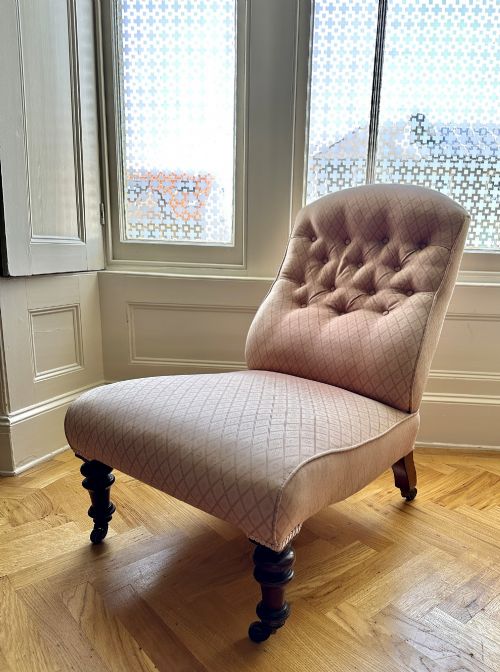
Upholstery defines these pieces, combining deep padding with traditional fabric coverings. Button back techniques secure the heavy fabric to internal padding, creating tailored tufted surfaces.
Armless Bedroom Armchair Retail Price Guide 2026
Typical asking prices for armless bedroom armchair among the pieces listed under this phrase on Sellingantiques today, from the lower quarter to the upper quarter. They describe what is for sale here now, not the wider market.
Listings span the nineteenth century, incorporating Victorian, Aesthetic Movement, and French stylistic influences.
Distinctions in quality
Quality separates through the refinement of the timber frame and the precision of the upholstery work. Superior pieces display carefully turned wooden legs, often mounted with original brass castors.
The complexity of the woodwork sets the standard, ranging from simple turned wooden supports to ebonised and gilt Aesthetic Movement frames. Finer examples retain their deep-seated proportions and tight, supportive button back upholstery.
Howard and Sons
The Armless Bedroom Armchair Glossary
- Slipper chair
- A low-set upholstered armchair traditionally used in a bedroom or dressing room for putting on shoes. These pieces lack arms to accommodate bulky nineteenth-century garments.
- Ebonised wood
- Timber stained or painted black to imitate costly ebony wood. This finish gained popularity during the Victorian era, particularly within the Aesthetic Movement.
- Button back
- An upholstery method where tufting pulls the fabric deep into the padding using buttons arranged in a geometric pattern. This technique secures the internal stuffing while creating a decorative texture.
- Aesthetic Movement
- A late nineteenth-century design style focusing on visual beauty over narrative meaning. Pieces from this movement often feature ebonised surfaces and slender proportions.
Armless Bedroom Armchair: Frequently Asked Questions
What is an armless bedroom armchair used for?
These low seats provided convenient places for dressing and putting on footwear in private chambers.
Their compact proportions allowed them to sit comfortably in smaller rooms without crowding the space.
How do I identify a Victorian bedroom chair?
Victorian examples typically feature dark hardwoods such as walnut or ebonised timber, often combined with deep button back upholstery.
Proportions remain low to the floor, reflecting the functional requirements of nineteenth-century dressing rooms.
Are these chairs comfortable for daily sitting?
Deep-seated versions provide generous padding designed for relaxation in private spaces.
Because they lack arms, they offer an open seat that suits various seating postures.
What materials are used in these frames?
Wood frameworks rely primarily on walnut, mahogany, and ebonised timber.
Detailing occasionally includes brass elements and gilt highlights on the exposed wooden components.