

Low Upholstered Armchair
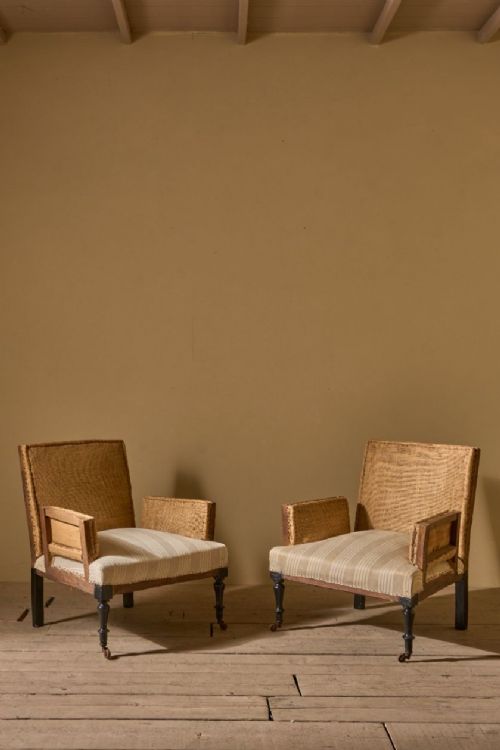
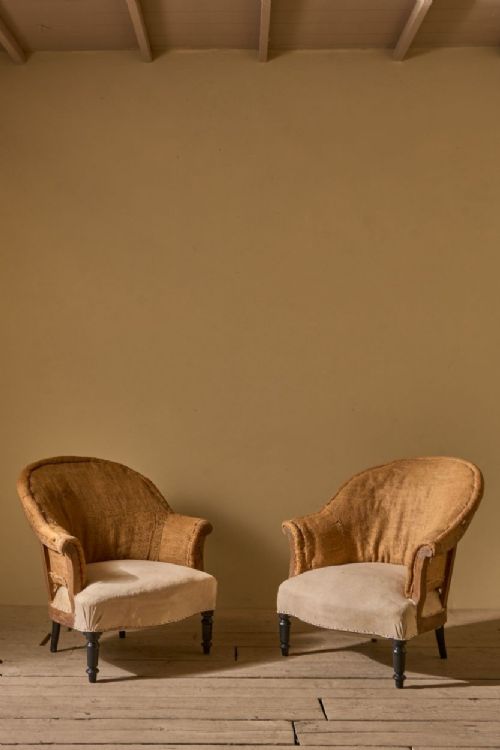
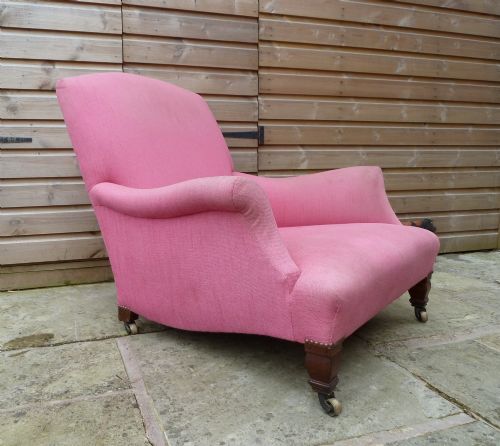
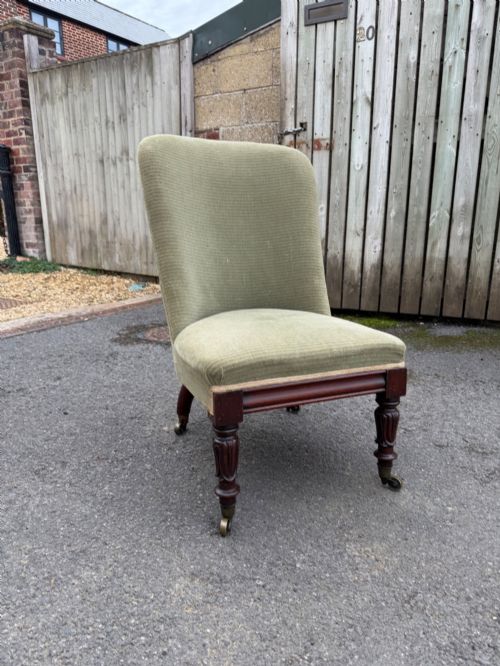
A low upholstered armchair provides deep comfort close to the floor, drawing on nineteenth-century forms designed for firesides and bedrooms.
Low Upholstered Armchair
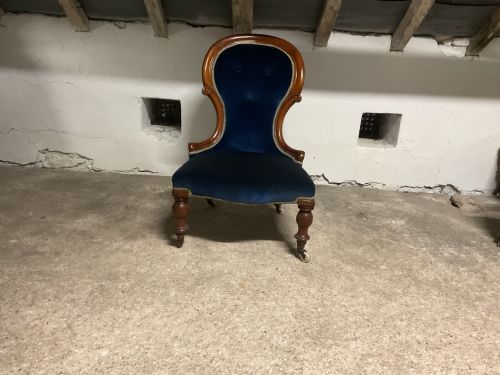
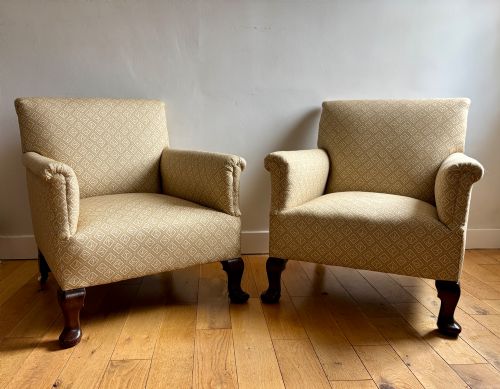
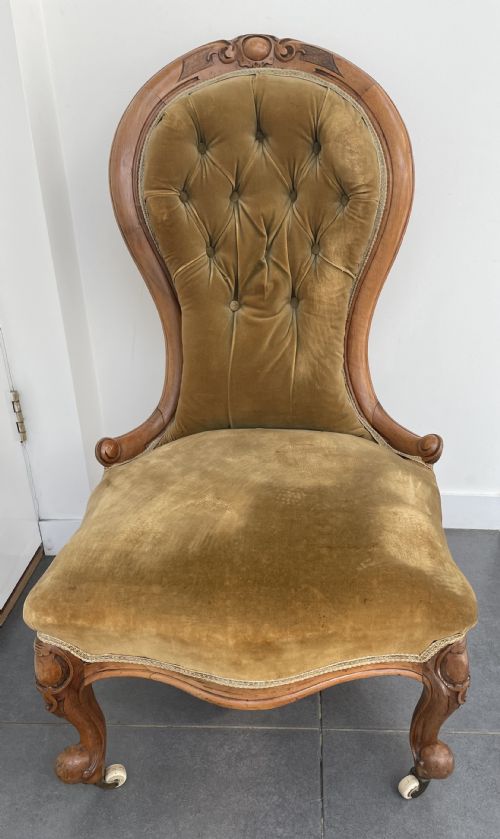
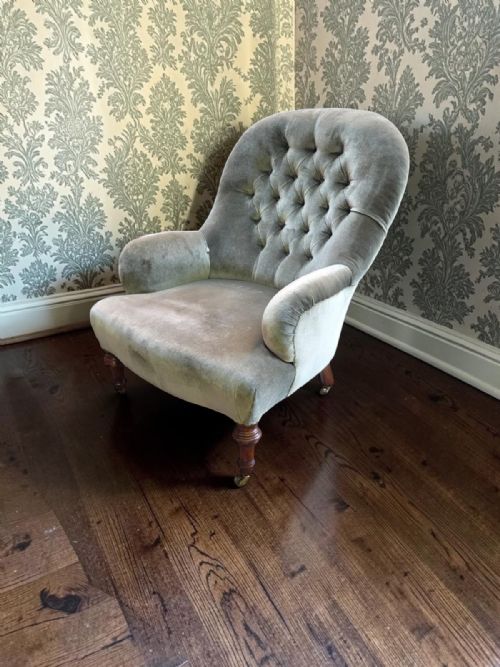
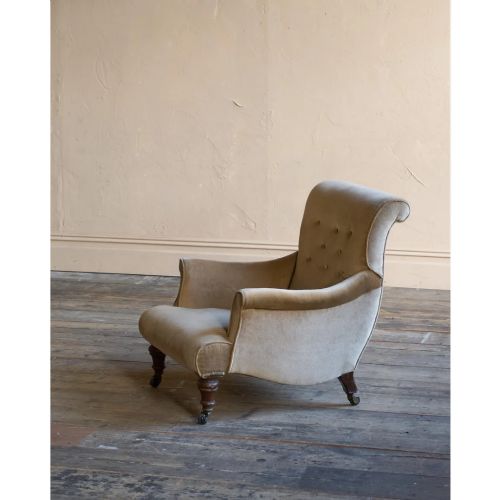
When you search for a low upholstered armchair, you encounter compact seating designed for intimate spaces, including bedroom chairs, nursing chairs, slipper chairs and reading armchairs. These forms sit closer to the ground than standard seating, with low centres of gravity intended for relaxed postures near a fire or dressing table.
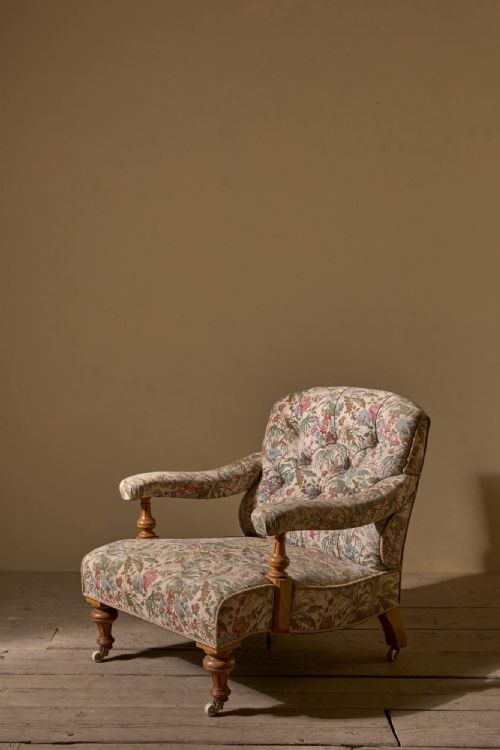
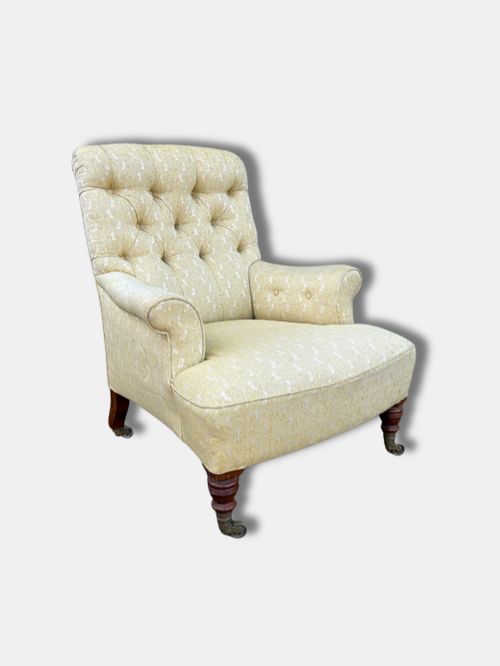
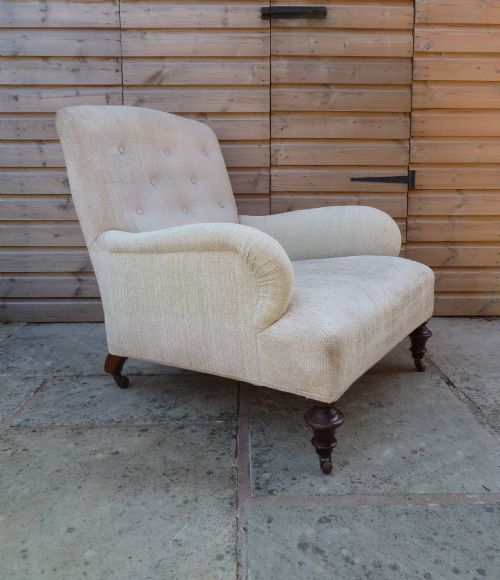
The selections span nineteenth-century Victorian and Edwardian periods, alongside Georgian and later twentieth-century examples. You frequently meet pieces styled in the manner of Howard and Sons or Gillows, featuring padded backs, sprung seats and deep proportions scaled down for domestic chambers.
How they were made
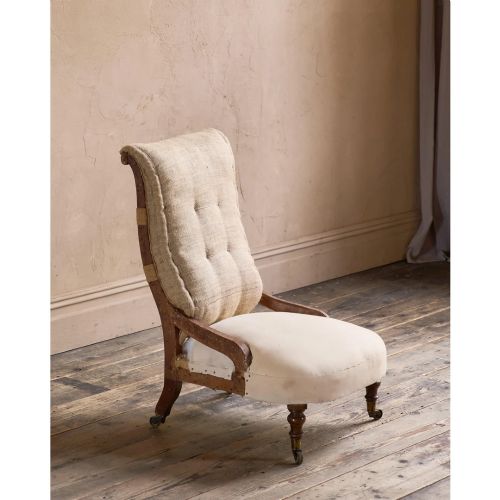
Carpeneters constructed the frames using hardwoods such as mahogany, walnut, oak and standard timber, often shaping the woodwork into scroll backs, turned legs or cabriole supports. Visible wood frames contrast with hidden internal construction of hessian webbing and coil springs.
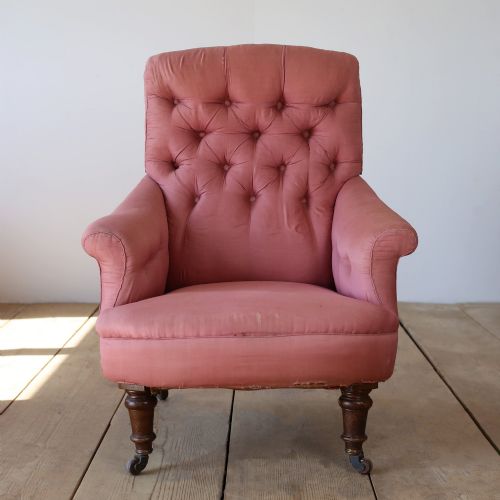
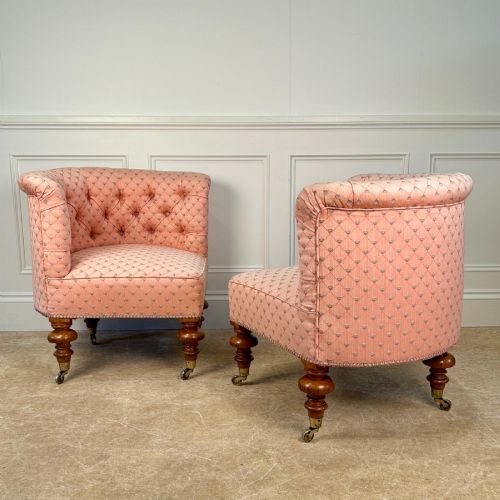
Upholsterers layered traditional stuffing materials beneath outer covers of velvet, calico, leather and patterned fabric, securing tufting with deep buttoning. Brass castors frequently fitted to the feet allowed these heavy, sturdy chairs to move easily across carpets.
Listings feature nineteenth-century Victorian, Edwardian, and Georgian periods alongside materials including mahogany, walnut, velvet, and brass.
What varies in quality
The distinction between standard workshop production and master craftsmanship lies in the architectural integrity of the frame and the resilience of the internal springing. Maker attributions to renowned firms such as Howard and Sons or Gillows elevate a piece through superior joinery and precise balance.
Subtleties in wood carving, the crispness of turned legs and the harmonious proportions of the low back distinguish finer examples. The original upholstery materials and the retention of maker stamps or paper labels further define the standing of individual pieces.
Howard and Sons·Whytock and Reid·C Hindley and Sons·Hampton and Sons·Gillows of Lancaster
The Low Upholstered Armchair Glossary
- Button back
- A style of upholstery where depressions are formed in the padding by stitching through to the frame, often secured with fabric-covered buttons.
- Slipper chair
- A low-framed bedroom chair originally designed for ladies to sit upon while putting on shoes or stockings.
- Nursing chair
- A low-seated armchair with an upright back, historically built to allow comfortable feeding of infants close to the hearth.
- Tub chair
- An armchair featuring a rounded, enclosed back and arms formed in a continuous curved sweep.
Low Upholstered Armchair: Frequently Asked Questions
Where were low upholstered armchairs placed?
These compact seats found their original homes in Victorian and Edwardian bedrooms, dressing rooms, and intimate drawing rooms where standard-sized armchairs would overwhelm the floor plan. Their reduced height suited private chambers and low hearths.
Today, they adapt easily to modern living spaces as accent chairs or reading seats in studies and corners where space is measured.
How do I identify a Howard and Sons style chair?
Howard and Sons style chairs are recognised by their exceptionally deep, sprung seats, low profiles, and generous upholstered proportions designed for total relaxation. They often feature turned mahogany legs fitted with brass castors stamped with the maker's name.
Many bear the influence of this firm through their characteristic shape, comfortable rake, and traditional stuffing methods using hessian and wool.
What is the difference between a nursing chair and a slipper chair?
Nursing chairs traditionally feature a higher, more upright padded back to support the torso, paired with a very low seat designed for nursing infants. Slipper chairs generally present a slightly more relaxed, shorter back intended for dressing.
Both share the key trait of sitting close to the floor, though their silhouettes reflect slightly different domestic uses in nineteenth-century homes.
How should I care for antique upholstery fabrics?
Protect antique textiles such as velvet, wool, and patterned cotton by keeping them out of direct sunlight to prevent fading of the fibres and dyes. Gentle vacuuming with a soft brush attachment removes surface dust without stressing delicate stitching.
Consult a specialist restorer for deep cleaning to preserve the internal stuffing and original tacking methods used by nineteenth-century makers.