
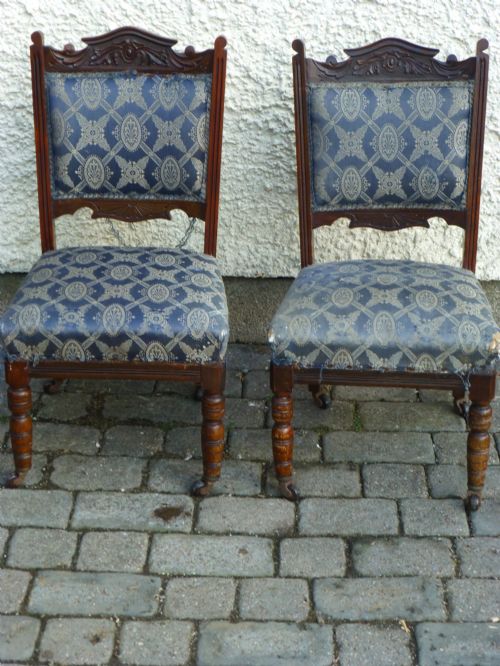
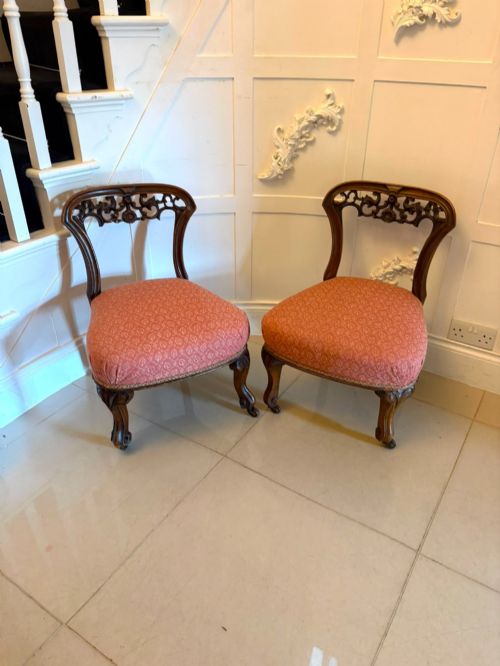
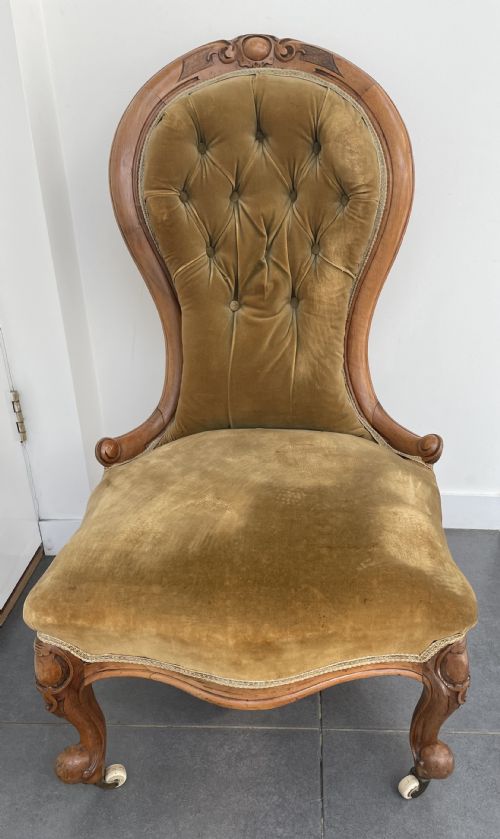
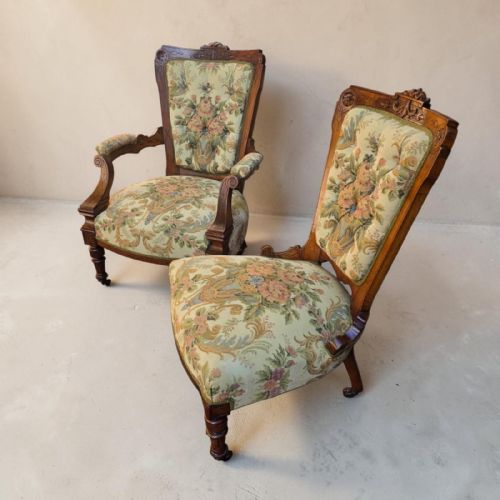
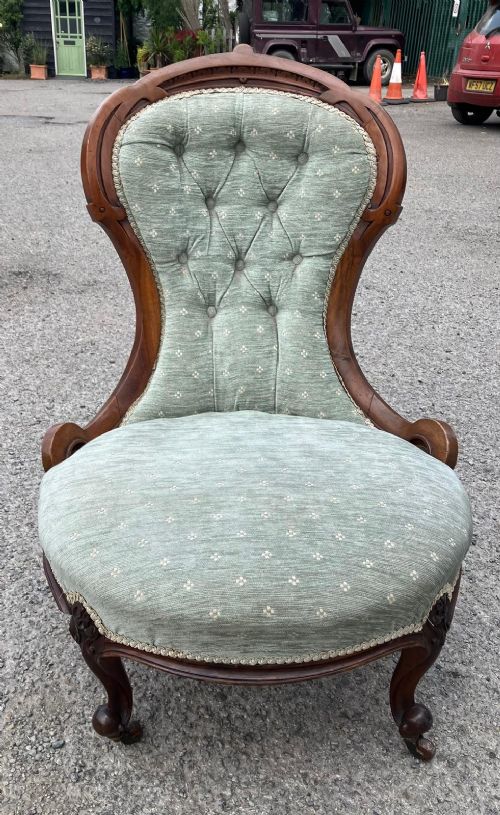
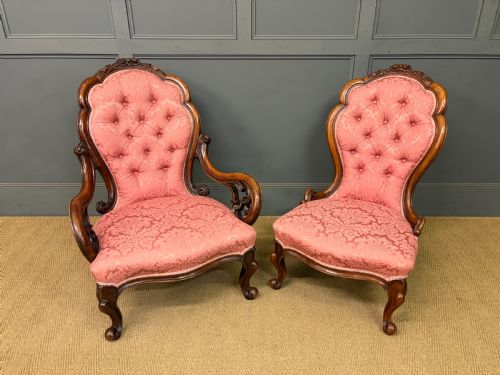
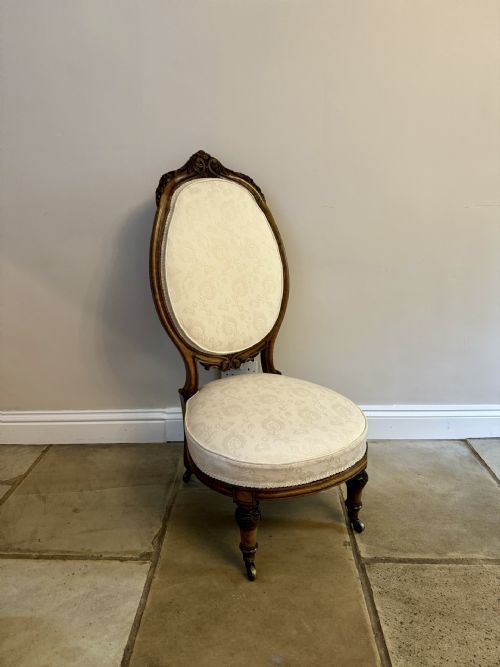


Carved Walnut Slipper Chair
These carved walnut slipper chair examples combine low-slung Victorian comfort with rich timber frames.
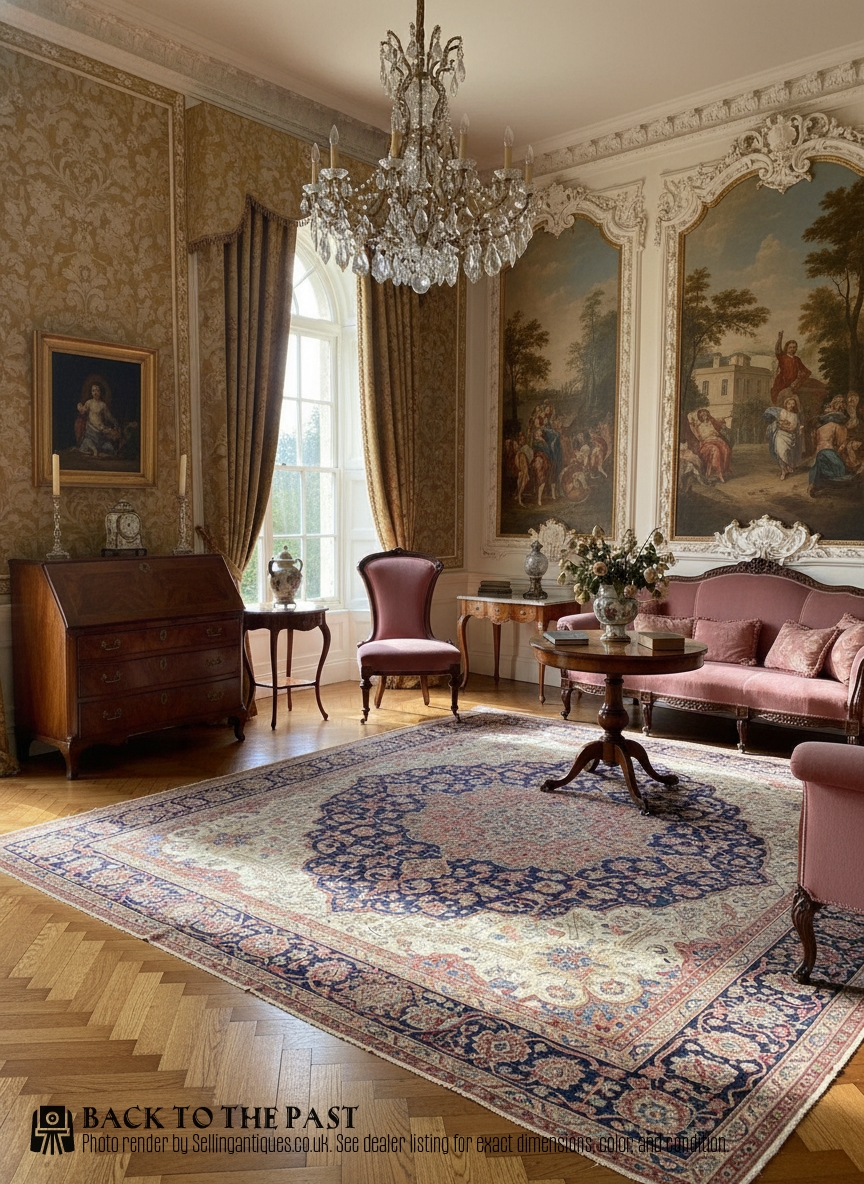
Carved Walnut Slipper Chair
A carved walnut slipper chair sits low to the floor, designed originally for dressing rooms and bedrooms during the nineteenth century. Buyers searching this phrase meet low-seated forms often classified across listings as nursing chairs, ladies chairs, or salon chairs.
The material record shows strong Victorian dominance, with dates spanning from the early nineteenth century through to the Edwardian period and the nineteen-twenties. Walnut frames appear alongside related seating such as side chairs, occasional chairs, and spoon-back armchairs.
Makers and workshops of the period utilised specific timber framing to support upholstered seats covered in velvet, tapestry, and various textile fabrics. These pieces frequently feature exposed carved woodwork around the crest and rails.
Materials and construction methods
Craftsmen shaped solid walnut into curved frames, spoon backs, and scroll terminals using traditional joinery and hand-carving techniques. The timber provides a deep, rich grain that accepts intricate floral and scrollwork detailing along the crest rails.
Upholstery methods involved buttoning, springing, and webbing to secure fabric, velvet, or tapestry over stuffing materials. Brass castors and ceramic components occasionally finish the lower legs, supporting the low profile required for dressing and sitting.
Carved Walnut Slipper Chair Retail Price Guide 2026
Typical asking prices for carved walnut slipper chair among the pieces listed under this phrase on Sellingantiques today, from the lower quarter to the upper quarter. They describe what is for sale here now, not the wider market.
Victorian ladies spent hours perfecting their posture on low chairs designed specifically to prevent crinoline frames from tipping over.
Distinctions in craftsmanship and finish
The crispness of the hand-carved woodwork separates standard production pieces from finer examples with deep relief carving and pierced fretwork. Walnut frames with tight joinery and well-defined grain patterns command closer attention from collectors.
The integrity of the original or period upholstery finish influences the overall character of each piece. Frames retaining intact spoon backs and robust internal webbing demonstrate superior original construction.
R Whytock of Edinburgh·Morison and Co
The Carved Walnut Slipper Chair Glossary
- Spoon back
- A padded chair back shaped like the bowl of a spoon to fit the human spine. This ergonomic form emerged during the Victorian era.
- Nursing chair
- A low-seated chair designed for feeding infants or general dressing room use. These pieces often lack arms to accommodate wide garments.
- Prie-dieu
- A devotional prayer chair featuring a high back and a narrow shelf for kneeling or resting arms. They frequently use walnut frames and tapestry upholstery.
- Fretwork
- Ornamental design created by cutting intricate patterns through thin boards of wood. Victorian makers applied this technique to chair crests.
- Scroll back
- A chair back featuring curved, scroll-like timber terminals at the top corners. This style appears frequently across mid-nineteenth-century seating.
Carved Walnut Slipper Chair: Frequently Asked Questions
What is a carved walnut slipper chair used for?
These low-seated chairs served historically in bedrooms and dressing rooms for putting on shoes or garments. Their compact proportions made them suitable for private chambers rather than formal reception rooms.
Today, buyers place them in bedrooms, hallways, or sitting rooms as accent seating. Their low profile works well in spaces with limited clearance.
Are these chairs comfortable for daily use?
The low seat height and supportive curved backs offer a distinct seating posture suited for relaxing or reading. Many examples feature sprung seats and padded upholstery for added comfort.
Re-upholstered pieces provide modern support while maintaining the historic wooden frame. Buyers often select them for occasional rather than primary lounge seating.
What fabric types appear on these chairs?
Historical upholstery materials recorded in the listings include velvet, tapestry, buttoned textiles, and general decorative fabrics. Buttoning creates a tufted surface that secures the internal padding.
Many listings note modern or period re-upholstery work. Original textiles occasionally survive on pieces preserved from the Victorian and Edwardian eras.