
Louis XVI Cabinet
When you search for a louis xvi cabinet, you encounter refined neoclassical French case furniture built for storage and display.
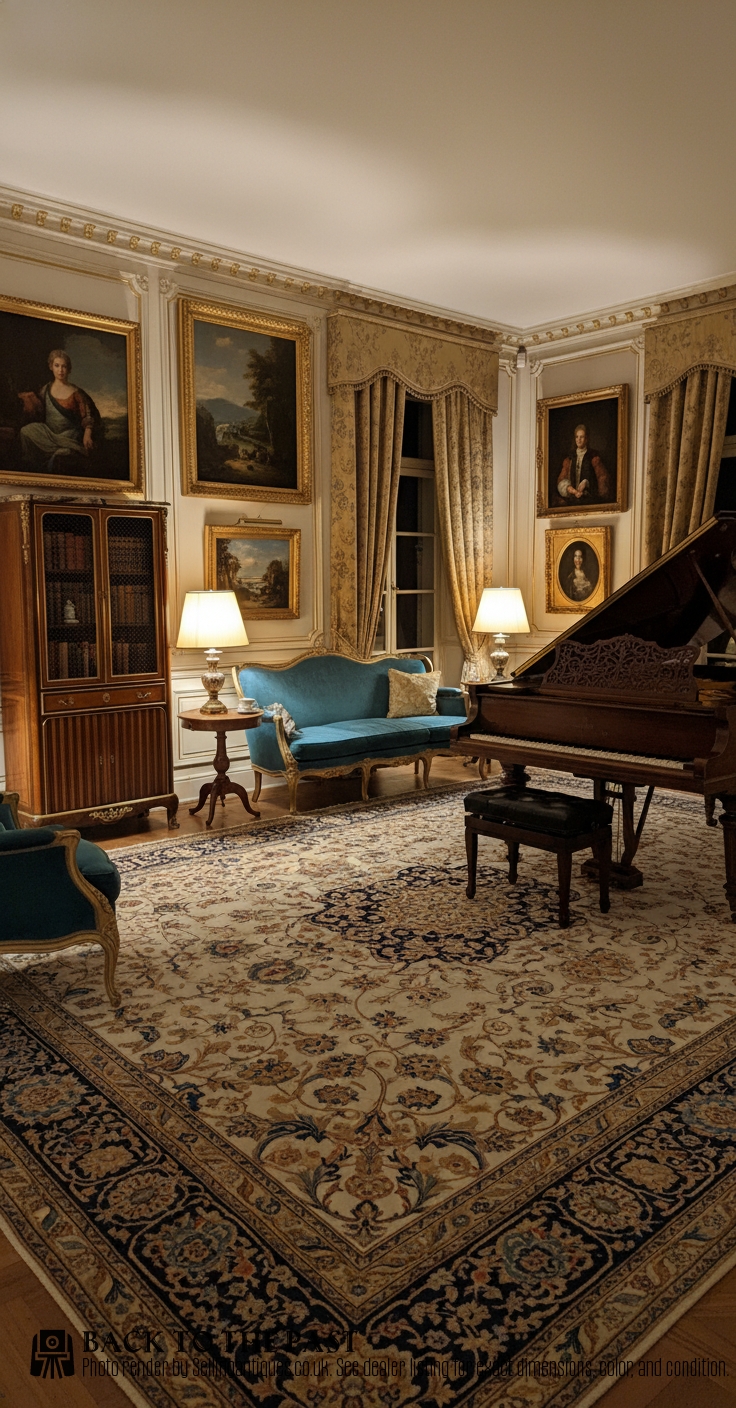
Louis XVI Cabinet
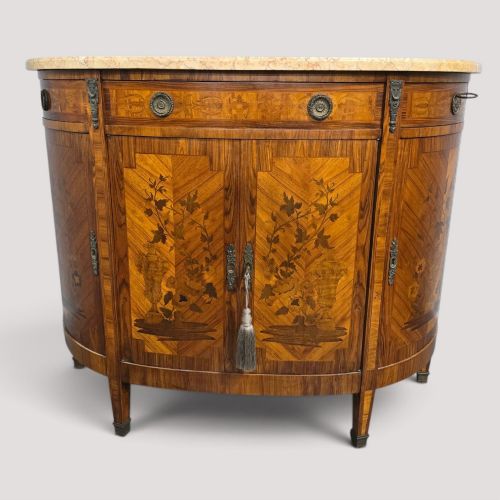
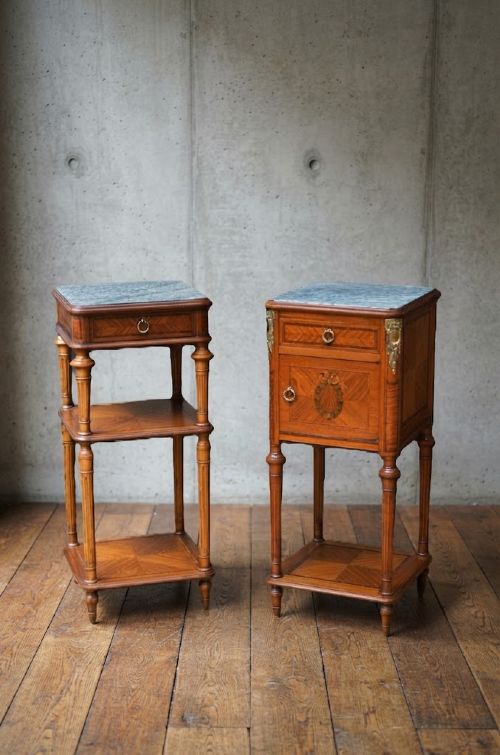
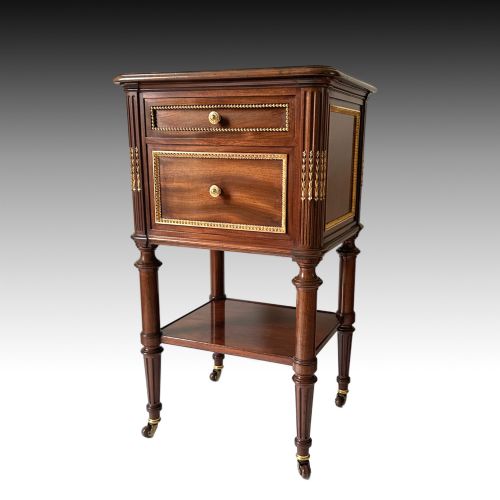
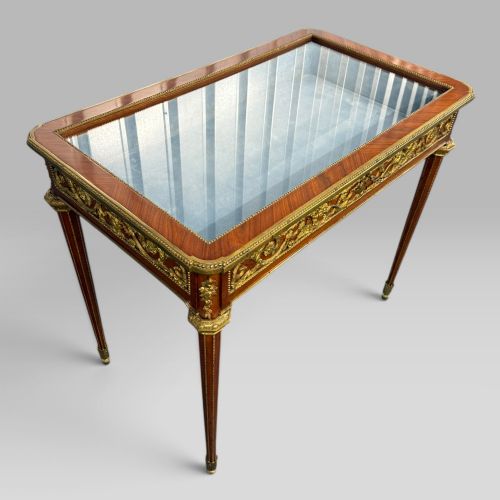
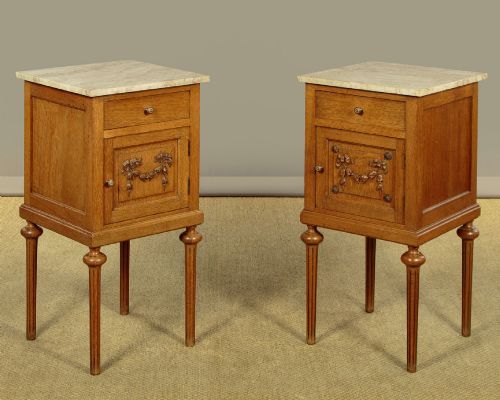
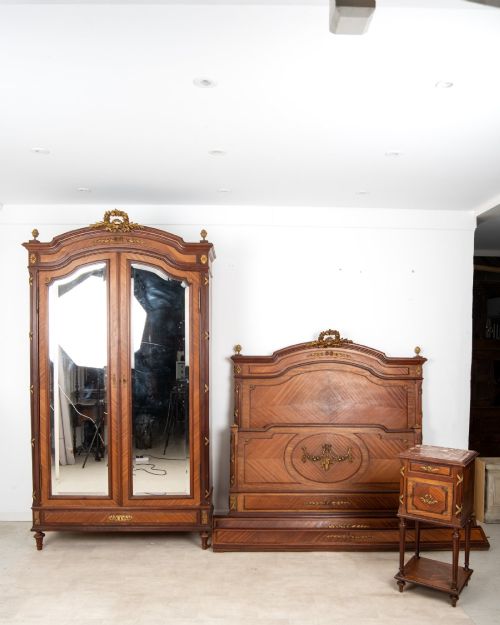
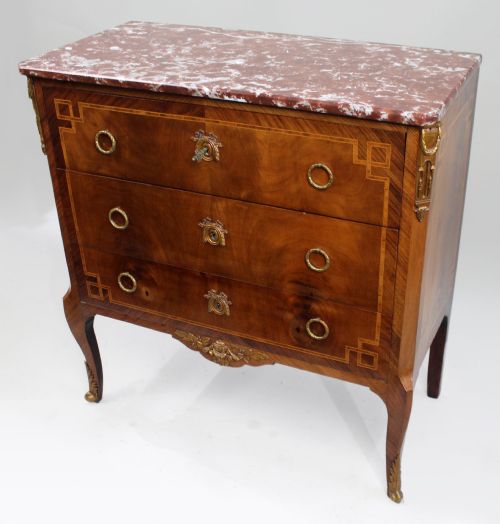
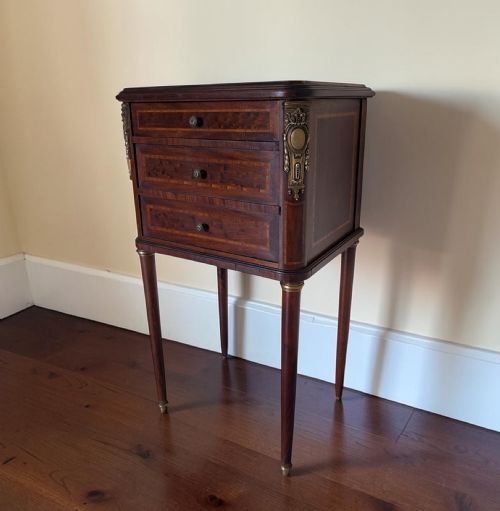
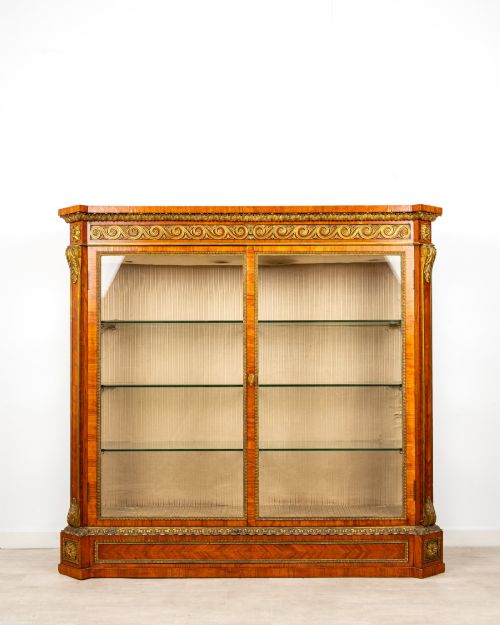
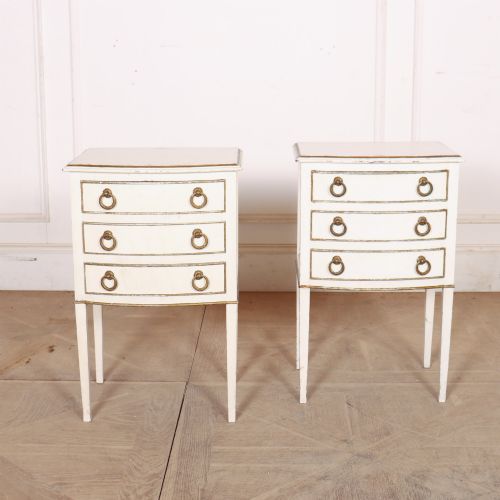
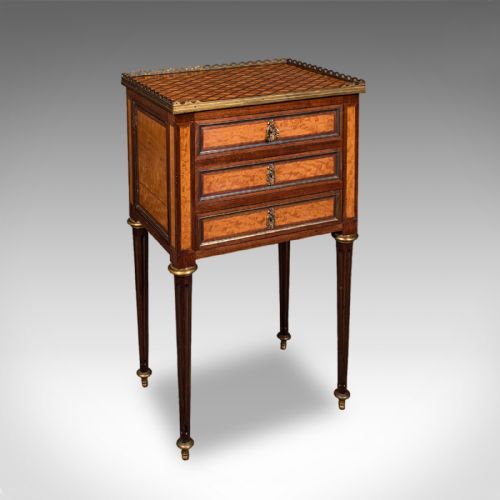
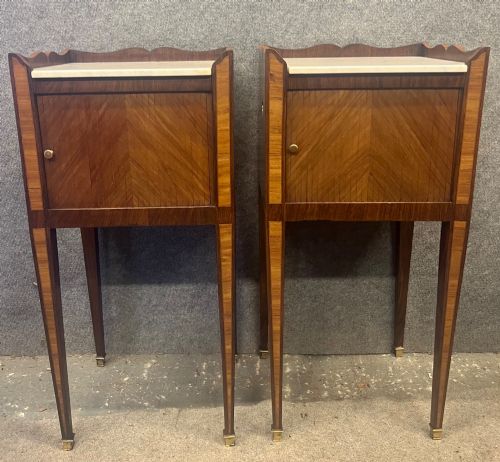
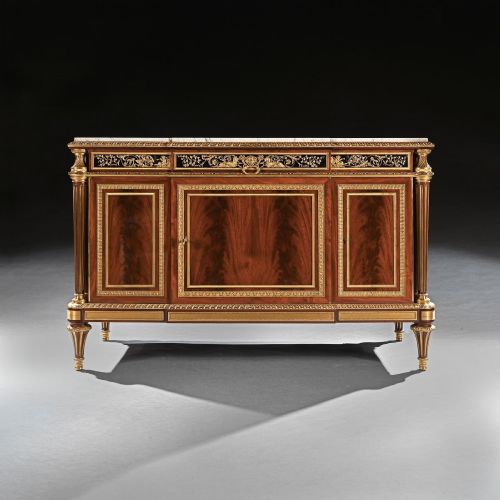
A louis xvi cabinet encompasses various utilitarian and decorative forms, including bedside tables, commodes, display cabinets, and side cabinets designed with classical restraint. Most pieces encountered here date from the nineteenth and early twentieth centuries, reflecting revivals of the eighteenth-century aesthetic.
Makers and workshops produced these forms in matched pairs or individual units, utilising marquetry, parquetry, and fine veneers. The lineage stretches from original eighteenth-century Parisian pieces through to later revival interpretations made across Europe.
Materials and construction
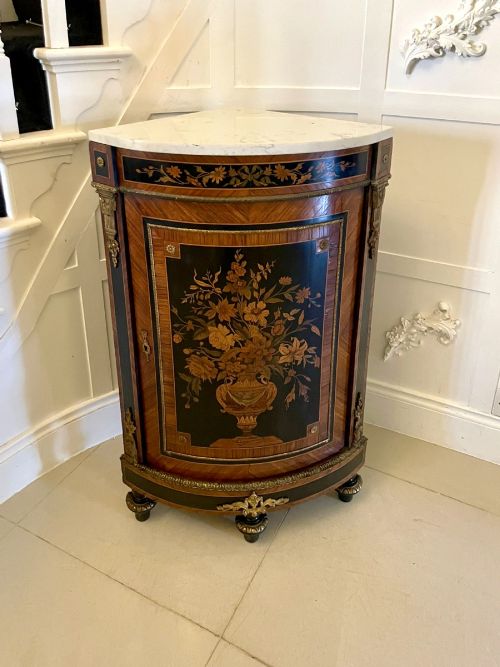
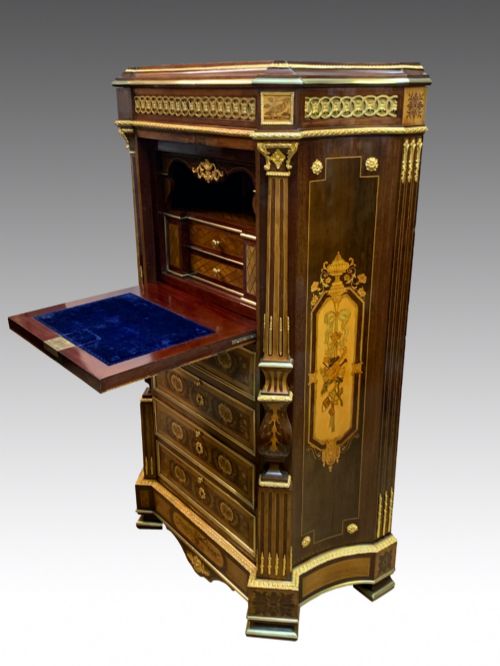
Cabinet makers built carcases from timbers such as mahogany, walnut, satinwood, kingwood, and tulipwood, often applying geometric parquetry or floral marquetry veneers across the surfaces. Tops frequently feature inset slabs of white, rouge, or grey marble.
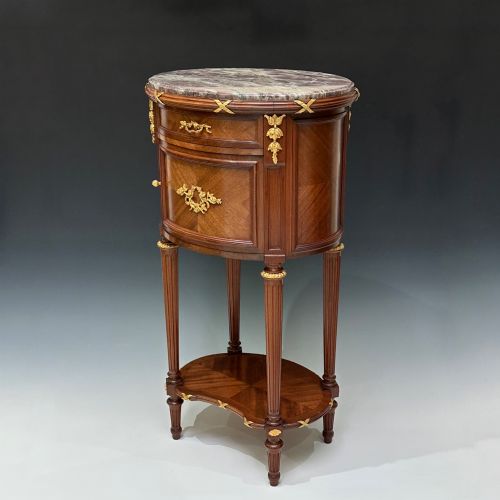
Gilt-bronze and ormolu mounts punctuate the corners, drawer edges, and aprons, providing classical symmetry and structural protection. Brass details and hand-painted porcelain plaques appear on select pieces to enrich the composition.
Some bedside cabinets conceal marble interiors designed to keep nocturnal medicines cool.
Judging the work
Quality rests in the precision of the cabinetmaker's joinery, the crispness of the ormolu casting, and the selection of timber veneers. Superior examples display seamless marquetry patterns that align across drawers and doors without distortion.
The weight and detail of the gilt-bronze mounts differentiate standard production from master workshops. Finer pieces retain original marble tops with clean bevelling and unblemished polished surfaces.
François Linke·Maison Krieger·H. J. Hatfield & Sons·Henry Dasson·Saunier·Blake
The Louis XVI Cabinet Glossary
- Ormolu
- Gilded bronze used for decorative mounts and furniture hardware. It provides a bright metallic contrast against dark hardwoods.
- Marquetry
- Inlaid wood veneers arranged in pictorial or decorative patterns. Artisans cut various coloured timbers to form floral or geometric scenes.
- Parquetry
- Geometric wood inlay forming repeating patterns such as cubes or lozenges. This technique demonstrates the precision of the cabinetmaker.
- Commode
- A low chest of drawers or cabinet with doors, standing on legs. These pieces usually feature a marble top.
- Vitrine
- A glass-fronted display cabinet used for porcelain and small objects. It protects delicate items while offering clear visibility from multiple angles.
Louis XVI Cabinet: Frequently Asked Questions
How do I spot a reproduction?
Examine the interior construction and timber seasoning for signs of modern machinery and synthetic glues. Nineteenth-century revivals display hand-cut dovetails and natural ageing consistent with their stated period.
Check the quality of the ormolu mounts and verify whether the marble top shows genuine patination. True period pieces carry the structural wear of decades of domestic use.
Were these used in bedrooms?
Many examples function as bedside tables, nightstands, and commodes intended for private quarters. Their proportions accommodated chamber items while maintaining decorative elegance.
Larger variants served in salons and reception rooms for displaying porcelain and storing linens.
How do I care for marble tops?
Clean polished marble surfaces using a damp cloth and mild neutral soap, avoiding acidic substances like citrus or vinegar. Wipe spills immediately to prevent staining the porous stone.
Apply a clear protective wax occasionally to maintain the sheen without damaging the natural grain.
What defines the style?
The aesthetic relies on straight lines, symmetry, and classical motifs derived from ancient Rome and Greece. Fluted columns, restrained proportions, and rectangular forms replace exuberant curves.
Ormolu mounts emphasise structural angles rather than overwhelming the underlying timber veneers.