

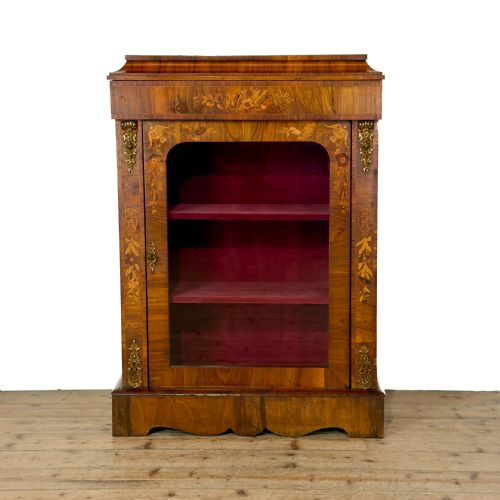


Inlaid Floral Credenza
An inlaid floral credenza brings together rich timbers and precise botanical marquetry to anchor a principal reception room.
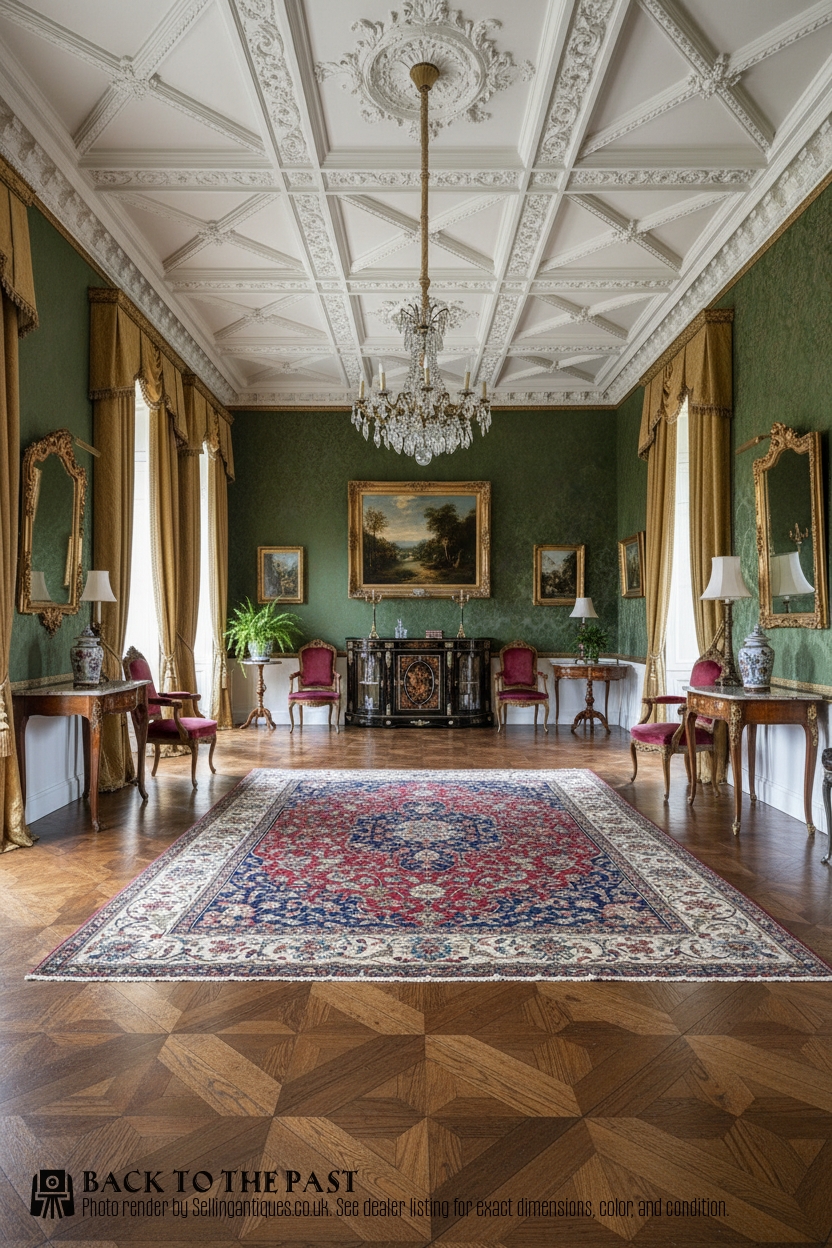
Inlaid Floral Credenza
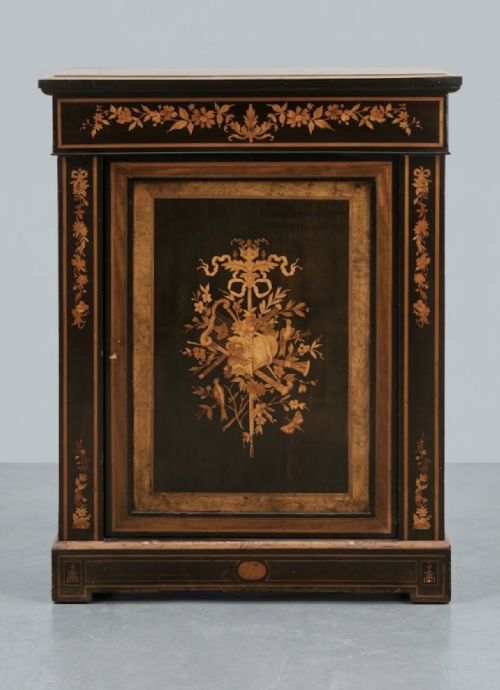
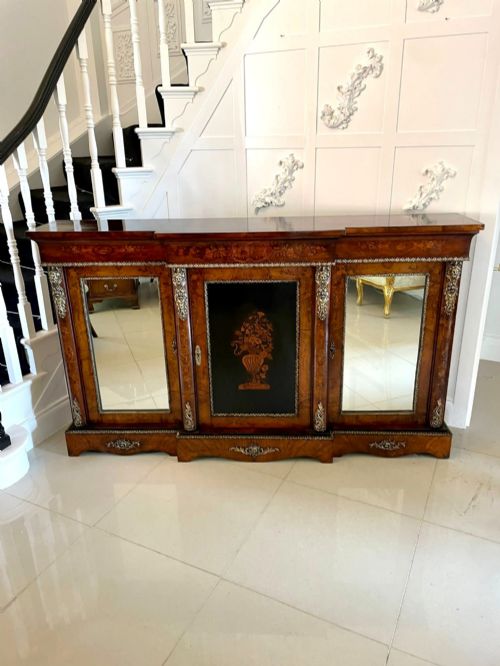
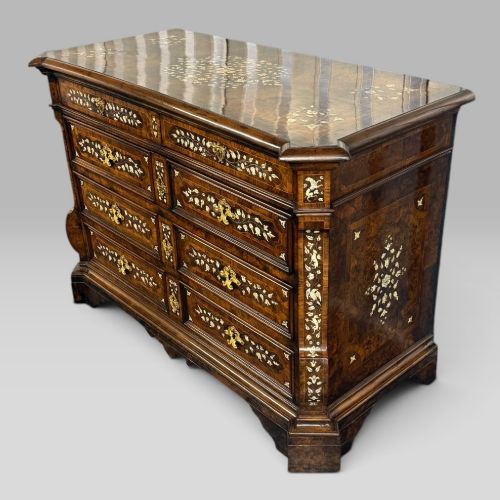
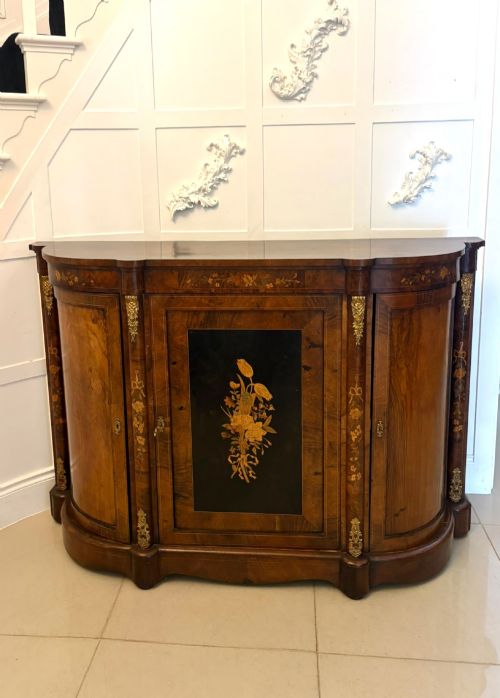
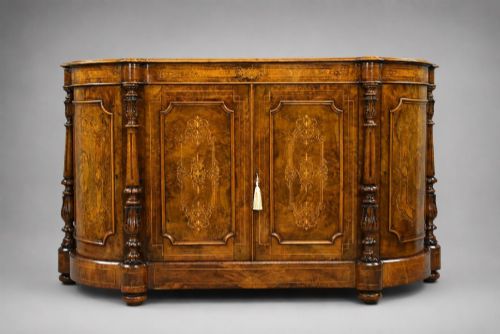
An inlaid floral credenza represents a specialised form of low cabinet developed for formal display and storage during the nineteenth century. The most common version met here is the Victorian burr walnut piece featuring detailed floral marquetry panels across the doors and curved sides.
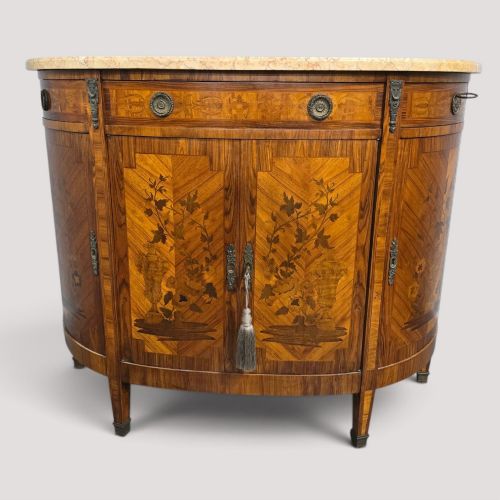
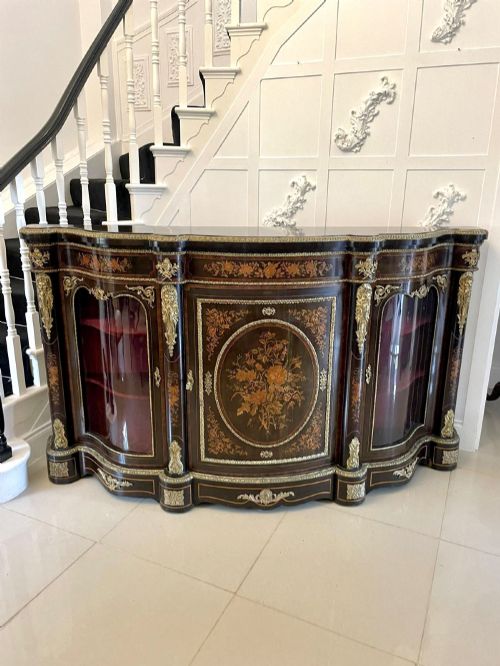
Makers designed these low cabinets with central doors flanked by curved glass display sections or open shelves. Pieces frequently incorporate serpentine fronts and substantial marble tops derived from French taste.
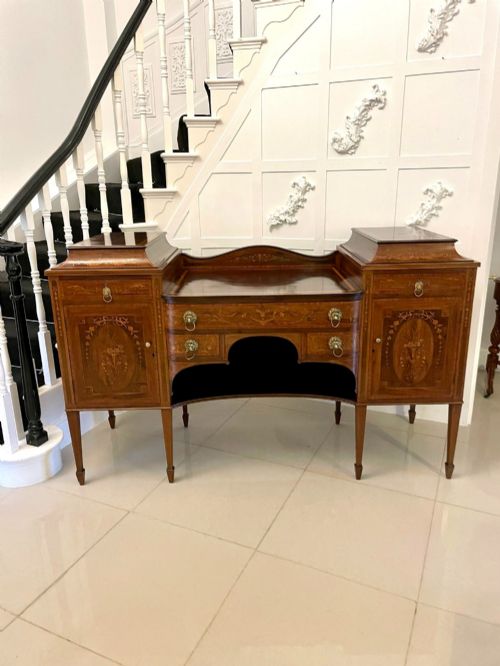
The category overlaps closely with sideboards, pier cabinets, and meubles d'appui sharing the same foundational proportions and decorative vocabulary.
How they were made
Cabinet makers constructed the foundational carcase from native softwoods or hardwoods before applying highly figured veneers such as burr walnut, kingwood, or satinwood. Craftsmen cut contrasting woods by hand to assemble intricate floral marquetry motifs.
Gilders and metalworkers integrated cast ormolu mounts to edge borders, protect corners, and accentuate the structural curves of the cabinet. Polishing involved building up multiple coats to highlight the grain variation of the underlying timber.
Listings span periods from the seventeenth century through the Victorian era, dominated by burr walnut, marquetry, and ormolu mounts.
What varies in quality
The refinement of the marquetry cutter dictates the distinction between standard production and exceptional examples. Superior panels display sharp tonal graduation within the wood types, whereas lesser versions rely on ink staining or superficial engraving.
Structural density and timber selection separate workshop output significantly. Dense burr walnut veneers paired with heavy fire-gilded ormolu mounts indicate superior patronage compared to thinner veneers on simpler carcases.
Hewetsons London·Grand Ducal Workshops
The Inlaid Floral Credenza Glossary
- Marquetry
- The practice of arranging small pieces of veneer into pictorial patterns on a carcase. It differs from inlay by covering the entire surface rather than resting within hollowed-out recesses.
- Ormolu
- Gilded bronze applied as decorative mounts to furniture edges and feet. This material gained widespread favour during the nineteenth century for French-influenced designs.
- Serpentine
- A curved contour featuring a convex centre flanked by concave ends. This profile requires precise woodworking to maintain symmetry across doors and frames.
- Burr Walnut
- Timber harvested from walnut tree growths yielding highly swirling grain patterns. Cabinet makers prized these sections for central door panels.
- Meuble d'appui
- A French term for a sideboard or standing cabinet intended to support decorative objects. These pieces often feature marble tops and glazed side compartments.
Inlaid Floral Credenza: Frequently Asked Questions
What is an inlaid floral credenza?
An inlaid floral credenza is a low nineteenth-century cabinet distinguished by botanical wood veneers and ornamental mounts.
Such furniture served as a focal point for displaying ceramics and bronzes in formal rooms.
Where were credenzas placed?
These cabinets typically stood against principal drawing room walls between windows or beneath large mirrors.
The low profile ensured paintings hung above remained visible.
How do I care for walnut?
Walnut surfaces require stable indoor humidity away from direct sunlight to prevent veneer lifting or fading.
Periodic polishing with traditional wax maintains the natural lustre of the timber.
How to spot Victorian pieces?
Victorian examples frequently utilise burr walnut veneers combined with cast ormolu mounts and serpentine glass doors.
Interior construction often reveals secondary timbers like oak or pine behind the polished exterior.