


Lobed Japanese Porcelain Dish
A lobed japanese porcelain dish brings intricate hand-painted pattern and sculptural form to a table, combining traditional cobalt underglaze with vibrant enamel work.
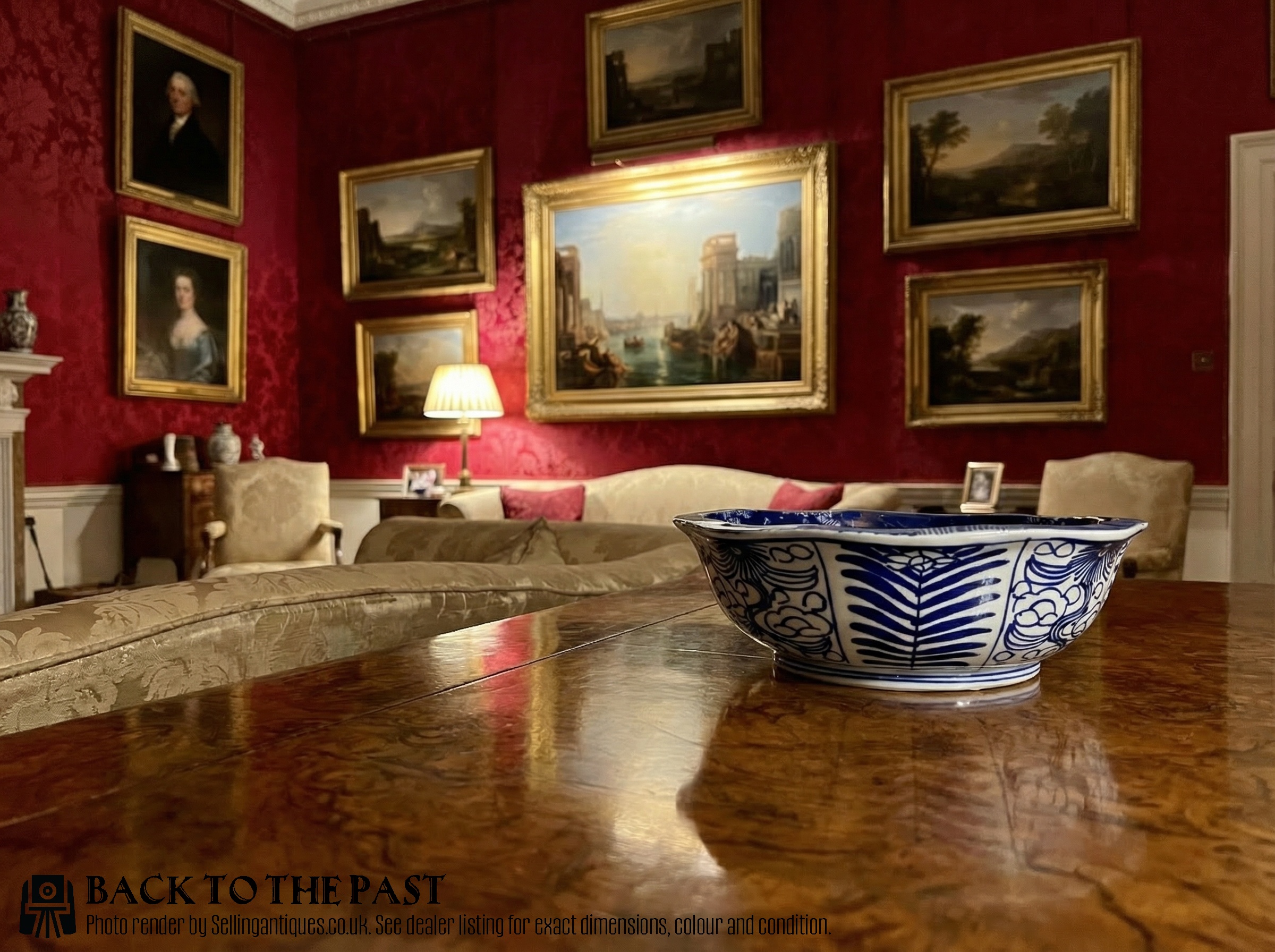
Lobed Japanese Porcelain Dish
When you search for a lobed japanese porcelain dish, you are looking at items shaped with indented rims, frequently seen in forms such as plates, chargers, bowls, and saucers. These pieces span the eighteenth century, the nineteenth century, the Victorian era, and the Meiji and Edo periods.
The version you are most likely to meet on this page is an antique Japanese Imari plate or dish decorated with characteristic blue and white underglaze, often highlighted by enamel and gilt detailing. Pieces range from single decorative dishes to pairs and larger display platters.
Originating from workshops in Japan, these items demonstrate traditional ceramic forms adapted for both domestic use and export. The listings include Satsuma ware alongside standard porcelain creations, showing considerable variety in shape and decorative programme.
How they were made
Potters shaped porcelain and earthenware bodies by hand or on the wheel before applying cobalt underglaze for foundational blue designs. Kiln firing fixed the initial pigment beneath a clear glaze, ensuring durability and depth.
Workers added enamel colours and gold leaf or gilding over the fired glaze, requiring secondary lower-temperature firings to bond the metallic and coloured pigments securely to the surface.
Listings feature items spanning the eighteenth, nineteenth, and twentieth centuries, encompassing both Edo and Meiji periods alongside Victorian era imports.
What varies in quality
The precision of the cobalt underglaze painting dictates the crispness of the underlying design, separating routine production from superior examples. Brushwork control on intricate motifs like cranes or floral themes shows the hand of a more skilled decorator.
The application of enamel and gold leaf varies significantly, with finer pieces retaining dense, well-aligned gilding that integrates harmoniously with the ceramic body. Heavier porcelain weight and more complex moulded lobed contours also distinguish higher-tier items.
The Lobed Japanese Porcelain Dish Glossary
- Imari
- A style of Japanese porcelain featuring a distinct palette of cobalt blue, iron red, and gold. It gained widespread popularity in Europe during the Edo period.
- Edo Period
- A historical division of Japan lasting from seventeen-sixteenth to eighteen-sixty-eight, known for economic growth and distinct arts. Pieces from this era often display refined regional kiln characteristics.
- Meiji Period
- The era in Japanese history spanning from eighteen-sixty-eight to nineteen-twelve, marked by increased international trade. Ceramics from this time combined traditional techniques with expanded export production.
- Cobalt Underglaze
- A blue pigment applied to raw ceramic bodies before glazing and high-temperature firing. This technique protects the colour from wear over centuries of use.
- Satsuma Ware
- A type of earthenware from Japan traditionally featuring a crackled ivory glaze and elaborate polychrome enamel decoration. It frequently incorporates heavy gilt highlights.
Lobed Japanese Porcelain Dish: Frequently Asked Questions
How do I date a dish?
Dating relies on stylistic markers, historical periods such as Edo or Meiji, and the characteristics of the glaze and paste. Comparing the cobalt blue tone and enamel style helps establish the likely era of manufacture.
Examining the base and foot ring also provides clues about production methods and workshop traditions associated with specific centuries.
Can I use them daily?
These antique ceramics are generally intended for display rather than robust daily use. Gentle handling helps preserve the delicate enamel and gold leaf details.
Hand washing with mild soap is recommended to protect the surface decoration from chemical degradation over time.
What does lobed mean?
Lobed refers to a rim or body shaped with rounded projections and indented sections. This technique creates a scalloped or undulating profile rather than a simple circle.
Potters used this moulding style to add sculptural interest and formal structure to plates and bowls.
How do Imari pieces differ?
Imari ceramics are distinguished by their specific colour palette combining underglaze blue, iron red, and gold leaf. This combination creates a rich, patterned surface that fills the entire vessel.
Other Japanese wares, such as Satsuma, rely on crackle glazes and polychrome enamels without the signature cobalt blue underpainting.
Are pairs common?
Pairs and sets do appear among antique Japanese ceramics, though many pieces survive as singles. Matching pairs of plates or bowls reflect original domestic or export groupings.
Sets often show minor variations in hand-painted motifs due to the individual nature of traditional studio work.