
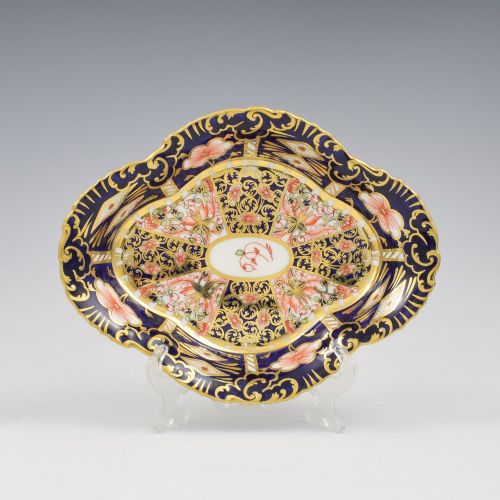
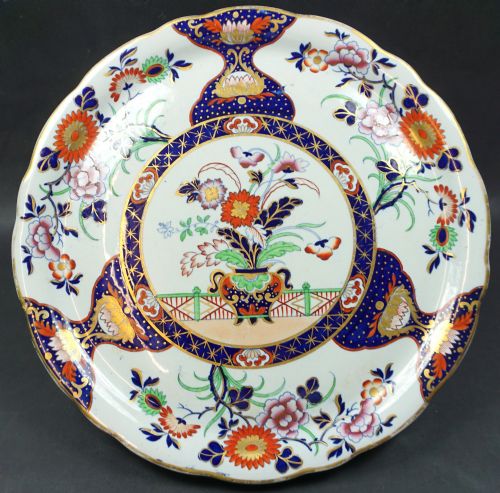


Lobed Imari Porcelain Plate
These lobed imari porcelain plate examples combine traditional Japanese aesthetics with decorative appeal, offering a distinctive addition to any interior scheme.

Lobed Imari Porcelain Plate
A lobed imari porcelain plate brings together distinct panelled designs and scalloped edges that define the Japanese Imari tradition. Buyers searching this phrase encounter plates and dishes originating predominantly from the Meiji and Edo periods, alongside Victorian interpretations.
The items listed on this page span decorative plates, serving dishes, and fruit display platters. Most examples date from around nineteen hundred, while earlier nineteenth century English ceramics also appear in the selection.
Materials and construction
Potters shaped ceramic and porcelain bodies before applying intricate glazes and hand-coloured enamel pigments. Artisans then incorporated gilding and gold leaf highlights to accentuate the characteristic patterns.
The combination of cobalt blue underglaze and iron-red enamel creates the signature palette visible across these ceramic pieces. Firing techniques fixed these colours permanently to the porcelain substrate.
Some nineteenth-century English potters attempted to recreate Japanese patterns so convincingly that even the cheese dishes joined the Imari export aesthetic.
Assessing quality and craftsmanship
Excellence in these ceramics rests upon the precision of the hand-painted enamel work and the crispness of the porcelain moulding. Superior examples display carefully controlled cobalt tones and well-preserved gilding.
Unusual shapes and scalloped forms require greater skill from the potter, distinguishing finer decorative dishes from standard production wares.
The Lobed Imari Porcelain Plate Glossary
- Imari
- A style of Japanese porcelain named after the port from which wares were shipped to Europe, typically characterised by a palette of blue, red and gold.
- Lobe
- A rounded projection or division of a curved edge, giving plates and dishes their characteristic scalloped outline.
- Enamel
- Opaque glass applied to ceramic surfaces as a decorative coating before secondary firing.
- Gilding
- The application of gold leaf or powdered gold to the surface of porcelain to provide metallic ornamentation.
- Glaze
- A vitreous coating fused to ceramic bodies to render them impervious to liquid and give a glossy finish.
Lobed Imari Porcelain Plate: Frequently Asked Questions
What periods do these plates date from?
The selection includes pieces spanning the nineteenth century and the Victorian era, alongside examples from nineteen hundred.
Japanese Edo and Meiji periods represent the primary origins, supplemented by nineteenth-century English interpretations.
How were these plates used originally?
These ceramic items functioned primarily for serving food or displaying fruit within domestic interiors.
Many examples served a purely decorative purpose as display plates rather than daily tableware.
Are these plates suitable for daily use?
Hand-painted enamels and delicate gilding benefit from careful handling and gentle cleaning.
Displaying them on plate stands or wall mounts protects the historic surfaces from wear.