


Lion Mask Wine Cooler
A lion mask wine cooler brings monumental presence to a dining room, combining functional cooling with sculptural cast metal hardware.
Lion Mask Wine Cooler
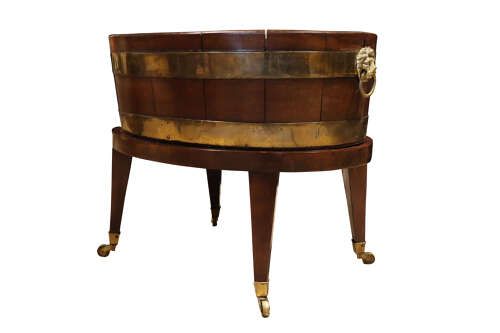
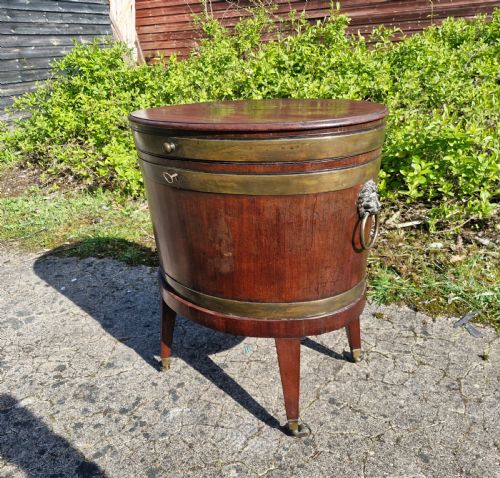
When you search for a lion mask wine cooler, you are looking at substantial vessels designed to chill bottles for the table, spanning Georgian, Regency, Victorian, and Edwardian periods.
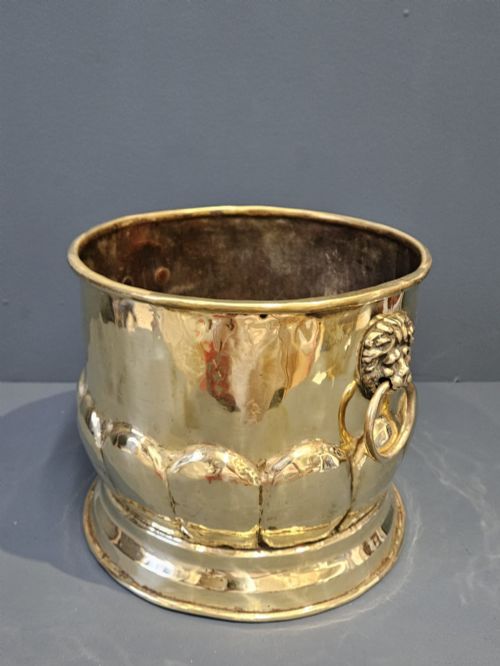
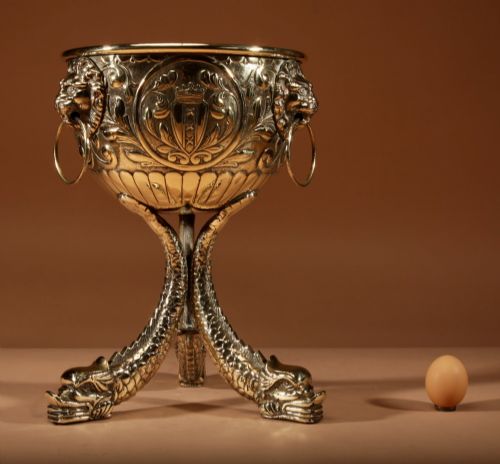
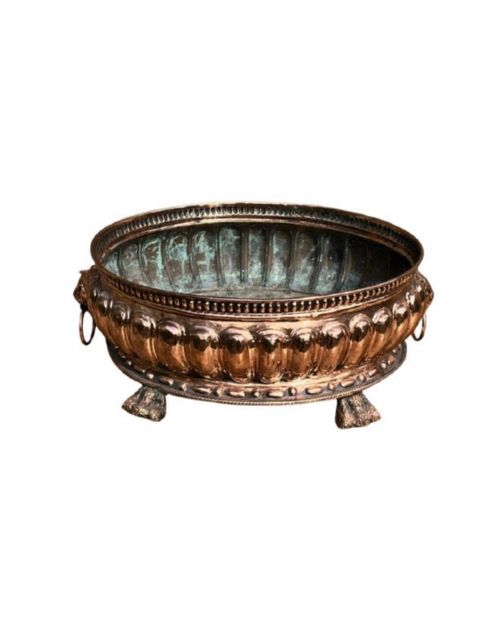
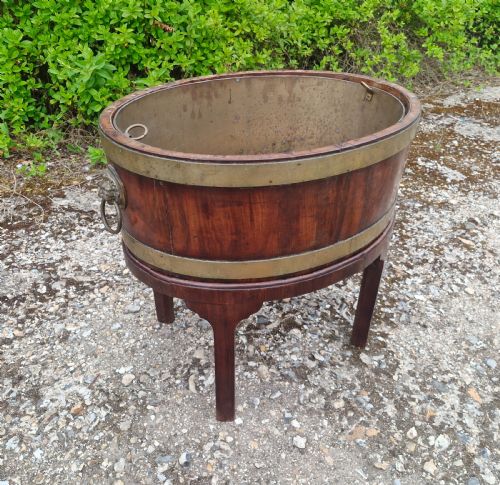
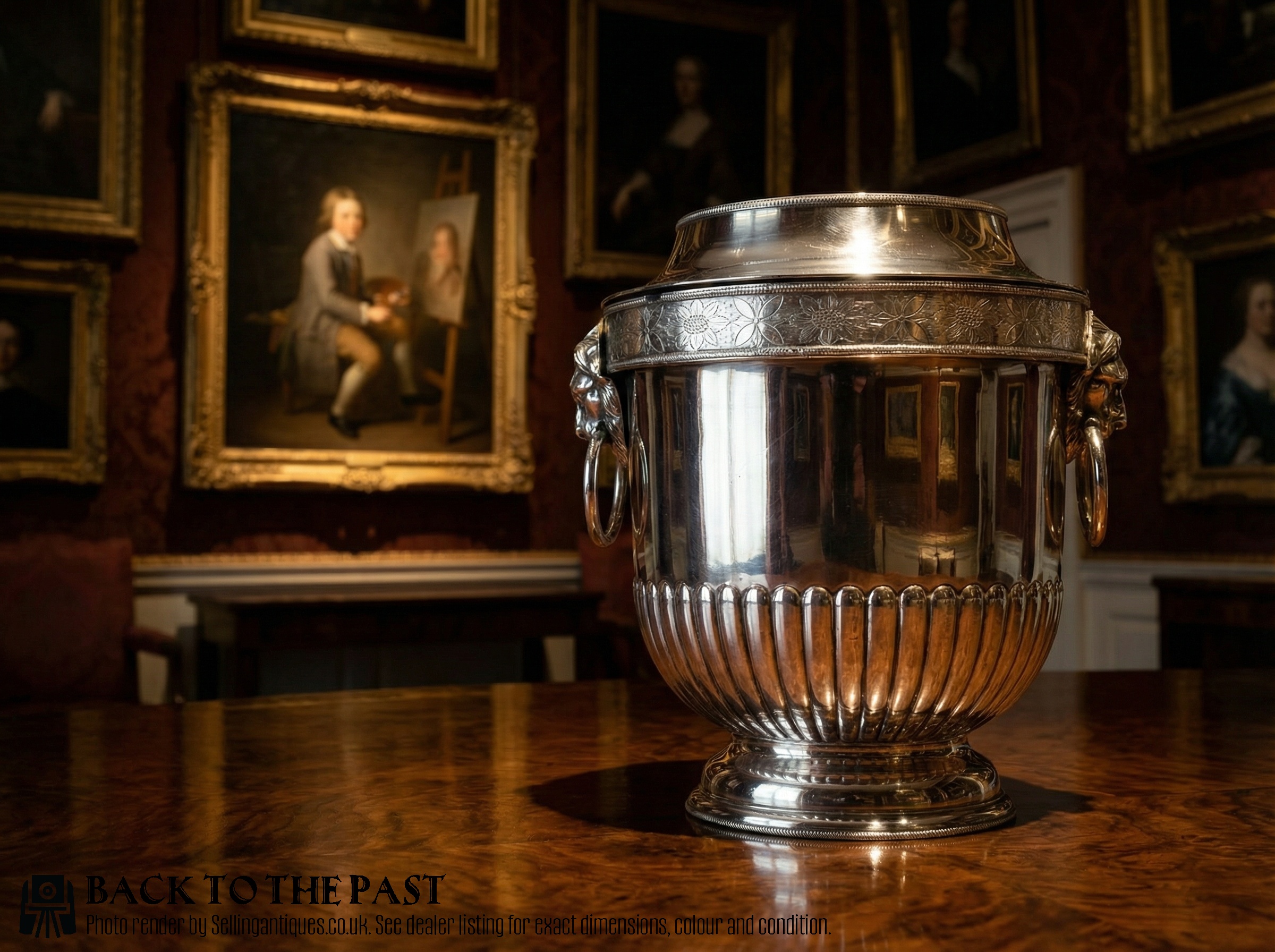
The pieces appearing here include coopered mahogany wine coolers with brass bands, alongside metal jardinières, copper vessels, and silver-plated presentation bowls adorned with animal heads.
Mahogany cellarettes in sarcophagus or oval shapes form a major part of the selection, often accompanied by brass cylindrical planters and repoussé containers.
How they were made
Cabinet makers utilised dense mahogany for wooden cellarettes, employing traditional cooperage techniques with tight staves and secure brass banding.
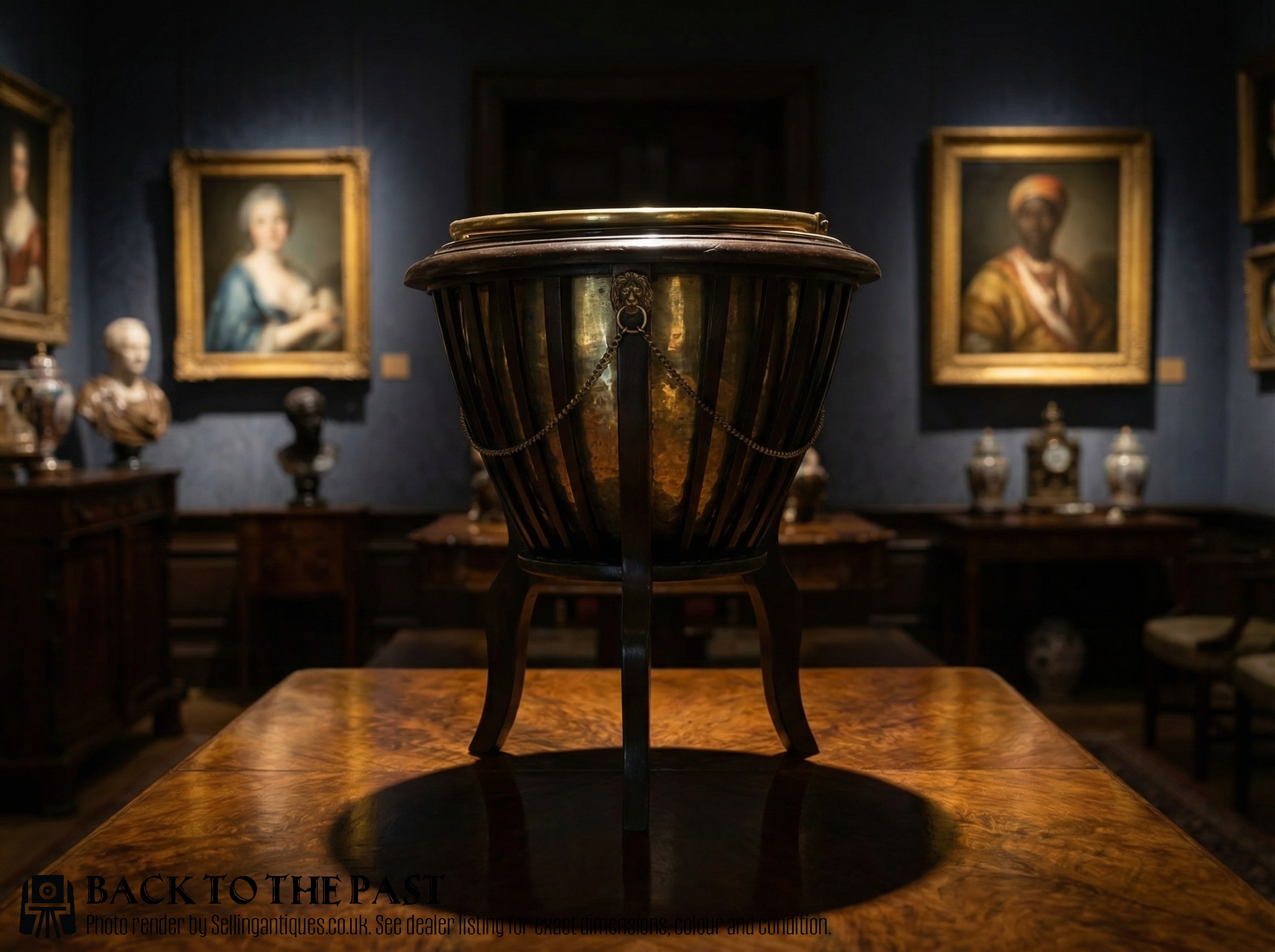
Metal vessels combine beaten brass and copper with cast elements, utilising repoussé work to push decorative animal heads and botanical motifs outward from the sheet.
Cut glass and silver plate introduce reflective surfaces, pairing heavy moulded crystal with gilt bronze mounts or plated metal bodies.
Lion Mask Wine Cooler Retail Price Guide 2026
Typical asking prices for lion mask wine cooler among the pieces listed under this phrase on Sellingantiques today, from the lower quarter to the upper quarter. They describe what is for sale here now, not the wider market.
Several brass planters feature unexpected animal heads peering out from the repoussé work, watching over the dining room.
What varies in quality
The distinction between standard containers and finer specimens lies in the crispness of the metal casting and the depth of the repoussé work on the masks.
In wooden examples, the quality rests on the figure of the mahogany, the tight fit of the coopered staves, and the integrity of the original brass mounts and stands.
The Lion Mask Wine Cooler Glossary
- Cellarette
- A lockable container used for storing wine bottles near the dining table. They frequently appear in mahogany during the Georgian and Regency periods.
- Coopered
- Made from curved wooden staves joined together by metal hoops, much like a traditional barrel. This method ensures the watertight strength of wooden wine coolers.
- Repoussé
- A metalworking technique where the artisan hammers the design from the reverse side to form a raised relief. It defines the detailed animal head motifs on many brass and copper vessels.
- Jardiniere
- An ornamental pot or stand designed to hold plants or flowers. These often share forms with metal wine coolers and presentation bowls.
- Sarcophagus
- A heavy, box-like form with a stepped or domed lid, popular for Regency mahogany cellarettes. The shape provides generous interior space for ice and bottles.
Lion Mask Wine Cooler: Frequently Asked Questions
What is a wine cellarette?
A wine cellarette is a wooden container designed to hold bottles and ice beside the dining table. They were essential pieces of dining room furniture in Georgian and Regency houses.
Many examples feature fitted interiors and secure locks to protect valuable vintages. They often stand on bracket feet or dedicated mahogany stands.
How were these coolers used?
These vessels held ice and water to chill wine and champagne before and during meals. The metal linings protected the surrounding wooden furniture from moisture.
Over time, many wooden and metal vessels transitioned from dining room coolers into decorative planters and jardinières for the home.
How do I date a mahogany cooler?
Dating relies on the joinery, timber grain, and hardware style. Georgian and Regency pieces typically show dense mahogany with hand-cut dovetails and heavy cast brass mounts.
Later Victorian and Edwardian interpretations often adopt revival styles, reflecting George III or Regency forms with machine-finished components.
Are these pieces waterproof?
Original metal liners and copper bodies held water and ice for chilling wine during dinner service. Wooden coopered examples relied on tight staves and fitted metal interiors.
When using antique examples today, checking the internal lining prevents moisture from reaching the historic timber or damaging modern surfaces.