


Leather Coffee Table Ottoman
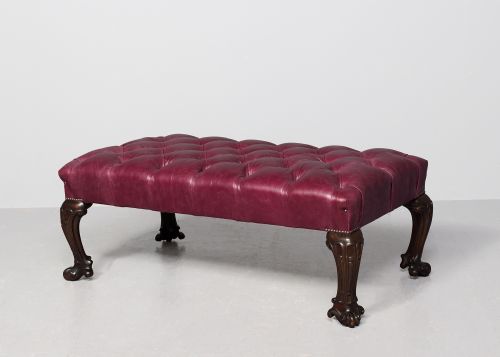
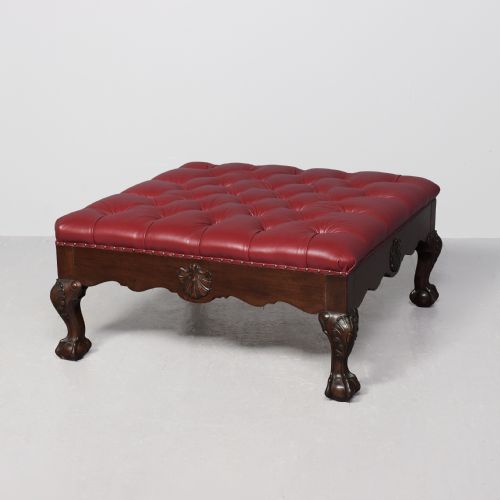
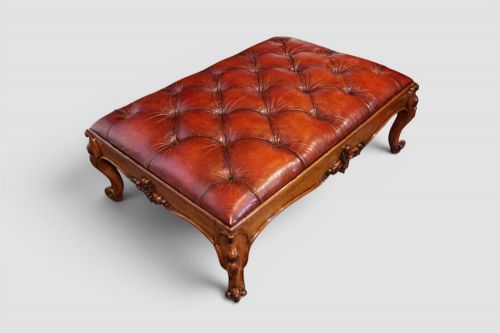
A leather coffee table ottoman brings a rich hide surface and low profile to a room, offering a sturdy place to rest feet or a tray.
Leather Coffee Table Ottoman
When you search for a leather coffee table ottoman, you encounter large footstools and centre stools adapted from nineteenth-century seating. These pieces combine a solid wood frame with a padded top covered in hide, serving double duty as low tables and seating.
The versions most common on this page date from the Victorian era and the late nineteenth century, alongside revival styles. They appear in generous proportions, often with buttoned upholstery and hand-dyed finishes.
Makers of the period drew on Georgian and Regency design traditions, producing substantial oak, walnut, and mahogany frames. These low stools suit contemporary drawing rooms where a tactile surface is preferred over polished wood.
How they were made
Cabinetmakers built the structural frames from dense hardwoods like mahogany, walnut, oak, and hardwood, often shaping the legs in revival styles. Frames were joined securely to bear the weight of feet or seated guests.
Upholsterers applied deep buttoning through the hide, securing the leather to internal stuffing with traditional tacking methods. The red, burgundy, and hand-dyed hides were stretched over generous padding to create a firm yet resilient surface.
Listings feature pieces spanning the Victorian era, Regency period, and late nineteenth century, constructed from mahogany, walnut, oak, and hardwood.
What varies in quality
The distinction between standard examples and the finest pieces lies in the substance of the timber frame and the depth of the buttoning. Superior items utilise heavy mahogany or walnut with substantial proportions and crisp period detailing.
The leather itself dictates much of the character, with hand-dyed hides showing a depth of colour that machine-finished alternatives lack. Tight, even buttoning and robust frame construction indicate a workshop of higher capability.
The Leather Coffee Table Ottoman Glossary
- Buttoned
- Upholstery pulled into depressions by twine secured with buttons, creating a geometric pattern of folds. This technique keeps the internal stuffing firmly in place over decades of use.
- Hide
- The natural skin of cattle used for upholstery, valued for durability and the way it develops a rich patina. Antique versions are frequently hand-dyed.
- Centre stool
- A large, freestanding low seat designed to sit in the middle of a room rather than against a wall. They function well as stable surfaces for trays and books.
- Regency
- A design period spanning the early nineteenth century characterised by classical restraint and neoclassical motifs. Pieces from this era often display clean structural lines.
Leather Coffee Table Ottoman: Frequently Asked Questions
Can I use an ottoman as a coffee table?
These upholstered stools make practical coffee tables when paired with a stable tray for drinks and books. Their padded surface adds a softer texture to a room than traditional wooden tables.
The firm buttoned tops found on these period pieces provide enough support to hold everyday living room items securely without sagging.
How do I clean antique leather?
Antique leather requires gentle cleaning with a damp cloth and specialised leather balms to maintain its flexibility. Avoid modern chemical detergents that strip the original hand-dyed finish.
Nourishing the hide periodically prevents cracking while preserving the natural patina developed over the nineteenth century.
What is a centre stool?
A centre stool is a substantial piece designed to stand away from walls in the middle of a drawing room. They provide flexible seating and surface space in open interior layouts.
Victorian country houses utilised these large stools for both resting feet and accommodating extra guests during gatherings.
How do I identify a Victorian ottoman?
Victorian ottomans typically feature dense timber frames made from mahogany, walnut, or oak, combined with deep buttoned upholstery. Construction methods involve traditional hand-tacking and sturdy joinery characteristic of the nineteenth century.
Stylistic cues often reference earlier Georgian or Regency taste, interpreted through the heavier proportions favoured by Victorian makers.