

Late Victorian Table Lamps
Late victorian table lamps bring substantial brass and glass character to a room, offering period illumination rooted in nineteenth-century craftsmanship.
Late Victorian Table Lamps
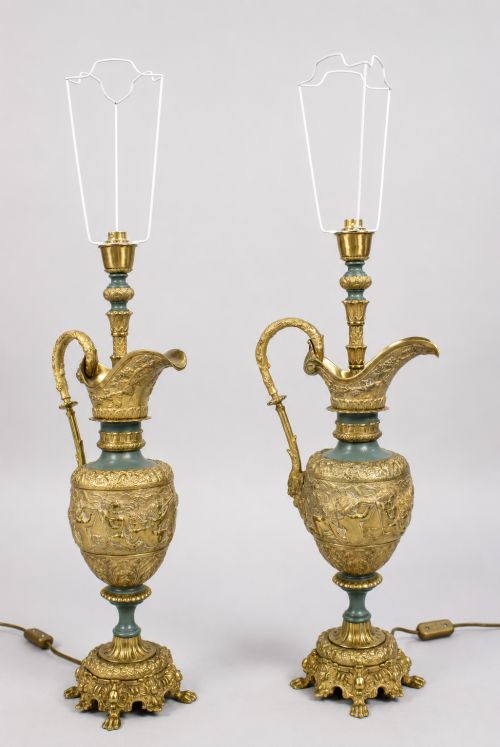
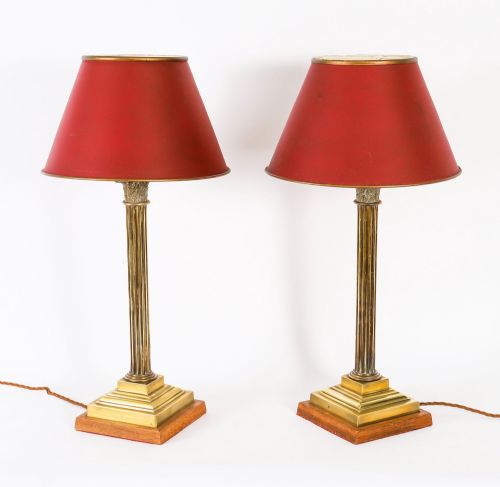
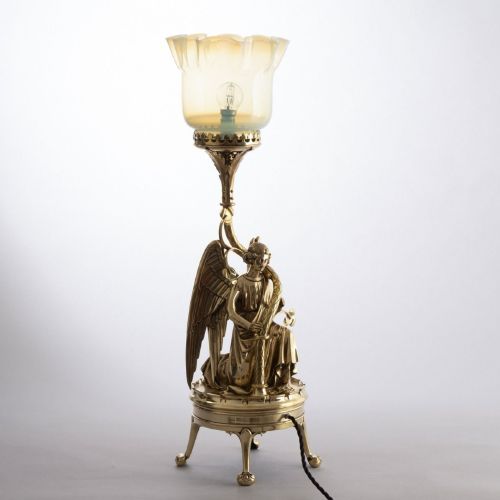
Brass examples dominate this category, frequently paired with ceramic bodies, marble bases, or vaseline glass shades. The selection reflects the distinct decorative movements of the era, ranging from simple reeded columns to ornate gothic designs.
Buyers encounter both single lamps and matching pairs originating around eighteen-eighty to nineteen-hundred. These items bridge the gap between functional household objects and period decorative art.
Materials and construction methods
Brass forms the primary structural material for these lighting pieces, often combined with cast metals, marble, and glass elements. Artisans utilised heavy metal casting to create stable bases for columns, ewers, and adjustable desk fittings.
Glass components, including vaseline glass and patterned oil fonts, introduce distinct colour and texture to the designs. Metalwork techniques of the period involved precise turning, reeding, and column construction to achieve classical proportions.
Late Victorian Table Lamps Retail Price Guide 2026
Typical asking prices for late victorian table lamps among the pieces listed under this phrase on Sellingantiques today, from the lower quarter to the upper quarter. They describe what is for sale here now, not the wider market.
Some nineteenth-century desk lamps feature adjustable brass arms designed originally to keep paperwork illuminated during foggy London evenings.
Factors of quality and execution
The weight and gauge of the brass separate superior examples from lighter production pieces. Heavier castings provide stability and allow for crisper surface detailing on Corinthian capitals and fluted columns.
The integration of secondary materials such as marble plinths, painted ceramic sections, and coloured glass shades defines the tier of execution. Original mounts and intact patination elevate the visual cohesion of the object.
James Shoolbred
The Late Victorian Table Lamps Glossary
- Corinthian column
- A classical column style featuring an ornate capital decorated with acanthus leaves, frequently adopted for nineteenth-century metal lamp standards.
- Vaseline glass
- A type of glass containing uranium dioxide that glows under ultraviolet light, known for its distinctive yellow-green hue seen in Victorian lighting.
- Ewer
- A jug-shaped vessel with a wide spout and handle, adapted in late nineteenth-century metalwork to serve as a decorative lamp body.
- Reeded column
- A architectural decorative motif consisting of parallel convex mouldings running vertically along the shaft of a lamp base.
- Oil lamp
- A lighting device designed to burn liquid fuel through a wick before many examples underwent later conversion to electricity.
Late Victorian Table Lamps: Frequently Asked Questions
What materials make up late victorian table lamps?
These lamps primarily utilise cast brass, often combined with marble bases, ceramic bodies, and coloured glass elements.
Secondary materials such as painted pine and various metals also appear across the surviving nineteenth-century examples.
Were these lamps originally electric?
Many surviving examples began as oil lamps or fluid-burning desk lights before undergoing conversion to electricity in later decades.
Original wiring is rarely intact, meaning modern electrical safety updates are standard practice for contemporary use.
How do you identify this period?
Identification relies on stylistic markers from the Victorian era, including classical architectural motifs, heavy brass casting, and aesthetic movement influences.
Construction details and material combinations characteristic of the late nineteenth century help confirm the timeframe.
Are pairs common in these lamps?
Matching pairs frequently appear in surviving archives and current selections, particularly in brass column and desk lamp configurations.
Single lamps also exist, representing individual pieces from larger domestic interior settings.