
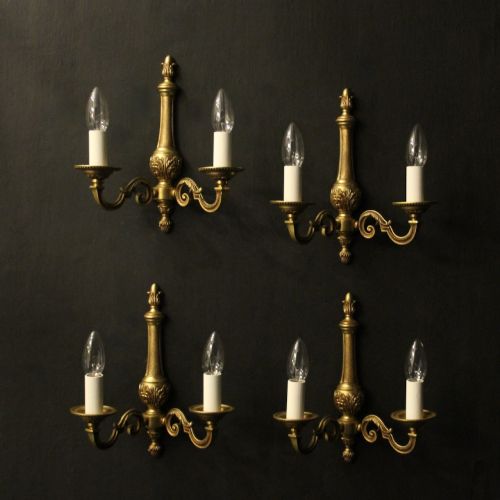
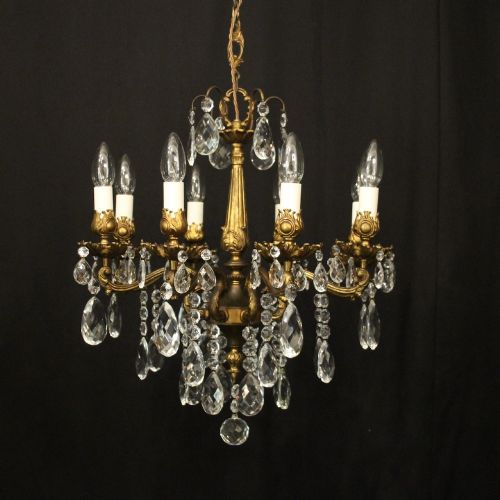
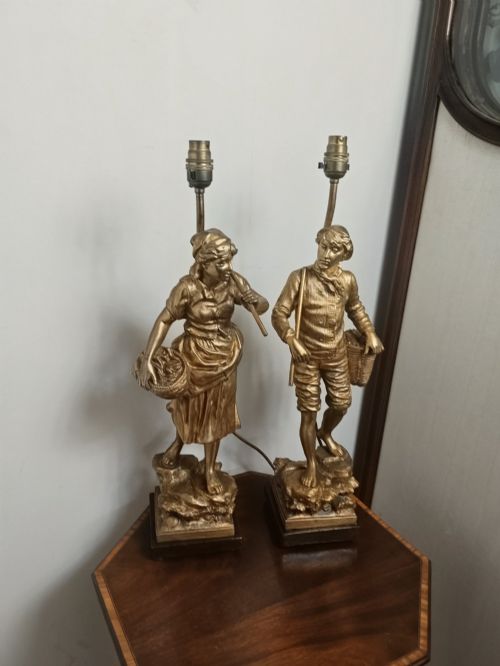
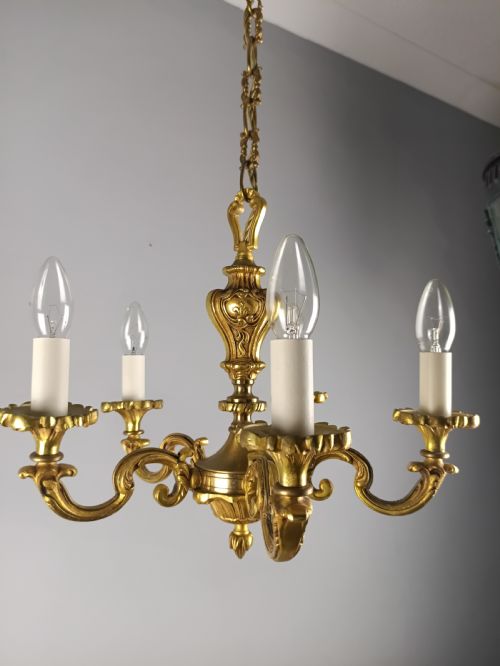
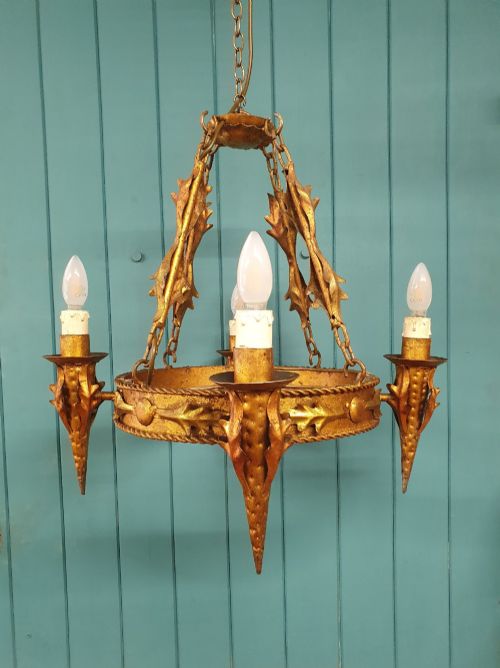

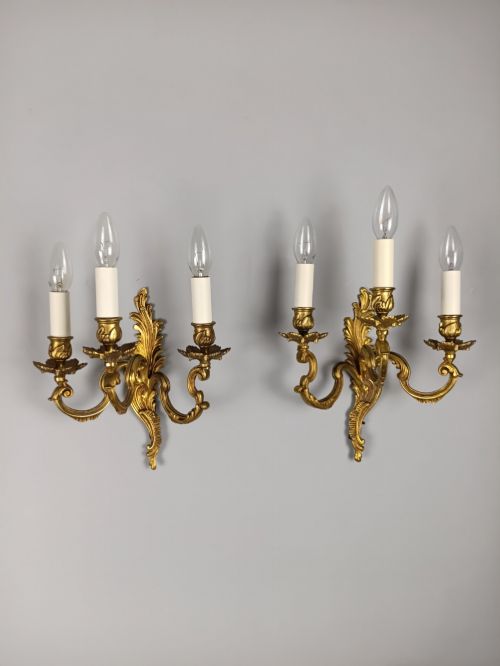
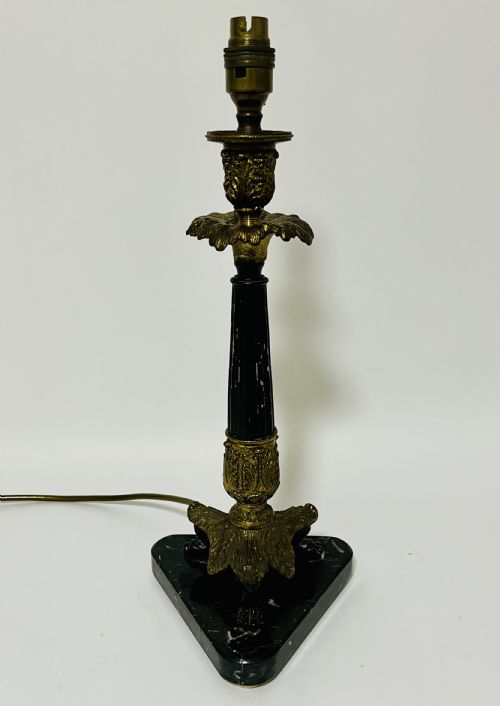
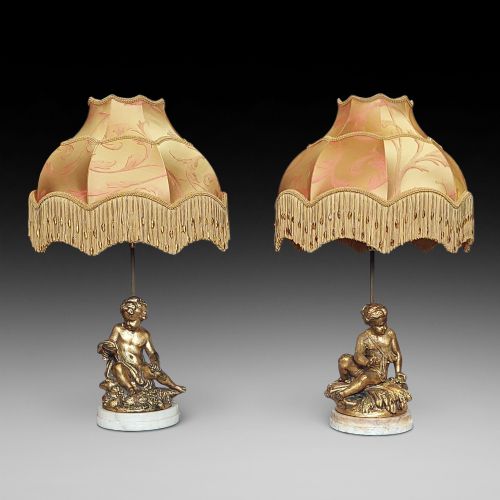


Gilt Metal Lamps
These gilt metal lamps combine luminous metalwork with decorative stone, crystal, and ceramic elements to illuminate period interiors.
Gilt Metal Lamps
These pieces encompass table lamps, standard lamps, and converted candelabra that utilise gilded finishes over various base metals. When searching for gilt metal lamps, a buyer encounters domestic lighting fixtures originating predominantly from the nineteenth and early twentieth centuries, often carrying French or Italian stylistic influences.
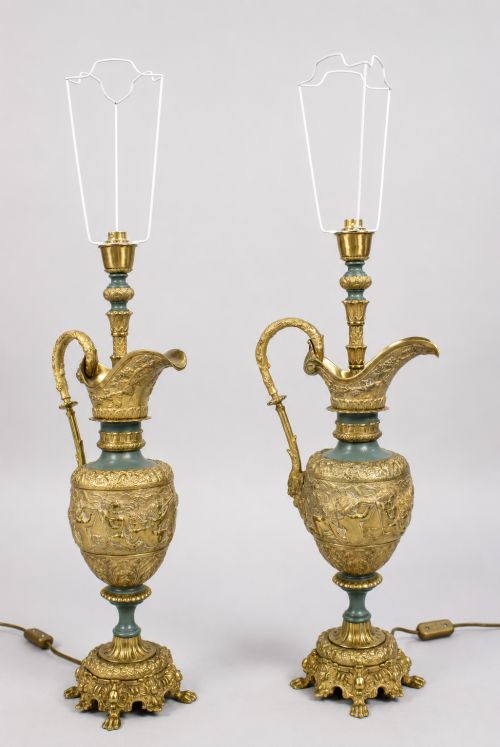
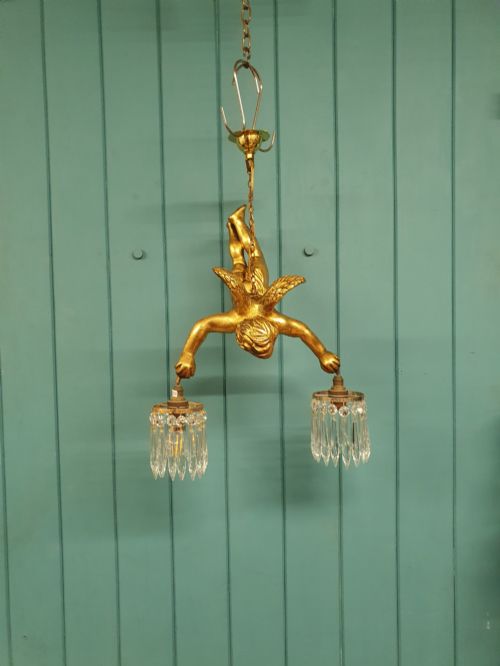
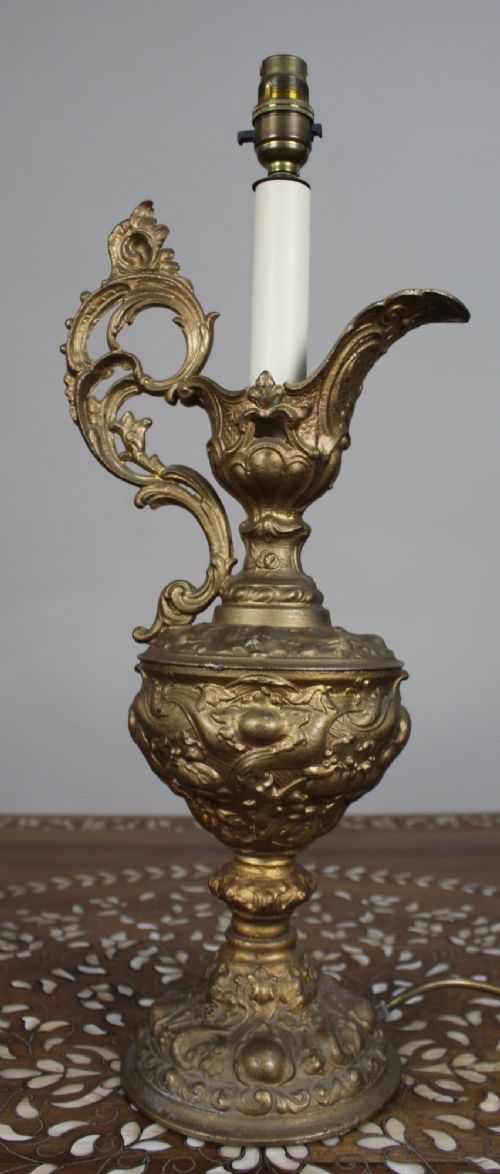
The selection frequently includes structural forms shaped as classical ewers, columns, or figural supports incorporating cherubs alongside marble, onyx, or alabaster mounts. Many surviving examples pair the metallic stands with fabric shades or crystal lustres.
Dated pieces span the Victorian, Edwardian, and early twentieth-century decades, reflecting styles from French Empire and Rococo Revival to Art Nouveau. Table lamps and matched pairs appear regularly alongside larger floor-standing formats.
Materials and construction
The manufacturing process relies on cast bronze, brass, spelter, or standard gilt metal combined with applied chemical or leaf gilding. Ormolu and fire-gilded bronze frequently appear on higher-status items from earlier decades, while later production incorporates simpler plated brass or painted metal components.
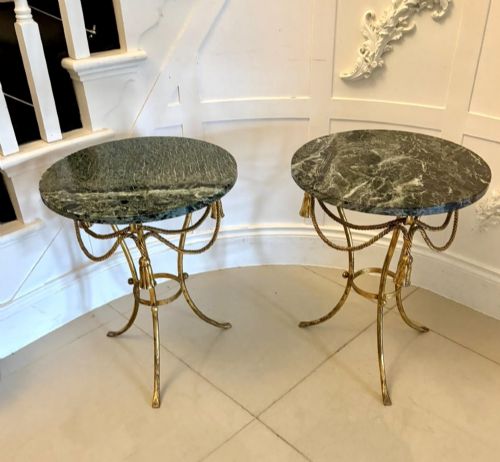
Structural bases often integrate contrasting natural materials such as green marble, onyx, alabaster, and ceramic elements. Crystal drops, glass beads, and cut glass spikes are frequently suspended from the metal arms and shades.
Several lamps feature cheerful flying cherubs keeping permanent watch over the living room.
Distinctions in craftsmanship
Quality separates through the crispness of the metal casting and the depth of the chased detail on figures and foliate mounts. Sharp definition in cast cherubs, acanthus leaves, and floral motifs indicates superior workshop execution compared to softer, more rounded cast forms.
The selection of base materials also divides the range, with solid bronze, heavy ormolu, and genuine carved marble outlasting lighter spelter frames and plated substitutes. The integrity of the original gilt surface and the weight of the overall assembly dictate the standard of the piece.
Mappin & Webb·E Rousseau·Bradley & Hubbard
The Gilt Metal Lamps Glossary
- Ormolu
- Gilded bronze produced through a mercury amalgamation process, yielding a deep, durable golden finish characteristic of nineteenth-century French pieces. This technique created rich decorative surfaces on fine mounts and lamp bases.
- Spelter
- A zinc alloy used as a less expensive alternative to bronze for casting figures and decorative lamp components. It frequently received a gilt or painted surface treatment.
- Ewer
- A large jug with a wide spout, which makers frequently adapted into the central upright body of nineteenth-century table lamps. These classical vase forms often rest on marble or onyx plinths.
- Lustre
- A cut glass pendant or prism hung from lighting fixtures to refract light from the bulbs or candles. Pairs of these drops add visual sparkle to the upper sections of the lamp.
- Toleware
- Painted or lacquered sheet metal, often decorated with floral motifs and utilised in shades and body components of period lamps. It provides coloured contrast against the surrounding gilt metal mounts.
Gilt Metal Lamps: Frequently Asked Questions
How do I wire antique lamps?
Most period lamps require rewiring to meet modern electrical safety standards before daily domestic use. A qualified electrician can thread modern flex through the existing central channels without altering the outer metal structure.
Retaining the original switch mechanism or housing is often possible while updating the internal wiring and plug. This preserves the historical integrity of the piece whilst ensuring safe operation in a modern home.
Are these lamps converted from candles?
Many nineteenth-century examples began life as oil lamps, candelabra, or candlesticks before undergoing subsequent conversion to electricity. These adaptations often occurred decades after manufacture to accommodate changing domestic lighting technology.
Traces of burner mechanisms or candle pans frequently remain visible beneath the current bulb fittings. Such conversions are standard for antique lighting and do not diminish the decorative appeal.
How do I clean gilt metal?
Gentle dusting with a dry, soft microfibre cloth is the safest method for removing everyday particle accumulation. Moisture and chemical polishes should be avoided because they strip fragile historical gilding from the base metal.
Marble and onyx sections can be wiped with a slightly damp cloth before immediate drying. Care must be taken around fragile crystal lustres and painted toleware components.
How do I date these pieces?
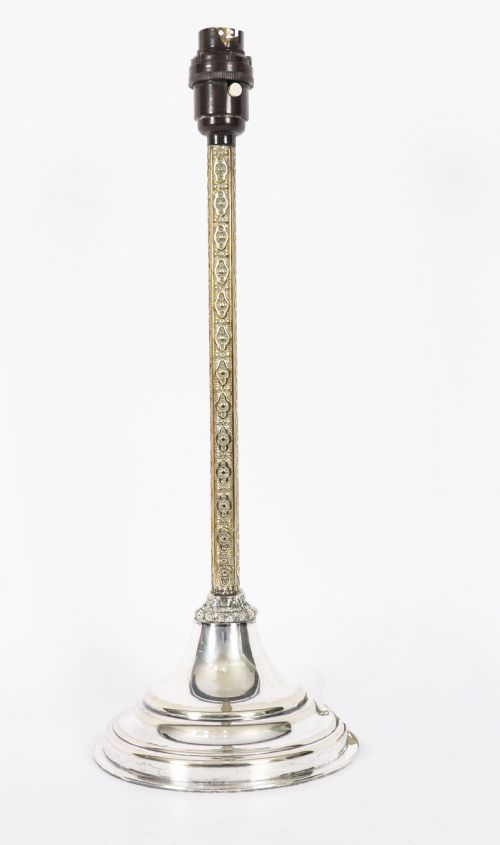
Dating relies on stylistic clues, casting techniques, and the materials combined within the structure. Nineteenth-century models often feature heavy chased bronze and natural stone bases, while 1920s examples introduce lighter brass and distinct architectural lines.
Maker marks, registration numbers stamped into the metal, and the style of internal wiring channels provide further chronological markers. Comparing the decorative motifs to known period styles helps narrow the manufacturing decade.