


Cream Fringe Lampshades
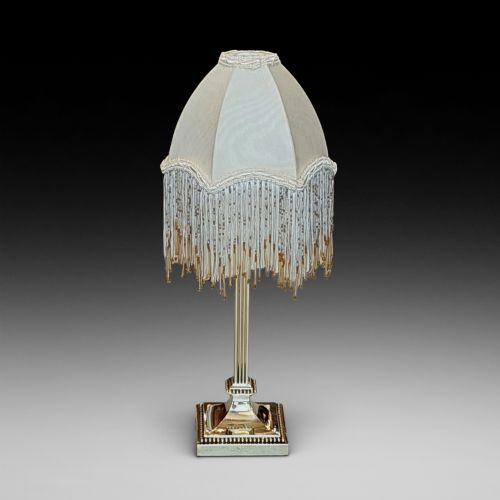
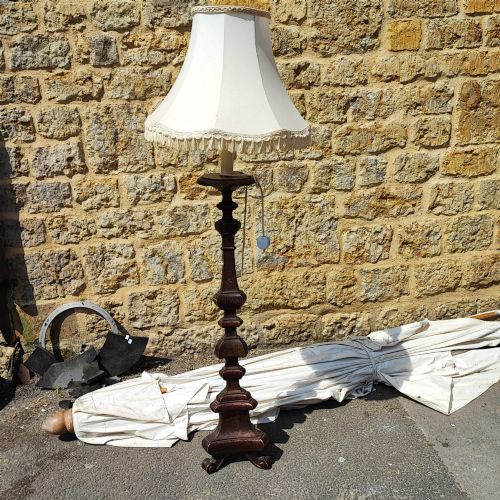
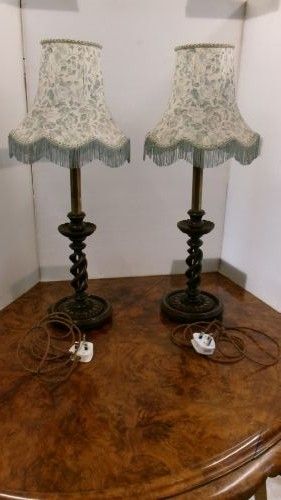
Cream fringe lampshades top standard lamps, table lamps and light fittings from periods ranging through the nineteenth century, Edwardian era and nineteen-twenties.
Cream Fringe Lampshades
Cream fringe lampshades sit atop table lamps, floor lamps, standard lamps and light fittings found across this selection. The listings bring together pieces from the nineteenth century, Regency period, Edwardian era and the nineteen-twenties.
The forms vary from substantial pairs of candlesticks and tall wooden table lamps to pressed brass oriental designs and torchere vase standard lamps. These accessories complete domestic lighting arrangements in styles spanning Edwardian neoclassical revival, empire and traditional English country schemes.
Materials and construction
The physical evidence records lamps constructed from fabric, silk, glass, ceramic, silver plate, carved wood, oak and brass. Makers utilised these varied materials to build sturdy bases and structural frames for domestic illumination.
Metalwork pieces incorporate pressed brass, copper and silver plate, often featuring detailed motifs such as Minerva with stags. Wooden examples utilise oak and carved timber forms alongside ceramic and glass components.
Current listings feature pieces spanning the nineteenth century, Regency, Edwardian era and nineteen-twenties, incorporating brass, oak, glass, silk and fabric.
Assessing quality
Quality rests in the substance of the materials and the execution of decorative details across the metal, wood and fabric components. Substantial pairs and substantial brass construction distinguish the higher end of the range from simpler utility pieces.
The refinement of period stylistic details, such as neoclassical revival motifs or orientalist brass work, separates standard production from superior examples.
The Cream Fringe Lampshades Glossary
- Standard lamp
- A tall floor-standing lamp designed to illuminate a room from a vertical position. These objects often incorporate wooden or metal columns.
- Torchere
- A tall ornamental stand or candlestick adapted to hold a light fitting. The term describes slender columns holding lamps.
- Neoclassical revival
- A stylistic movement drawing inspiration from classical antiquity. Pieces in this style display formal architectural motifs.
- Orientalist
- A design style incorporating artistic motifs from eastern cultures. Pressed brass table lamps frequently exhibit these decorative elements.
Cream Fringe Lampshades: Frequently Asked Questions
What periods do these lamps represent?
The lighting pieces span from the nineteenth century and Regency period through the Edwardian era into the nineteen-twenties.
Craftsmen built these lamps using materials including brass, carved wood, oak, ceramic, glass and silk.
How were standard lamps used?
Standard lamps stood in principal rooms to provide ambient and reading light alongside table lamps and candlesticks.
They functioned as major decorative furnishings within traditional English country and empire interiors.
What materials make up the bases?
Bases appear in solid brass, copper, silver plate, carved wood and oak alongside ceramic and glass bodies.
Fabric and silk complete the top sections where shades diffuse the light.
How do styles differ?
Styles range from Edwardian neoclassical revival and empire designs to orientalist brass work and traditional country wooden forms.
Each style employs specific decorative motifs characteristic of its period of manufacture.