


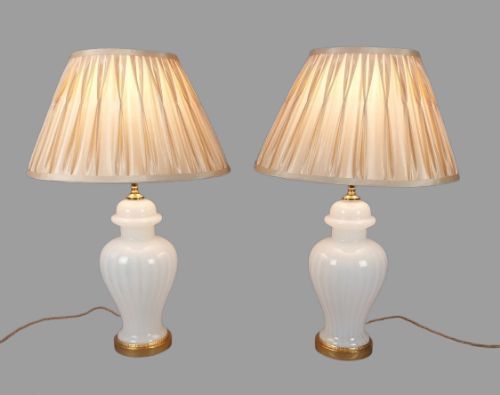


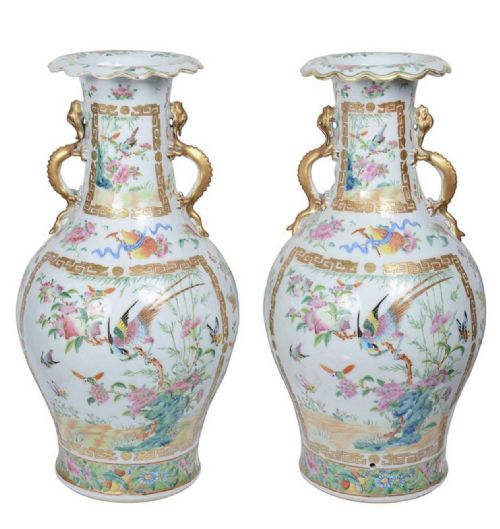
Baluster Urn Table Lamps
Baluster urn table lamps are substantial lighting pieces transformed from antique vases, bringing classical silhouettes and rich decorative surfaces into interior spaces.
Baluster Urn Table Lamps
When you search for baluster urn table lamps, you find decorative lighting formed from converted vessels featuring distinct bulbous lower bodies tapering toward the top. These pieces originate across the eighteenth, nineteenth, and early twentieth centuries, spanning Victorian, Edwardian, and Art Deco periods.
The selections on this page draw heavily from Chinese export traditions, Japanese bronze and cloisonné work, and European porcelain or glass production. Forms range from single statement objects to matched pairs, often incorporating translated vase shapes like Famille Rose, Sang de Boeuf, and Chinoiserie designs.
Makers and converters utilise historic vessels, adapting them for electrical illumination while retaining their original ceramic, bronze, or brass bodies. Fabric shades frequently complete the conversion, balancing the visual weight of the heavy bases beneath.
How they were made
Construction relies on durable structural metals and fired ceramics, employing materials such as bronze, brass, porcelain, and tin-glazed earthenware. Artisans shaped these mediums into classic urn profiles before later workshops drilled and fitted them for electrical components.
Surface decoration involves specialist techniques including enamel work, cloisonné wire inlay, and hand-painted Chinoiserie motifs. Gilt metal mounts and opaline white glass also appear, reflecting the diverse manufacturing methods of the nineteenth and early twentieth centuries.
Some nineteenth century vases spent decades holding dried flowers before finally gaining a brass spindle and a plug.
What varies in quality
Quality rests upon the preservation of the original vessel and the harmony of its conversion into a lamp. Pieces retaining crisp hand-painted enamel details or precise bronze casting sit distinctly apart from simpler later adaptations.
The integrity of the body materials, whether fine porcelain or heavy bronze, dictates the overall presence of the lamp. Matched pairs demonstrate a higher level of decorative symmetry than individual conversions sourced independently.
Samson Porcelain
The Baluster Urn Table Lamps Glossary
- Baluster
- A architectural form characterised by a swollen lower portion resembling a pillar or vase. This curving profile provides the primary silhouette for the urn lamps found in these listings.
- Cloisonne
- An ancient metalworking technique using wire compartments soldered to a metal base and filled with enamel paste. These colourful decorative cells create intricate patterns across bronze lamp bodies.
- Famille Rose
- A prominent palette of Chinese porcelain enamels dominated by opaque pink hues introduced during the eighteenth century. This decorative style frequently adorns the porcelain vase bodies adapted into lamps.
- Chinoiserie
- European artistic interpretations of Chinese and East Asian decorative motifs popular across multiple historic periods. This style appears on several Edwardian and Georgian inspired lamp conversions.
- Sang Du Bouf
- A rich, deep red copper glaze originating in Chinese ceramics, translating literally to ox-blood. This striking monochrome finish creates dramatic surfaces on nineteenth century urn conversions.
Baluster Urn Table Lamps: Frequently Asked Questions
What are baluster urn table lamps?
Baluster urn table lamps are lighting fixtures created by converting historic vases and vessels into functional lamps. They feature a characteristic rounded lower body and slender neck derived from traditional urn forms.
These pieces integrate historical ceramic, bronze, or glass bodies with modern electrical wiring and fabric shades. They serve as prominent decorative objects in traditional and eclectic interiors.
How do I date an antique lamp?
Dating these lamps involves examining the manufacturing characteristics of the base vessel rather than the electrical components. Periods represented include the eighteenth, nineteenth, and early twentieth centuries.
Stylistic markers such as Chinoiserie motifs, Meiji period bronzes, or Victorian porcelain glazes help establish the age of the underlying object. Subsequent electrical conversions typically date from the twentieth century onwards.
Are these lamps sold as pairs?
Many listings feature balanced pairs of lamps created from matching antique vases. These symmetrical sets provide coordinated lighting for sideboards, mantelpieces, or large desks.
Single lamps also appear frequently, offering standalone focal points for smaller tables or specific interior corners.
How do I style a vase lamp?
Vase lamps require sturdy placement surfaces due to their substantial weight and ceramic or bronze construction. They suit traditional living spaces, studies, and grand hallways where their decorative height and rich surfaces can stand out.
Pairing them with neutral fabric shades allows the intricate colours and patterns of the underlying urns to remain the visual centrepiece.