


Celadon Porcelain Lamps
Celadon porcelain lamps combine pale green glazes with nineteenth-century French and Chinese craftsmanship, offering soft illumination and historic character.
Celadon Porcelain Lamps
When you search for celadon porcelain lamps, you encounter table lamps fashioned from nineteenth-century Chinese vases and French ceramic bodies. These pieces frequently incorporate brass, bronze, gilt bronze, and wood mountings that elevate the glazed ceramic vessels into functional lighting.
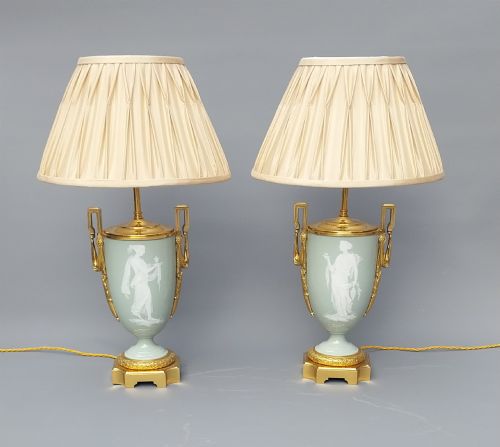
You are most likely to meet nineteenth-century examples, including pieces from the Qing dynasty alongside French neoclassical interpretations. The forms range from monumental vases converted to lighting to pairs of twin-handled vessels fitted with fabric shades.
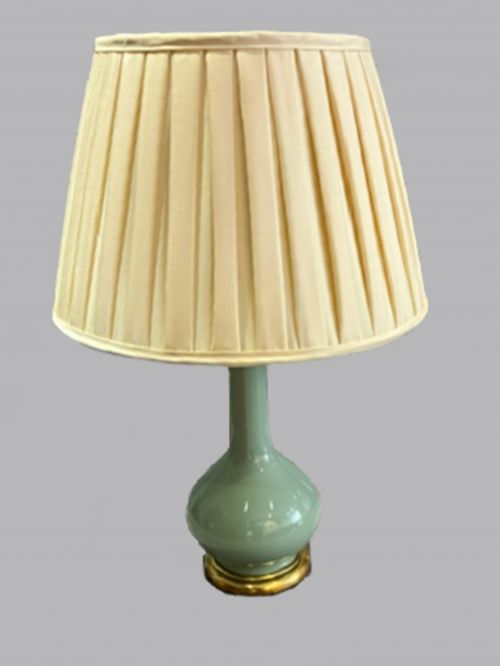
Chinese export works and French late nineteenth-century productions dominate the selection, showing how Asian ceramic traditions blended with European mounting styles. Each object bridges decorative arts and interior lighting through the conversion of antique vases.
Materials and construction
The primary bodies utilise ceramic and porcelain covered in characteristic celadon glaze, ranging from pale seafoam to deeper green tones. Artisans shaped these vessels in China and France before mounting them onto stable bases.
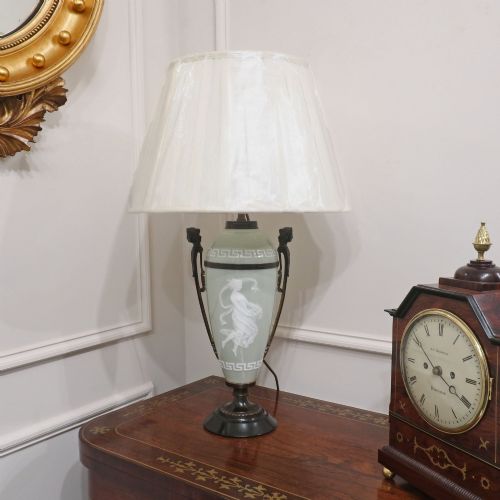
Metalwork played a crucial structural and decorative role, with brass, bronze, and gilt bronze securing the porcelain bodies and housing the electrical components. Fabric elements complete the upper sections to diffuse light across the glazed surfaces.
Vases that once held tea or blossoms in distant dynasties now quietly illuminate twentieth-century reading corners.
Assessing quality
Quality rests upon the depth and consistency of the celadon glaze, alongside the crispness of any incised or moulded decoration beneath the surface. Superior examples display an even tone and smooth tactile finish across the ceramic body.
The refinement of the metal mounts distinguishes finer pieces, particularly where gilt bronze or cast brass mounts complement the curves of the porcelain vase. The integration of the lighting hardware without compromising the historic ceramic vessel determines the overall success of the conversion.
The Celadon Porcelain Lamps Glossary
- Celadon glaze
- A pale green ceramic glaze originating in China, prized for its resemblance to jade. This glaze forms the defining visual characteristic of the porcelain bodies.
- Pate sur pate
- A ceramic decorating technique where white slip is applied in successive layers upon a coloured body to create low relief designs. French nineteenth-century makers utilised this method on porcelain lamp bodies.
- Gilt bronze
- Copper alloy treated with a layer of gold, often termed ormolu in French pieces. Mounts of this material secure and decorate the bases and necks of the porcelain lamps.
- Qing dynasty
- The final imperial dynasty of China, spanning from sixteen forty-four to nineteen twelve. Many vase bodies utilised for these lamps date from this extended period.
- Neoclassical
- A Western stylistic movement drawing inspiration from classical antiquity. French pieces from the nineteenth century frequently adopt these symmetrical, restrained architectural motifs in their metal mounts.
Celadon Porcelain Lamps: Frequently Asked Questions
What are celadon porcelain lamps?
These pieces are table lamps created by converting nineteenth-century Chinese and French ceramic vases into functional lighting fixtures.
They combine historical glazed porcelain bodies with metal mounts made from brass, bronze, or gilt bronze.
Where were these lamps made?
The ceramic bodies originate from Chinese kilns, particularly from the Qing dynasty and export periods, as well as nineteenth-century French workshops.
European artisans frequently added metal mounts and electrical fittings to these imported vases.
How do I date a celadon lamp?
Dating relies on examining the characteristics of the porcelain glaze, the style of any surface decoration, and the manufacturing technique of the metal mounts.
Nineteenth-century examples often feature French neoclassical bronze work or specific nineteenth-century potting traits.
How do I live with antique lamps?
These lamps function effectively on side tables, desks, or chests where their glazed ceramic bodies contribute colour and texture to a room.
Pairing them with appropriate fabric shades helps balance the visual weight of the porcelain and metal bases.