



Late Meiji Satsuma
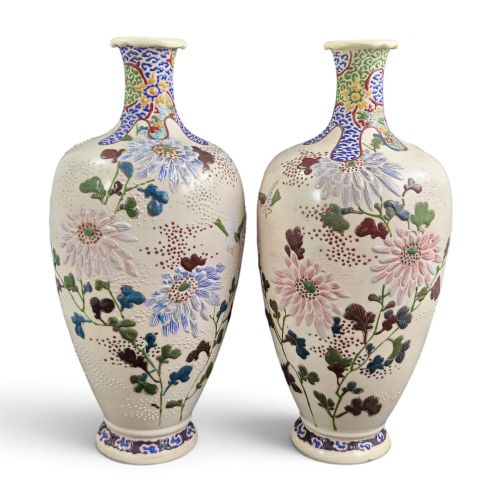
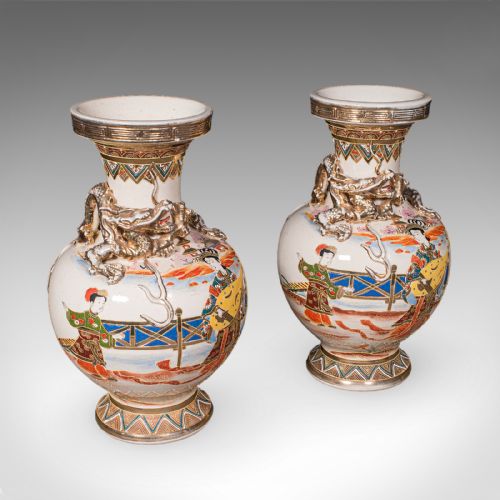
Late meiji satsuma pieces bring intricate enamel and gold leaf work into a room through vases, bowls, and plates.
Late Meiji Satsuma
When you search for late meiji satsuma, you are looking at earthenware and ceramic vessels created during the closing decades of the nineteenth century and the early years of the twentieth century. These objects include vases, decorative bowls, incense burners, plates, and figures originating from kilns in regions such as Kyoto and Kobe.
The version you are most likely to meet on this page is the baluster vase or decorative plate, often finished with cobalt grounds, landscape scenes, court figures, or floral moriage relief work. They capture a period of intense export production tailored for Western collectors who favoured densely decorated Japanese ceramics.
Many of these pieces carry maker marks or artist signatures from notable studios and individual potters working in the Meiji tradition. Alongside vessels, you encounter smaller items such as miniature incense burners, tea sets, and bowls bearing the Shimazu mon crest.
What varies in quality
Quality rests primarily on the discipline of the brushwork and the precision of the raised moriage details. Finer examples display cleanly delineated facial expressions on court figures and precise control over the application of gold gilt.
The complexity of the composition also separates standard output from exhibition-quality pieces. Works carrying signatures from recognised studios like Kinkozan or Hododa often exhibit denser decorative programmes and more harmonious colour palettes across the cobalt or cream grounds.
The listings here feature earthenware and porcelain materials decorated with enamel, gold leaf, and glaze across the nineteenth and twentieth centuries.
Maruni Kobe·Nanzan·Hododa·Kinkozan·Kotobuki do·Hayakawa·Dozan·Taizan·Gyokuzan·Koshida·Ryokuzan
The Late Meiji Satsuma Glossary
- Moriage
- A technique of applying clay slip in raised dots or lines before glazing and firing, creating a tactile, three-dimensional effect on the surface of the ceramic.
- Shimazu mon
- The heraldic crest of the Shimazu clan, featuring a cross within a circle, frequently found on Satsuma wares produced in association with their domain.
- Koro
- A traditional Japanese incense burner, often supplied with a fitted lid and handles, appearing in miniature and larger formats on Satsuma vessels.
- Baluster
- A vase shape with a rounded body that tapers toward the base and swells near the lower middle, common among the ceramic forms listed here.
Late Meiji Satsuma: Frequently Asked Questions
How do I identify a maker mark?
Maker marks on these ceramics typically appear on the base as handwritten or stamped signatures in iron red or gold. They identify the studio, potter, or decorator responsible for the piece.
Names such as Kinkozan or Hododa indicate workshops based in Kyoto or Yokohama that managed significant export production during the Meiji era.
Were these pieces used or displayed?
Most Satsuma wares produced during this period served as decorative display items for Western drawing rooms rather than practical vessels. Their delicate earthenware bodies and heavy enamel work made them unsuited for everyday utility.
Items like incense burners and tea sets often functioned as ornamental cabinet pieces rather than functional household goods.
How should I clean these ceramics?
Dusting with a soft, dry brush is the safest method for maintaining the surface of these fragile earthenware pieces. Moisture and cleaning agents can damage the delicate enamel and gold leaf applied over the glaze.
Keep them away from direct sunlight and areas of high humidity to protect the crackled glaze and prevent deterioration of the gilding.