
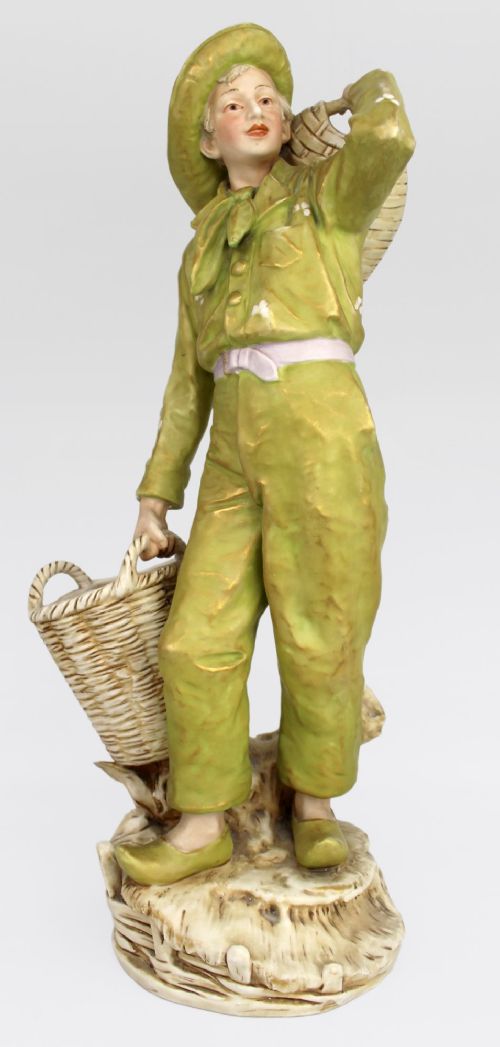
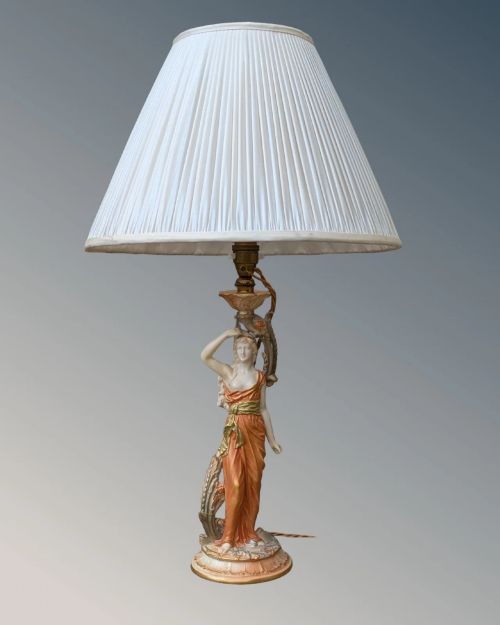


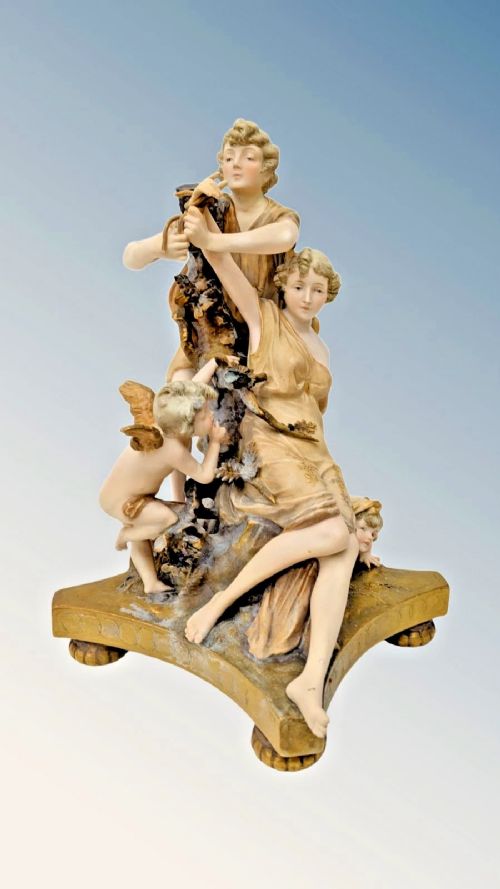


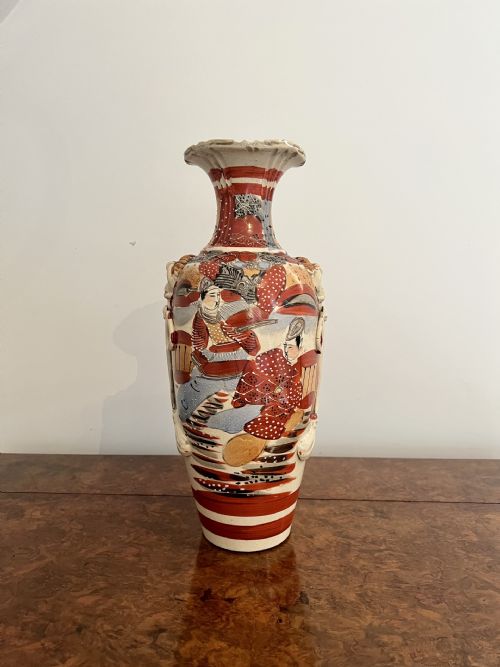
Terracotta Porcelain Figure
These terracotta porcelain figure selections bring together Victorian and Edwardian craftsmanship, offering character and period detail for your interior.
Terracotta Porcelain Figure
A terracotta porcelain figure represents a diverse group of sculptural works spanning the Victorian, Edwardian, and Art Nouveau eras. You encounter various forms including maiden sculptures, animal studies, and decorative lamps made during the nineteenth and early twentieth centuries.
The objects originate from European potteries and Asian kilns, bringing together English regional figures, Bohemian models, and Japanese export ware. The grouping reflects a broad mix of cultural influences from Victorian Orientalism to classical revival styles.
Figurines and decorative ornaments dominate the selection, often taking the form of graceful maidens, animal pairs, or mythological subjects. Each piece showcases the sculptural ambitions of makers working in ceramic and earthenware mediums.
How they were made
Makers utilised porcelain, terracotta, and earthenware bodies, shaping them through moulding and hand-modelling techniques. Surfaces frequently received enamel decoration, hand-painted details, and applications of gilt or gilding.
Firing techniques varied from low-temperature earthenware kilns to high-fired porcelain and ceramic production. Brass elements occasionally supplemented the ceramic bodies, particularly in table lamp adaptations.
Materials recorded across the selection include porcelain, terracotta, earthenware, enamel, gilt, and brass.
What varies in quality
The refinement of the modelling separates standard production from exceptional studio outputs. Fineness in facial expressions, delicate hand-painting, and crisp execution of drapery indicate superior workmanship.
The integrity of the glaze and the preservation of enamel or gilt highlights dictate visual strength. Well-executed forms maintain balance and proportion across complex multi-figure groups and large sculptural models.
Royal Dux·Thomas Parr·Ernst Wallace·Ernst Whaliss·Samuel Alcock·B Rezl
The Terracotta Porcelain Figure Glossary
- Bisque
- Unglazed ceramic fired once to create a matte, porous finish resembling marble or fine stone. It is frequently employed for detailed nineteenth-century portrait busts and classical figures.
- Gilt
- A thin layer of gold applied to the surface of ceramic or metal elements to provide decorative highlights. It accentuates borders and drapery details.
- Enamel
- Vitreous material fused to the ceramic surface during firing to provide vibrant colour. It allows for intricate hand-painted patterns on vases and figures.
- Terracotta
- Fired clay ranging from orange-brown to red hues, used independently or combined with glazed porcelain elements. Its porous nature accepts fine surface detail.
Terracotta Porcelain Figure: Frequently Asked Questions
How do I clean an antique figure?
Dust the surface gently with a soft, dry brush to remove settled particles without disturbing fragile enamel or gilt highlights.
Avoid liquid immersion or harsh chemical cleaners, as nineteenth-century ceramic finishes and painted details are sensitive to moisture.
Where were these figures displayed?
Victorian and Edwardian households placed these sculptural ornaments on mantelpieces, occasional tables, and drawing room cabinets.
Larger models and table lamps served as focal points in reception rooms, combining decorative presence with functional lighting.
How do I date a ceramic figure?
Examine the base for impressed model numbers, factory stamps, or registration marks characteristic of nineteenth-century production.
Stylistic cues such as Art Nouveau curves or Victorian classical drapery further help narrow the decade of manufacture.
Can I use an antique lamp safely?
Inspect the original ceramic or brass fittings to determine whether rewiring by a professional electrician is necessary for modern safety standards.
Retaining the original porcelain body while updating internal wiring preserves the decorative value of the piece.