
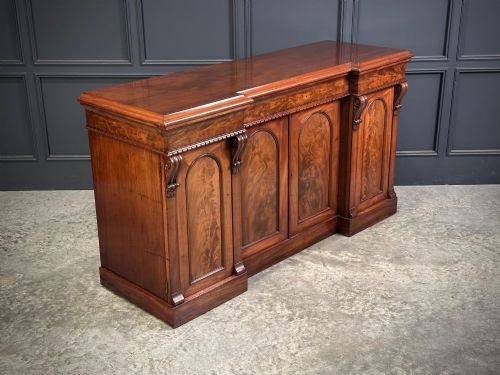
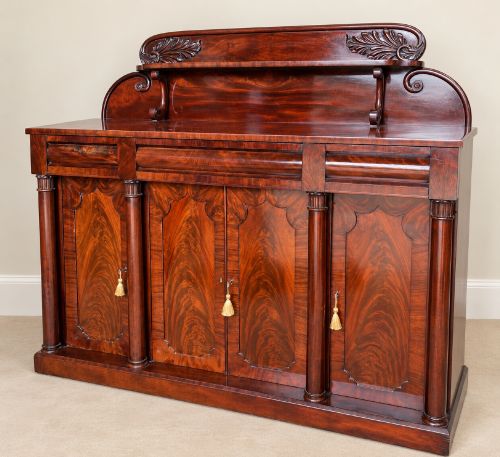
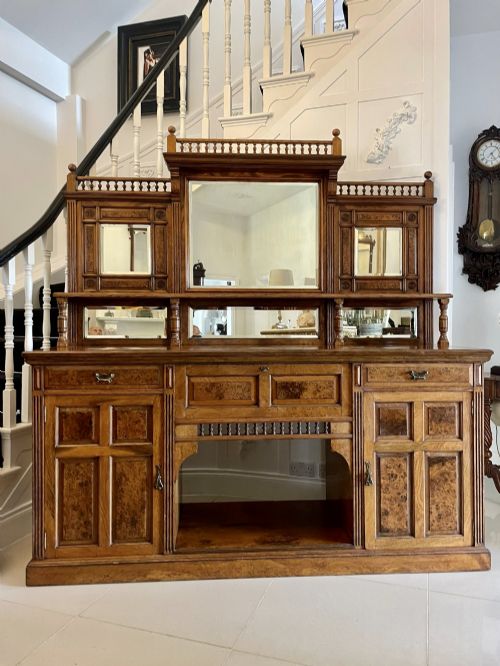
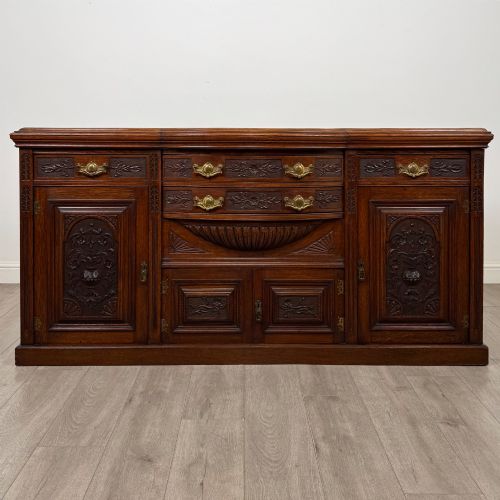
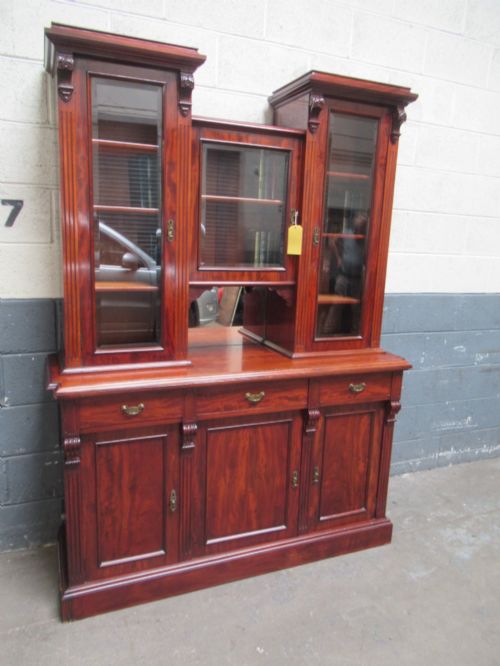
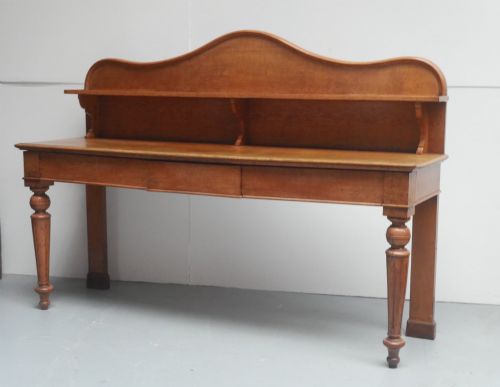

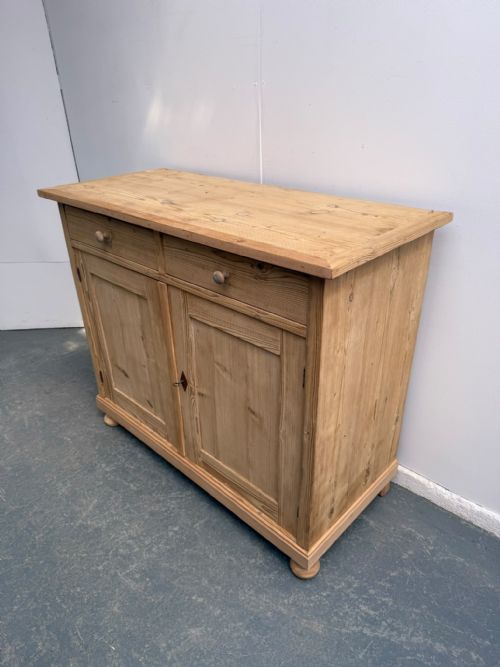
Large Victorian Sideboard
When hunting for a large victorian sideboard, you encounter substantial 19th-century dining furniture designed to anchor a room and store silver, linen, or spirits.
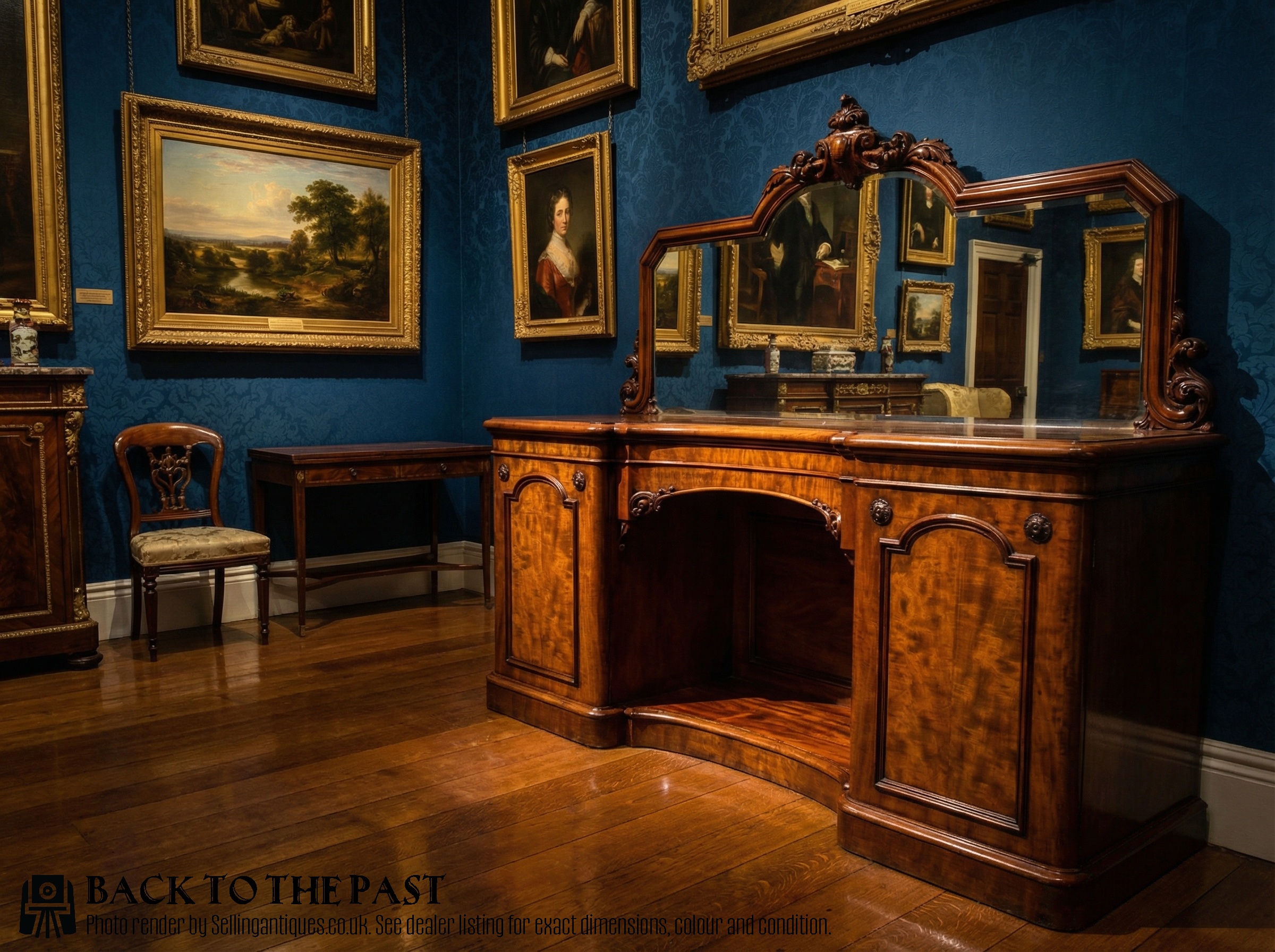
Large Victorian Sideboard
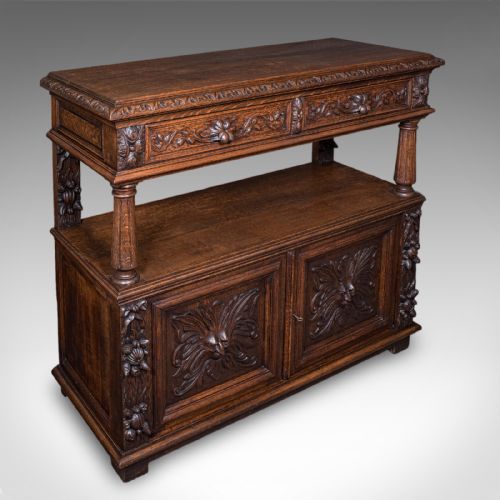
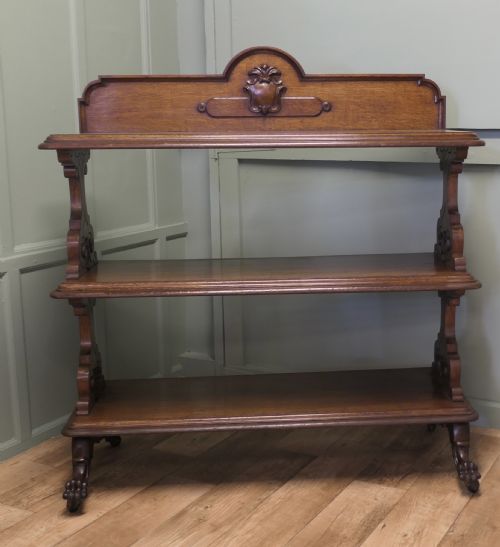
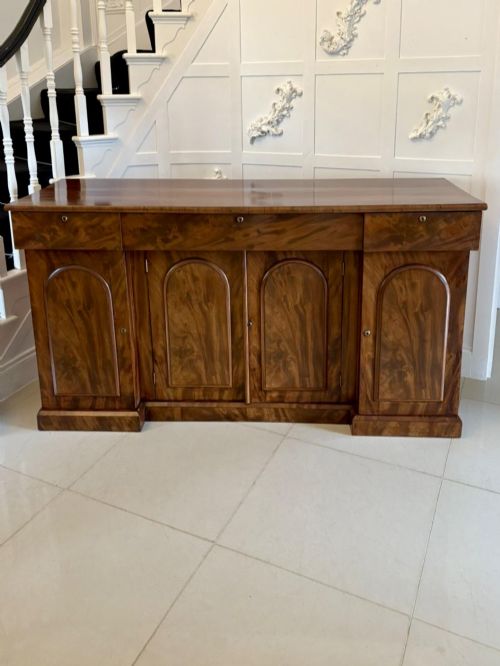
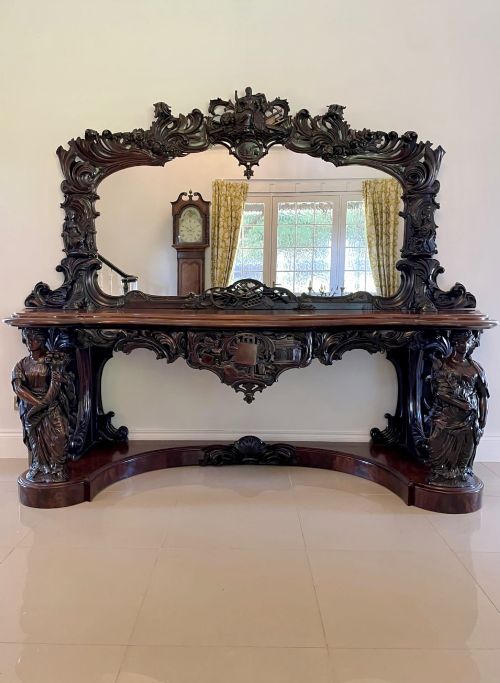
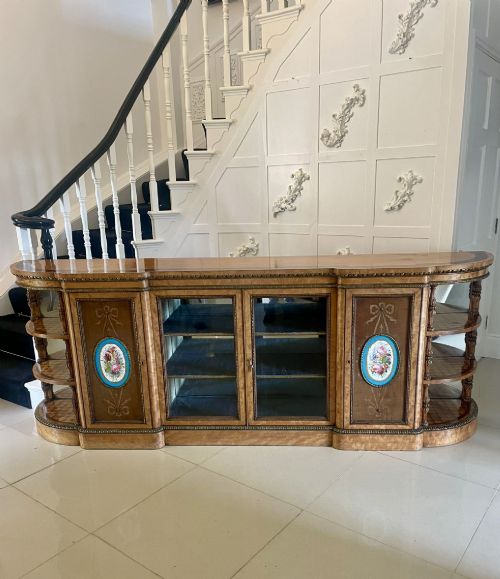
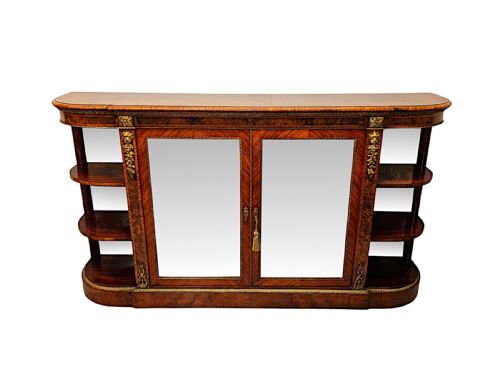
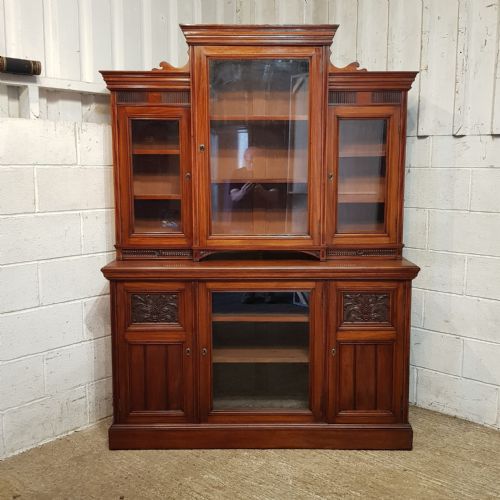
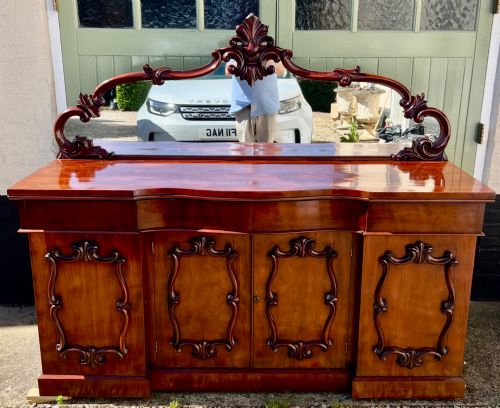
A large victorian sideboard serves as a commanding focal point for dining rooms and large hallways, built primarily during the nineteenth century in various regional interpretations. The forms vary from architectural mirror-back pedestals and breakfront servers to robust oak dresser bases and inlaid walnut credenzas.
The pieces emerge from diverse design movements, ranging from Gothic Revival and Renaissance Revival to English country house utility and ornate marquetry. Buyers meeting these pieces today find both formal urban dining furniture in figured mahogany and walnut, alongside utilitarian pine and oak versions from country houses and farmhouses.
How They Were Made
Cabinetmakers utilised dense timbers like mahogany, burr walnut, and pollard oak, often applying flame mahogany or floral marquetry veneers to primary display surfaces. Secondary structural elements commonly relied on pine and solid oak for durability.
Decorative enrichment involved hand carving, applied ormolu mounts, brass hardware, and occasionally mirrored glass backs or inset porcelain panels. Construction techniques combined traditional joinery with heavy pedestals, breakfront carcasses, and panelled doors.
Listings demonstrate materials ranging from common pine to burr walnut, with oak and mahogany dominating structural forms.
What Varies in Quality
The standard of timber selection largely dictates the rank of a piece, with highly figured flame mahogany or burr walnut marking the higher tiers of production. Plain pine and utilitarian oak versions occupy a more domestic and robust category.
Execution of carving and mount work separates standard production from exhibition pieces. Refined mouldings, intricate marquetry inlay, and heavy architectural mirror backs demonstrate greater workshop ambition.
Gillows·Liberty And Co
The Large Victorian Sideboard Glossary
- Credenza
- A low cabinet or sideboard, frequently mounted with ormolu and inlaid with marquetry. These pieces often feature glass display sections.
- Pedestal sideboard
- A heavy form featuring a central serving surface flanked by large cupboards or pedestals. They dominate formal 19th-century dining spaces.
- Chiffonier
- A compact sideboard or cabinet equipped with enclosed shelving below. They often incorporate a mirrored superstructure.
- Marquetry
- Decorative veneer work forming pictorial or floral patterns using various coloured woods. It requires precise cutting and fitting by hand.
- Ormolu
- Gilt-bronze mounts applied to furniture for decorative enrichment. This technique adds metallic lustre to walnut and mahogany surfaces.
Large Victorian Sideboard: Frequently Asked Questions
Where were these sideboards placed?
These large pieces stood principally against dining room walls to hold serving dishes and silverware during large meals.
Secondary placements included grand hallways and withdrawing rooms where mirrored backs reflected light and displayed decorative objects.
How do I care for the wood?
Maintain polished surfaces with traditional beeswax rather than modern silicon sprays to preserve the patina on mahogany and walnut.
Keep pieces away from direct heat sources to prevent timber splitting and veneer lifting.
What is a mirror back?
A mirror back incorporates a large glass plate set into an elaborately carved wooden frame rising above the main serving surface.
This feature became prominent during the Victorian era to amplify light and display ceramics.
How do I distinguish country pieces from formal ones?
Formal urban examples utilise exotic timbers like mahogany and walnut with complex veneers and classical revival carvings.
Country versions favour regional timbers such as pine and oak, prioritising straightforward utility over decorative flourishes.