


Large Porcelain Ginger Jar
A large porcelain ginger jar brings centuries of ceramic tradition into a room, offering striking decorative presence and timeless storage forms.
Large Porcelain Ginger Jar
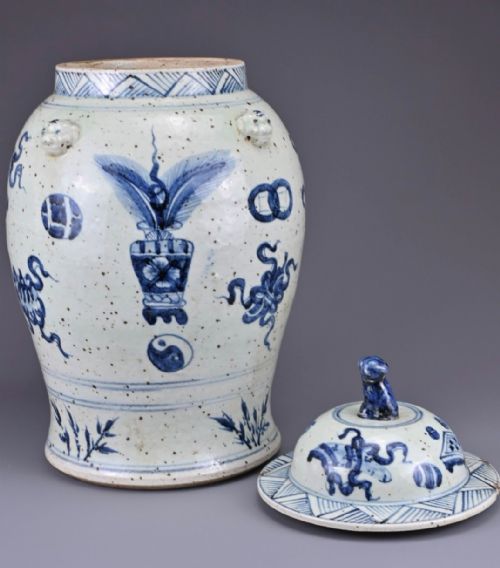
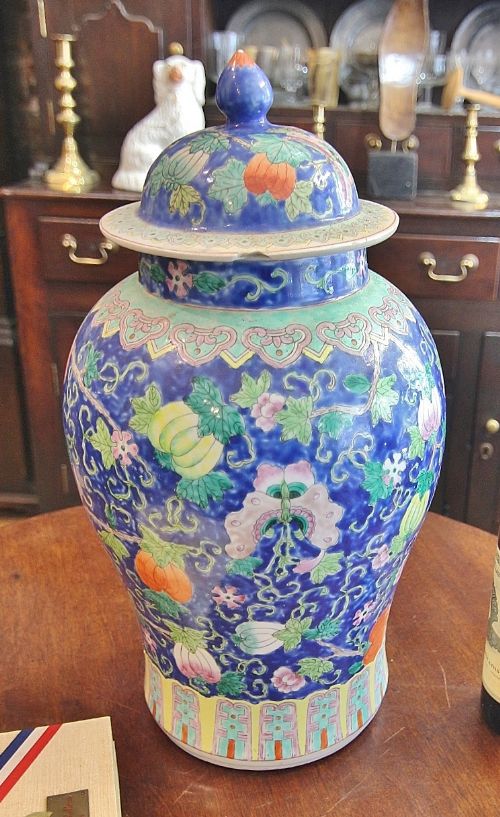
A large porcelain ginger jar is a substantial vessel originally designed to hold spices and provisions, evolving into a celebrated decorative form across Asian and European traditions. When you search for a large porcelain ginger jar, you encounter pieces spanning the nineteenth and twentieth centuries, including Chinese blue and white vessels, Japanese Imari wares, and Satsuma lidded pieces.
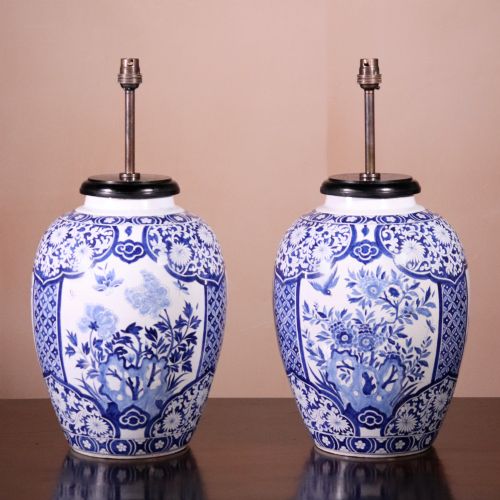
The inventory on this page showcases diverse interpretations of the form, from nineteenth-century Japanese Kutani and Imari lidded vases to twentieth-century Chinese vases and Paris porcelain table lamps. Buyers meet both single statement vessels and matching pairs, frequently complete with original covers or adapted as table lamps.
How they were made
Makers shaped these vessels from ceramic and porcelain, often utilising ironstone for robust British interpretations alongside traditional oriental bodies. Surfaces received intricate decoration through hand-painted enamel, blue and white underglaze pigment, and generous applications of gold leaf and gilding.
Many examples incorporate brass components, particularly where jars have been converted into table lamps with fitted mounts. Kiln-fired glazes seal the porcelain bodies, creating the durable finished surfaces seen on both Chinese Qing Dynasty designs and Japanese Meiji period works.
Some jars started life carrying preserved ginger across stormy seas, only to spend their retirement holding dried lavender in a quiet drawing-room.
What varies in quality
Quality in these vessels rests upon the crispness of the hand-painted detail and the balance of the overall form. Superior pieces display precise brushwork in cobalt blue or multi-coloured enamel palettes, with harmonious proportions between the body and the matching cover.
The refinement of the porcelain paste and the richness of any applied gilding separate standard production wares from exceptional collector pieces. Original components, such as matching covers and uncompromised bodies, elevate the standing of a vessel within its period.
Samson
The Large Porcelain Ginger Jar Glossary
- Imari palette
- A traditional Japanese decorative scheme utilising rich iron red, cobalt blue, and gold leaf. This distinctive colour combination appears frequently on nineteenth-century lidded vases.
- Blue and white
- A ceramic decoration technique employing cobalt oxide pigment beneath a transparent glaze. It defines many classic Chinese export jars and Qing Dynasty style vessels.
- Satsuma
- A type of Japanese earthenware or porcelain characterised by a crackled ivory glaze and elaborate polychrome enamel and gold decoration. These pieces often depict figurative or floral scenes.
- Ironstone
- A heavy, durable ceramic developed in Britain as a robust alternative to true porcelain. Masons examples demonstrate this dense, utilitarian material formed into decorative hall vases.
- Kutani
- A style of Japanese coloured porcelain known for bold designs and extensive use of gold. Kutani vases in the archive frequently feature detailed pictorial panels.
Large Porcelain Ginger Jar: Frequently Asked Questions
What were large ginger jars used for?
Originally, these vessels served to store and transport valuable spices, ginger, and preserves along trade routes. Merchants relied on their sturdy porcelain walls and secure lidded tops to protect contents from moisture and pests.
Over time, Western interiors adopted them purely for decoration and architectural symmetry. Placed on mantelpieces or console tables, they brought refined shape and colour to formal rooms.
How do I date a porcelain ginger jar?
Dating relies on examining the painting style, glaze characteristics, and any reign marks stamped or painted on the base. Nineteenth-century pieces often display specific palette combinations and potting weights typical of the Meiji or Qing periods.
Comparing the blue and white pigments or enamel thickness against known historical periods helps narrow the decade of production. Stylistic nods to earlier eras, such as Kangxi designs executed later, require careful inspection of the paste.
Are ginger jars supposed to have lids?
Traditional ginger jars were manufactured with matching fitted covers to seal the contents inside. Surviving examples complete with their original lidded covers remain particularly desirable for collectors.
Many pieces listed over time retain their covers, though some functional adaptations, such as lamp conversions, alter the original top configuration. Finding a matched pair with intact lids is a notable advantage.
How do I style a ginger jar at home?
These versatile vessels anchor vignettes on sideboards, bookshelves, or entrance hall tables. Displaying a matching pair creates a sense of balance, while a single large jar acts as an immediate focal point.
Consider the surrounding colour scheme to complement the cobalt blue, Imari palette, or Satsuma gilding of the piece. They integrate smoothly into both traditional period settings and contemporary minimalist interiors.