


Red Kutani Vase
A red kutani vase brings vibrant Japanese artistry into a room, offering striking hand-painted detail from the nineteenth and early twentieth centuries.
Red Kutani Vase
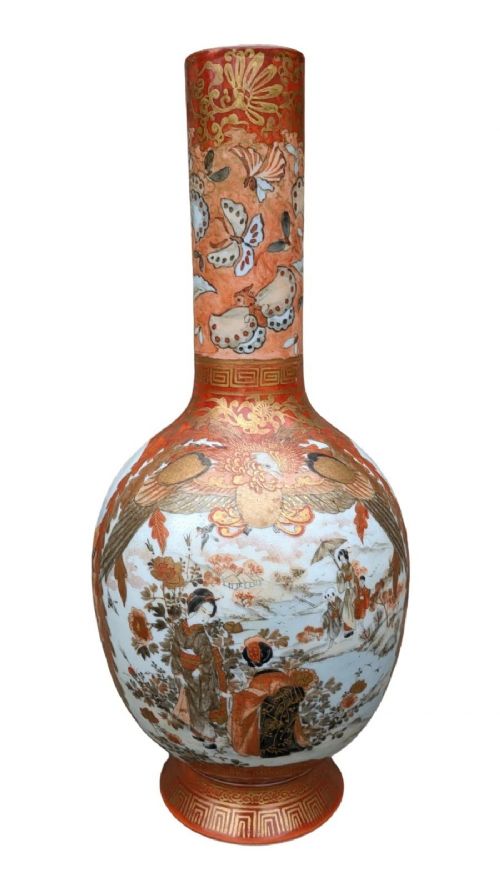
A red kutani vase represents a distinct category of Japanese ceramic art originating from the Kaga province, widely produced during the Meiji period and subsequent decades. These vessels typically manifest as hand-painted porcelain objects featuring characteristic reddish tones alongside other pigments.
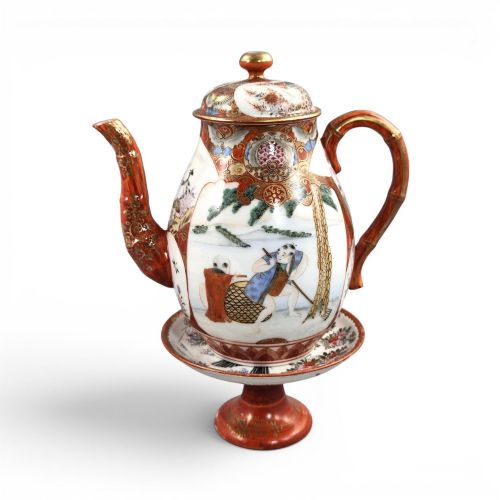
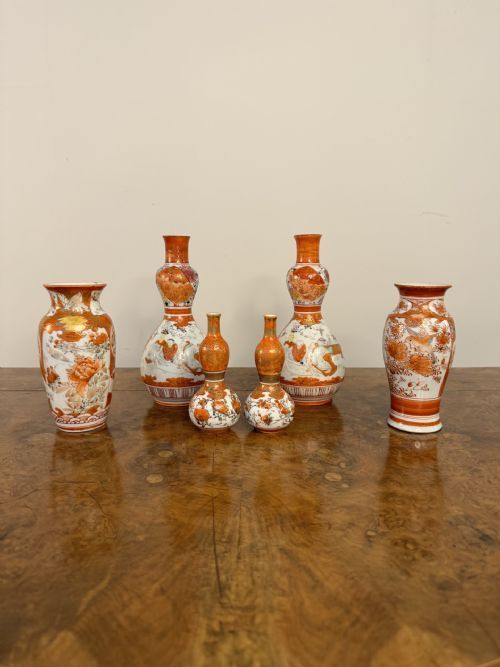
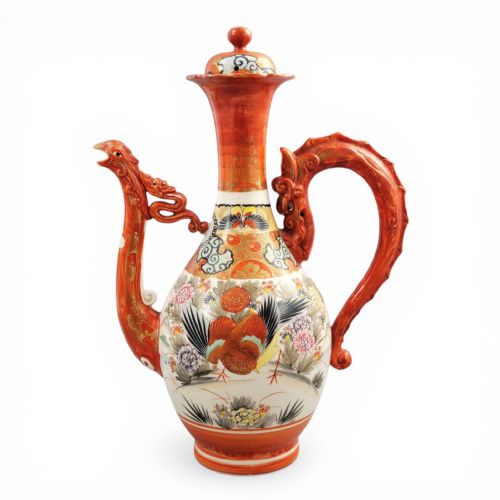
The versions most commonly met on this page span the nineteenth century up to the early twentieth century, encompassing various forms such as large cylindrical vessels, pairs with flared necks, and examples adapted into table lamps. Alongside standard vases, the selection occasionally includes related items like teapots, ewers, and decorative chargers.
Buyers encounter pieces associated with specific historical markers such as the Meiji period and Taisho period, reflecting the traditional craftsmanship of Japanese export wares. These objects range from modest small hand-painted vessels to large floor-standing examples adorned with figural scenes or animal handles.
How they were made
These pieces are constructed from porcelain and decorated using detailed enamel painting techniques. Artisans applied pigments by hand to create intricate surface patterns across the ceramic body.
Many examples incorporate highlights of gold leaf and gilding alongside the primary enamel colours, adding metallic depth to the painted designs. Additional structural elements such as brass components or wood bases appear on specific items like lamps and stands.
Watch out for fierce porcelain lions guarding the handles of nineteenth-century vases.
What varies in quality
Quality in these ceramics rests on the precision and complexity of the hand-painted decoration, where finer brushwork and more ambitious figural or floral compositions elevate a piece. The depth and richness of the enamel palette, combined with the judicious use of gold leaf, separate standard production wares from superior examples.
Kinrin Workshop
The Red Kutani Vase Glossary
- Kutani
- A style of Japanese porcelain traditionally produced in Kaga province, known for colourful hand-painted enamel decoration. It forms the defining aesthetic of these vessels.
- Meiji Period
- The era in Japanese history spanning from 1868 to 1912, corresponding to the production period of many antique pieces found here. This era saw a significant increase in ceramic exports to the West.
- Moriage
- A decorative ceramic technique where slip is piped onto the surface in dots or lines to create a raised, textured effect. This adds a tangible dimension beneath the enamel colours.
- Ewer
- A large jug with a wide spout and handle, used historically for pouring water or wine. In this inventory, they appear alongside vases as decorative porcelain forms.
- Charger
- A large ornamental decorative plate intended for display rather than dining use. These items share the palette and painting style of the accompanying vases.
Red Kutani Vase: Frequently Asked Questions
What is a red kutani vase?
A red kutani vase is a hand-painted Japanese porcelain vessel featuring prominent reddish enamel work, commonly produced during the nineteenth and early twentieth centuries.
These pieces reflect traditional artisan techniques from the Kaga region and frequently showcase intricate floral or figural motifs.
How do I date a kutani vase?
Dating these ceramics involves examining the stylistic markers, such as association with the Meiji or Taisho periods, and the characteristics of the porcelain body.
Evidence from nineteenth-century export wares often points towards specific manufacturing eras through distinct potting techniques and decorative palettes.
Were these vases made for export?
Many of these pieces were created during the Meiji period specifically for international export to Western markets, aligning with global demand for Japanese art.
This trade resulted in a wide variety of vessel forms, including large decorative pairs and items later converted into table lamps.
How should I display a large kutani vase?
Large examples function effectively as focal points in a room, often placed on sturdy surfaces or paired with matched pieces for symmetry.
Some variations include dedicated wood stands or have been adapted as lamps to suit contemporary interior placement.