


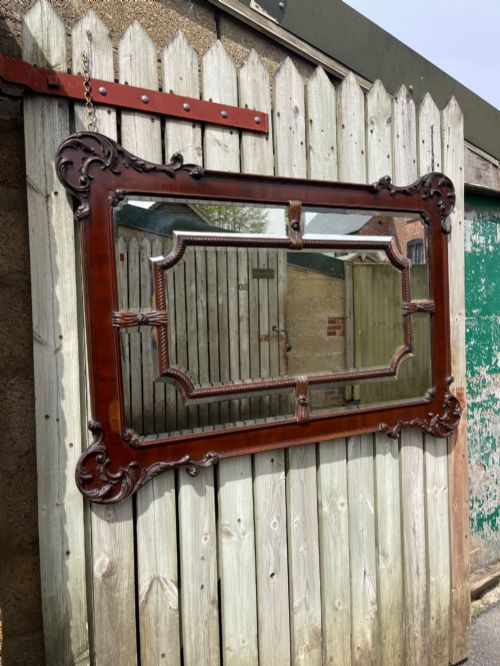


Large Landscape Mirror
A large landscape mirror anchors a room with horizontal expanses of glass, bringing light and scale to period interiors.
Large Landscape Mirror
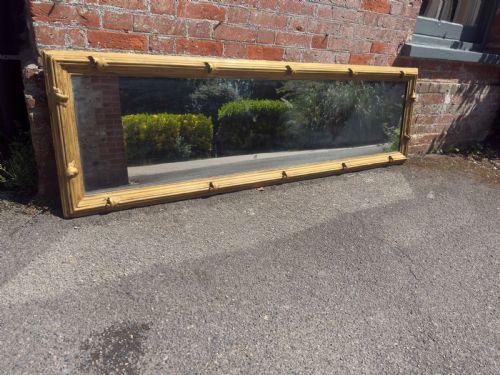
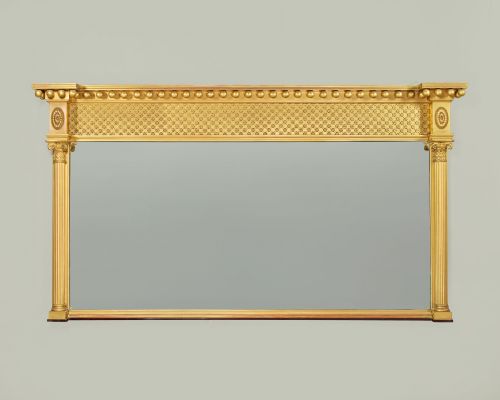
A large landscape mirror spans walls horizontally, frequently taking the form of an overmantel mirror designed to sit above a fireplace. These horizontal pieces appear across Georgian, Regency, Victorian, and Edwardian periods.
The selections on this page bridge domestic utility and grand reception spaces, drawing on styles from Neoclassical to Regency Revival. Walnut, mahogany, pine, and gessoed woods form the primary structural backbones for these wide formats.
Materials and construction
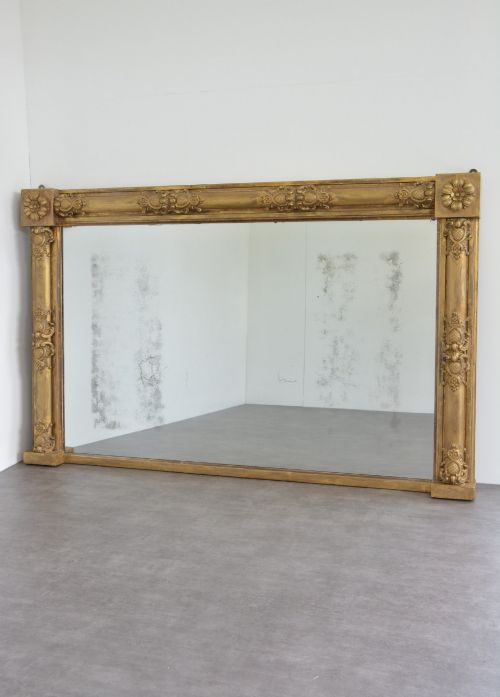
Carved wood, gesso, and gold leaf dominate the decorative finishes, often applied over pine or hardwood substrates such as mahogany and walnut. Artisans built up intricate relief work using gesso on carved wood frames before applying gilding or paint.
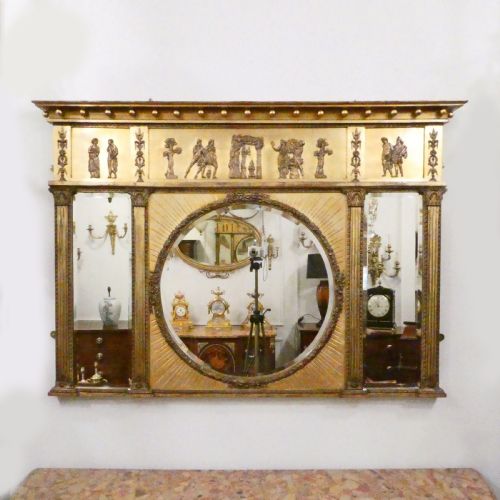
Mirror glass panels are secured within sectional or triptych frames, sometimes utilising original glass plates that display natural foxing and age spots from centuries past.
Periods represented span from the 18th century through Georgian, Regency, and Victorian eras into the Edwardian years.
Distinctions in craftsmanship and preservation
Quality rests in the crispness of the carved wood and gesso ornamentation, where depth and hand-carved detail elevate a frame far above standard moulded plaster. Original gilding and untouched glass plates contribute substantially to a piece's integrity.
The structural stability of large sectional timber frames and the subtlety of painted or parcel-gilt finishes separate standard decorative items from superior examples.
Ciceri & Co. of Edinburgh
The Large Landscape Mirror Glossary
- Overmantel mirror
- A wide horizontal looking glass specifically proportioned to hang on the wall directly above a mantelpiece.
- Gesso
- A plaster-like mixture applied to wood frames and carved into intricate decorative reliefs before being gilded or painted.
- Triptych
- A mirror divided into three distinct vertical sections or panels within a single unifying frame.
- Foxing
- The natural age-related spotting, browning, or speckling that occurs within the reflective silvering of antique glass plates.
- Trumeau
- A decorative wall mirror incorporating a painted panel or artwork directly into the upper section of the frame.
Large Landscape Mirror: Frequently Asked Questions
Where should a large landscape mirror hang?
These wide looking glasses find their traditional home centred on the chimney breast above a fireplace mantel, where their horizontal proportions balance the hearth below.
They also work effectively along long reception room walls to reflect natural light and create an illusion of depth.
How do I identify a Regency period mirror?
Regency examples often incorporate Neoclassical motifs such as classical urns, reeded pilasters, and ball-bearing decoration beneath the cornice.
Giltwood frames from this era typically display sharp, refined carving and distinct architectural proportions.
What is a triptych mirror format?
A triptych mirror divides the horizontal glass plate into three separate vertical sections using internal mouldings or columns.
This division breaks up the reflection and adds architectural complexity to the frame.
Should I keep foxed mirror glass?
Foxed glass displays natural oxidation and dark spots that confirm the age and authenticity of the antique plate.
Many collectors prefer retaining this original glass for its historic character rather than opting for a modern replacement.