
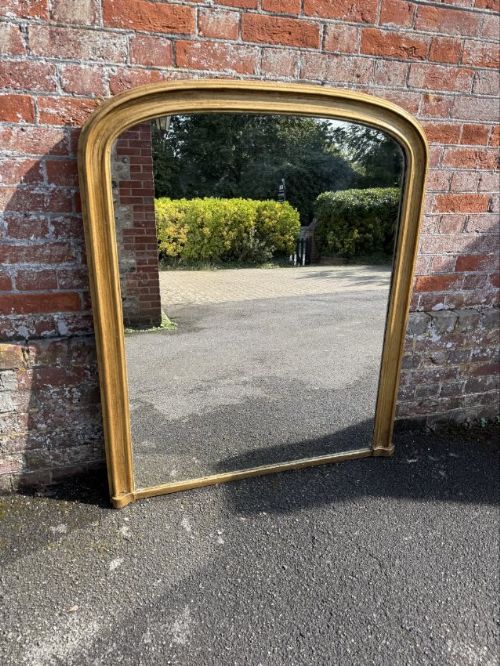
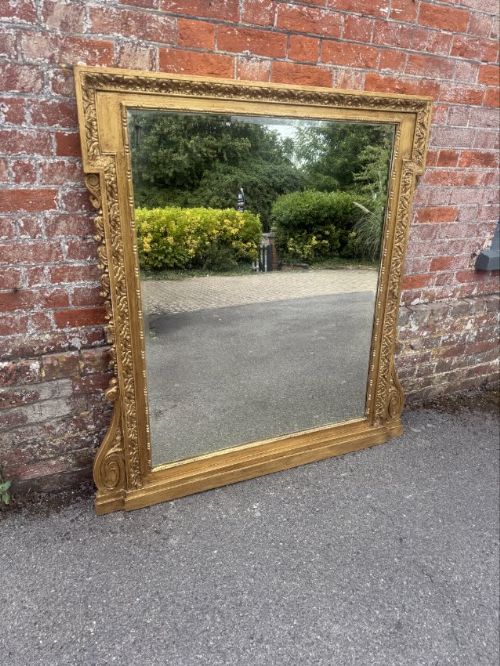
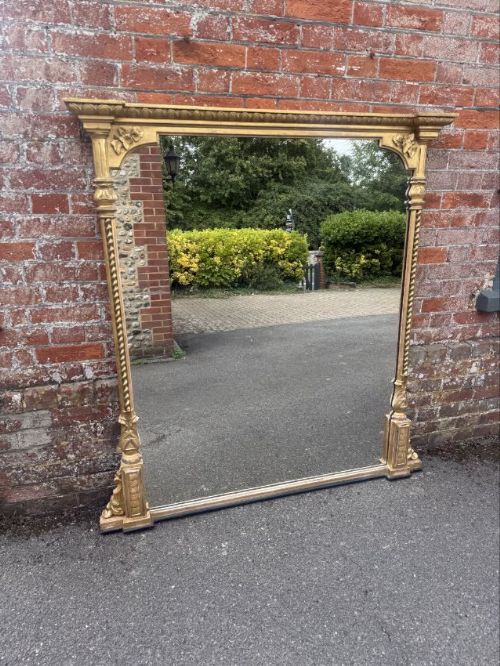
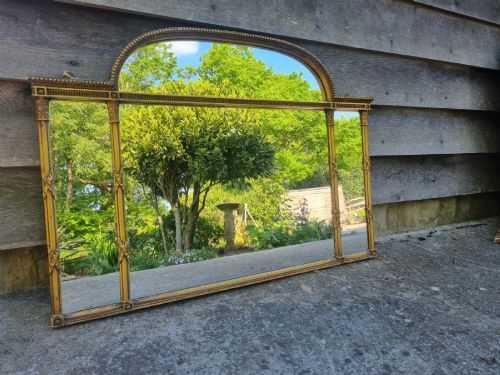
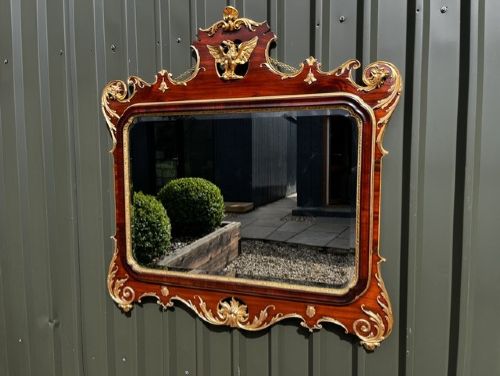
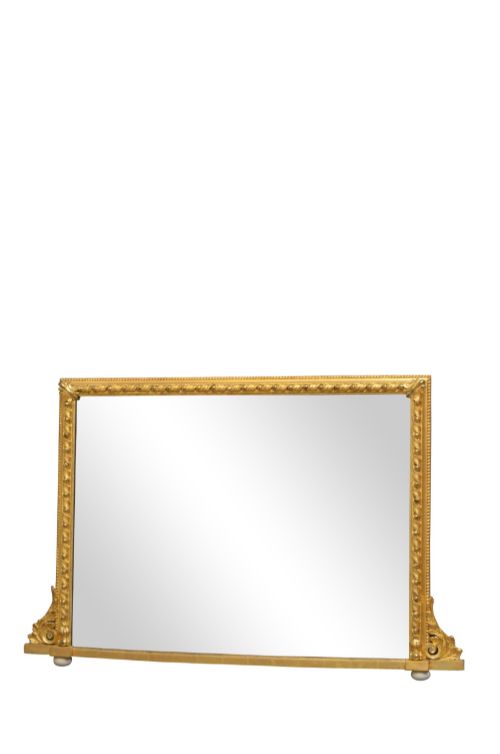
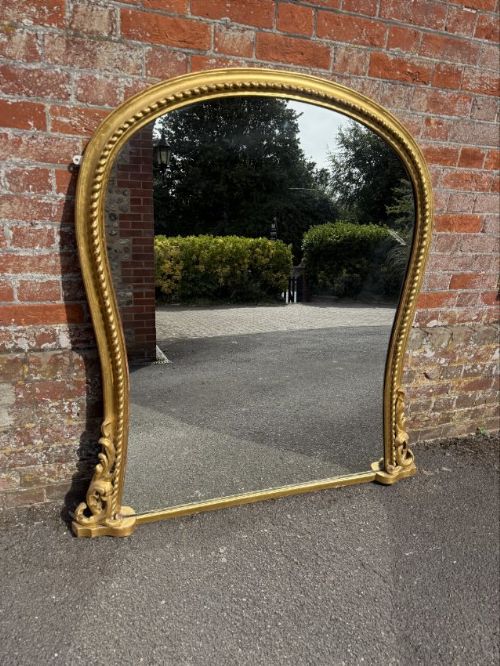
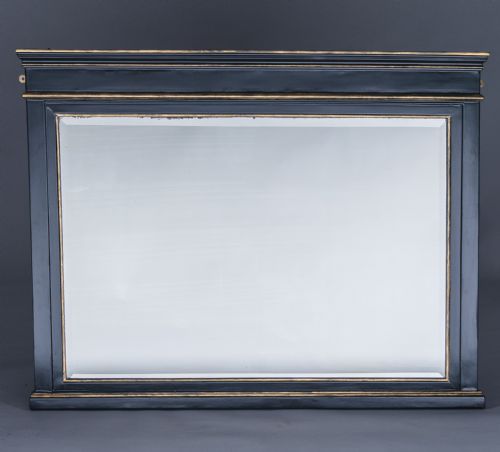

Gilt Chimney Glass
A gilt chimney glass brings warmth and reflection to a room, framing firesides with historic presence and bright metallic surfaces.
Gilt Chimney Glass
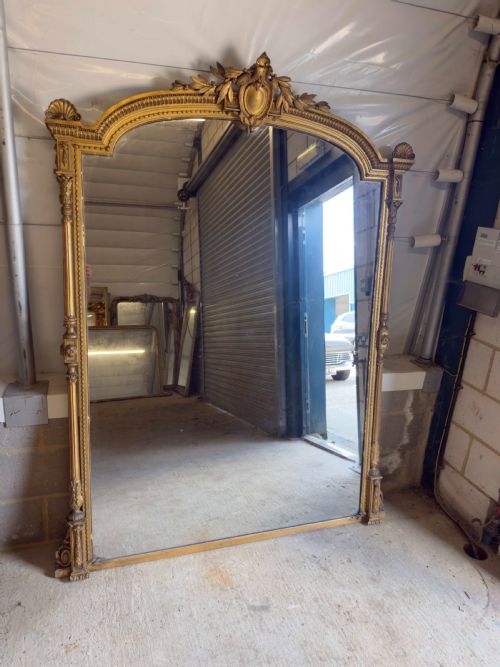
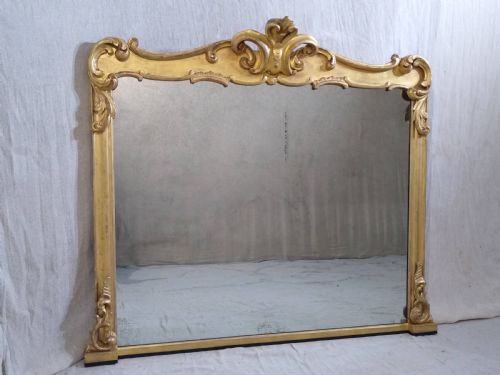
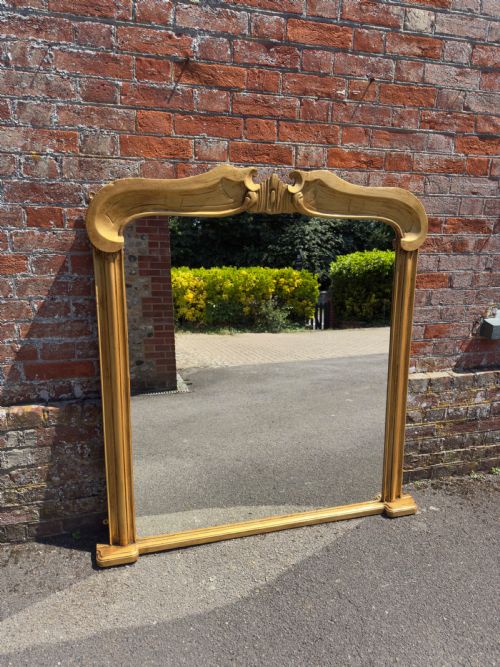
A gilt chimney glass is a large mirror designed to sit upon the mantelpiece above a fireplace, anchoring the proportions of the hearth. These pieces trace back through the Georgian, Regency and Victorian periods, taking forms such as overmantle mirrors, wall mirrors and grand trumeaux.
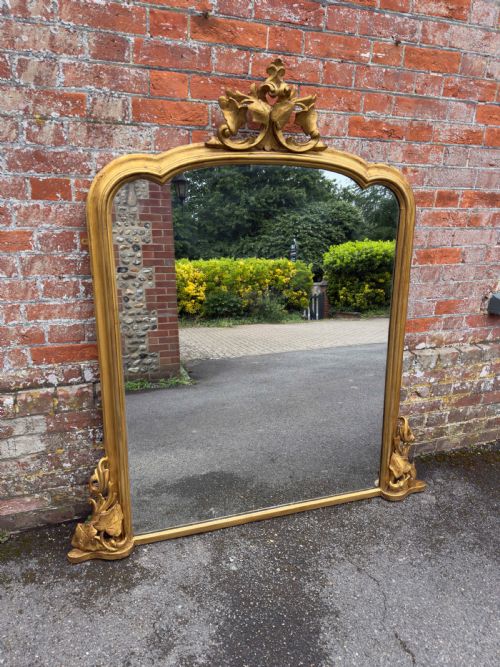
The most common examples met on this page belong to the nineteenth century, emerging from Victorian and Regency workshops with arched tops, shaped frames and substantial proportions. Makers constructed them to sit low against the wall, reflecting light from the fire across the room.
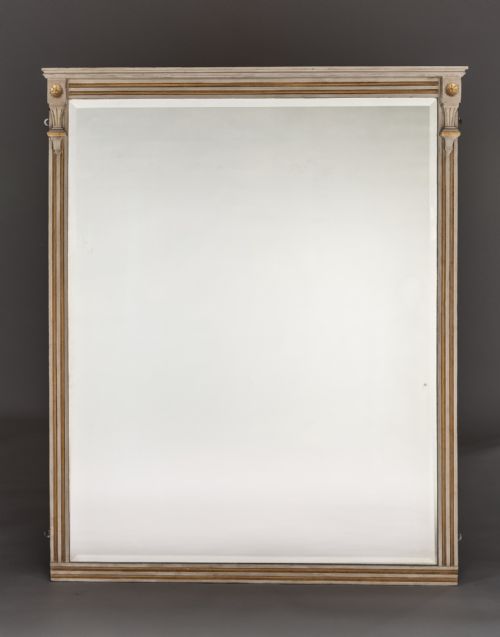
Stylistic influences range from austere Neoclassical designs and Adam panels to ornate Rococo Revival flourishes and Chippendale mahogany frameworks. Collectors also encounter distinct regional variations, including Irish country house mirrors featuring decorative details like birds and squirrels.
How they were made
Carpenters built the foundational frames of a gilt chimney glass using timber such as wood, ebonised wood or mahogany. They then applied layers of gesso, a plaster-like mixture, over the carved wooden base to create smooth surfaces for detailing and gilding.
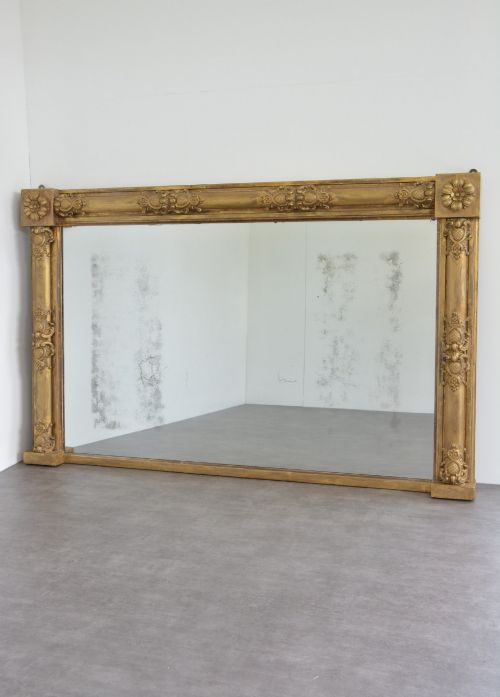
Craftsmen finished the frames with gold leaf or composition applied over the gesso, capturing light through the reflective metallic sheen. Some pieces incorporate original mirror glass, which frequently exhibits foxing where the backing silvering has aged over time.
Gilt Chimney Glass Retail Price Guide 2026
Typical asking prices for gilt chimney glass among the pieces listed under this phrase on Sellingantiques today, from the lower quarter to the upper quarter. They describe what is for sale here now, not the wider market.
What varies in quality
The depth and crispness of the carved wood and gesso ornamentation separate standard joinery from superior craftsmanship. Master carvers produced intricate rope twists, ribbed columns and figurative motifs with distinct definition rather than soft, mass-produced contours.
The integrity of the original mirror plate and its silvering determines the historical value of the piece. Authentic plates showing natural foxing or age spots retain their character far better than modern replacement glass.
The Gilt Chimney Glass Glossary
- Overmantle mirror
- A large mirror specifically constructed to hang or stand upon the mantelpiece above a fireplace. These frames often match the horizontal width of the chimney breast.
- Gesso
- A mixture of plaster of Paris, chalk and size used as a smooth base for gilding on wooden frames. Artisans carved intricate decorative details directly into this hardened layer.
- Foxing
- Small dark spots and discolouration that develop in the reflective backing of antique mirror glass over decades. This natural chemical ageing process is prized by collectors for authenticity.
- Trumeau mirror
- A decorative wall mirror incorporating a painted panel or a detailed carving above the glass plate. These grand items originated in French interior design and influenced British styles.
- Parcel-gilt
- A decoration technique where portions of an object are highlighted in gold leaf while the underlying wood or paint remains visible. This creates a contrasting two-tone effect on the frame.
Gilt Chimney Glass: Frequently Asked Questions
How do I hang a heavy overmantle mirror safely?
These large framed mirrors require substantial wall fixings anchored directly into masonry or secure wall studs to support their considerable weight safely. Many examples were originally designed to rest directly upon the mantelpiece while secured to the wall with discreet brackets.
Professional installation is strongly advised for grand scale pieces featuring heavy wood and gesso construction. Ensuring the weight rests partially on the mantel shelf relieves tension from the hanging wire.
What is the difference between an overmantle and a wall mirror?
An overmantle mirror is specifically proportioned to sit above a fireplace hearth, usually featuring a wide horizontal layout that matches the chimney breast. Standard wall mirrors are designed for general room placement without the specific spatial constraints of a fireplace.
Traditional chimney glasses often incorporate lower base structures or flat bottoms intended to sit securely on a wooden mantel shelf. Wall mirrors instead rely entirely on central hanging points positioned on the back of the frame.
How do I identify a Regency period chimney glass?
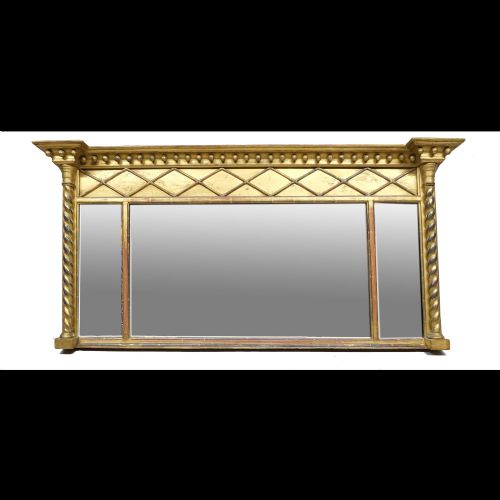
Regency mirrors typically display classical restraint, featuring architectural elements such as reeded columns, ball-bearing friezes and convex or compartmentalised mirror plates. The frames often utilise carved wood finished with bright gold leaf rather than heavy Victorian ornamentation.
Proportions during this era favoured symmetry and clean geometric lines influenced by Neoclassical design principles. The presence of compartmental plates divided by gilded muntins is another hallmark of the period.