
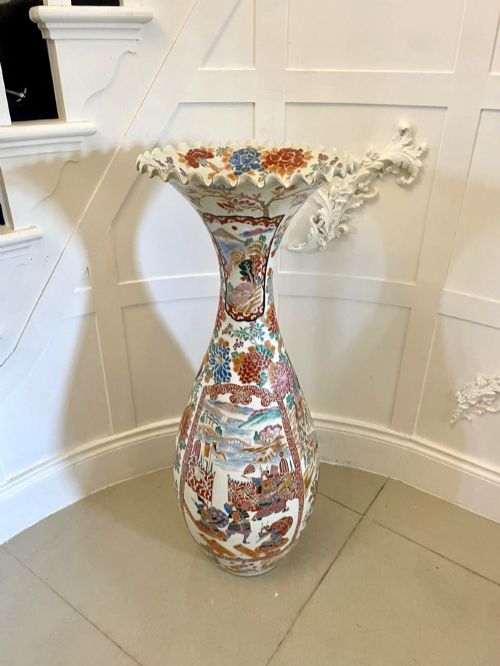
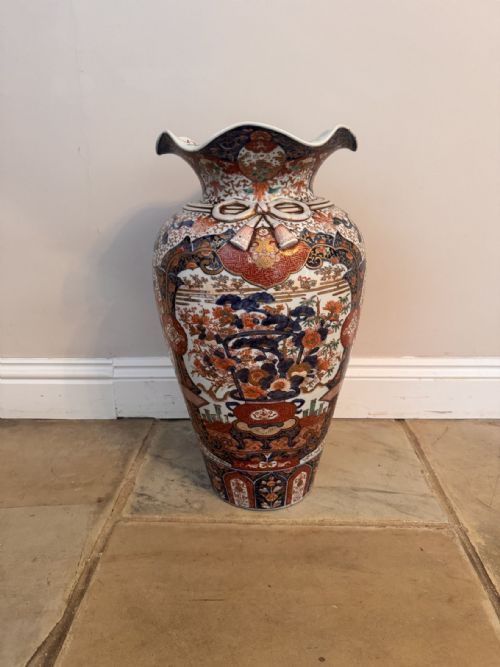
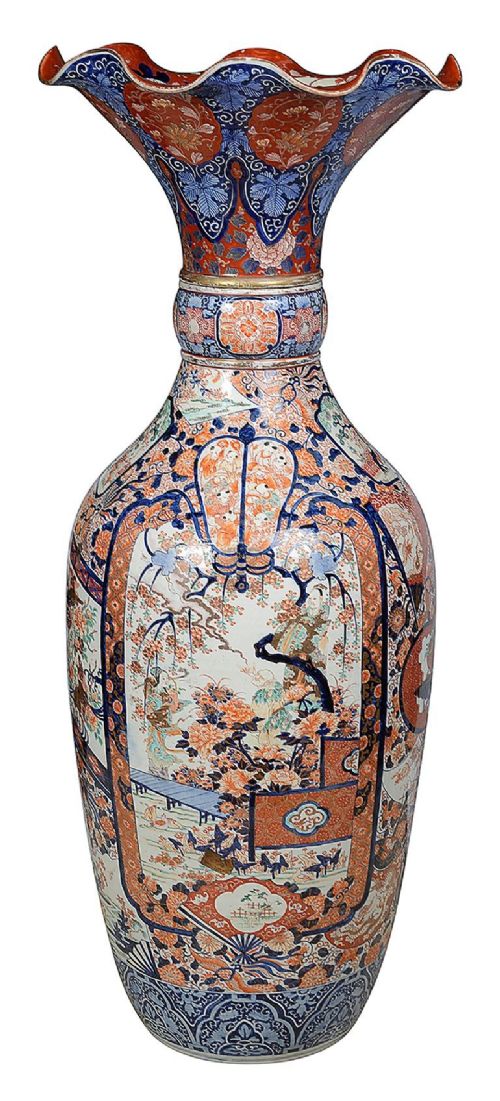
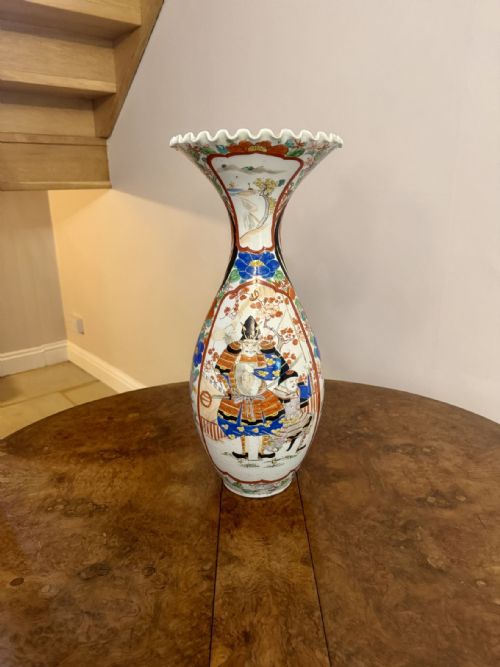


Large Imari Vase
A large imari vase brings rich cobalt blue, iron red, and gilt decoration to a room, drawing the eye with traditional Japanese and European export aesthetics.
Large Imari Vase
A large imari vase most commonly refers to 19th century Japanese porcelain created during the Meiji period, alongside earlier Edo period examples and European interpretations. These substantial vessels appear as floor-standing pieces, lidded jars, trumpet forms, and spill vases shaped for display.
Makers in Japan produced these for both domestic use and export, working primarily in Arita, while European potteries such as Minton and Samson of Paris created their own Imari style wares. Buyers frequently encounter impressive pairs, monumental floor vases, and examples mounted on wood stands or converted into table lamps.
Materials and construction methods
Potters shaped hard-paste porcelain on the wheel or in moulds before applying underglaze blue and overglaze enamel colours. Artisans then added gold leaf, gilt, and gilding highlights to enrich the botanical and panel motifs.
Many of the larger floor-standing pieces and lidded urns incorporated structural wooden or brass stands to support their considerable height, which often exceeded a metre.
Fierce mythical beasts guard some of these vessels, appearing as sculpted Dogs of Foo acting as handles.
Factors that distinguish standard pieces from exceptional examples
Quality rests in the crispness of the hand-painted cobalt blue panels, the richness of the iron red enamel, and the density of the gold leaf application. Finer examples display balanced proportions, intricate floral or figural detailing, and well-preserved covers.
The presence of handles, such as Dogs of Foo, and original matching pairs or garnitures elevate the standing of a vessel. Potteries like Arita and recognised European makers achieved greater precision in their glaze consistency and firing than generic commercial workshops.
Minton·Samson
The Large Imari Vase Glossary
- Imari palette
- A traditional colour scheme featuring underglaze cobalt blue, iron red, and supplementary gilt highlights. This palette originated in Japanese kilns and was later copied widely across Europe.
- Meiji Period
- The era of Japanese history spanning from 1868 to 1912. Many of the large decorative vases and floor-standing pieces encountered today date from this productive manufacturing epoch.
- Garniture
- A set of three or more matching vases or jars designed to be displayed together on a mantelpiece or sideboard. These matched groupings remain sought after by collectors.
- Arita
- The Japanese town and surrounding region where Imari porcelain production was centred. Kilns here supplied the raw white porcelain and finished wares for export.
- Spill vase
- A tall, slender vessel originally designed to hold wooden spills used for lighting fires or pipes. In larger sizes, these form striking decorative objects.
Large Imari Vase: Frequently Asked Questions
How do I date a large imari vase?
Dating relies on stylistic markers, paste characteristics, and the historical context of the piece. Meiji period examples often show dense detailing and bright enamels, while 18th century Edo pieces exhibit different potting weights and softer cobalt tones.
European copies from potteries like Samson imitate these traits but reveal distinct porcelain bodies and glaze textures under close examination.
Where should I display a floor standing vase?
These tall vessels require stable floor space away from heavy foot traffic to prevent accidental knocks. Placing them in corners, hallways, or beside fireplaces allows their height and colourful palettes to stand out without crowding the room.
Many period pieces benefit from being placed on their original wood stands to distribute weight and protect the base.
Are lidded vases rarer than open ones?
Vessels featuring their original matching covers are scarcer because lids were easily separated or broken over centuries of handling. Surviving pairs with intact lids hold particular appeal for collectors seeking complete garnitures.
Open forms such as trumpet vases and spill vases were made in distinct shapes for different decorative purposes.
How do Japanese and European Imari differ?
Japanese export pieces produced in Arita display authentic potting techniques and specific mineral impurities in the porcelain body characteristic of East Asian kilns. European factories like Samson and Minton deliberately imitated the Japanese Imari style during the 18th and 19th centuries.
Examining the foot rim, glaze application, and gilding style helps distinguish the place of origin.