


Arita Porcelain Jar
An arita porcelain jar brings centuries of kiln craft to a room, offering the bold palettes of early Japanese export trade.
Arita Porcelain Jar
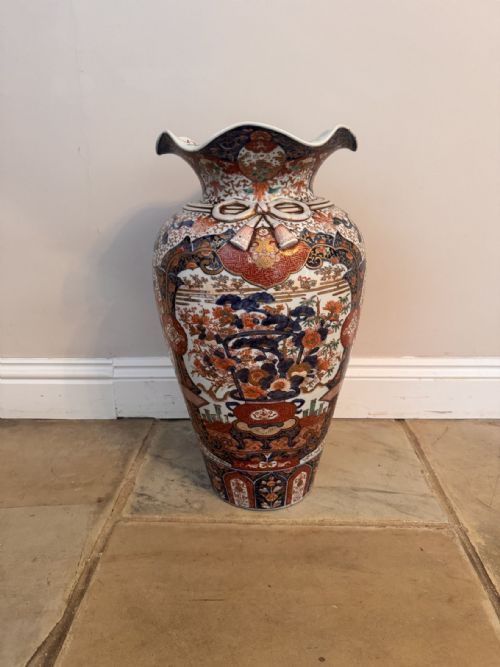
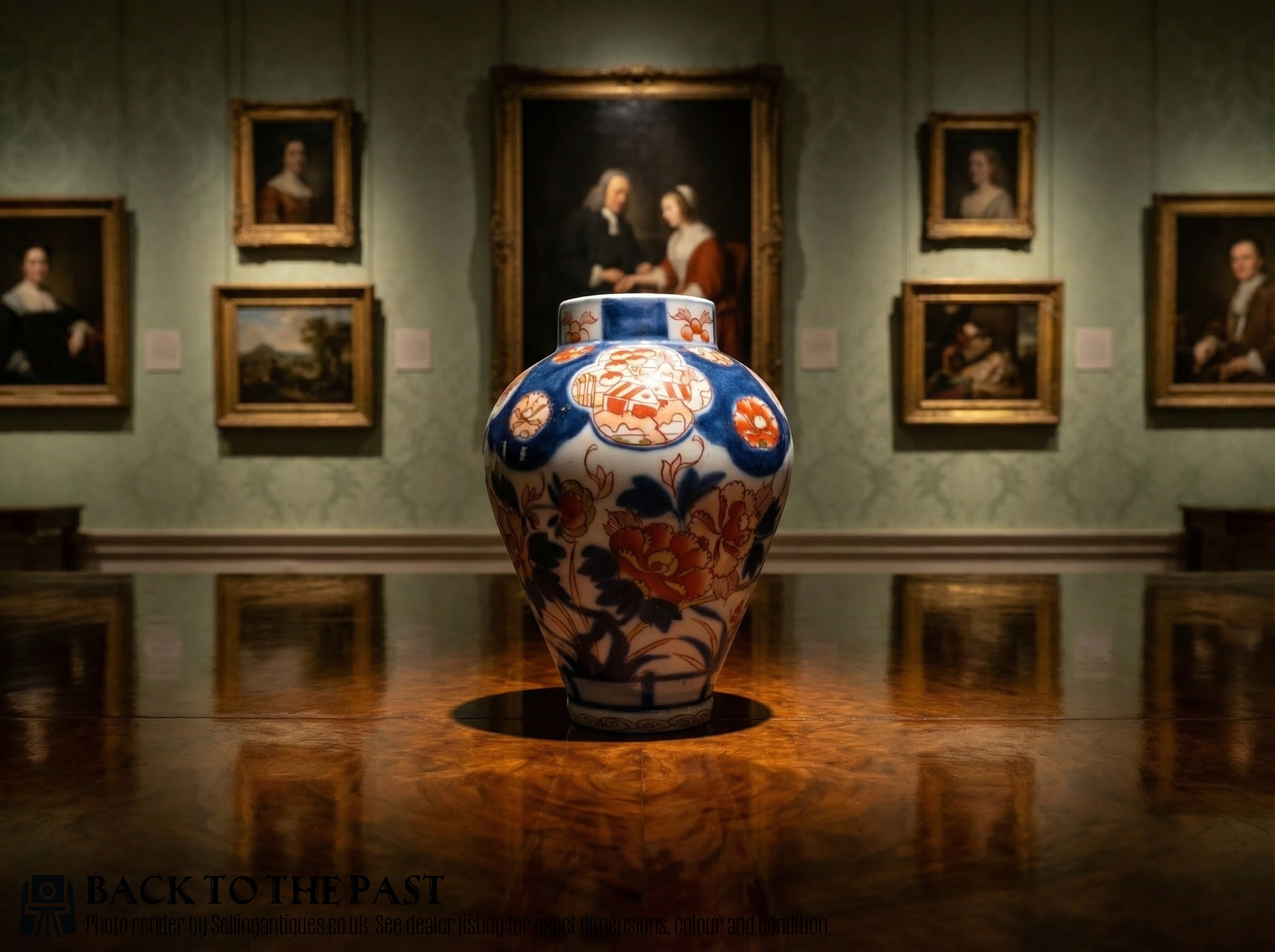
When you search for an arita porcelain jar, you encounter vessels shaped in the Hizen province of Japan for domestic use and international export. These pieces span centuries of production, ranging from early blue and white wares to richly decorated garnitures.
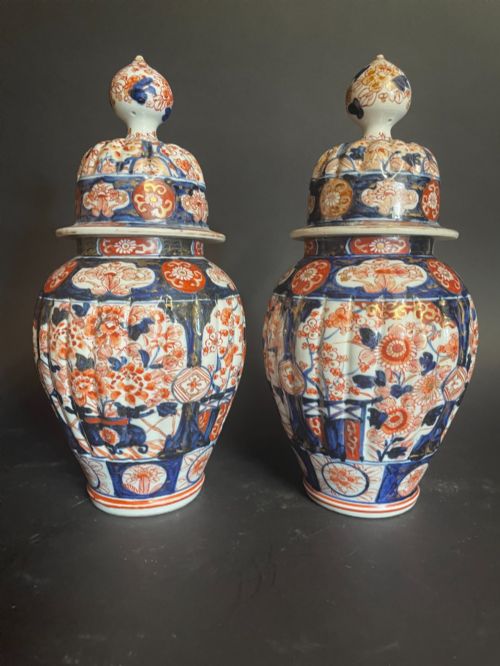
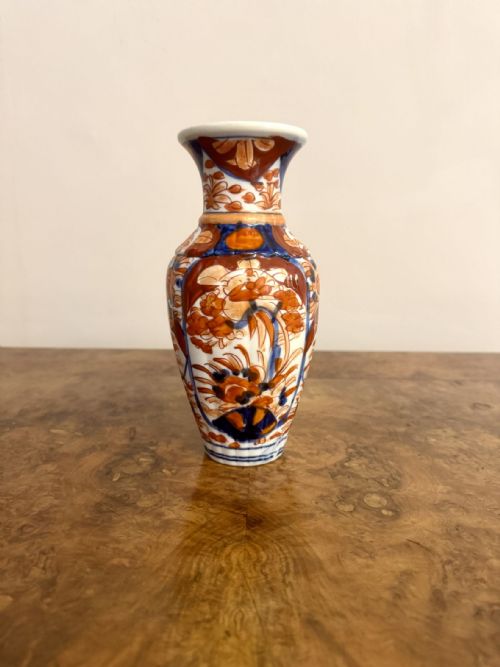
The version you are most likely to meet on this page is the lidded ginger jar or covered vase finished in the Japanese Imari palette. These examples draw upon Edo period traditions, employing distinct cobalt blue underglaze paired with contrasting enamel and gold leaf accents.
Beyond lidded jars and ginger jars, the selection encompasses floor standing vases, hexagonal shapes, and occasional conversions into table lamps. Each object reflects the evolution of kiln techniques from the seventeenth century through the Meiji period.
How they were made
Potters shaped fine white clay by hand or on the wheel before applying mineral pigments beneath a clear glaze. Cobalt blue underglaze provided the durable foundation for intricate motifs painted directly onto the un-fired surface.
Following the initial high-temperature firing, artisans added vibrant enamel colours and gold leaf highlights in subsequent low-temperature firings. Some heavier lidded jars and vases received gilt or ormolu mounts later in their history to suit European tastes.
Several vessels crossed oceans twice, serving first as luxury export cargo before spending centuries on quiet European mantelpieces.
What varies in quality
The refinement of the potting and the clarity of the cobalt blue underglaze set early seventeenth and eighteenth-century examples apart from later mass-produced wares. Crispness in the hand-painted enamel details and the preservation of original covers dictate desirability.
Larger floor-standing vases and balanced garnitures demand greater technical mastery during the kiln process, resulting in superior visual presence. The integration of gold leaf and the crisp execution of Japanese Imari or Kakiemon motifs distinguish the finer outputs.
Fukagawa
The Arita Porcelain Jar Glossary
- Cobalt blue underglaze
- A mineral pigment applied to raw porcelain clay before glazing and firing. It survives high kiln temperatures to produce a deep blue hue beneath a glassy finish.
- Japanese Imari
- A style of decorative ceramic originating from Arita, characterised by a distinctive palette of cobalt blue, iron red, and gold. This aesthetic heavily influenced European porcelain design.
- Kakiemon
- A refined style of Japanese porcelain featuring asymmetrical enamel designs of birds and flowers on a milky white body. It represents an important benchmark in early export wares.
- Garniture
- A set of three or more matching vases and lidded jars designed to be displayed together on a mantelpiece or cabinet. These coordinated groups were highly prized in historic interiors.
- Edo period
- The historic era in Japan spanning from the early seventeenth to the mid-nineteenth century. Ceramics from this time display characteristic forms and traditional kiln methods.
Arita Porcelain Jar: Frequently Asked Questions
What is an arita porcelain jar?
An arita porcelain jar is a vessel produced in the historic kiln hub of Arita in Japan, renowned for fine potting and painted decoration.
These containers range from utilitarian storage jars to grand lidded vases made for export to European markets.
How do I date an arita jar?
Dating relies on stylistic clues, potting weight, and the complexity of the cobalt blue underglaze and enamel palette.
Early pieces from the seventeenth and eighteenth centuries show different clay impurities and brushwork compared to nineteenth-century Meiji period outputs.
What does Imari mean on these jars?
Imari refers to the port from which these decorated porcelains were shipped to the West, rather than a single kiln.
The term describes the signature combination of underglaze cobalt blue, iron red, and gold leaf that defines the aesthetic.
Where should I display my jar?
These jars suit prominent placement on sideboards, tables, or within period mantelpiece garniture arrangements.
Keep them away from direct sunlight and high-traffic edges to protect the delicate enamel and gold leaf surfaces.