


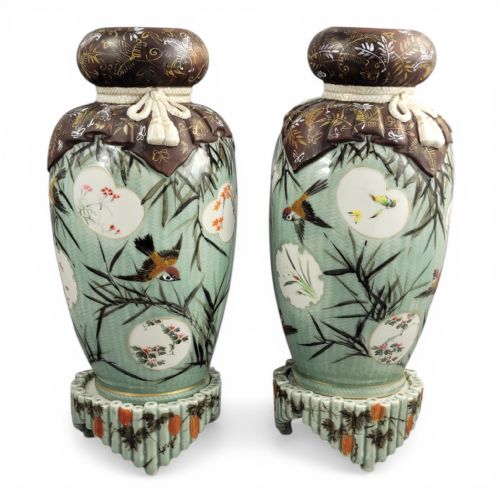

Large Japanese Ceramic Vase
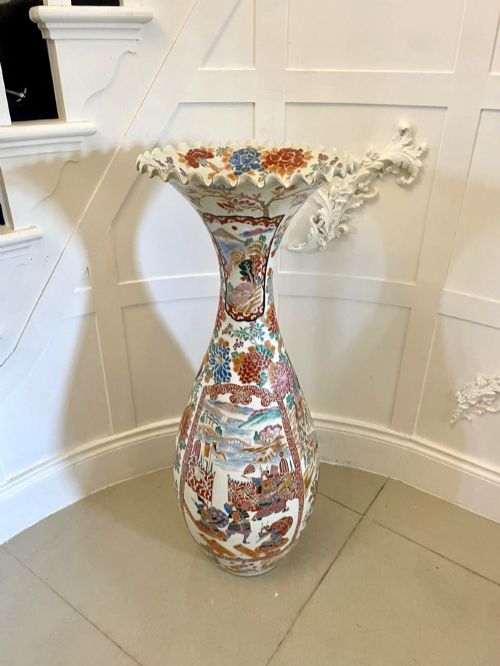
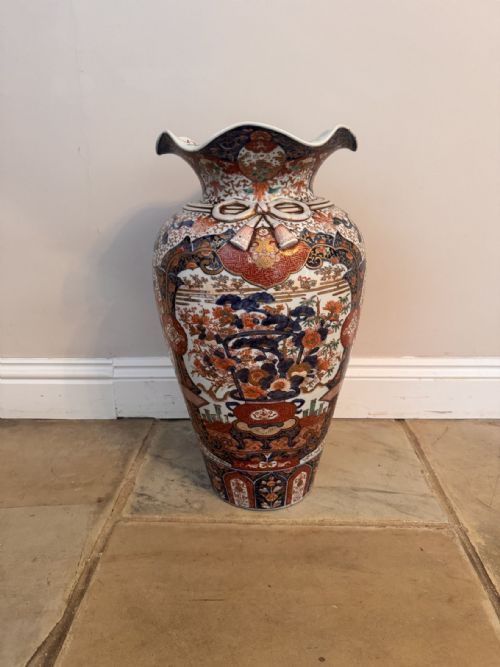
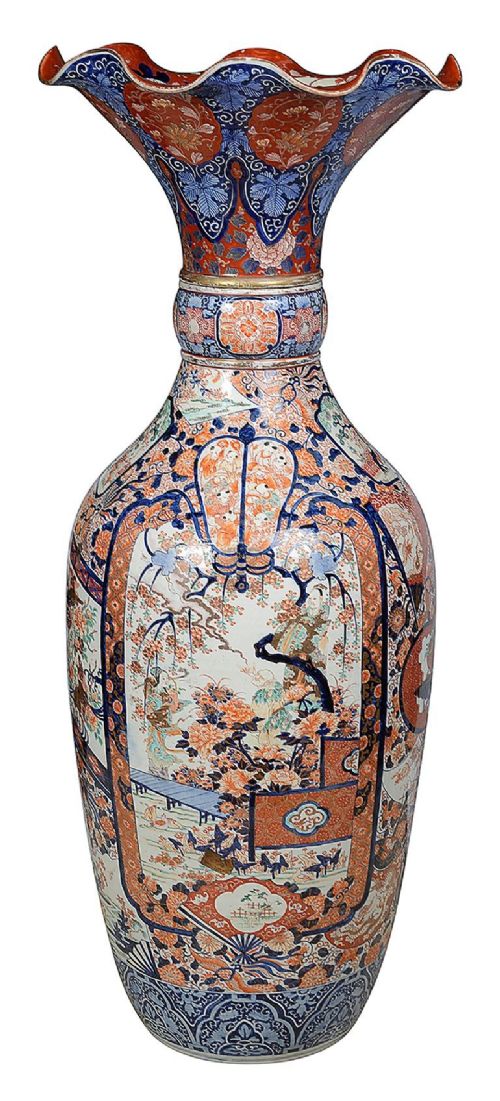
A large japanese ceramic vase commands space through scale, painted detail and presence, spanning nineteenth-century Imari and Satsuma traditions.
Large Japanese Ceramic Vase
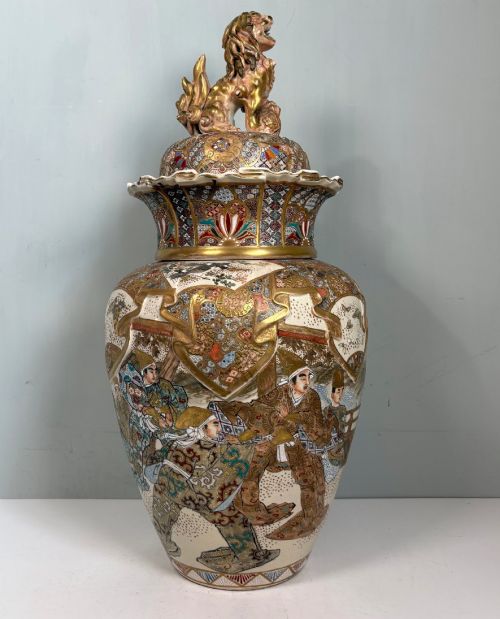
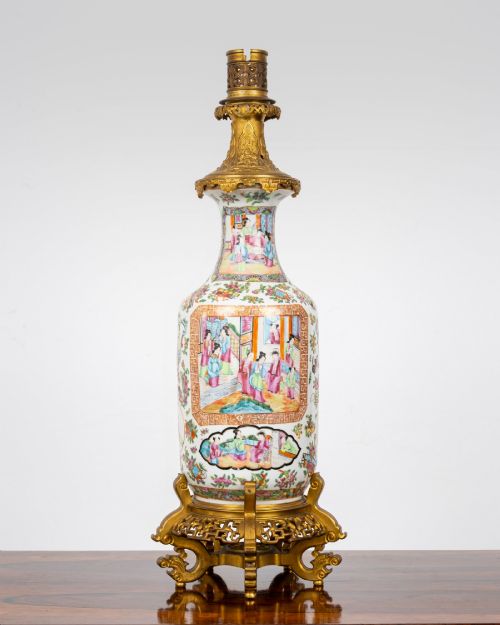
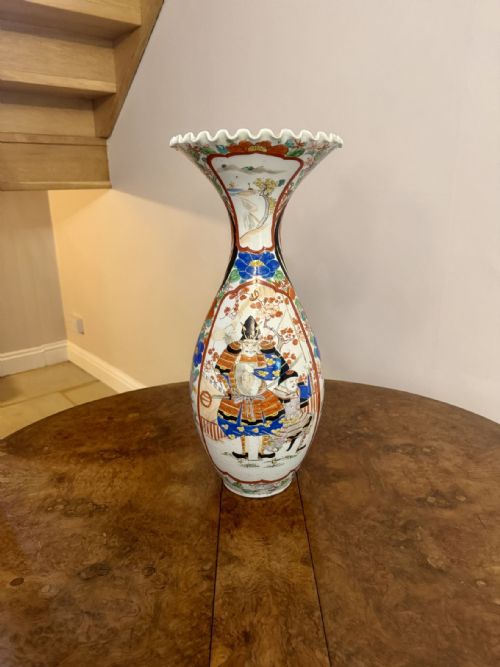
A large japanese ceramic vase typically arrives as an imposing floor-standing vessel, a lidded jar, or a converted table lamp. The selections seen here span the nineteenth century and early twentieth century, capturing distinct periods of export production.
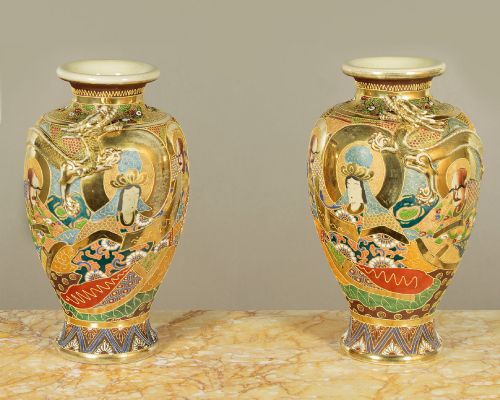
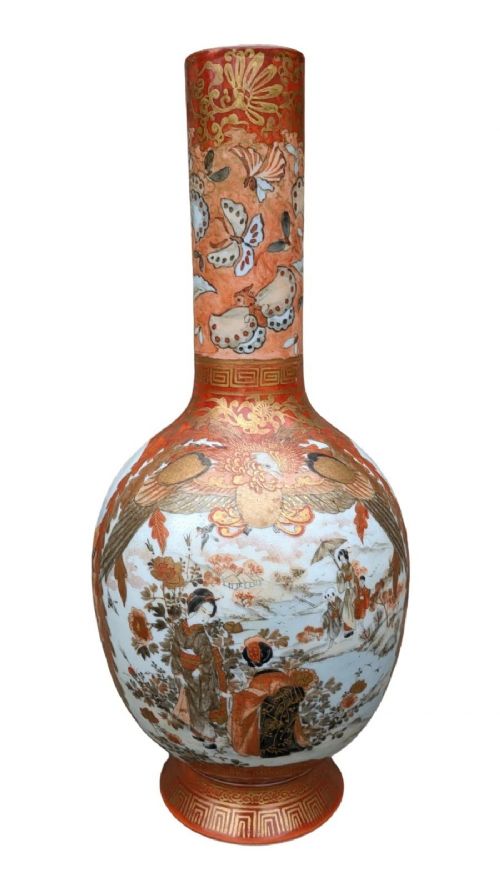
Imari and Satsuma wares dominate the forms, alongside Kutani and blue and white porcelain. Buyers encounter floor-standing examples reaching well over a metre in height, often accompanied by matched pairs or individual display pieces.
How they were made
Potters shaped high-fired porcelain and earthenware bodies, frequently mounting them with gilt bronze or incorporating original porcelain stands. Surface decoration combined dense enamel painting with gold leaf and raised moriage work.
Some vessels integrated lacquer panels or applied details like lion handles and garlic-head necks. Kiln techniques allowed for monumental heights in floor-standing shapes without losing structural integrity.
Listings feature works spanning the nineteenth century into the Shōwa period, utilising porcelain, earthenware, enamel, and gold leaf.
What varies in quality
The distinction between ordinary export wares and exceptional pieces rests upon the precision of the brushwork and the ambition of the composition. Master potters and decorated studios achieved a depth of palette and complexity of narrative scenes that lesser workshops could not replicate.
Proportion and scale also dictate the hierarchy of these objects. Monumental floor vases with intact original covers or matching stands demonstrate a completeness that elevates the work significantly.
Hotoda·Makuzu Kozan·Kato Sanhei·Seiko-en Chokei·Kinkozan·Hattori
The Large Japanese Ceramic Vase Glossary
- Imari
- A style of Japanese export porcelain characterised by a palette of underglaze blue, iron red, and gilt highlights. It originated in Arita and became immensely popular in European interiors.
- Satsuma
- An earthenware ceramic type featuring a crackled creamy glaze decorated with polychrome enamels and extensive gilding. The best examples depict detailed figural scenes and thousand-figure arhat motifs.
- Moriage
- A decorative technique using piped clay slips to create raised relief patterns on the ceramic surface. This adds tactile depth beneath the enamel and gold leaf.
- Kutani
- A traditional style of Japanese porcelain known for bold pictorial designs and rich colour palettes, particularly greens, blues, yellows, and purples. Pieces often incorporate narrative panels and nature motifs.
- Meiji Period
- The era spanning from 1868 to 1912, marked by Japan opening to Western trade and the production of highly ornate decorative arts for export.
Large Japanese Ceramic Vase: Frequently Asked Questions
Where were these large vases displayed?
These imposing vessels were primarily produced for Western export markets during the Meiji period, where they furnished grand Victorian and Edwardian reception rooms.
Floor-standing pieces and massive lidded jars sat in entrance halls or drawing rooms, designed to project cultural sophistication and wealth.
How do I care for a ceramic vase?
Dust the surface gently with a soft, dry cloth to protect the delicate enamel and gold leaf work from abrasion.
Keep these vessels away from direct sunlight and moisture to preserve the glazes and any secondary materials like lacquer or bronze mounts.
What is the difference between Imari and Satsuma?
Imari wares are hard-paste porcelains decorated in deep blue and iron red with gold, offering a crisp and resonant ceramic body.
Satsuma pieces utilise a softer earthenware body with an absorbent crackled glaze, providing a matte canvas for dense pictorial enamel painting.
Can these vases be used for flowers?
Most monumental nineteenth-century export vases served decorative rather than functional purposes as ornamental centrepieces.
Due to their age, porous earthenware bodies, and delicate gilt surfaces, using them to hold water is generally discouraged.