
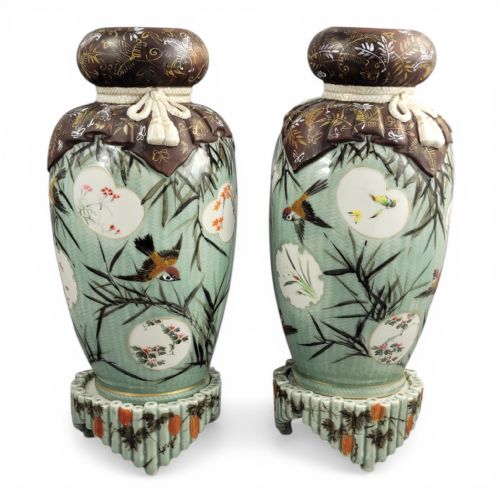


Porcelain Floor Urn
These large porcelain floor urn vessels bring commanding vertical scale and intricate hand-painted detail to a room.
Porcelain Floor Urn
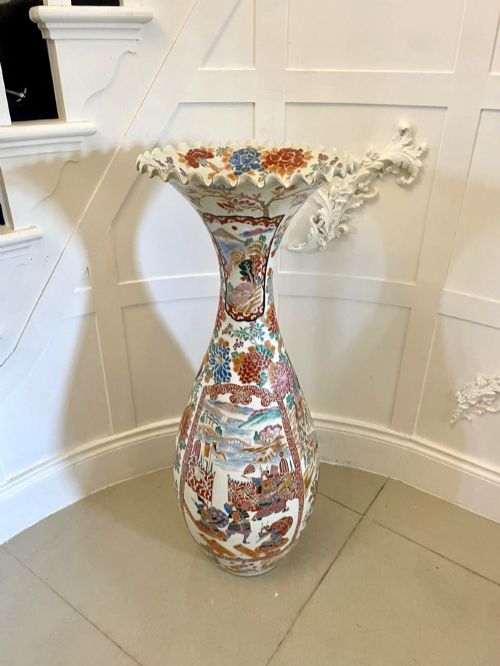
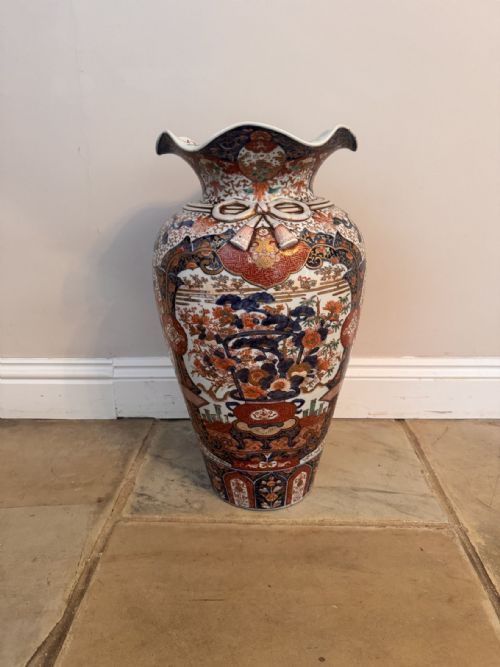
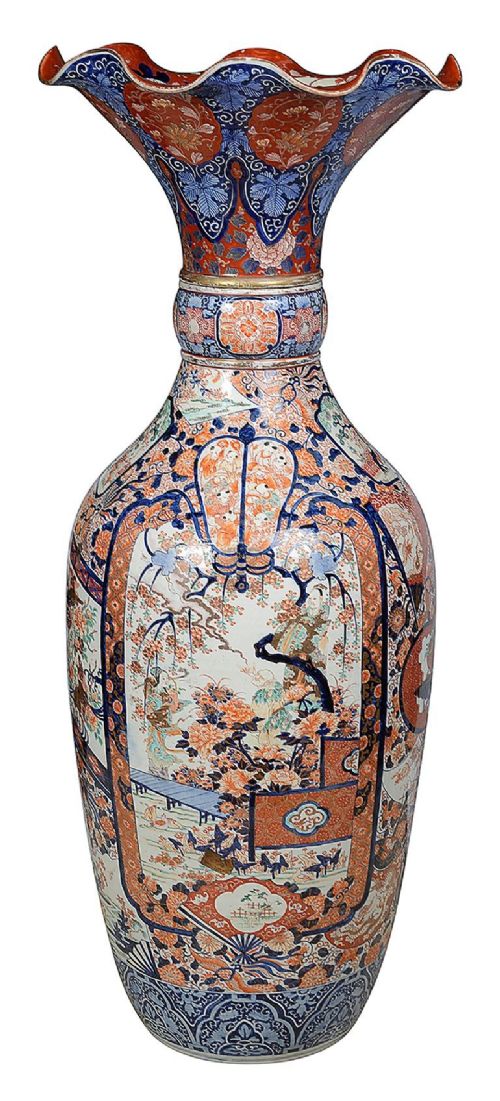
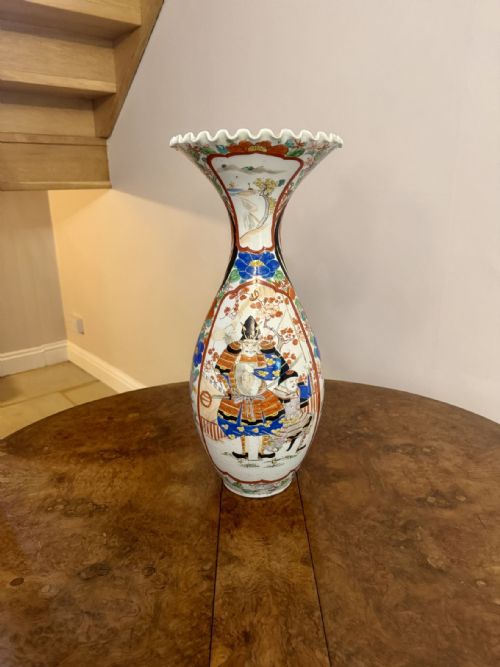
A porcelain floor urn serves as a monumental statement piece, standing directly on the floor to fill empty corners or frame architectural doorways. When exploring porcelain floor urn options, buyers encounter grand Japanese Imari, Satsuma, and Chinese palace jars predominantly originating from the nineteenth century.
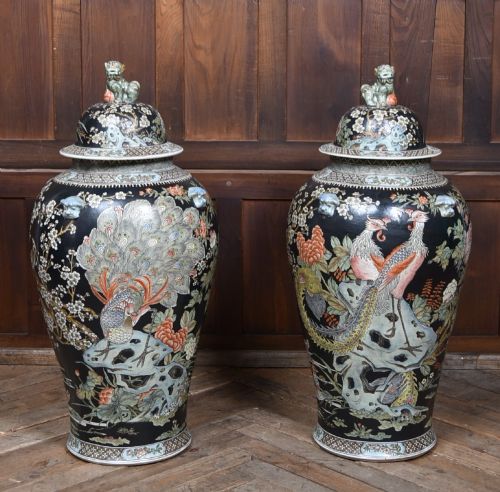
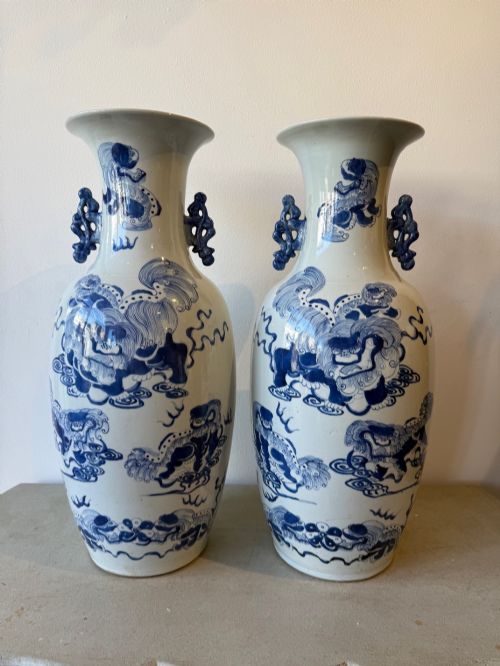
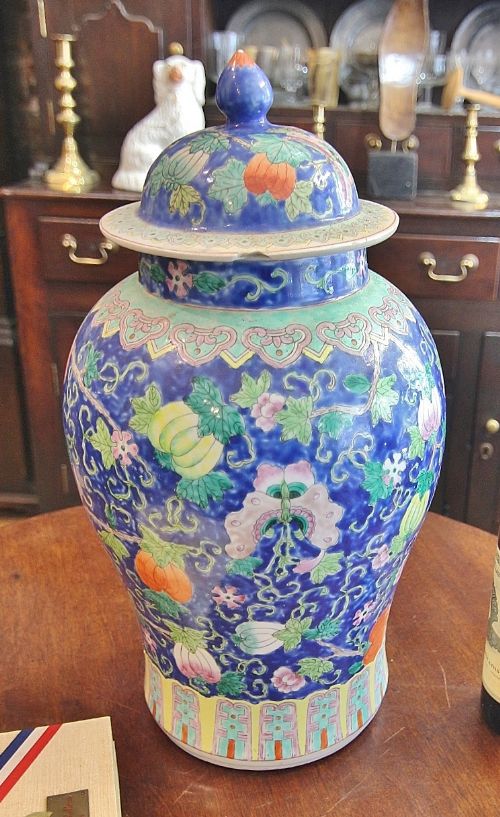
These substantial vessels often appear as impressive pairs designed for symmetry, taking forms such as tall baluster vases, lidded jars, and broad floor vessels. The scale ranges from generous domestic heights up to towering exhibition pieces well over a metre tall.
Originating largely from Asian export traditions, these grand ceramics reflect distinct periods including the Meiji era and Qing Dynasty. They bring substantial presence to interior spaces through rich palettes of blue and white, iron red, and gilt ornamentation.
Materials and methods
Potters shaped dense ceramic bodies and porcelain clays to support massive vertical heights without slumping during firing. Artisans applied cobalt blue underglazes, polychrome enamel colours, and delicate gold leaf highlights across the exterior surfaces.
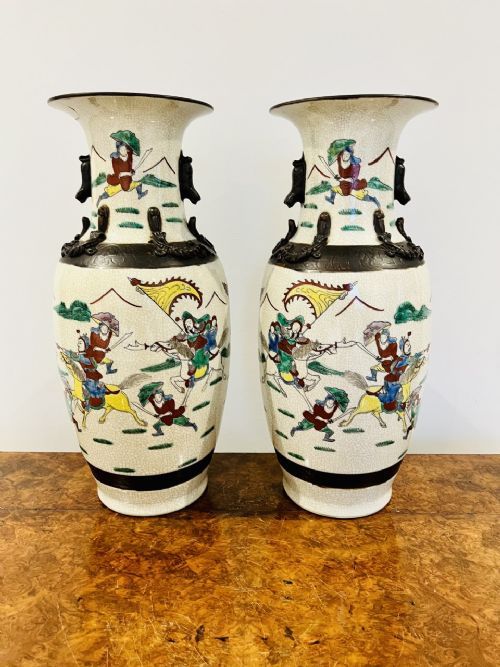
Specialised techniques included cracked glazes, applied lacquer panels, and geometric inset panels mounted onto the porcelain body. Kiln workers managed high-temperature firings to vitrify the clay and fuse the colourful enamel pigments permanently into the glaze.
Some towering nineteenth-century vases stand taller than an adult visitor.
Evaluating quality and execution
Quality rests upon the crispness of the hand-painted brushwork and the complexity of the decorative scheme, ranging from simple cobalt washes to dense multi-figure scenes in famille rose palettes. The precision of the original potting, the stability of large matching pairs, and the richness of the gilding separate standard production from masterwork pieces.
The presence of original matching porcelain stands, intricate lacquer additions, or documented workshop signatures elevates a piece significantly. Superior examples maintain structural integrity and vibrant enamel retention across their immense vertical surfaces despite the hazards of historical firing and display.
Kato Sanhei·Masons Ironstone
The Porcelain Floor Urn Glossary
- Imari
- A traditional Japanese style of porcelain decorated in underglaze blue, iron red, and gold. This palette creates a rich, contrasting surface often seen on large export pieces.
- Satsuma
- A type of Japanese earthenware featuring a pale, cracked ivory glaze decorated with detailed enamels and gilding. It gained immense popularity during the Meiji period.
- Baluster
- A vase form with a rounded bulbous lower body that tapers toward the neck. This silhouette provides stability for tall floor vessels.
- Famille Rose
- A Chinese porcelain palette dominated by opaque pink or rose enamel colours introduced during the Qing Dynasty. Artisans used these tones to render intricate floral and figural compositions.
- Crackled Glaze
- A decorative surface treatment intentionally producing a network of fine cracks within the glass layer. This technique adds subtle texture to the ceramic body.
Porcelain Floor Urn: Frequently Asked Questions
Where should I place a large floor vase?
These imposing vessels anchor empty corners, frame fireplaces, or flank grand entranceways where their height can be fully appreciated.
Because of their substantial size and weight, they sit safely directly on solid flooring away from heavy household traffic.
How do I distinguish Imari from Satsuma?
Imari pieces use true vitrified porcelain decorated primarily with deep underglaze blue, iron red, and gold leaf highlights.
Satsuma pieces utilise a cream-coloured earthenware body featuring a visible network of fine glaze cracks beneath densely painted enamel figures.
Were these large urns made for export?
Many of these monumental pieces were specifically produced in Japanese and Chinese kilns for Western export markets during the nineteenth century.
European and American collectors eagerly sought out these grand decorative objects to display in Victorian drawing rooms and halls.
Do these urns always come in pairs?
While many grand palace jars and floor vases survive as matching pairs intended for symmetrical mantel or floor placement, others exist as single monumental statements.
Pairs often command greater interest from collectors seeking balanced arrangements for large rooms.