
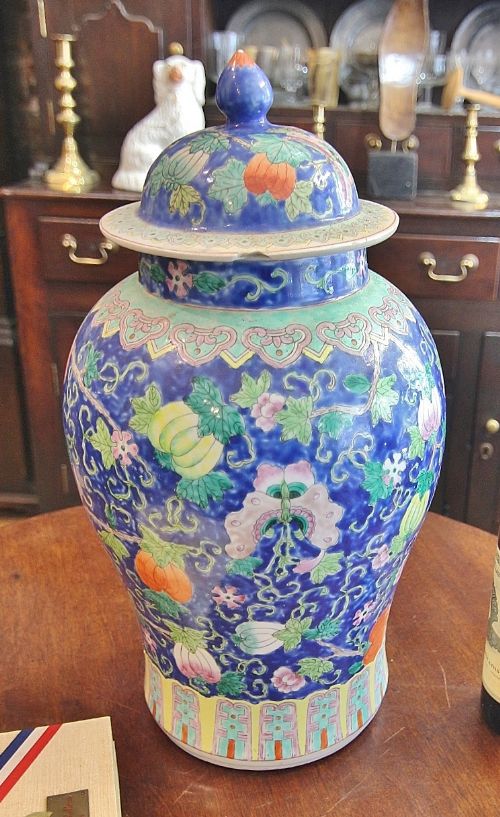


Large Floral Porcelain Vase
A large floral porcelain vase brings colour and scale to a room, drawing the eye with botanical motifs rendered across substantial ceramic bodies.
Large Floral Porcelain Vase
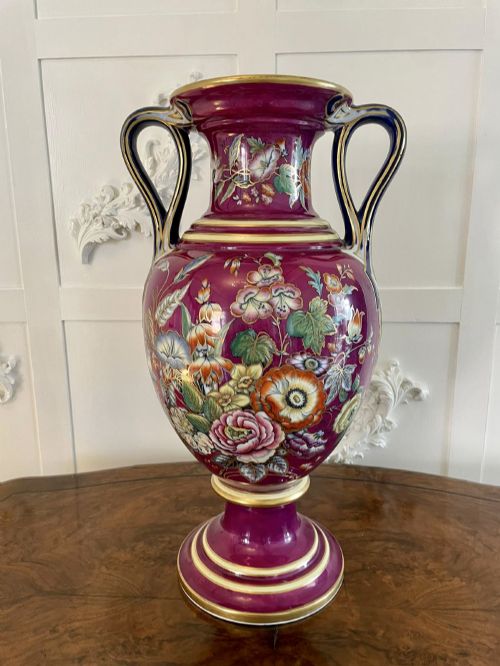
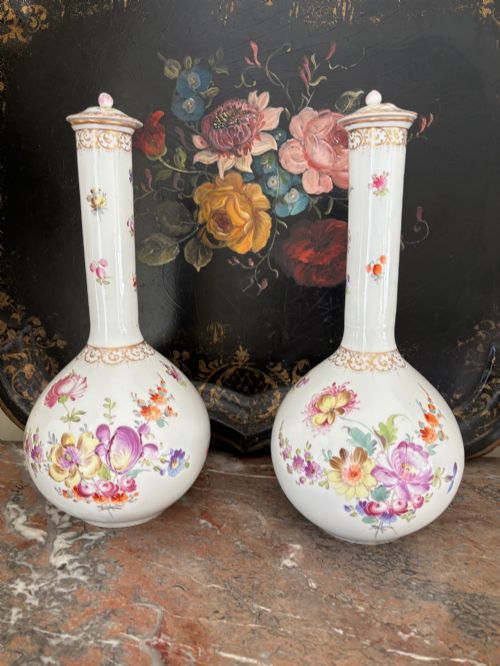
A large floral porcelain vase spans nineteenth-century European production and East Asian export wares, offering substantial vessels designed for display. These pieces appear as bulbous jars, handled urns, lidded vessels, and floor-standing models decorated with botanical themes.
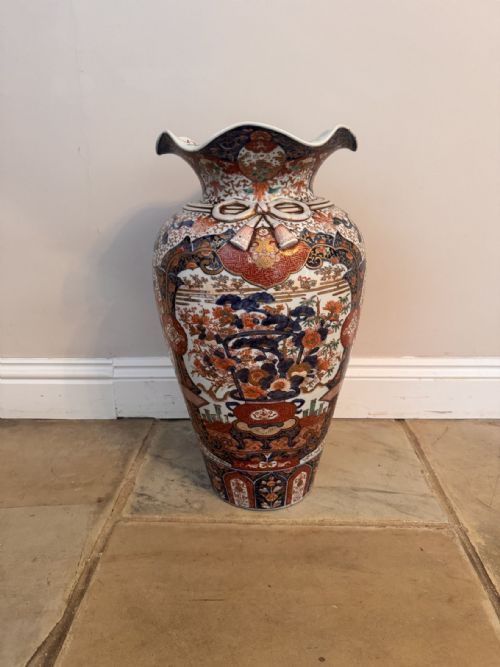
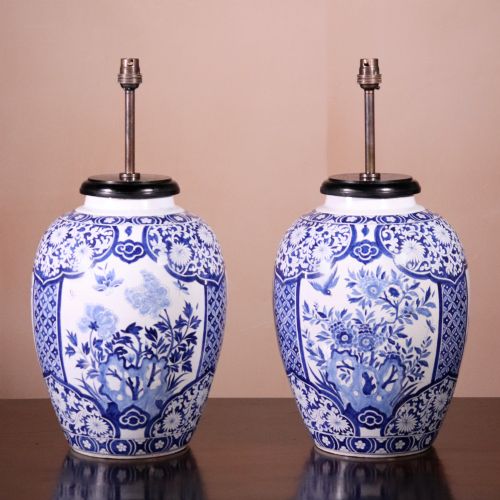
The selection ranges from Victorian Staffordshire and Royal Worcester creations to Japanese Imari, Satsuma, and Kutani pieces, alongside Chinese porcelain and earthenware. Buyers encounter both single statement pieces and matched pairs intended for mantels or pedestals.
Materials and Techniques
Maker operations relied on ceramic bodies, porcelain, and earthenware shaped into vessels and fired before receiving hand-painted decoration. Artisans applied enamel pigments alongside underglaze blue to build floral motifs across the curved surfaces.
Many examples incorporate gold leaf, gilt, and gilding to highlight rims, handles, and panel borders. Certain pieces utilise glaze finishes, ranging from opaque glass effects to blush ivory grounds, completing the decorative scheme.
Several towering examples stand tall enough to double as floor-standing companions for an evening stroll indoors.
Standards of Execution
Quality rests upon the precision of the hand-painted floral decoration and the crispness of the underlying ceramic form. Finer examples display deliberate brushwork and balanced compositions rather than mechanical repetition.
The application of gilding and enamel work distinguishes standard production from superior pieces, where gold leaf remains bright and detailed. Heavier potting and well-balanced proportions also denote higher tier manufacture.
Royal Worcester·Royal Doulton·Sitzendorf·Royal Dux Bohemia·Adams·Tunnicliffe
The Large Floral Porcelain Vase Glossary
- Imari
- A style of Japanese porcelain decorated in underglaze blue, iron red, and gold. This palette creates high-contrast floral and geometric patterns.
- Blush Ivory
- A cream-coloured ceramic ground popularised by English potteries. It provides a soft background for hand-painted floral decoration.
- Famille Rose
- A palette of opaque enamels dominated by pink or rose colours. Chinese artisans utilised this scheme to render detailed floral and figurative scenes.
- Pot Pourri
- A lidded jar or vase pierced to release scent from dried materials. These vessels often feature elaborate crown covers.
- Ewer
- A large jug with a wide spout and handled body. These forms served decorative purposes alongside traditional pouring functions.
Large Floral Porcelain Vase: Frequently Asked Questions
What periods do these vases date from?
The pieces span the nineteenth and twentieth centuries, including Victorian productions and Meiji period Japanese works.
Dates extend from around eighteen-fifty through to the nineteen-forties, capturing distinct aesthetic movements and export eras.
How were these large vases used historically?
These vessels served as principal decorative objects for grand interiors, often displayed on floors, pedestals, or large tables.
Lidded versions and pot pourri jars additionally held scented dried materials to perfume domestic spaces.
How do I distinguish Japanese styles like Imari and Satsuma?
Imari wares rely on a distinct palette of underglaze blue, iron red, and gilt over porcelain surfaces.
Satsuma pieces typically feature a warm earthenware body with crackle glaze, decorated with detailed enamels and raised gold.
Are these pieces suitable for holding water?
While many retain their original waterproof ceramic integrity, larger antique and decorative vessels are primarily intended for display.
Users should check individual interior conditions before introducing water or fresh stems to antique bodies.