

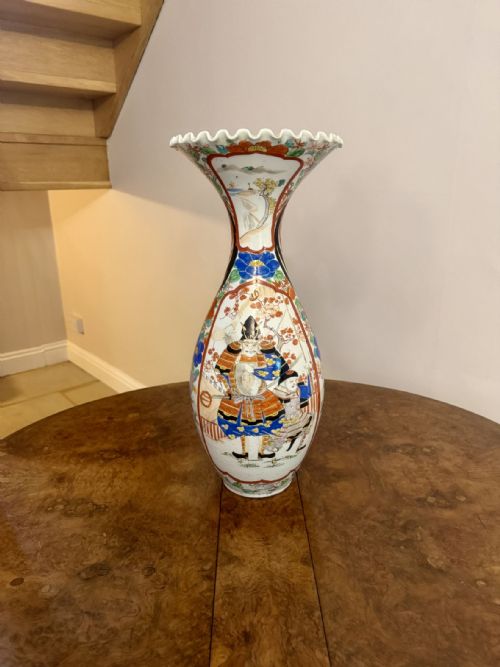


Large Imari Floor Urns
Large imari floor urns bring immense presence to a room, offering striking palettes of porcelain and glaze that define nineteenth-century interiors.
Large Imari Floor Urns
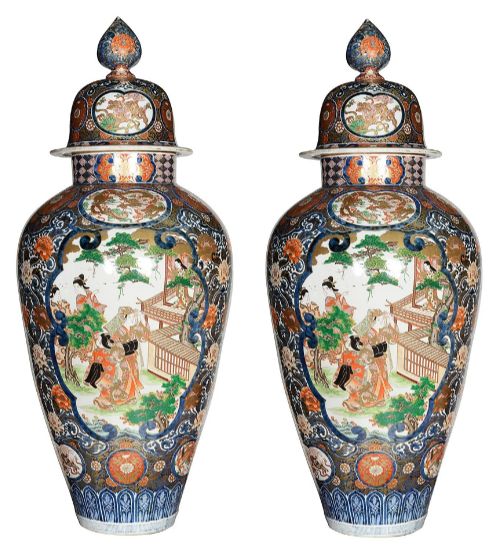
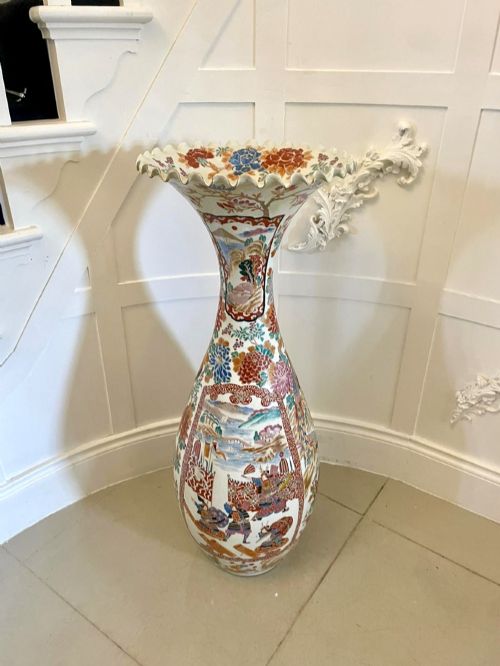
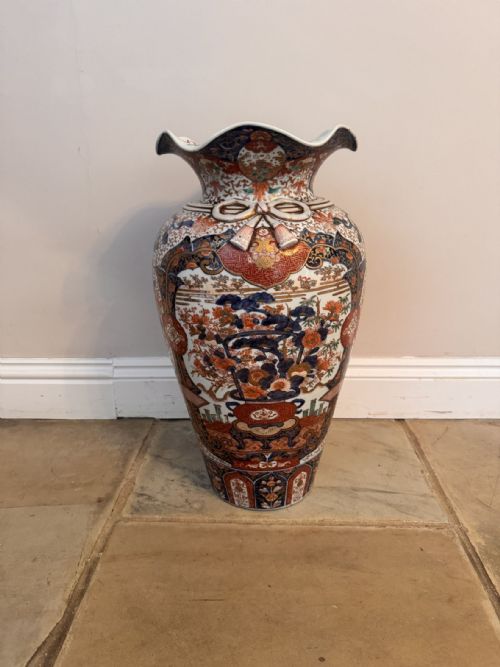
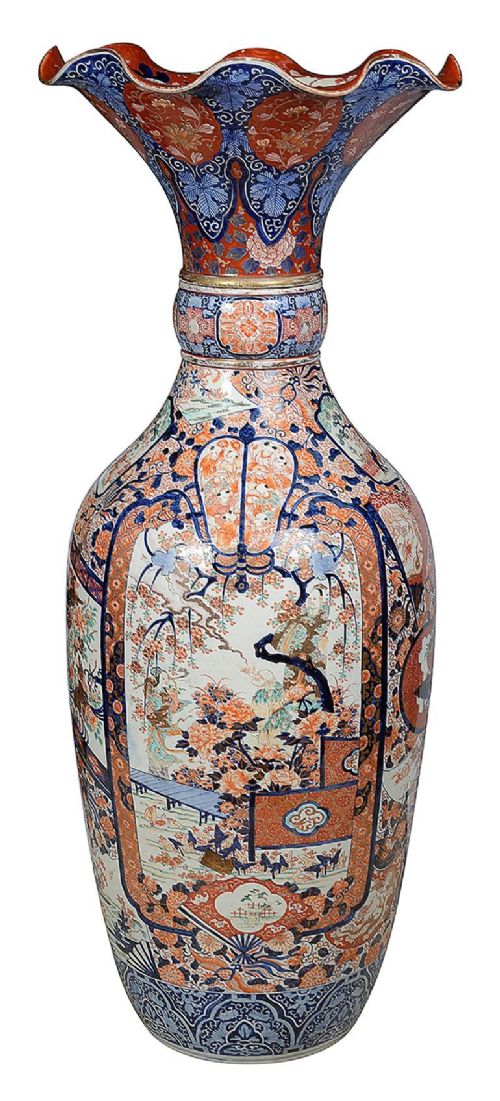
When you search for large imari floor urns, you encounter substantial ceramic vessels originating from the nineteenth century. These pieces include floor-standing vases, pairs of monumental vases, and lidded urns decorated in the Japanese Meiji period style.
The objects on this page span the late nineteenth and early twentieth centuries, showing forms designed specifically for grand display. They range from single tall floor vases measuring nearly five feet to impressive pairs suitable for hallways and reception rooms.
How they were made
Makers shaped these large vessels from porcelain, applying rich enamel colours and gold leaf over a durable glaze. The distinctive imari palette relies on this combination of pigment and metallic detail fired onto the ceramic body.
Some examples incorporate wooden elements or gilt finishes to support their scale and decorative impact. The production techniques of the Meiji period allowed workshops to throw and fire exceptionally tall vases without losing structural stability.
Large Imari Floor Urns Retail Price Guide 2026
Typical asking prices for large imari floor urns among the pieces listed under this phrase on Sellingantiques today, from the lower quarter to the upper quarter. They describe what is for sale here now, not the wider market.
Materials recorded on this page include porcelain, enamel, gold leaf, glaze, wood, and gilt.
What varies in quality
The distinction between average and exceptional pieces lies in the precision of the hand-painted enamel and the application of gold leaf. Superior examples display crisp detail across the imari palette, maintaining vibrant tones without blurring or fading.
Scale and proportion also set the better pieces apart, particularly in monumental floor-standing vases and balanced pairs. Handling massive porcelain forms required significant skill, and the most successful vessels combine towering height with elegant symmetry.
The Large Imari Floor Urns Glossary
- Imari palette
- A traditional decorative scheme featuring rich iron red, underglaze blue, and gold highlights on a white porcelain ground. This distinctive combination creates the high-contrast visual style seen across nineteenth-century Japanese ceramics.
- Meiji period
- The era of Japanese history spanning from 1868 to 1912, characterised by a surge in export ceramics destined for Western markets. Pieces from this time often exhibit ambitious scale and intricate surface decoration.
- Spill vase
- A tall, slender cylindrical vessel originally intended to hold wooden spills for lighting candles or fires. In larger formats, these forms served as decorative focal points on mantelpieces and tables.
- Porcelain
- A hard, fine-grained ceramic fired at high temperatures to achieve a vitrified, non-porous body. It provides the smooth white canvas essential for the layered enamels of imari ware.
Large Imari Floor Urns: Frequently Asked Questions
Where should I place a floor vase?
These tall ceramic vessels suit spacious hallways, grand reception rooms, or corners that require vertical visual weight.
Because many examples reach heights over a metre, keeping them clear of heavy foot traffic protects the glazed surface from accidental knocks.
Are these vases waterproof?
Most nineteenth-century export ceramics were created for decorative display rather than daily utilitarian use.
Filling them with water can damage the historic body or interior glaze, so using them dry or with a hidden inner container is safer.
How do I identify Meiji period pieces?
Meiji period ceramics generally date between eighteen sixty-eight and nineteen twelve, reflecting the artistic output of that specific Japanese era.
They frequently combine dense enamel decoration with the traditional imari palette on large porcelain forms.
Do these urns always come in pairs?
While many monumental pieces survive as matching pairs, single floor-standing vases also appear frequently in nineteenth-century inventories.
Pairs offer symmetrical balance for architectural spaces, whereas single urns anchor a corner or fill a specific architectural recess.