
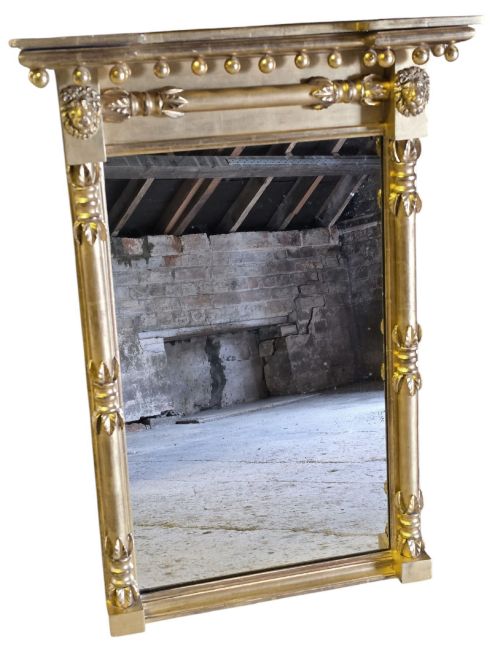
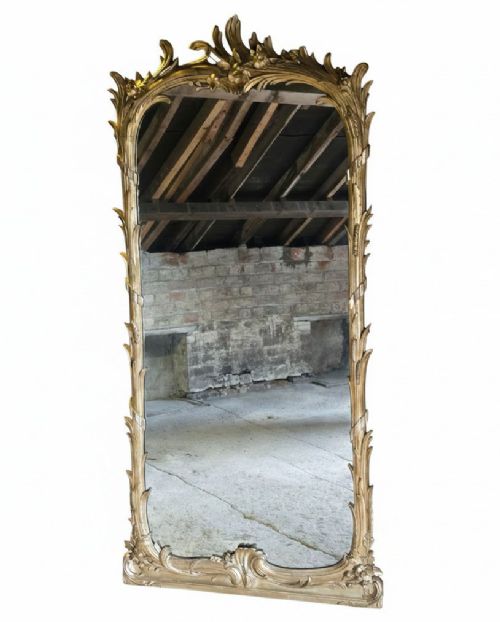
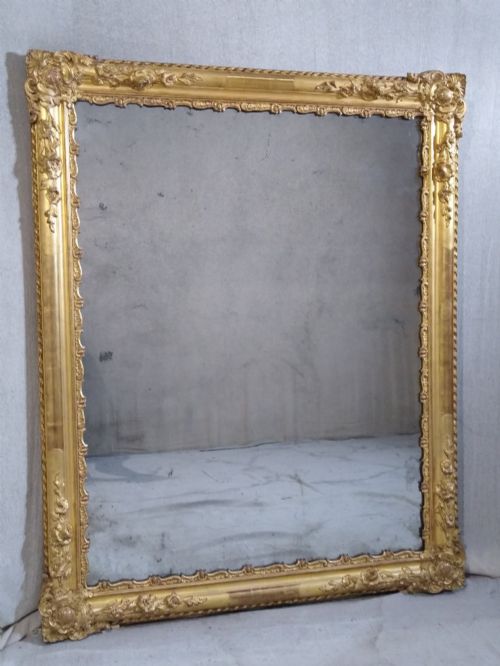
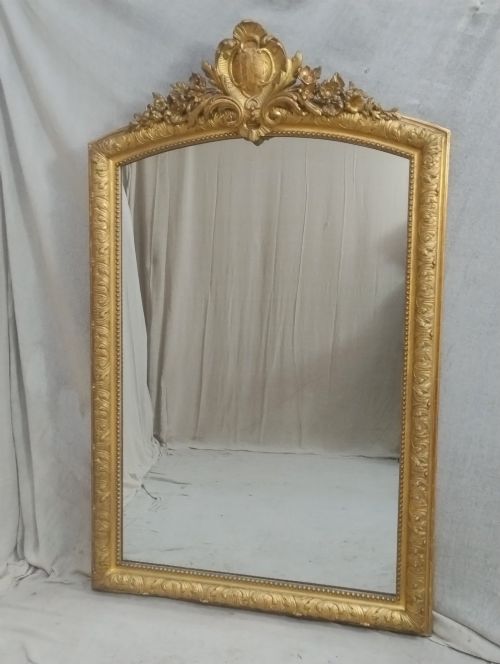


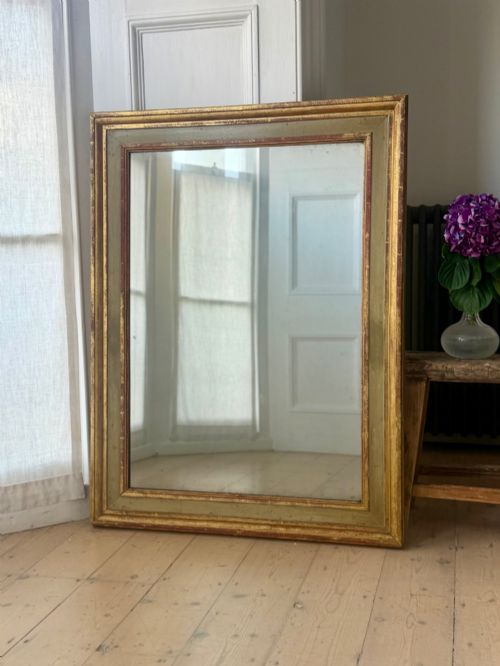
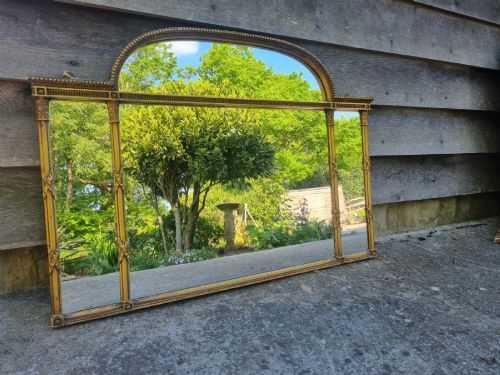
Large Gold Leaf Mirror
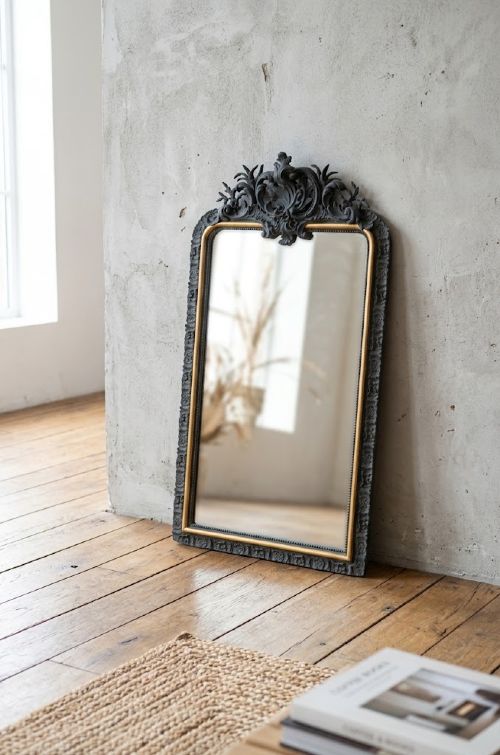
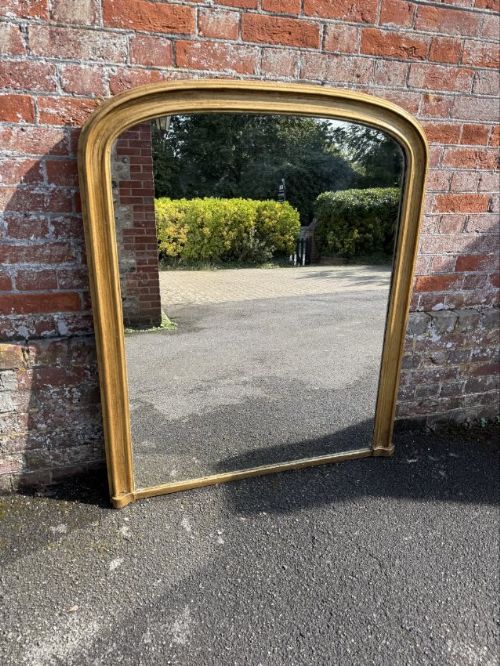
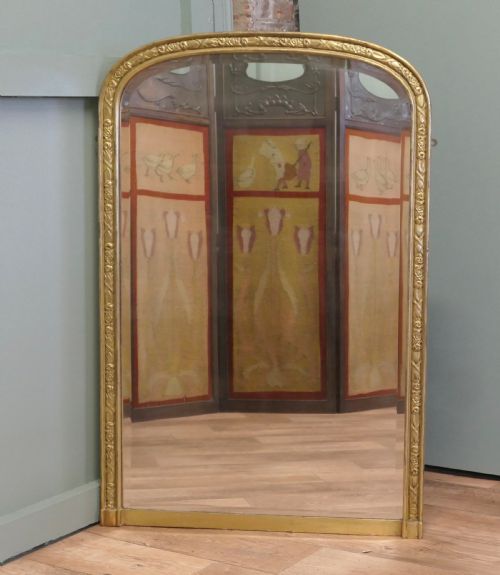
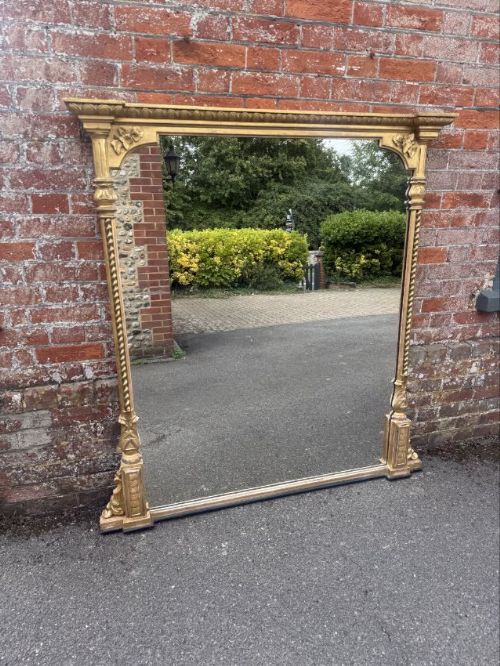
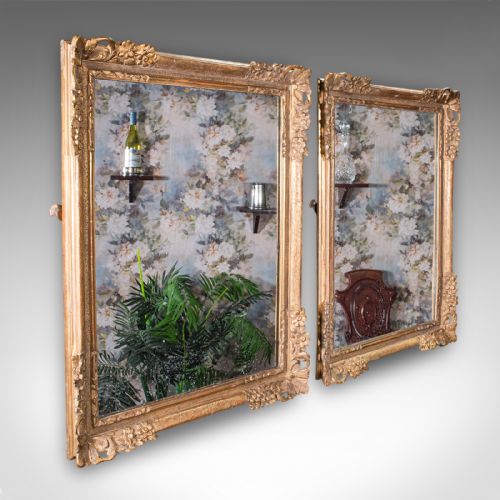
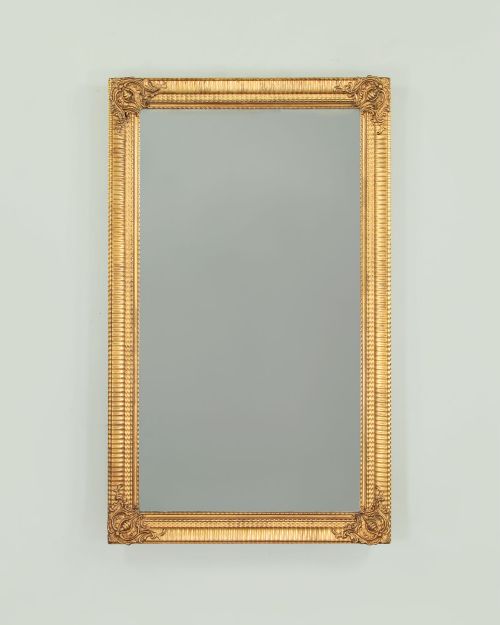
A large gold leaf mirror commands attention in a room, reflecting light through ornate frames shaped in the nineteenth century.
Large Gold Leaf Mirror
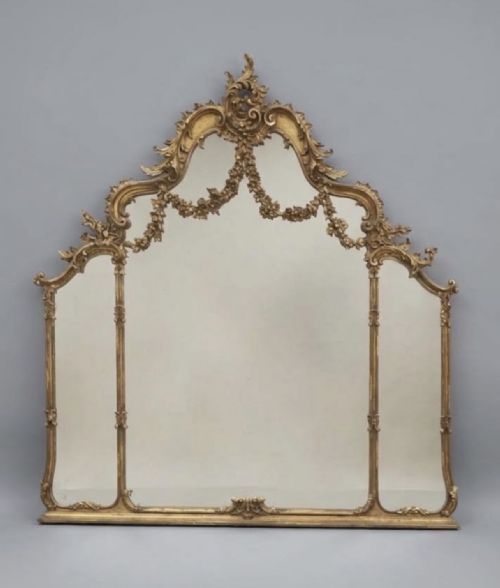
A large gold leaf mirror serves as a dominant architectural focal point in a reception room or above a fireplace. When searching for this phrase, buyers encounter substantial wall mirrors and overmantels shaped during the nineteenth century, alongside Regency and Georgian pieces.
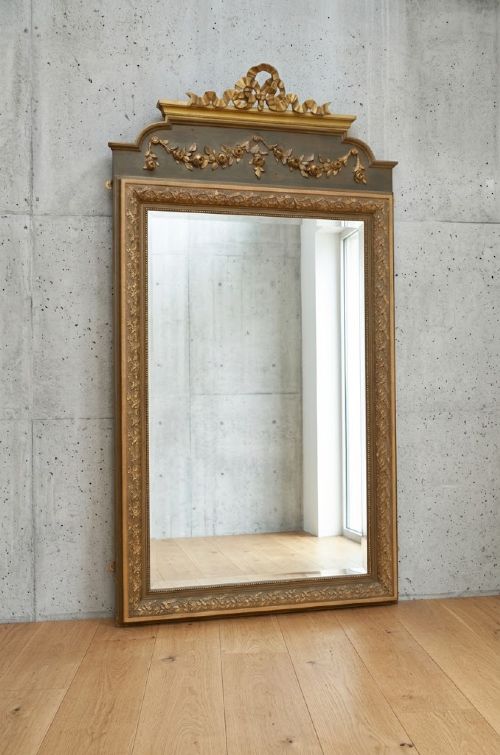
The selections span English and French workshops, featuring forms such as arched tops, pier glasses, and triple plate overmantles. Victorian and Rococo Revival styles appear frequently, often displaying deep carved frames finished with gold leaf applied over gesso.
Proportions tend to be generous, with many standing well over a metre in height to maximise light reflection. French Chateau and Louis Philippe influences bring refined crests and ribbon motifs to the taller formats.
How artisans built these frames
Carved wood forms the structural carcass of these pieces, utilising timber such as pine or mahogany as a base. Artisans then applied layers of gesso, a chalk and glue mixture, to the wooden foundation to create smooth surfaces for intricate relief moulding.
Gold leafing involved laying extremely thin sheets of beaten gold over a prepared bole layer, adhering the metal to the gesso framework. Composition ornament, a mouldable putty pressed into shape, frequently augmented the hand-carved wooden details on nineteenth-century frames.
Listings feature nineteenth-century pieces predominantly, alongside Regency, Georgian, and early twentieth-century examples utilising giltwood, gesso, and original mirror glass.
What separates standard execution from excellence
The crispness of the carved wood and gesso ornamentation dictates the visual weight and refinement of the piece. Superior examples exhibit sharply defined foliage, rope twists, and crests without the softening of detail that occurs in heavy restoration.
The integrity of the mercury glass or original mirror plate marks a significant distinction between tiers. Original reflective surfaces displaying even ageing and foxing retain historical authenticity compared to modern replacement glass.
The Large Gold Leaf Mirror Glossary
- Gesso
- A fine plaster mixture applied to carved wood frames to provide a smooth ground for gilding. Artisans built up this layer before applying gold leaf.
- Overmantel mirror
- A large horizontal looking glass designed to hang specifically above a fireplace mantelpiece. These pieces frequently incorporate arched tops or triple plates.
- Pier mirror
- A tall vertical glass created to hang on the narrow pier of wall between two windows. They often match console tables positioned below.
- Composition
- A moulded mixture of whiting, resin, glue, and linseed oil pressed into decorative relief ornaments. Workshops used this technique to ornament nineteenth-century frames rapidly.
- Parcel gilt
- A decorative finish where selected portions of a wooden frame are gilded with gold leaf while other areas show the exposed timber or painted surface.
Large Gold Leaf Mirror: Frequently Asked Questions
How do I hang a heavy overmantel mirror safely?
These substantial frames require secure anchoring directly into wall studs or masonry using heavy-duty mirror brackets. Weight distribution must be calculated carefully across the structure of the frame rather than relying on a single central wire.
Professional installation is recommended for pieces exceeding a metre in height or width. Ensure the chosen wall fixings match the specific load requirements of nineteenth-century timber and gesso construction.
What is the difference between an overmantel and a wall mirror?
An overmantel mirror is specifically proportioned in a landscape orientation to sit above a fireplace opening. Wall mirrors encompass a broader range of vertical and square formats intended for general room placement.
Many overmantel designs incorporate lower shelf rebates or specific framing to complement mantelpieces. Pier mirrors and standard wall mirrors lack this horizontal hearth-focused layout.
How do I clean an antique gold leaf surface?
Dusting should be performed gently using a soft, dry ostrich feather duster or a very soft dry brush. Moisture must be avoided entirely, as water lifts delicate gold leaf and degrades underlying gesso.
Chemical cleaners and abrasive cloths will strip the historic gilding immediately. Professional conservators should handle any significant grime accumulation.
Are original mirror plates always clear?
Original antique glass often exhibits characteristic oxidation, dark spots, and foxing developed over many decades. These surface variations confirm the age of the plate rather than constituting a structural fault.
Some nineteenth-century pieces retain mercury glass, which produces a distinctive warm, deep reflection. Clear modern replacements lack this historical patina.