
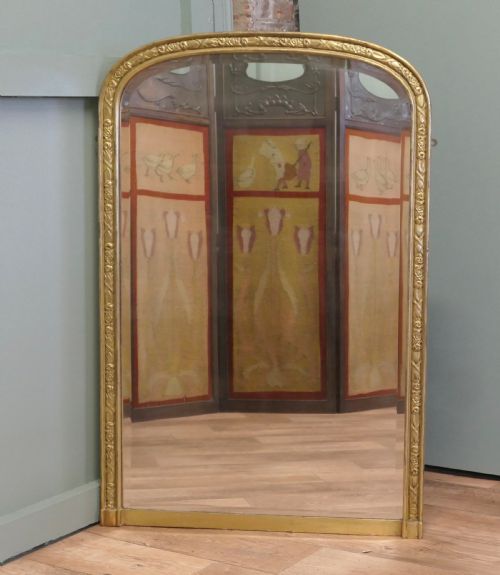
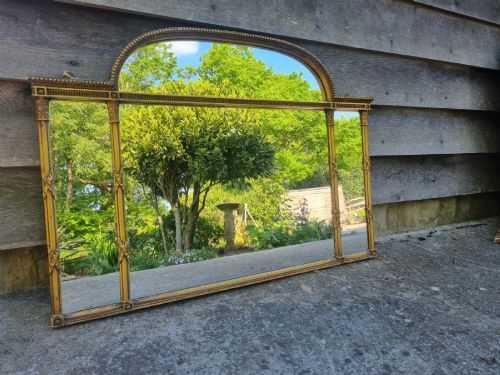
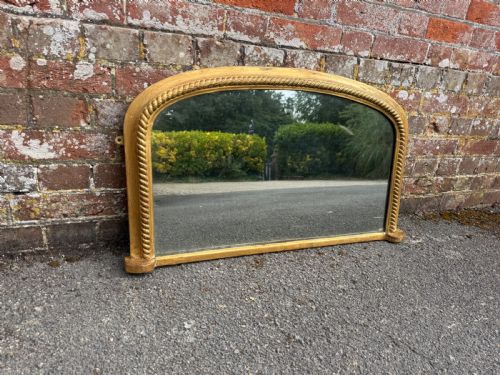
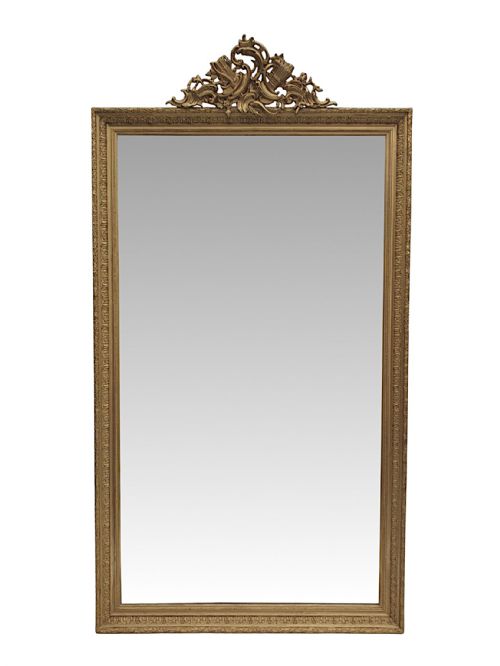
Large Gilded Mantle Mirror
A large gilded mantle mirror anchors a room with scale and reflective light, commanding the chimney breast with presence.
What these pieces are
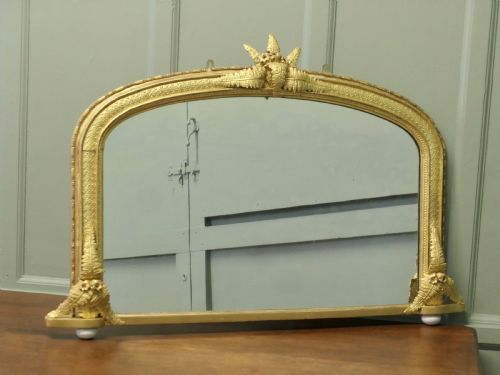
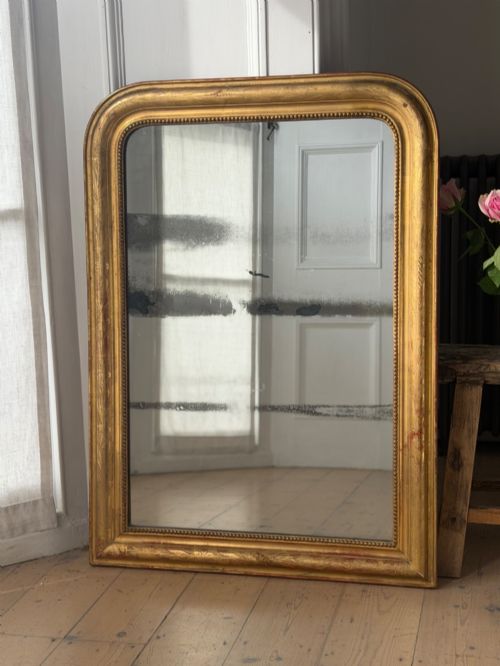
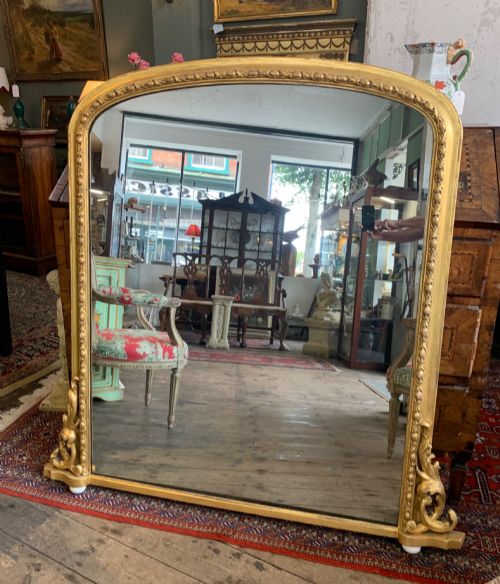
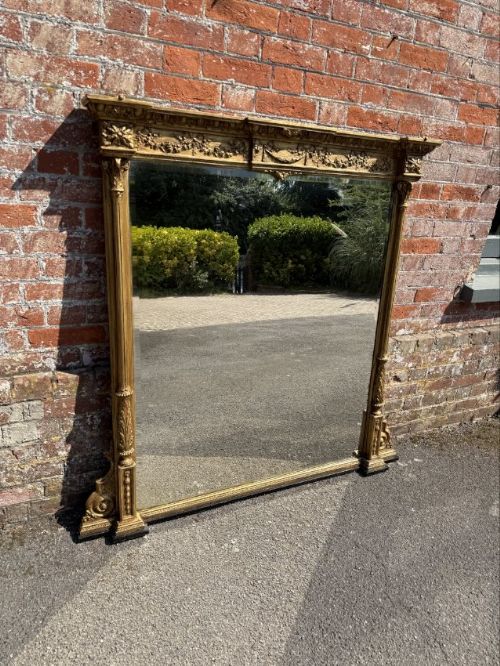
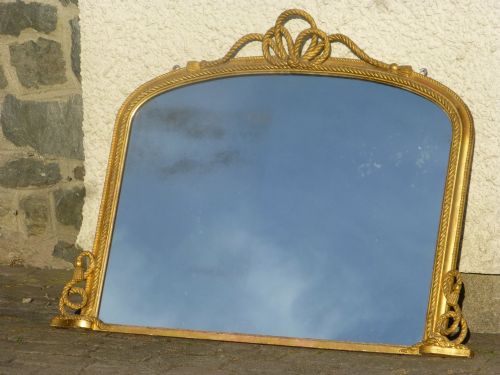
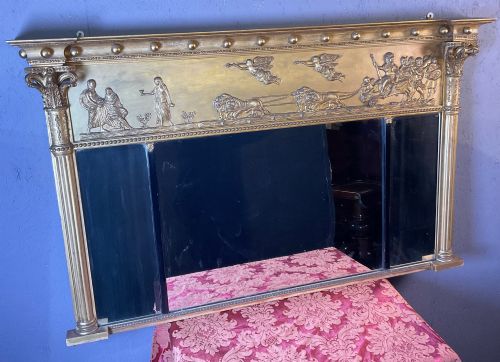
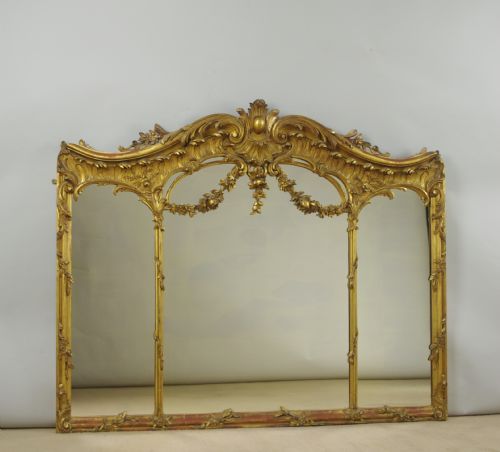
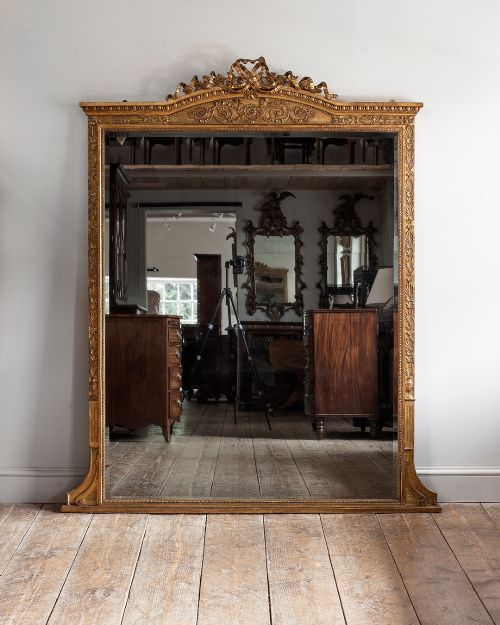
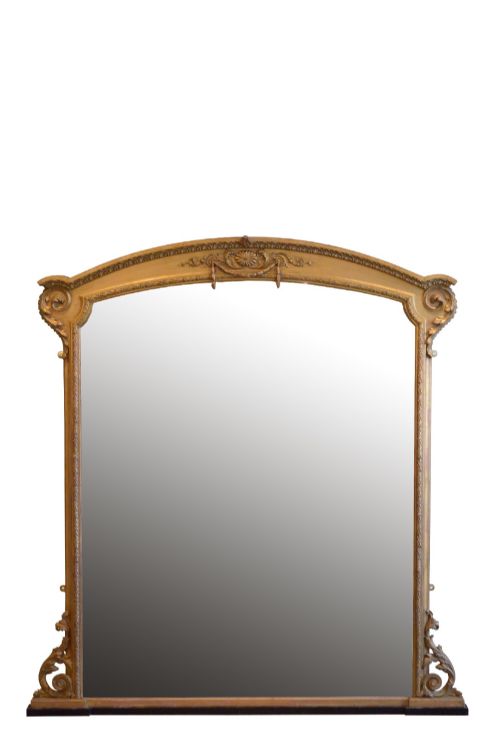
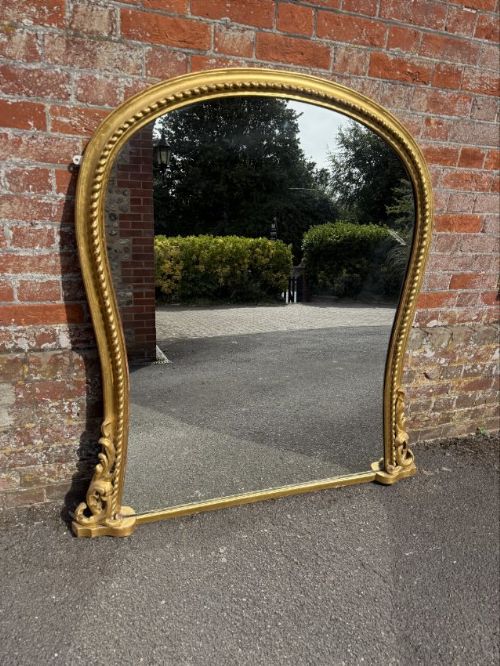
A large gilded mantle mirror is typically an overmantel or wall mirror designed to sit directly above a fireplace, reflecting light and space into the room. The inventory on this page consists predominantly of nineteenth-century examples spanning the Victorian, Regency, and Georgian periods, alongside French and English regional variants. These pieces serve both a functional and decorative purpose, often featuring substantial arched tops or triptych configurations that draw the eye upward.
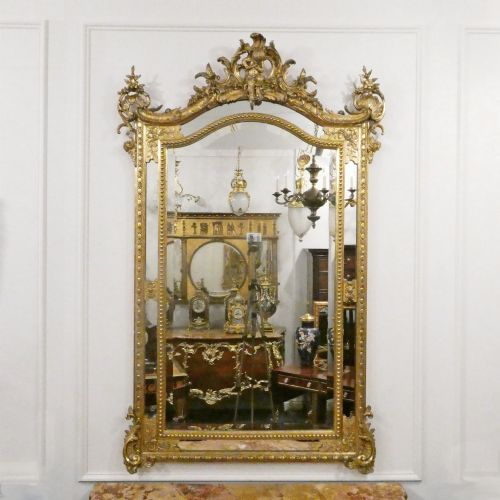
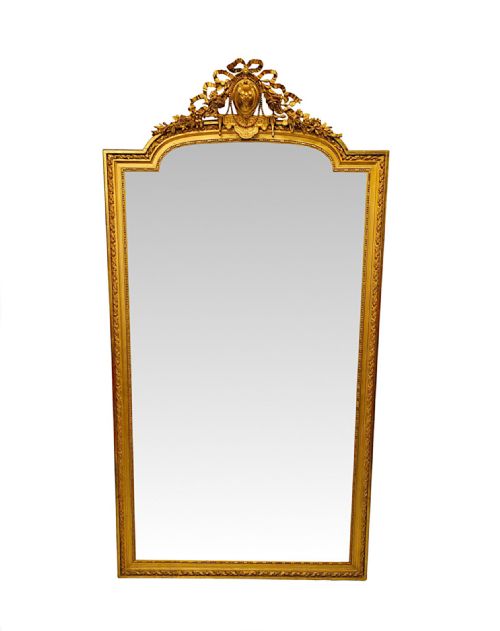
Most items you encounter here are overmantel mirrors, scaled specifically to match the width of a traditional hearth and mantelpiece. You will find wall mirrors and pier mirrors sharing similar proportions and decorative vocabularies, executed in forms ranging from plain rectangular frames to elaborately carved crestings with brackets. Their presence defines the domestic interior of the nineteenth century, built to project grandeur through sheer scale and reflective depth.
How they were made
The construction of these frames relies on timber foundations overlaid with gesso and plaster, which were then gilded with gold leaf or metallic leaf finishes. Carved wood details often appear alongside moulded composition ornaments, allowing for intricate relief work that catches the light across the arched tops and friezes. Frame makers utilised traditional joinery techniques to support the heavy weight of the mirror glass within the gilded surrounds.
Mirror glass of the period was produced in sizeable sheets, sometimes featuring etched designs or bevelled edges depending on the date and origin. The backboards are typically constructed from heavy pine or softwood planks, securing the fragile glass and providing structural stability to the overall frame. Giltwood and gilt wood components were carefully layered over the base preparation to achieve a uniform metallic lustre.
Retail Price Guide 2026
Typical UK retail prices for large gilded mantle mirror, calculated from the Sellingantiques database of over a million retail prices indexed since 2003. This retail price guide relies exclusively on Sellingantiques data; no external sources or auction records are used, so the figures do not describe the wider market.
Nineteenth-century overmantels were so heavy that households occasionally secured them with hidden floor irons to stop rebellious chimney breasts from reclaiming them.
What varies in quality
The distinction between standard production and finer work lies in the depth and crispness of the gesso moulding and the execution of carved crestings. Superior pieces exhibit finely detailed friezes and well-defined decorative brackets rather than heavy, indistinct composition ornamentation. The quality of the gilding itself, and how gracefully it has aged over the underlying bole, determines the visual warmth of the surface.
Structural integrity also separates the better examples, particularly the stability of the heavy timber framing and the original condition of the mirror plate. Exceptional specimens retain their original triptych divisions or delicate etched motifs, showing little distortion in the glass over time. Maker stamps, such as those by Nosotti, elevate an item by confirming documented nineteenth-century workshop provenance.
Nosotti
The Large Gilded Mantle Mirror Glossary
- Giltwood
- Timber that has been gilded with gold leaf applied over a prepared gesso surface. This material forms the primary reflective frame for nineteenth-century wall and overmantel pieces.
- Gesso
- A plaster-like mixture applied to wooden frame bases to create a smooth surface for gilding. It allows intricate relief ornaments and mouldings to be formed.
- Overmantel Mirror
- A large mirror specifically proportioned to hang above a fireplace mantel. These pieces often feature horizontal or arched formats designed to fill the chimney breast.
- Triptych
- A mirror divided into three distinct vertical sections within a single frame. This layout is characteristic of certain late Georgian and nineteenth-century designs.
- Pier Mirror
- A tall mirror designed to hang on the wall between two windows, often matching the decorative style of contemporaneous overmantels.
Frequently Asked Questions
How do I hang a heavy overmantel mirror safely?
These large mirrors carry considerable weight due to their timber frames and thick glass plates. Secure wall fixing requires anchoring directly into structural wall studs or using heavy-duty masonry fixings suited to the specific wall type.
Professional installation is strongly advised to distribute the load evenly across multiple brackets. Ensure the hanging wire or integrated D-rings are robust enough to support the frame permanently without slipping.
Were these mirrors always meant to go above fireplaces?
While the overmantel format was engineered specifically in terms of width and scale to occupy the wall space above a hearth, many similar large mirrors functioned as pier or wall mirrors.
Placed between windows or along principal reception room walls, they served to bounce natural light deep into Victorian and Georgian interiors. Their primary domestic function remained the enhancement of room volume and illumination.
How do I distinguish a Victorian mirror from a Georgian one?
Georgian and late Georgian examples often display restrained architectural lines, sometimes incorporating triptych formats or simpler carved mouldings. Victorian pieces frequently embrace heavier proportions, arched tops, and elaborate composition gesso friezes.
Examining the construction of the timber backboards and the composition of the gesso helps clarify the period of manufacture. Stylistic revival movements during the nineteenth century also blended earlier motifs into Victorian production.