

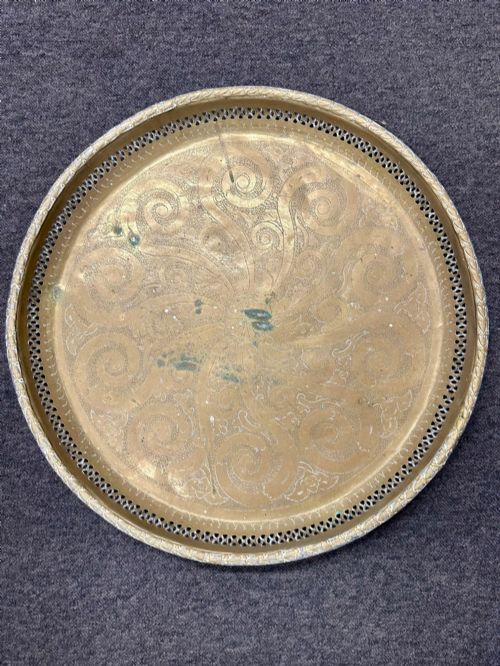
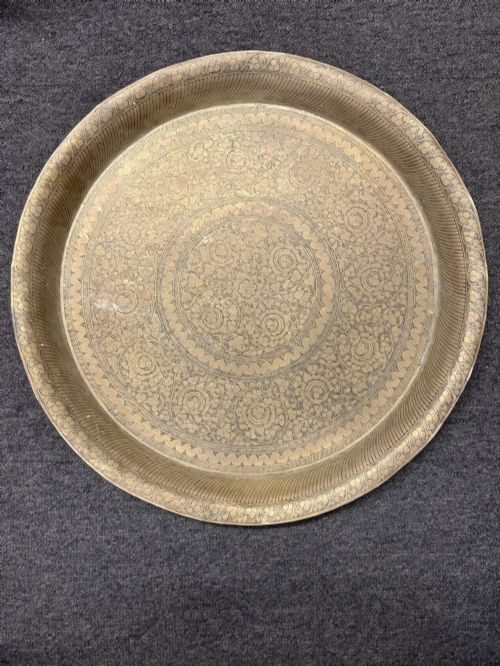

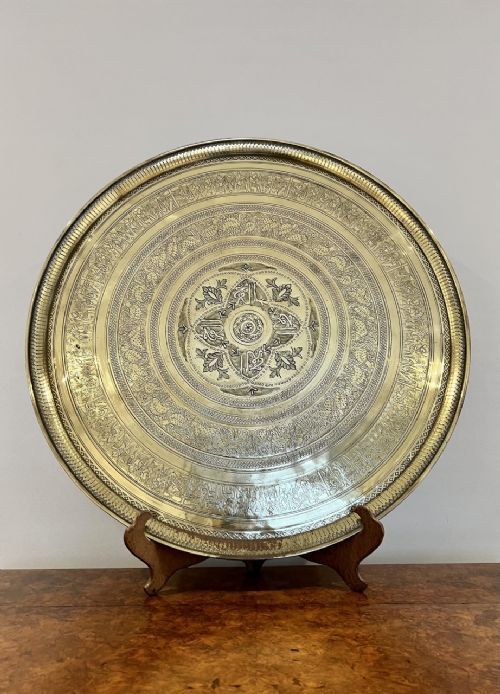
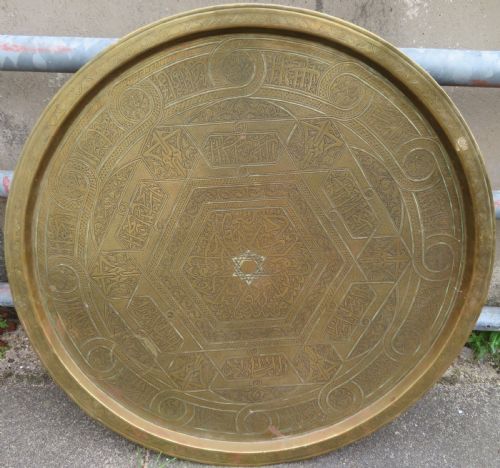
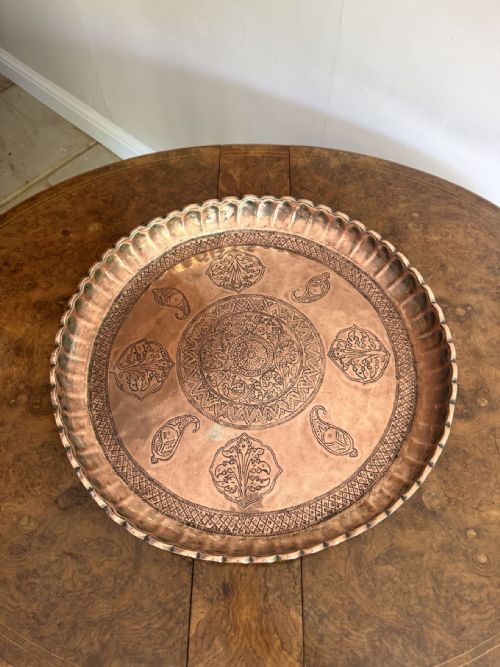


Large Decorative Brass Charger
These large decorative brass charger pieces bring grand scale and global historic styles straight into your room.
Large Decorative Brass Charger
A large decorative brass charger brings together heavy metal plates and broad platters spanning the Victorian, Edwardian, and Regency eras. When searching for a large decorative brass charger, collectors encounter varied origins ranging from Anglo-Indian and Persian workshops to Japanese Meiji period studios.
The selections on this page concentrate heavily on circular plates, octagonal trays, and wide wall chargers measuring substantial diameters. Many pieces double as functional serving vessels and wall-hung display items due to their impressive proportions.
Materials and construction
Makers utilised heavy base metals including brass, copper, and bronze, often combining them as mixed metal compositions. Surface enrichment frequently involved intricate hand engraving, repoussé work, and detailed silver and copper inlay.
Japanese examples incorporated cloisonné enamel techniques, fusing coloured glass pastes within wire boundaries across metal foundations. Other regional pieces relied on deep chiselling and contrasting metal tones to highlight complex Islamic and Eastern motifs.
Large Decorative Brass Charger Retail Price Guide 2026
Typical asking prices for large decorative brass charger among the pieces listed under this phrase on Sellingantiques today, from the lower quarter to the upper quarter. They describe what is for sale here now, not the wider market.
The listings on this page span the 1870s to the 1900s, incorporating Victorian, Edwardian, and Meiji period aesthetics.
Assessing quality and execution
Superior examples display crisp, deep chasing and precise metal inlay that remains flush and secure across the entire surface. The fineness of the engraved lines and the complexity of pictorial subjects, such as birds or Mount Fuji, distinguish master workshops from standard production.
Weight, rigidity, and the preservation of original enamel or mixed metal contrasts dictate the overall standing of an individual charger. Pieces showing harmonious patination without heavy distortion maintain stronger structural integrity.
The Large Decorative Brass Charger Glossary
- Charger
- A large ornamental plate or platter traditionally used for display or ceremonial service rather than everyday dining.
- Cloisonné
- An enamelling technique where metal wire is soldered to a metal base to create compartments filled with coloured glass paste.
- Cairo Ware
- Late nineteenth century metalwork originating from Egypt featuring intricate silver and copper inlay upon brass or bronze.
- Repoussé
- A metalworking method where the artisan hammers the material from the reverse side to form a raised design in relief.
- Mixed metal
- An eclectic decorative approach combining brass, copper, bronze, and silver elements within a single object.
Large Decorative Brass Charger: Frequently Asked Questions
How were large decorative brass chargers originally used?
These large vessels served primarily as grand presentation pieces, table centrepieces, or formal wall decorations in domestic interiors. Wealthy households displayed them prominently on sideboards or hung them directly on walls to showcase exotic craftsmanship.
Over time, their decorative function superseded any practical dining use, particularly for heavily enamelled or inlaid examples that required careful preservation.
How do I hang a heavy charger safely?
Hanging large metal platters requires robust wall fixings and adjustable spring-loaded plate hangers designed to support substantial weight without scratching the rim. Ensure the wire or bracket engages securely behind the raised edge.
It is vital to anchor the fixings directly into wall studs or use appropriate cavity wall plugs to prevent structural failure over time.
How should I clean antique brass and copper?
Routine maintenance requires only gentle dusting with a soft, dry cloth to remove surface particles. Avoid harsh chemical polishes that strip away historical patination and damage delicate silver or copper inlays.
Enamelled sections, such as Japanese cloisonné, should be kept away from moisture and direct sunlight to preserve the coloured glass pastes.