

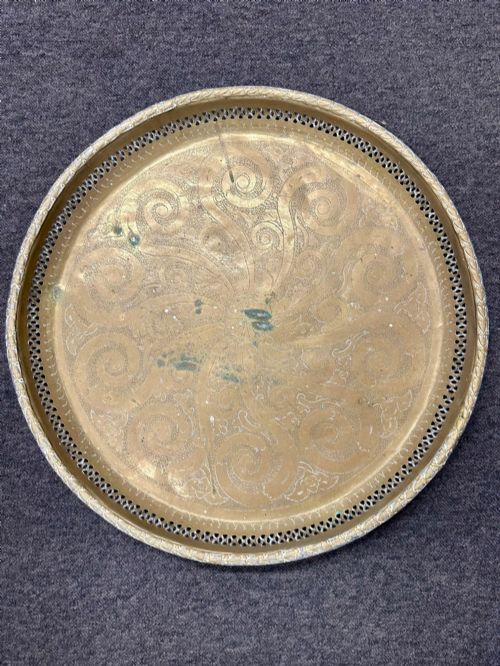


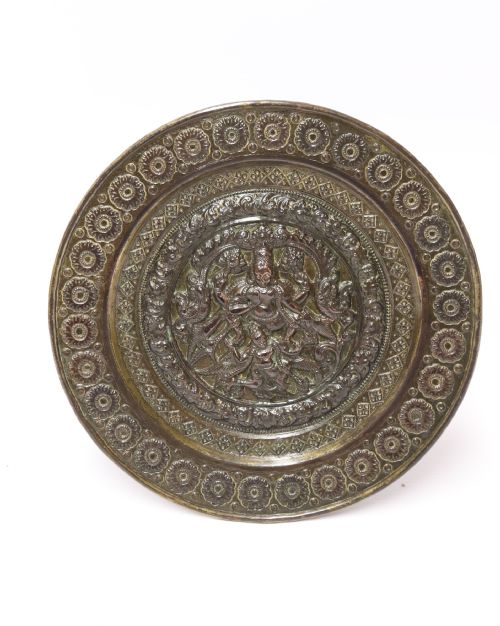

Vintage Brass Wall Dish
These vintage brass wall dish items are decorative metal chargers and plaques designed to hang, bringing warmth and intricate pattern to a room.
Vintage Brass Wall Dish
When you search for a vintage brass wall dish, you are looking at decorative chargers, wall plaques and large plates made primarily from brass, copper and bronze. These items range from the nineteenth century into the early twentieth century, spanning periods such as the Edwardian era, the Meiji period and the eighteenth century.
The pieces you are most likely to meet on this page include large Japanese cloisonne enamel chargers depicting birds and landscapes, Arts and Crafts hammered brass plates with animal motifs, and Middle Eastern or Anglo-Indian repousse work chargers. They encompass diverse stylistic traditions including Islamic metalwork, Chinese export and classical revival designs.
Most examples function as wall display pieces rather than table service, often incorporating hanging loops or flat rims suited for vertical mounting. Their forms vary from plain circular trays to heavily inlaid and chased copper or brass surfaces.
What varies in quality
The standard of a charger depends heavily on the crispness of the hand-chased or repousse detail and the depth of the metalwork relief. Sharper lines and deeply articulated motifs indicate superior craftsmanship compared to shallow, machine-pressed alternatives.
In enamelled pieces, the evenness of the glaze, the complexity of the wirework cells, and the absence of firing cracks separate fine Japanese cloisonne from simpler commercial output. Metal purity, surface patination and the integrity of any inlaid silver also dictate the overall calibre of the piece.
Vintage Brass Wall Dish Retail Price Guide 2026
Typical asking prices for vintage brass wall dish among the pieces listed under this phrase on Sellingantiques today, from the lower quarter to the upper quarter. They describe what is for sale here now, not the wider market.
Listings span from the eighteenth century to the twentieth century, incorporating materials such as cloisonne enamel, silver-inlaid patinated copper, and solid brass.
The Vintage Brass Wall Dish Glossary
- Charger
- A large decorative plate or dish, usually too wide for ordinary dining and intended for display on a sideboard or wall. These items form the bulk of the larger metalwork listed.
- Repousse
- A metalworking technique where an artisan hammers the reverse of a sheet to form a raised design in relief on the front. This method creates tactile depth on brass and copper plates.
- Cloisonne
- An ancient technique for decorating metal object surfaces, using vitreous enamel baked inside wire compartments. Japanese examples from the nineteenth century frequently utilise this method.
- Patination
- The natural ageing, oxidation and colour change that develops on the surface of copper and brass over decades. A stable patination adds visual depth to antique metalwork.
- Grand Tour
- A cultural journey undertaken by wealthy Europeans in the nineteenth century, often resulting in the acquisition of souvenirs such as Egyptian Cairo Ware and Middle Eastern inlaid metalwork.
Vintage Brass Wall Dish: Frequently Asked Questions
How do I hang a heavy brass wall charger safely?
Most large chargers require a robust spring-loaded brass plate hanger that grips the rim securely without scratching the metal. Ensure the wall fixing is anchored directly into a stud or uses a heavy-duty wall plug suited to the weight of the piece.
Check that the wire or hanging loop attached to the back of the dish is structurally sound before trusting it to support the full weight. Avoid hanging metal dishes in damp environments or areas exposed to direct, harsh sunlight.
Are these brass dishes meant for serving food?
These items are intended primarily as decorative wall plaques and chargers rather than functional tableware. Many older pieces contain copper alloys or silver inlays that are unsuited for direct contact with acidic foods.
Using them purely for display preserves the delicate surface patination, enamel work and intricate chasing. Cleaning should remain minimal, relying on a soft, dry cloth rather than harsh metal polishes that strip historical patina.
How can I tell Japanese Meiji work from Arts and Crafts brass?
Japanese Meiji pieces often feature detailed cloisonne enamel work with motifs like birds, Mount Fuji, and mon crests on copper or bronze bases. They reflect distinct Eastern artistic conventions and precision wirework.
Arts and Crafts pieces, by contrast, typically showcase hand-hammered plain brass surfaces with stylized animals, fish, or flowing botanical designs. The tooling marks left by the craftsman remain visible on the face of British Arts and Crafts trays.
What is Cairo Ware and where was it made?
Cairo Ware refers to metalwork produced in Egypt during the late nineteenth and early twentieth centuries, often collected by travellers on the Grand Tour. These pieces typically consist of brass or copper heavily inlaid with silver and calligraphic designs.
They blend Islamic metalwork traditions with the demands of the Western export market. The craftsmanship relies on contrasting dark patinated metal with bright inlaid metallic wire.