



Embossed Metal Wall Platter
An embossed metal wall platter brings history and texture to a room, offering classical portraits and heraldic motifs shaped in brass and copper.
Embossed Metal Wall Platter
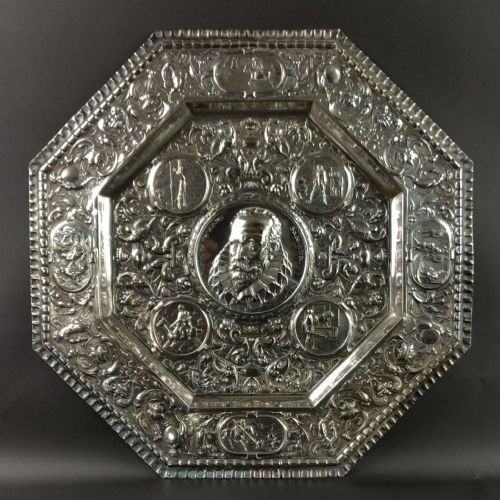
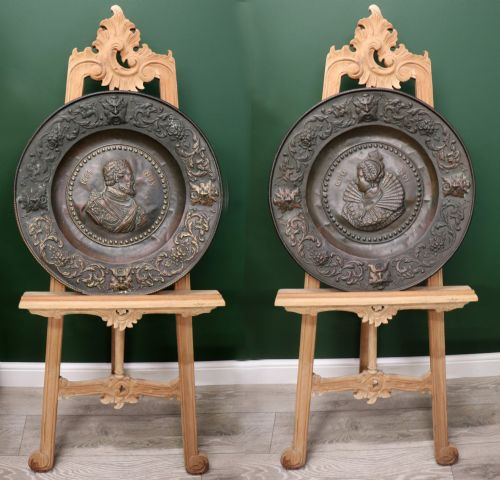
An embossed metal wall platter is a decorative plate or charger designed primarily for display, utilising hanging loops or substantial weight to sit flat against a wall. The examples on this page span several centuries, with the nineteenth century heavily represented through repoussé work and circular forms.
Buyers will encounter varied forms ranging from large brass and copper chargers to oval dishes and shields. These display pieces frequently depict historical figures, classical deities, and heraldic coats of arms across Renaissance Revival, Gothic Revival, and Neoclassical styles.
The selection includes circular trays and alms dishes alongside portrait plaques featuring subjects such as Miguel de Cervantes, Henry IV, and Diana the Huntress. Pieces extend from eighteenth-century brass examples up to Edwardian and Raj period productions.
How they were made
The primary metals utilised across these pieces are brass and copper, supplemented by bronze, silvered metal, electrotype metal, and silver plate. Makers shaped these materials through hammering, repoussé, and general embossing techniques to raise the decorative motifs from the surface.
Surface decoration relies heavily on hand-wrought repoussé work, where designs are hammered from the reverse side to create high-relief portraits, animal motifs, and intricate border patterns. Heavier items such as bronze centrepieces and electrotype wall plaques involve casting and secondary metalworking to achieve deep architectural detail.
Embossed Metal Wall Platter Retail Price Guide 2026
Typical asking prices for embossed metal wall platter among the pieces listed under this phrase on Sellingantiques today, from the lower quarter to the upper quarter. They describe what is for sale here now, not the wider market.
One hefty bronze plate tips the scales at four kilograms, proving that seventeenth- and nineteenth-century decorators took wall load-bearing very seriously indeed.
What varies in quality
Material thickness and weight heavily influence the character of each charger, with heavier bronze and substantial brass pieces offering greater rigidity. The nuance of the hand-hammered surface and the fidelity of historical portraits separate standard decorative wares from exceptional examples.
The Embossed Metal Wall Platter Glossary
- Repoussé
- A metalworking technique where the artisan hammers the design from the reverse side to form a raised relief on the front. This method defines the primary ornamentation on most copper and brass wall platters.
- Charger
- A large decorative plate or platter intended for display rather than dining use. These substantial pieces frequently feature detailed historical or mythological scenes.
- Alms dish
- A shallow metal bowl traditionally used for collecting church offerings or charity donations. Antique brass examples are frequently repurposed as decorative wall plaques.
- Electrotype
- A metal-duplicating process using electrolysis to deposit a thin layer of metal over a mould. This technique allows for the precise reproduction of complex historical reliefs.
- Gothic Revival
- An architectural and decorative style drawing on medieval forms, arches, and motifs. Pieces in this style often incorporate royal portraits and pointed ornamentation.
Embossed Metal Wall Platter: Frequently Asked Questions
How do I hang a heavy metal platter?
Most large chargers and wall plates require sturdy picture wire secured around the footring or dedicated heavy-duty wall brackets designed to support the specific weight of the metal.
Ensure the fixing goes directly into a wall stud or uses appropriate masonry anchors, particularly for pieces weighing several kilograms.
How should I clean antique brass and copper?
Dust the surface regularly with a soft, dry cloth to prevent grime accumulation in the recessed areas of the repoussé work. Avoid harsh commercial dips that strip away the aged patina which collectors value.
If cleaning is necessary, use a mild, non-abrasive metal cleaner specifically formulated for antique brass or copper, applying it sparingly with a cotton swab.
What is the difference between a tray and a charger?
While both share a circular or oval metal format, trays typically feature handles or flat bases designed for serving and carrying objects. Chargers are heavier wall or sideboard display pieces created primarily for visual ornamentation.
Many nineteenth-century examples blur these lines, functioning equally well as flat trays or hanging wall platters.
How do I identify a nineteenth-century revival piece?
Nineteenth-century revival pieces often draw heavily on Renaissance, Gothic, or Neoclassical motifs, featuring portraits of historical monarchs or mythological figures. Examine the reverse of the metal for hammering marks, construction joints, and patination consistent with Victorian manufacturing methods.
Maker attributions or stylistic clues like those associated with the Newlyn School can also help narrow down the production period.