
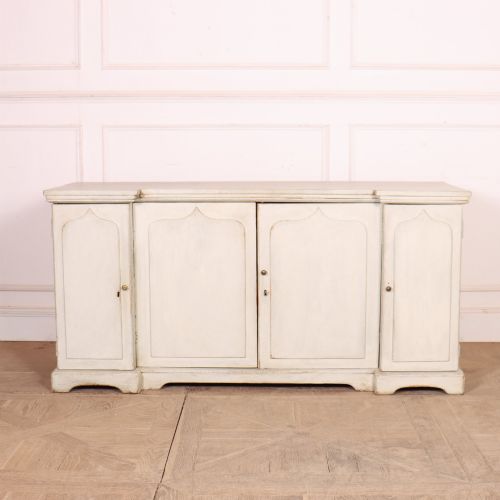
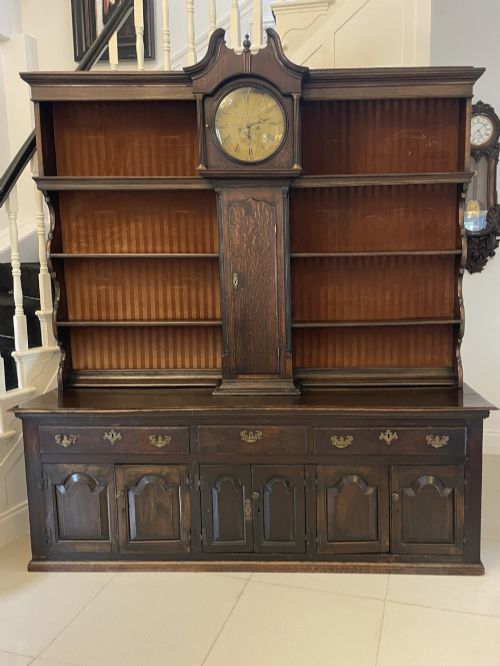
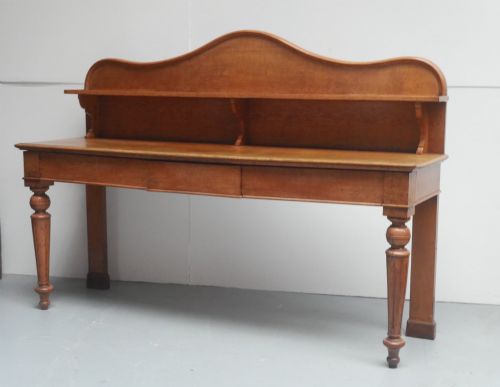
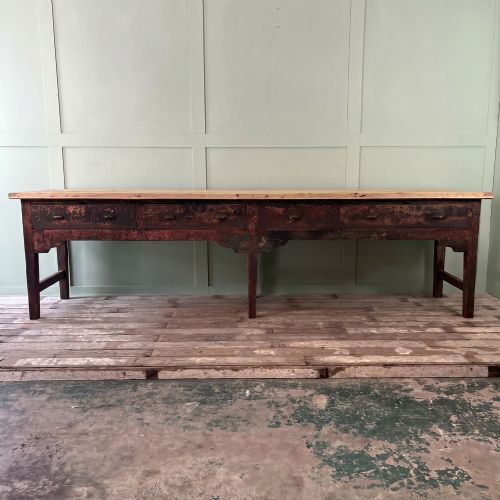

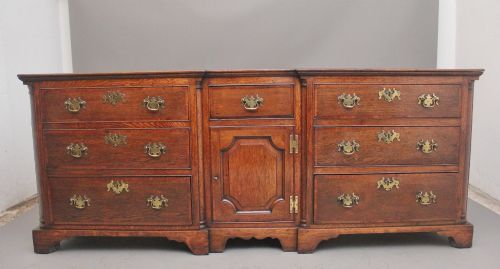
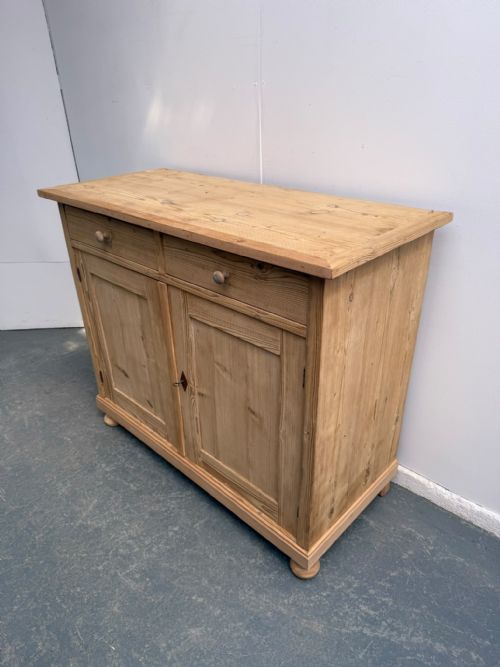
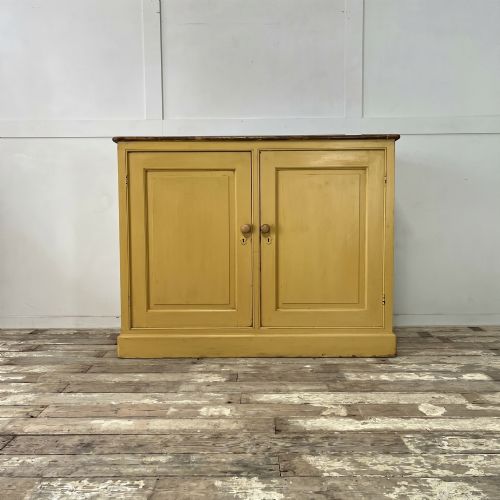


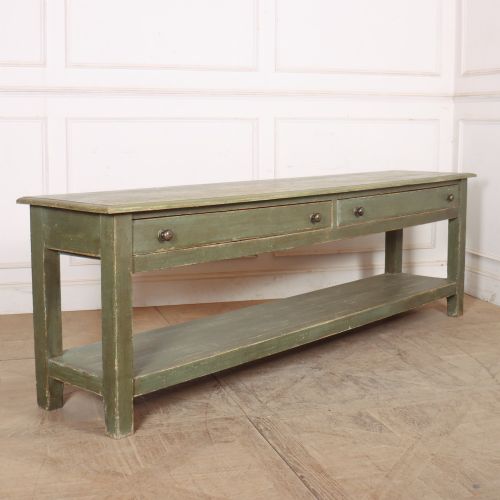

Large Country Sideboard
A large country sideboard brings substantial storage and honest domestic timber to a room, rooted in centuries of rural utility.
Large Country Sideboard
A large country sideboard provides deep storage and generous surface space through forms such as dresser bases, serving tables, and cupboards.
Most pieces seen here originate from the eighteenth and nineteenth centuries, spanning Georgian, Victorian, and Edwardian periods.
Makers shaped these items for practical service in kitchens, dining rooms, and housekeepers' stores across English, French, and Scottish country houses.
Materials and construction
Carpenters relied primarily on oak and pine, frequently finished with paint, wax, or left in their natural state.
Iron and brass fittings such as hinges and handles secured heavy doors and drawers, while glass occasionally appeared in upper display sections.
The listings show pine and oak as the predominant materials, spanning the eighteenth century through to nineteen hundred.
Distinctions in quality
The choice of primary timber sets the structural caliber, with dense eighteenth-century oak carrying different weight and presence than later pine or mixed woods.
Joinery techniques and the retention of original surface treatments, whether historic paint or honest wax, define the integrity of each surviving frame.
The Large Country Sideboard Glossary
- Dresser base
- A low storage unit with drawers and cupboards, originally used for food preparation and serving in large country kitchens.
- Potboard
- An open lower shelf built into a serving table or dresser base, traditionally used for storing heavy pots and pans.
- Enfilade
- A long sideboard or cabinet featuring a succession of doors in a single line, common in French country houses.
- Bread slide
- A pull-out wooden tray integrated into a dresser base, historically utilised for cooling loaves.
Large Country Sideboard: Frequently Asked Questions
What rooms suit a large country sideboard?
These substantial pieces fit well in spacious kitchens, dining rooms, and wide hallways where their depth and length can be fully appreciated.
Their generous top surfaces also serve effectively for display or serving during gatherings.
How do I care for wax and paint finishes?
Regular application of appropriate wax maintains the lustre of pine and oak surfaces without building up heavy residues.
Painted examples simply require gentle dusting with a dry or slightly damp cloth to protect the historic coating.
Are these sideboards made of solid timber?
Makers constructed these pieces from heavy timbers like oak, pine, and pitch pine, ensuring structural sturdiness.
Secondary woods sometimes appear in drawer linings and internal backs, as was standard practice in period workshops.
How do I distinguish eighteenth-century pieces from later ones?
Earlier pieces from the eighteenth century typically display hand-cut joinery, pegged joints, and denser oak construction.
Nineteenth and early twentieth-century examples frequently utilise pine or machine-sawn elements alongside different hardware styles.