
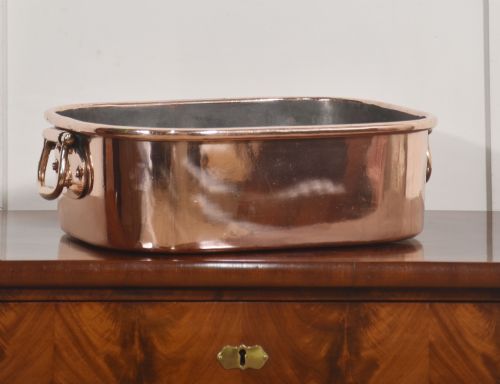


Large Copper Pan
A large copper pan brings centuries of heavy kitchen work and honest metal into the modern room.
Large Copper Pan
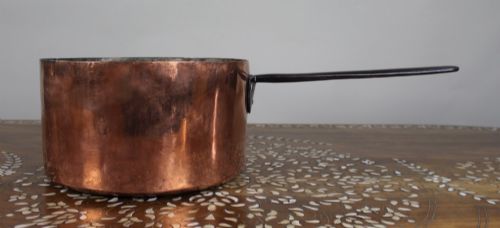
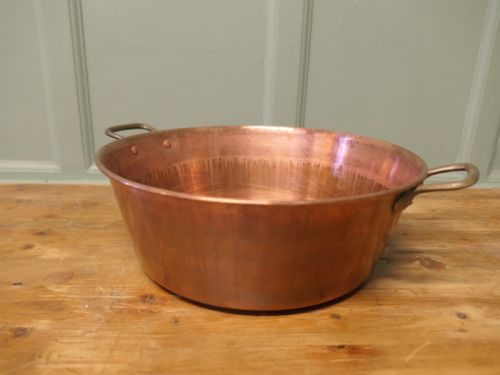
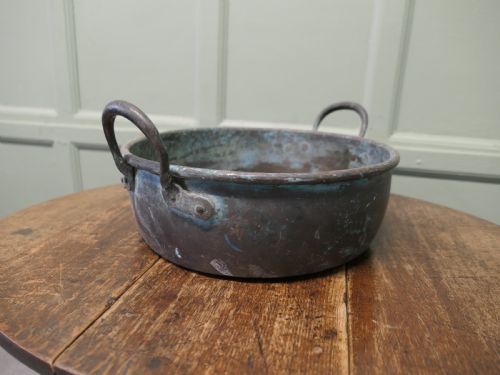
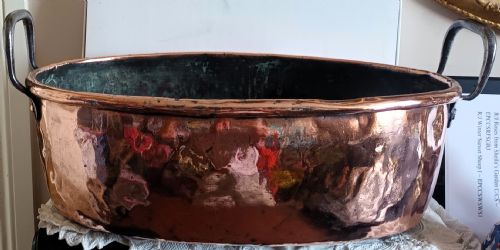
A large copper pan encompasses heavy utilitarian vessels shaped for cooking, preserving, dairy work and dairy setting across the Georgian, Victorian and early twentieth-century periods. These pieces include deep jam and preserve pans, wide cream setting pans, lidded saucepans, fish kettles and double-handled cauldrons.
The domestic kitchen and dairy generated the bulk of these forms, utilising durable metal to handle bulk quantities of fruit, milk or liquid over heat. Surviving examples reflect the shifts from eighteenth-century George III workshops through to nineteenth-century Victorian country kitchens and industrial production.
Buyers encounter items ranging from simple utilitarian cooking pots to refined saucepans stamped by known makers, alongside related vessels such as grain measures, log bins and balance scales. Their scale and presence suit display in contemporary interiors just as readily as traditional culinary use.
Materials and construction
Heavy gauge copper forms the primary body of these vessels, shaped to distribute heat evenly across base and sides during prolonged cooking or preserving tasks. Makers beat and joined the metal sheets by hand or with early mechanical assistance, leaving characteristic hammer marks and seams.
Iron, brass, wrought iron and cast iron appear frequently in handles, swing Bails and structural reinforcements, fixed securely to the copper bodies with rivets. Interiors typically retain traces of tin lining, which protected food from direct contact with the reactive copper during culinary use.
Original patination and surface wear document the working life of the metal, showing the natural oxidation and minor dents accumulated through decades in active kitchens and dairies.
Listings feature copper, iron, brass and tin across forms including saucepans, jam pans, cream setting pans, fish kettles and grain measures.
Distinctions in craftsmanship
Weight and metal thickness set the foundation for quality, with heavier gauge copper providing structural rigidity that resists warping over intense heat sources. Superior examples maintain an even thickness from the base up to the rim rather than thinning out toward the top.
Joinery and handle attachment reveal the hand of the maker, evident in tight riveting, neatly dovetailed seams and robust iron or brass mounts designed to bear heavy loads of liquid. Stamped maker marks from established firms add documentary value and confirm workshop provenance.
Surface preservation separates standard utilitarian kitchenware from finer display pieces, with top-tier survivals retaining crisp maker stamps, sound structural integrity and an honest, undisturbed patina.
Hodges and Sons·Liptons·Elkington and Co·Benham and Froud·Helvetia
The Large Copper Pan Glossary
- Preserving pan
- A wide, round vessel designed for boiling fruit and sugar mixtures, typically featuring one or two handles for lifting heavy loads of hot jam.
- Cream setting pan
- A wide, shallow pan utilised in dairies to allow cream to rise to the top of large quantities of milk before skimming.
- Fish kettle
- An elongated oval pan equipped with a lid and internal draining rack, built specifically to poach whole fish without breaking the flesh.
- Patina
- The surface sheen and colour acquired by copper and iron through age, handling and exposure to heat and air over many decades.
- Tin lining
- A protective layer applied to the interior surface of copper cookware to prevent metallic tasting food and chemical reactions during cooking.
Large Copper Pan: Frequently Asked Questions
How were large copper pans used?
These vessels served demanding tasks in large domestic kitchens, commercial spaces and dairies, handling boiling sugar syrups, preserving seasonal fruits, setting cream and poaching whole fish over open hearths or stoves.
Their heavy construction allowed them to conduct heat rapidly and evenly, preventing scorching during long hours of reduction or stewing.
Can I still cook with antique copper?
Many surviving pieces retain their structural integrity and heavy metal gauge, making them suitable for traditional culinary tasks once the interior tin lining is inspected.
If the protective tin layer has worn away completely down to the bare copper, the pan is best reserved for display, decorative planting or dry storage.
How do I clean tarnished copper?
Washing with mild soapy water removes everyday dust, while traditional pastes or lemon and salt mixtures lift heavy tarnish from the exterior surface.
Aggressive mechanical scouring should be avoided to preserve the historic patina and the subtle hammer marks left by the original maker.
How do I date a copper pan?
Dating relies on observing construction details such as hand-beaten seams, early cast iron handle attachments, maker stamps and the overall style associated with Georgian or Victorian periods.
Heavier hammered bodies without factory stamps generally point toward earlier eighteenth or early nineteenth-century workshop production.