
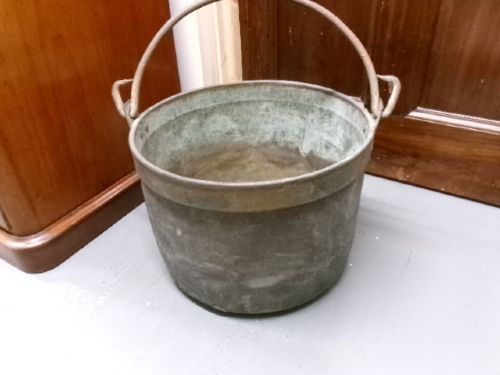
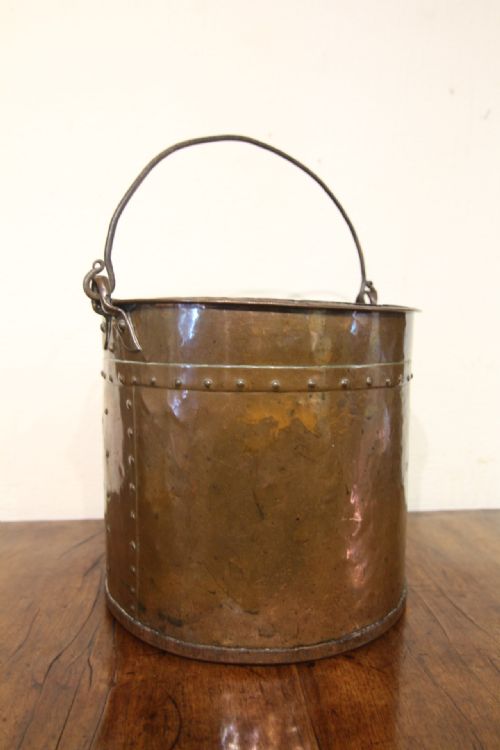


Rustic Copper Container
These rustic copper container pieces bring genuine hearthside utility and rich metallic warmth to any room, offering tangible links to historical domestic life.
What these pieces are
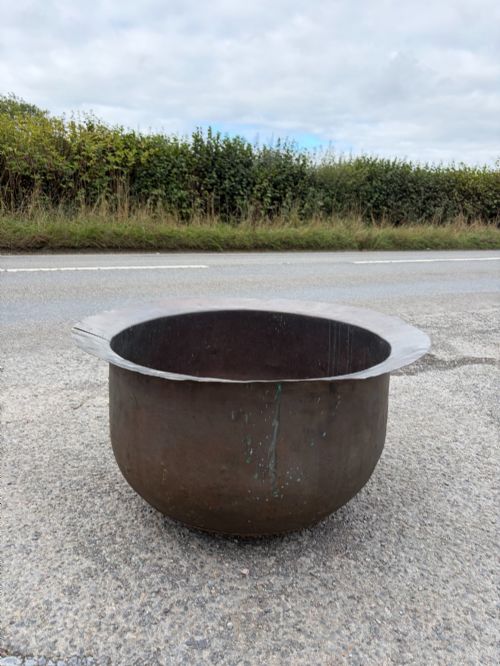
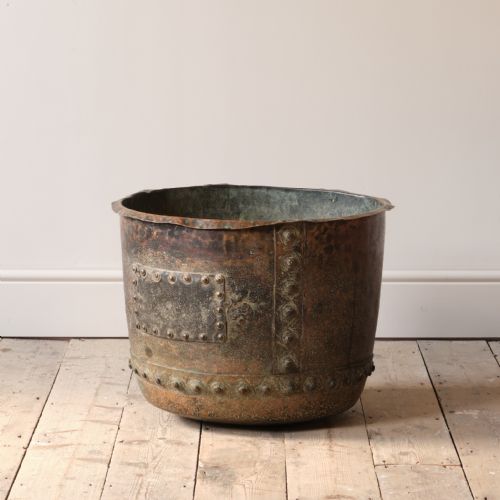
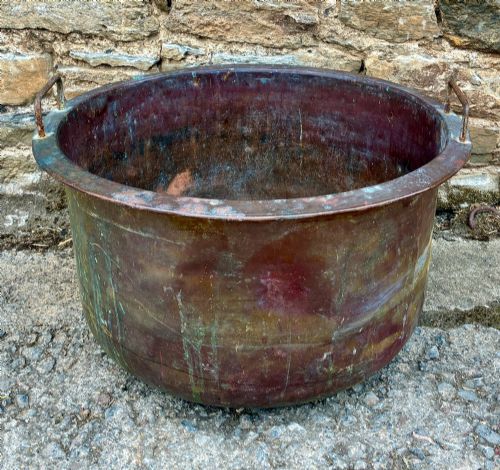
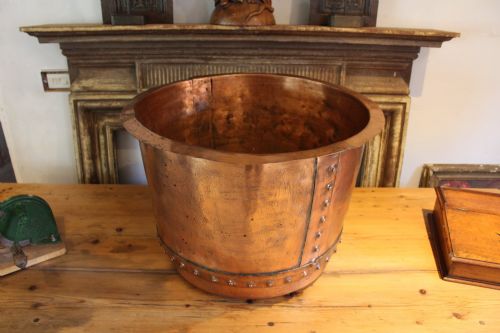
When you search for a rustic copper container, you are looking at substantial vessels designed for heavy domestic and kitchen use. The selection spans the eighteenth and nineteenth centuries, taking forms such as large pots, riveted buckets, lidded pitchers, and cooking vessels.
You are most likely to meet nineteenth-century examples on this page, often showing the robust utilitarian shapes of the Victorian and rustic farmhouse traditions. These items served practical roles around the hearth and farm before finding favour as decorative interior pieces.
How they were made
Makers formed these items primarily from sheet copper, joining heavy panels with visible rivets to ensure structural strength under load. Wrought iron and brass provided durable handles, mounts, and fittings capable of withstanding daily hauling and hanging.
The working metal shows hand-beated surfaces and construction marks left by smiths who shaped the hot or cold metal over stakes. Iron bails and handles were forged separately before being secured to the copper bodies with sturdy fixings.
Retail Price Guide 2026
Typical UK retail prices for rustic copper container, calculated from the Sellingantiques database of over a million retail prices indexed since 2003. This retail price guide relies exclusively on Sellingantiques data; no external sources or auction records are used, so the figures do not describe the wider market.
The listings span the eighteenth and nineteenth centuries, incorporating periods such as the Georgian and Victorian eras.
What varies in quality
The distinction between standard utility items and finer examples rests on the heaviness of the metal gauge and the integrity of the original construction. Substantial weight in the copper sheet and carefully hammered seams separate robust survival pieces from thinner, compromised vessels.
Proportion and patination also define the upper tier, where centuries of handling have mellowed the metal surface into deep, uneven tones. Original wrought iron handles and authentic period fixings preserve the structural honesty that collectors value above mere decorative neatness.
The Rustic Copper Container Glossary
- Copper
- A reddish-brown metallic element prized for its thermal conductivity and malleability. It forms the primary body of all these containers.
- Wrought iron
- Tough, fibrous iron worked by hand while hot, commonly used for the heavy swing handles and bails on these vessels. This material resists bending under heavy loads.
- Riveted
- Joined by metal pins hammered flat to hold overlapping plates securely together. This technique provides the visible structural seams seen on heavy buckets and pots.
- Pitcher
- A large jug with a pouring lip and handle, used historically for carrying liquids. Eighteenth-century examples often include fitted lids.
Frequently Asked Questions
What were rustic copper containers used for?
These vessels performed demanding tasks in historical kitchens, dairies, and farmhouses. They hauled water, heated liquids over open fires, and stored bulk provisions.
Their sturdy construction handled heavy daily workloads near the hearth. Today, collectors repurpose them as planters, umbrella stands, or fireside storage.
How do I care for antique copper?
Maintenance requires minimal intervention to preserve the historic surface and patination. Dusting with a soft cloth keeps the metal stable without stripping its age.
Avoid harsh modern chemical cleaners that remove the deep, natural tones accumulated over centuries. Gentle handling ensures the metal remains protected and stable.
Are these containers safe for food use?
Most antique copper vessels feature unlined interiors that are not rated for modern culinary consumption. Historical pots often lack the tin linings required to prevent copper interacting with acidic foods.
They function best as decorative objects, umbrella stands, or dry storage pieces rather than active cookware. Enjoy them for their visual presence in the room.