




Large Buddha Statue
A large buddha statue brings quiet presence to a room, cast in bronze, carved in hardwood, or shaped from stone.
Large Buddha Statue
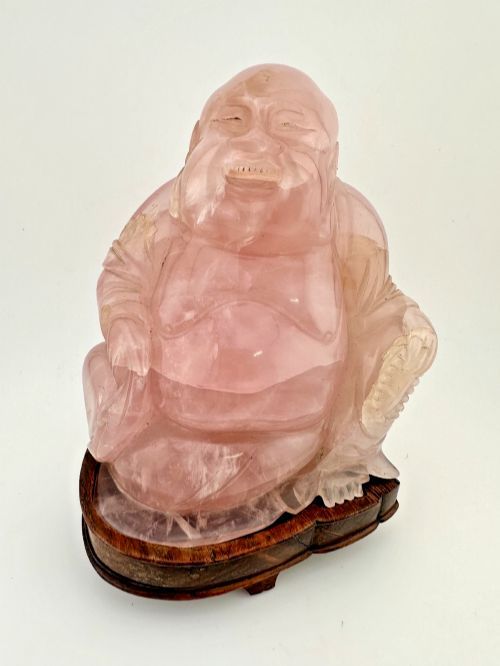
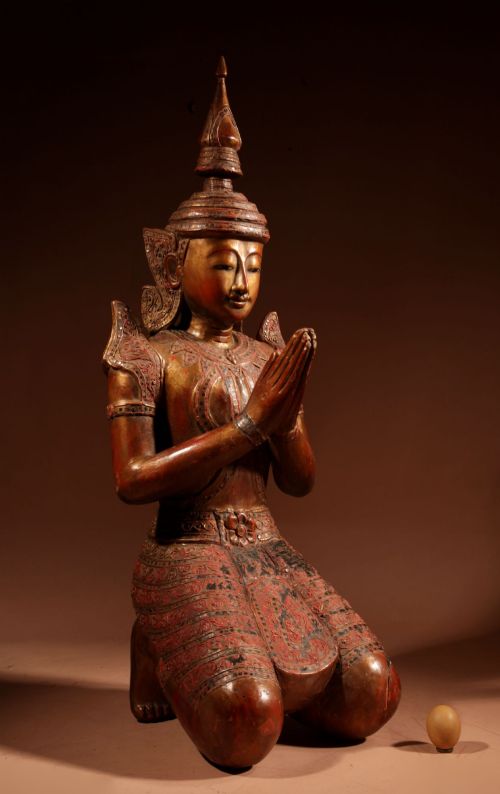
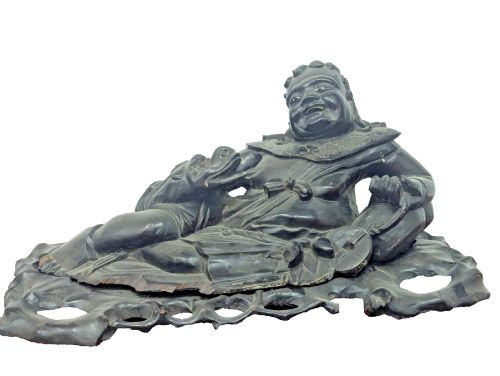
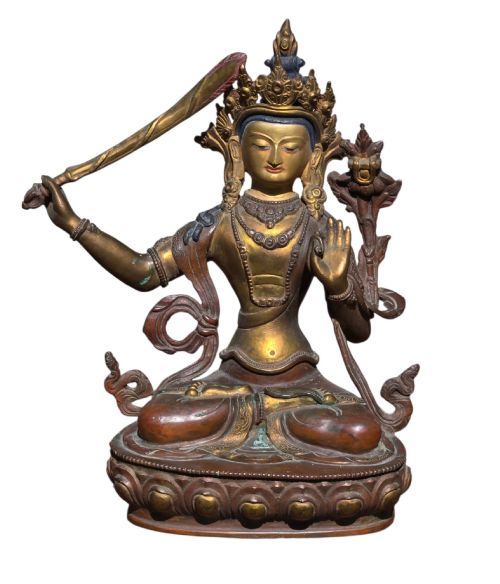
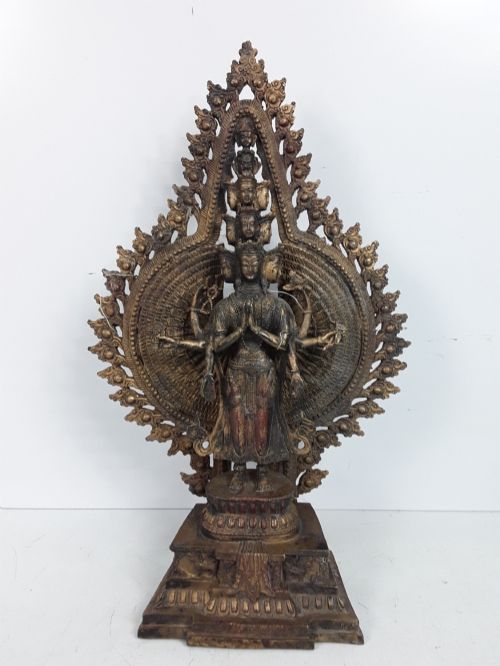
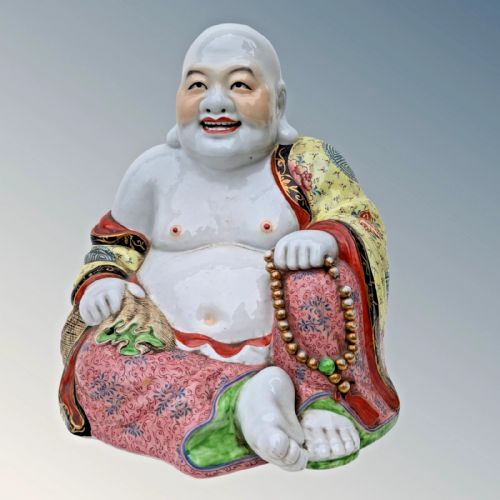
A large buddha statue represents figures of enlightenment, bodhisattvas, and notable teachers across various Asian traditions. When you search for a large buddha statue, you encounter substantial works meant to anchor a space, often standing or seated at considerable scale. The selection ranges from nineteenth-century Burmese wooden carvings to Sino-Tibetan gilt bronze figures and Chinese porcelain embodiments.
Most pieces on this page originate from the nineteenth century, alongside items from the early twentieth century and earlier periods. Formats vary from seated postures and standing figures to specific representations like Guanyin, Budai, and Avalokiteshvara. The materials shift according to regional traditions, encompassing metals, timber, and ceramics.
How they were made
Metal sculptures utilise the lost-wax casting method for bronze and copper alloy, sometimes receiving layers of applied gold leaf or fire gilding. Artisans then chased the surfaces to define robes, hair curls, and facial expressions.
Wooden examples rely on carved hardwood, teak, or gnarled timber, frequently finished with pigmented lacquers, painted details, or gilding over gesso. Stoneware and porcelain versions involve high-temperature firing, followed by polychrome enamels or monochrome glazes.
Large Buddha Statue Retail Price Guide 2026
Typical asking prices for large buddha statue among the pieces listed under this phrase on Sellingantiques today, from the lower quarter to the upper quarter. They describe what is for sale here now, not the wider market.
Listings feature materials including bronze, wood, gilded wood, carved hardwood, copper alloy, pigment, porcelain, terracotta, stone, alabaster, iron, and Peking glass.
What varies in quality
Quality rests in the sculptural command of the form, where facial serenity and the crispness of drapery folds demonstrate the maker's skill. Finer pieces display deliberate proportion and balanced posture, whereas simpler works rely on heavier, less refined casting or carving.
The integrity of surface finishes distinguishes tiers of craftsmanship, from well-preserved gilding and original pigments to later repaintings. Materials also dictate distinction, as dense hardwoods and heavy cast bronzes demand greater technical mastery than softer stones or basic moulded ceramics.
The Large Buddha Statue Glossary
- Bodhisattva
- An enlightened being who delays Nirvana to help others achieve salvation. These figures appear frequently in Sino-Tibetan and Chinese art.
- Gilt bronze
- Metal cast in bronze and coated with a thin layer of gold or gold amalgam. This technique creates a durable golden finish.
- Guanyin
- The bodhisattva of compassion, widely revered in East Asian traditions. Representations often show flowing robes and gentle expressions.
- Lost-wax casting
- A metalworking process where a molten metal is poured into a mould that has been created by means of a wax model. The wax is melted and drained away.
- Budai
- A Chinese eccentric monk often depicted as a stout, laughing figure associated with contentment and abundance. He frequently appears in porcelain and hardwood.
Large Buddha Statue: Frequently Asked Questions
How should I display a large statue?
A substantial statue requires a sturdy surface or a low, stable platform to support its considerable weight. Placing the piece away from direct heat sources protects wood, pigment, and gilt surfaces.
Allowing adequate breathing space around the sculpture lets the form command the room properly.
How do I tell different metal types apart?
Bronze and copper alloy pieces feel heavy and develop natural patinas over time. Gilt bronze shows traces of gold leaf or fire gilding adhering to the metallic base.
Iron figures, such as certain busts, present a darker, heavier finish that reacts differently to environmental moisture than copper alloys.
What is the difference between a buddha and a bodhisattva?
A buddha has achieved full enlightenment and transcendence, typically shown in simpler monastic robes with specific cranial protuberances. A bodhisattva remains active in the world to aid others, often adorned with royal jewellery, crowns, and sashes.
Both forms appear frequently in Tibetan and Chinese sculpture.