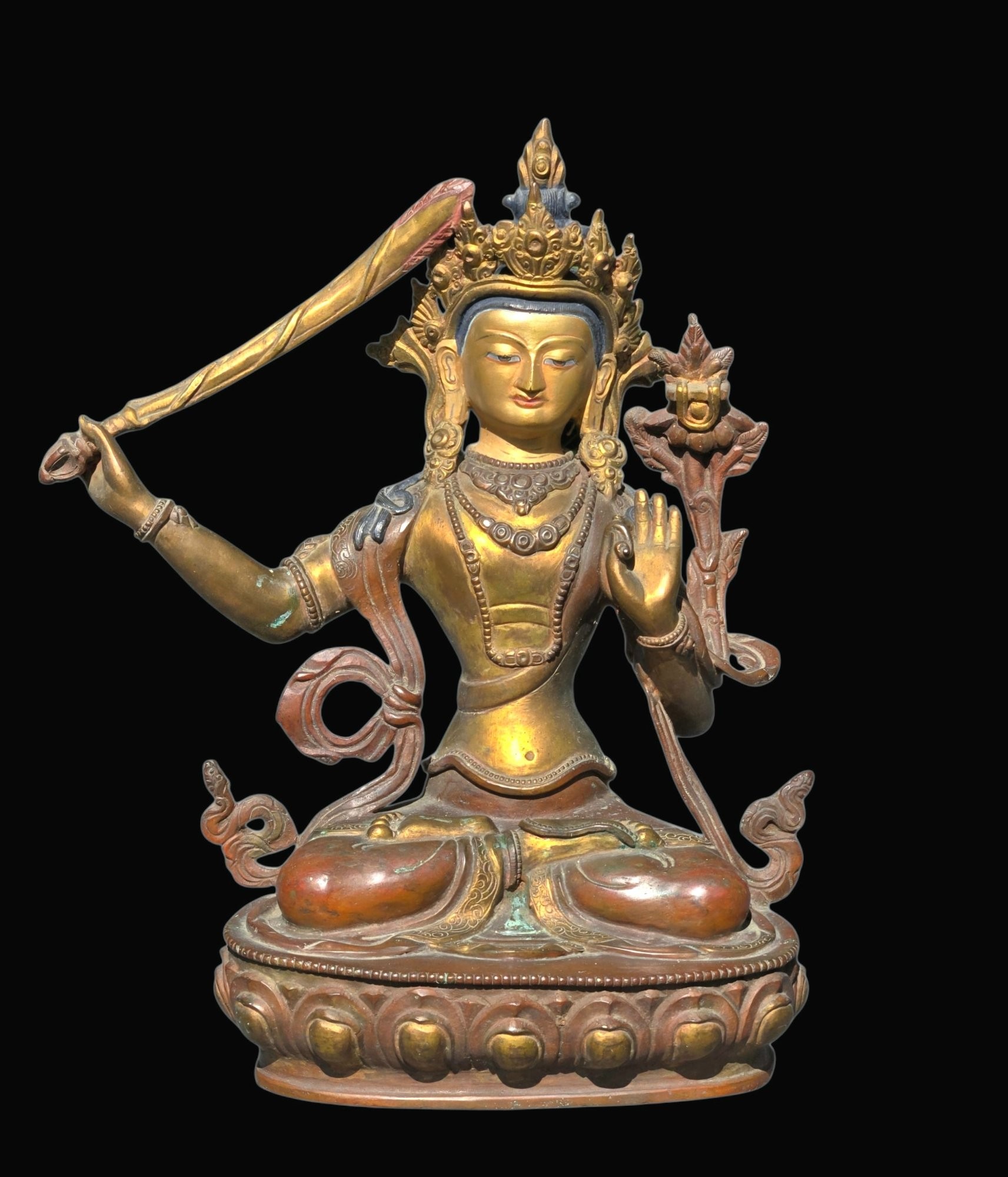
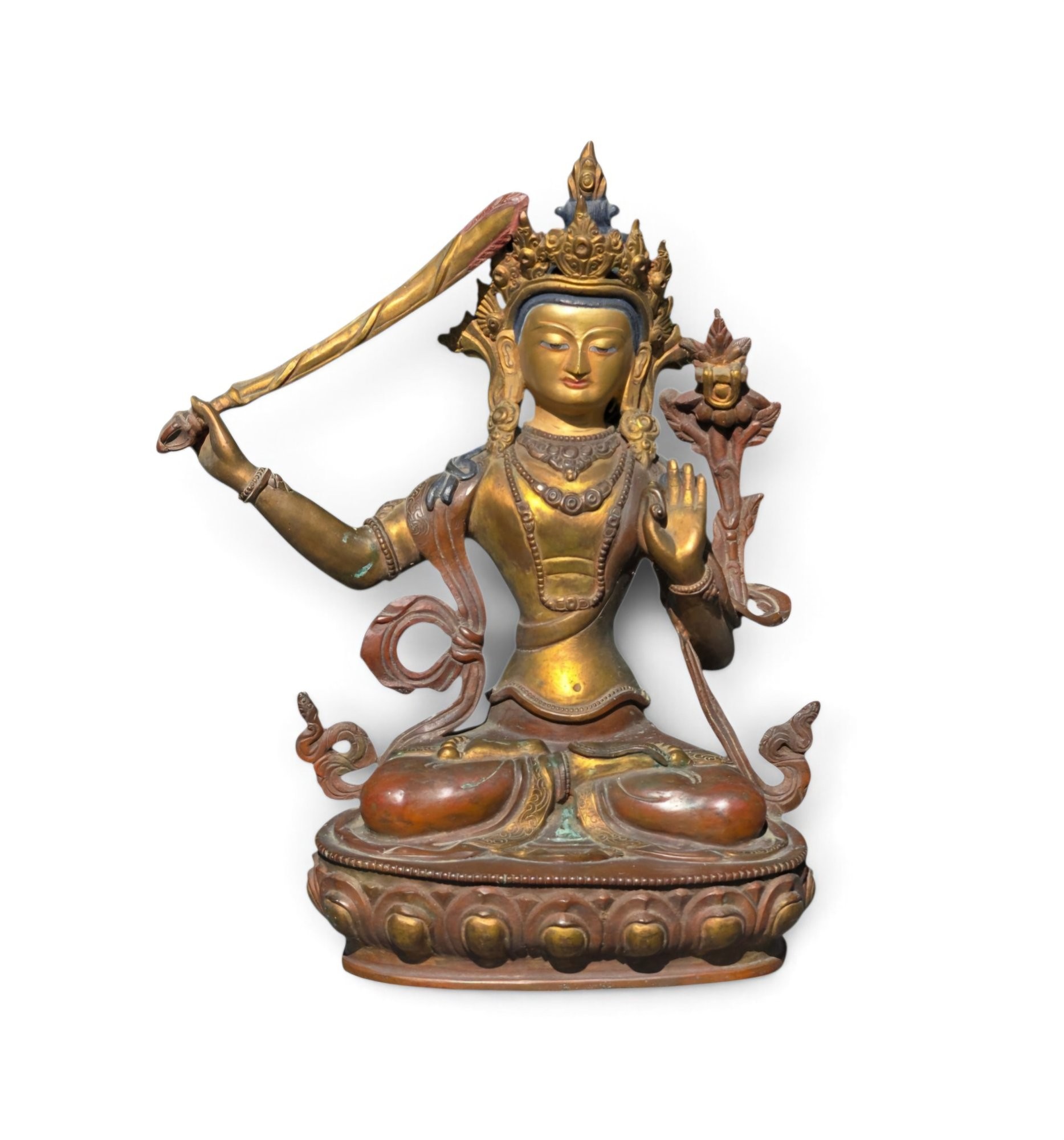
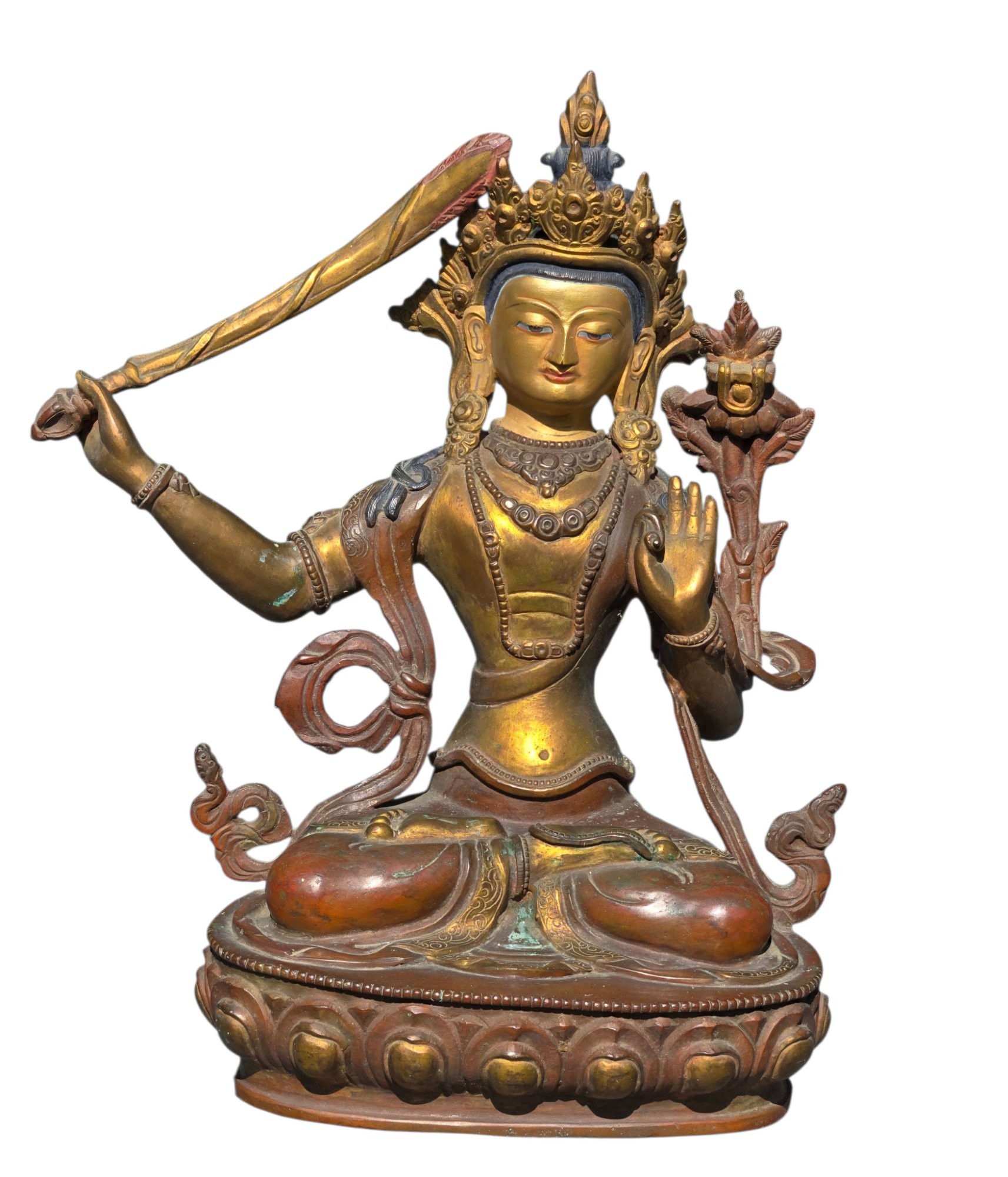
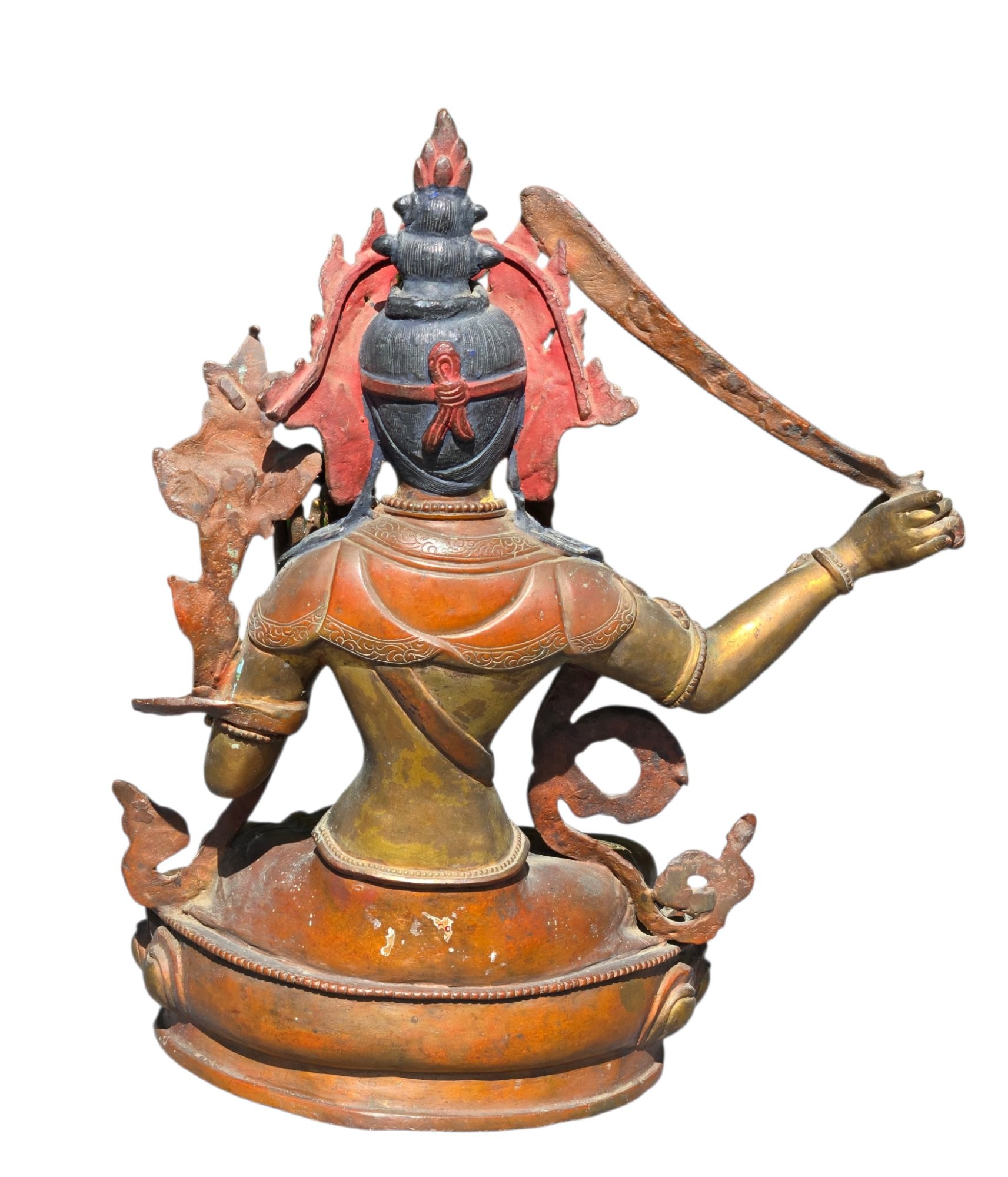
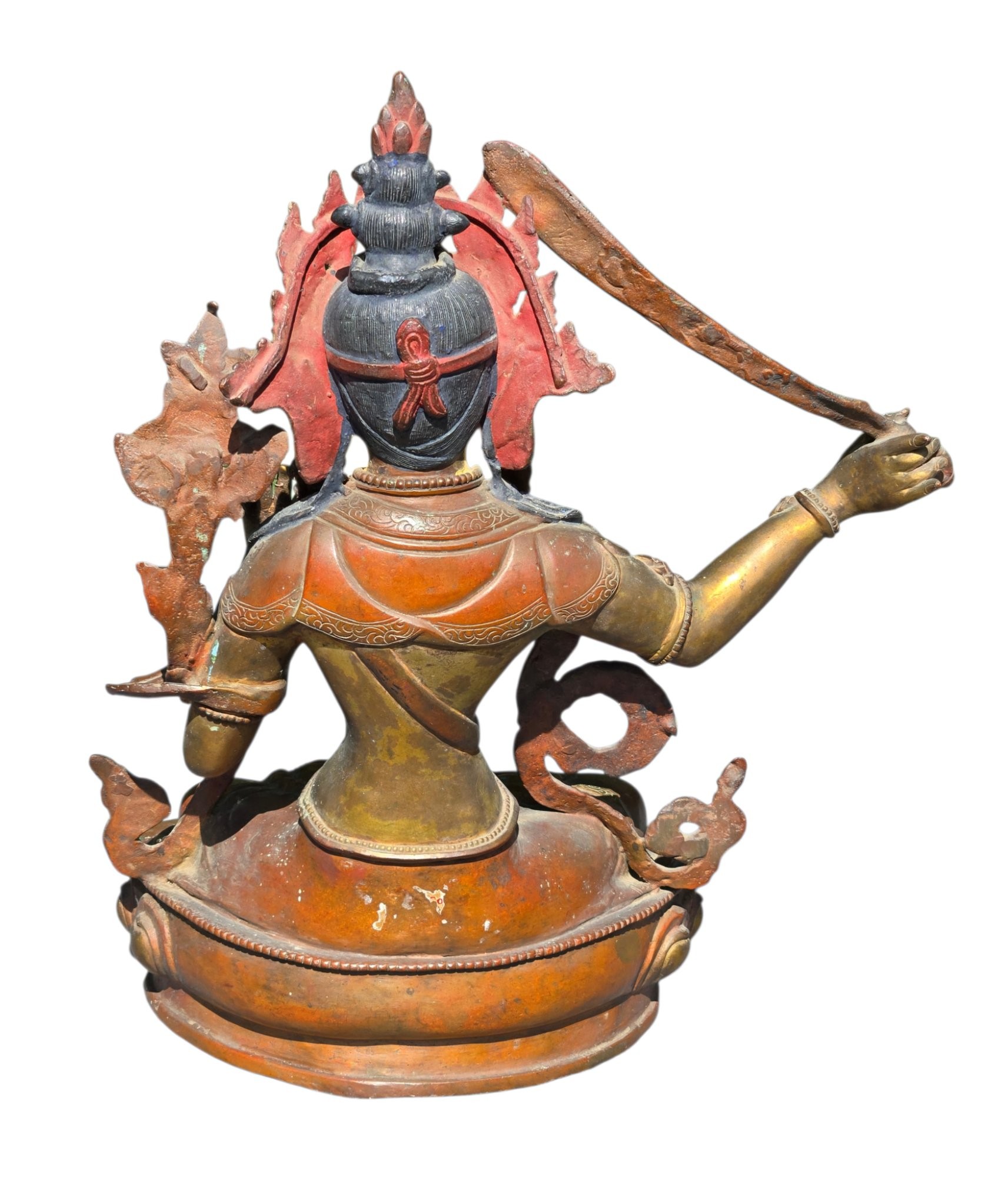
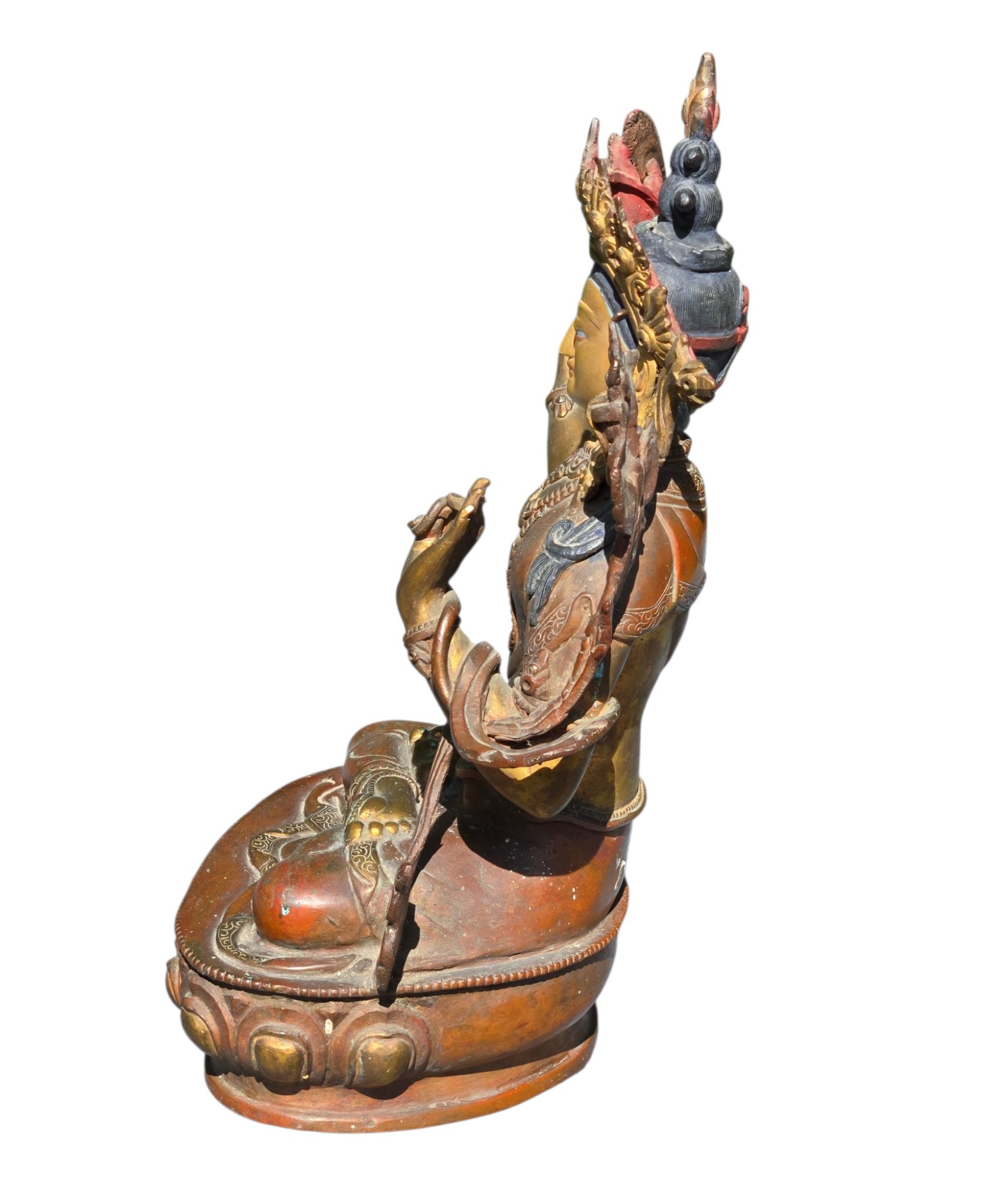
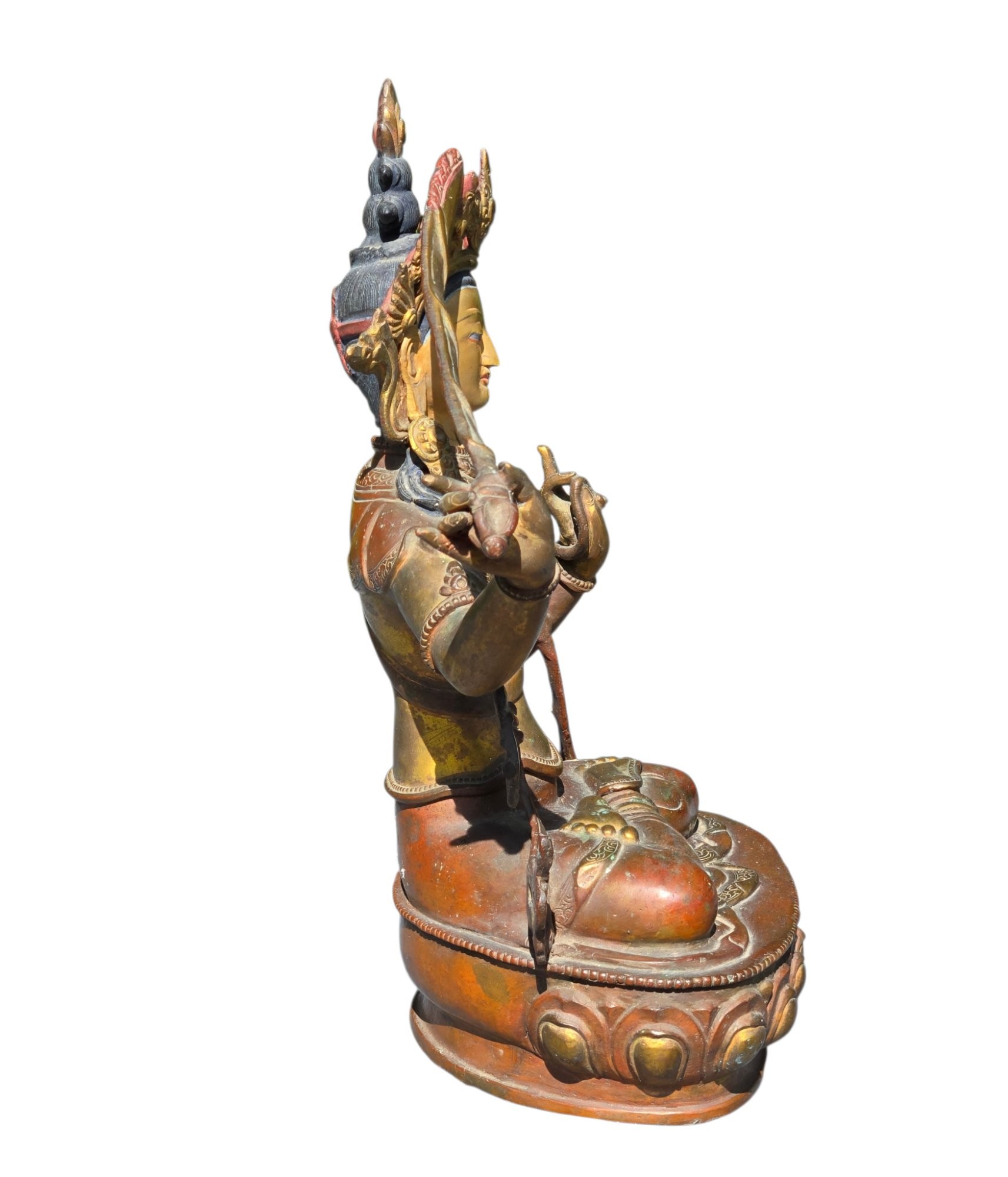
Sandbanks Antiques has dated this Gilt Bronze Manjushri Statue to the 18th Century.
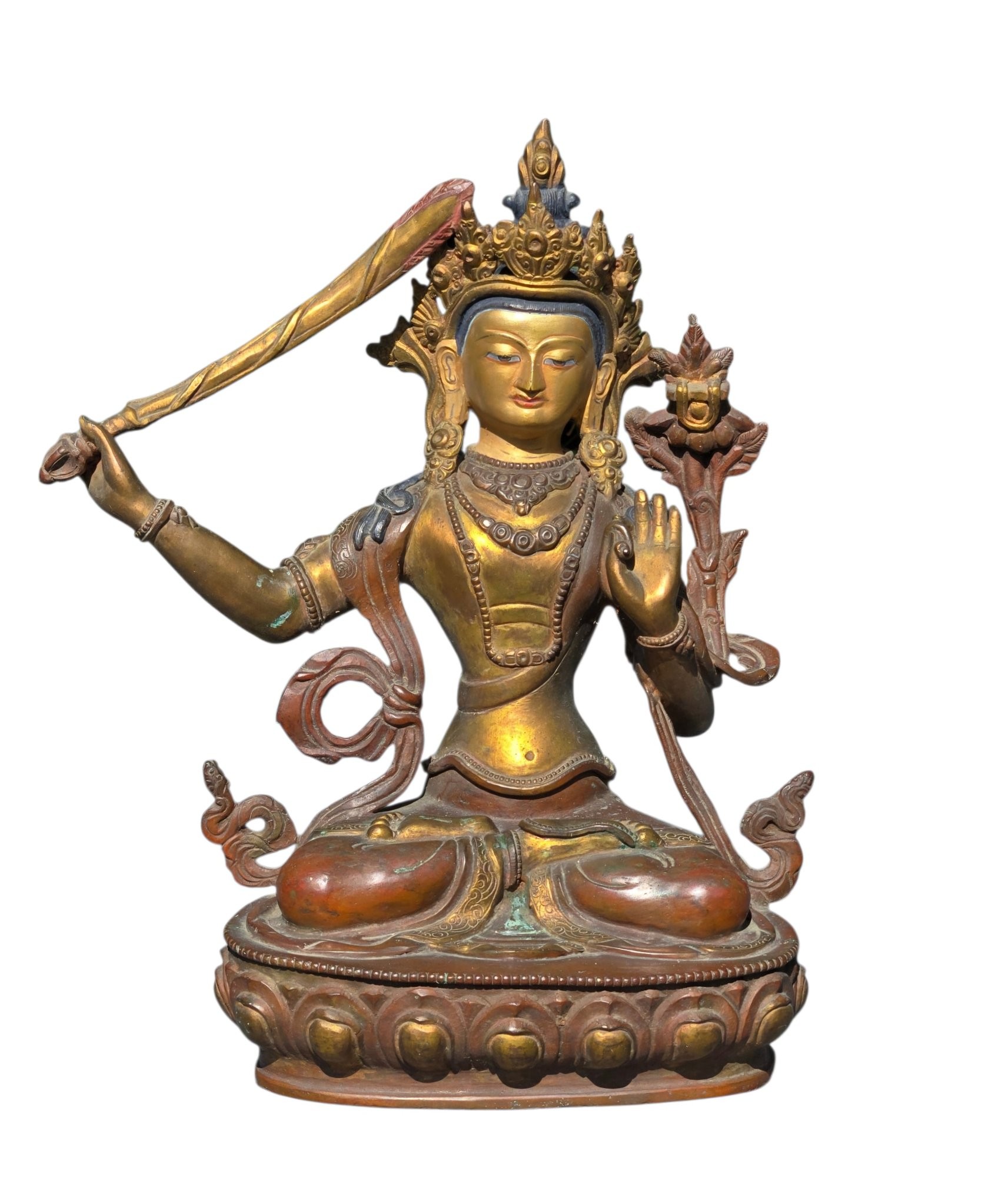
Standing at a substantial height of 37 cm, this piece presents a rare combination of refined Imperial-revival aesthetics, rich material patination, and undisturbed ritual integrity.
Iconography & Posture
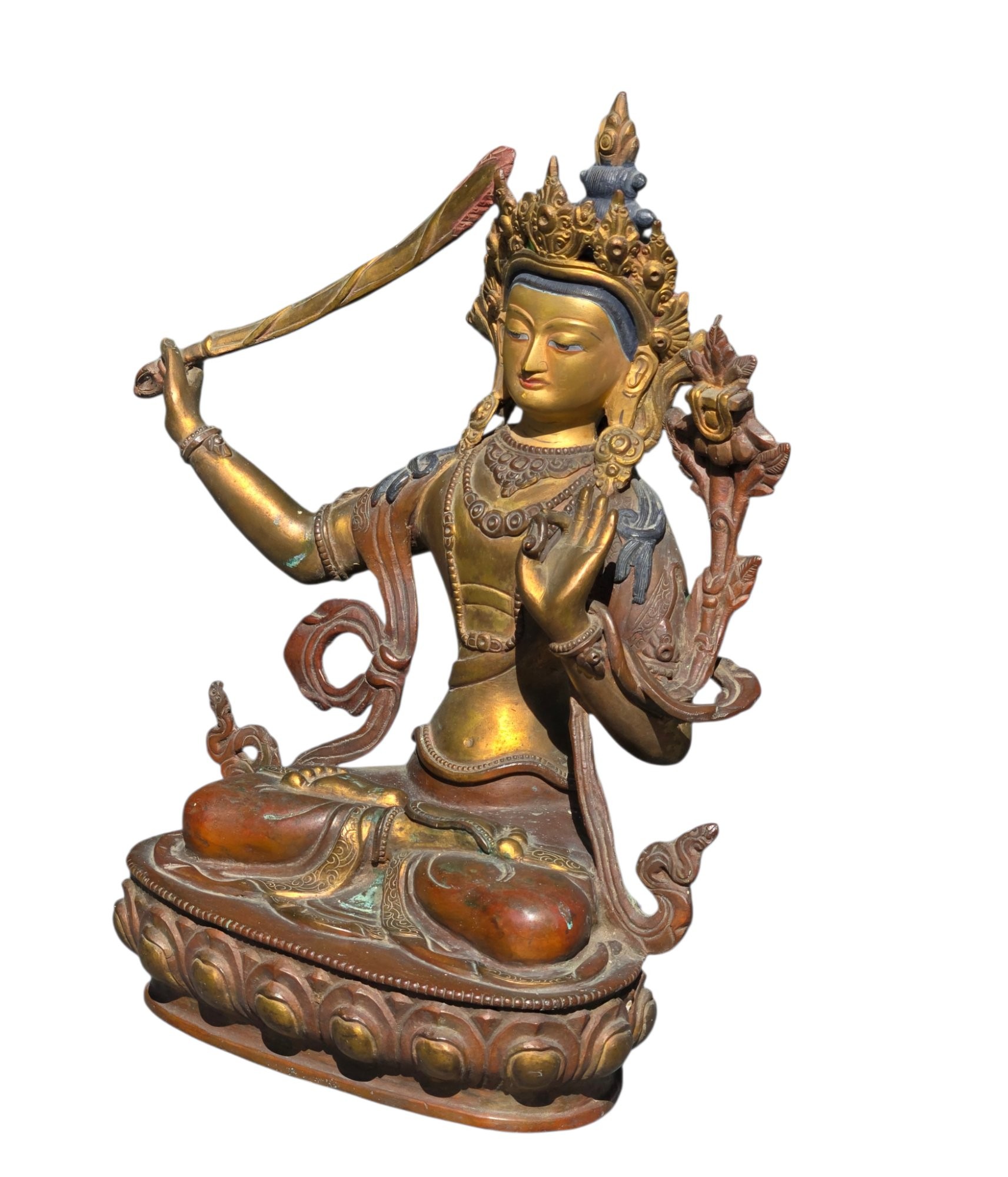
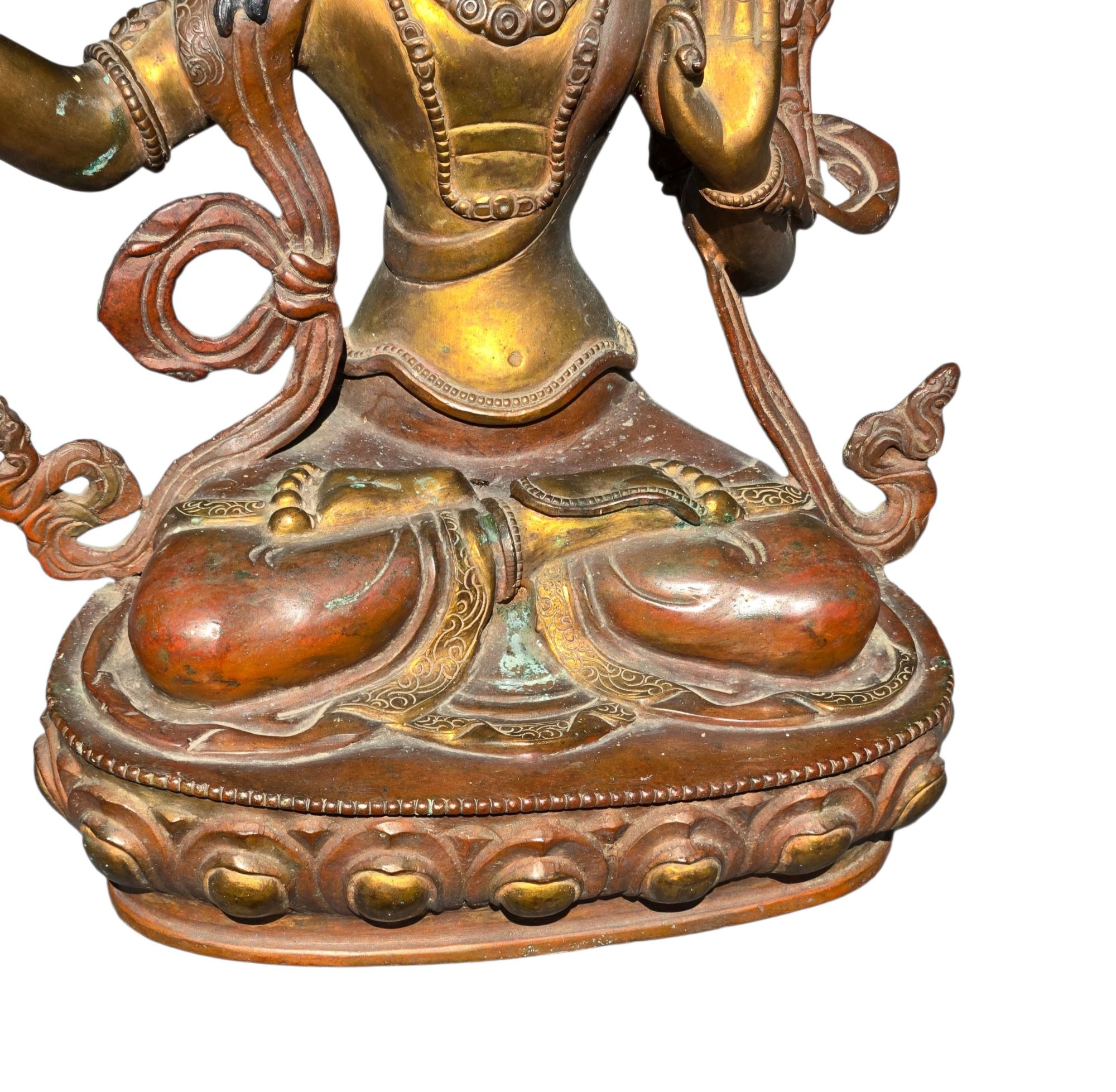
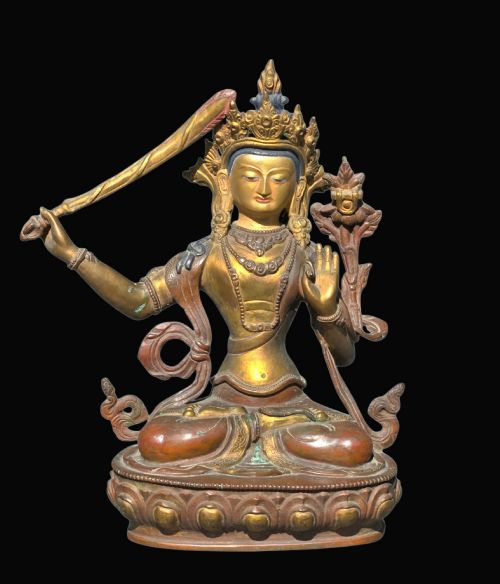
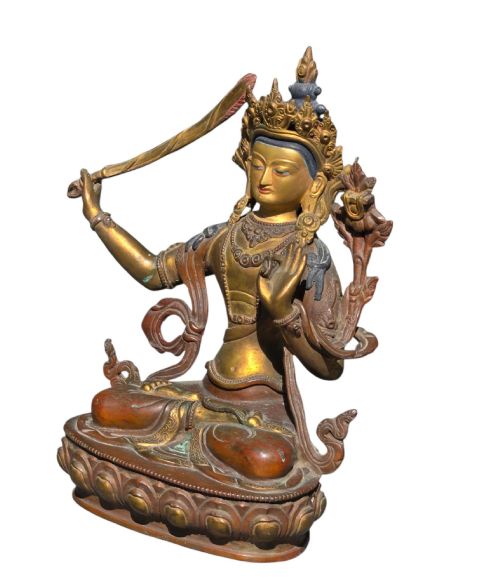
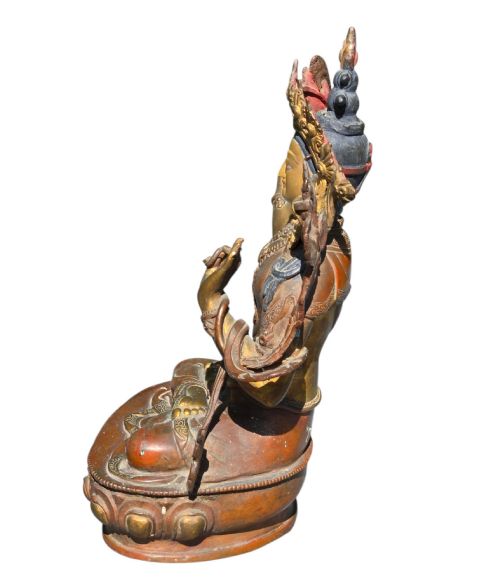
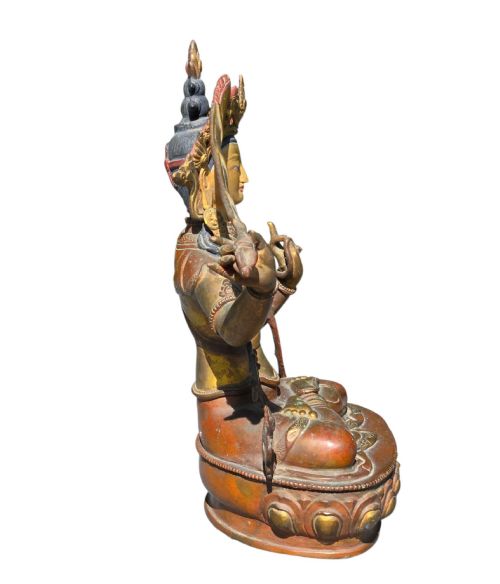
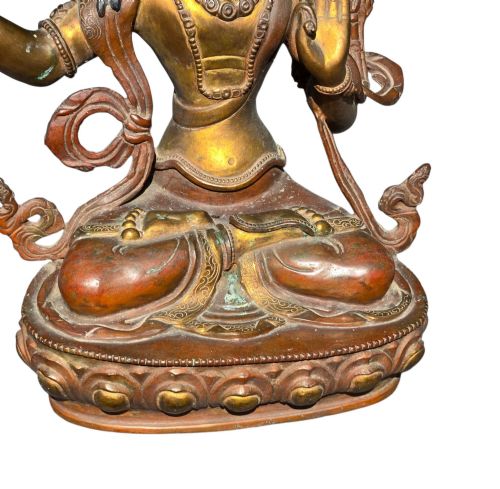
Form & Stance: The bodhisattva is seated in deep vajrasana (full lotus position) atop an expansive, crisply cast double-lotus throne. The posture is exceptionally graceful, featuring an elongated, elegantly cinched waist and balanced proportions that reflect traditional monastic craftsmanship.
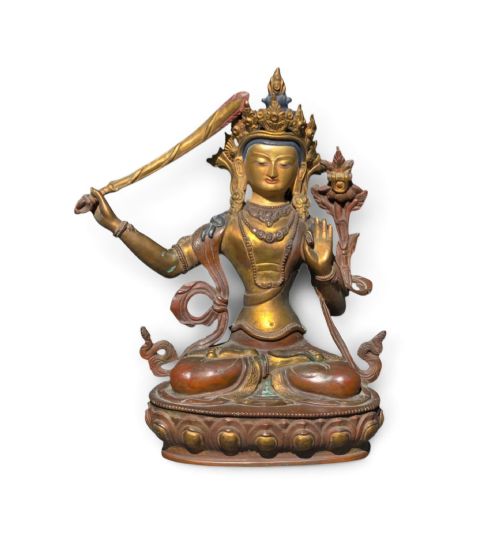
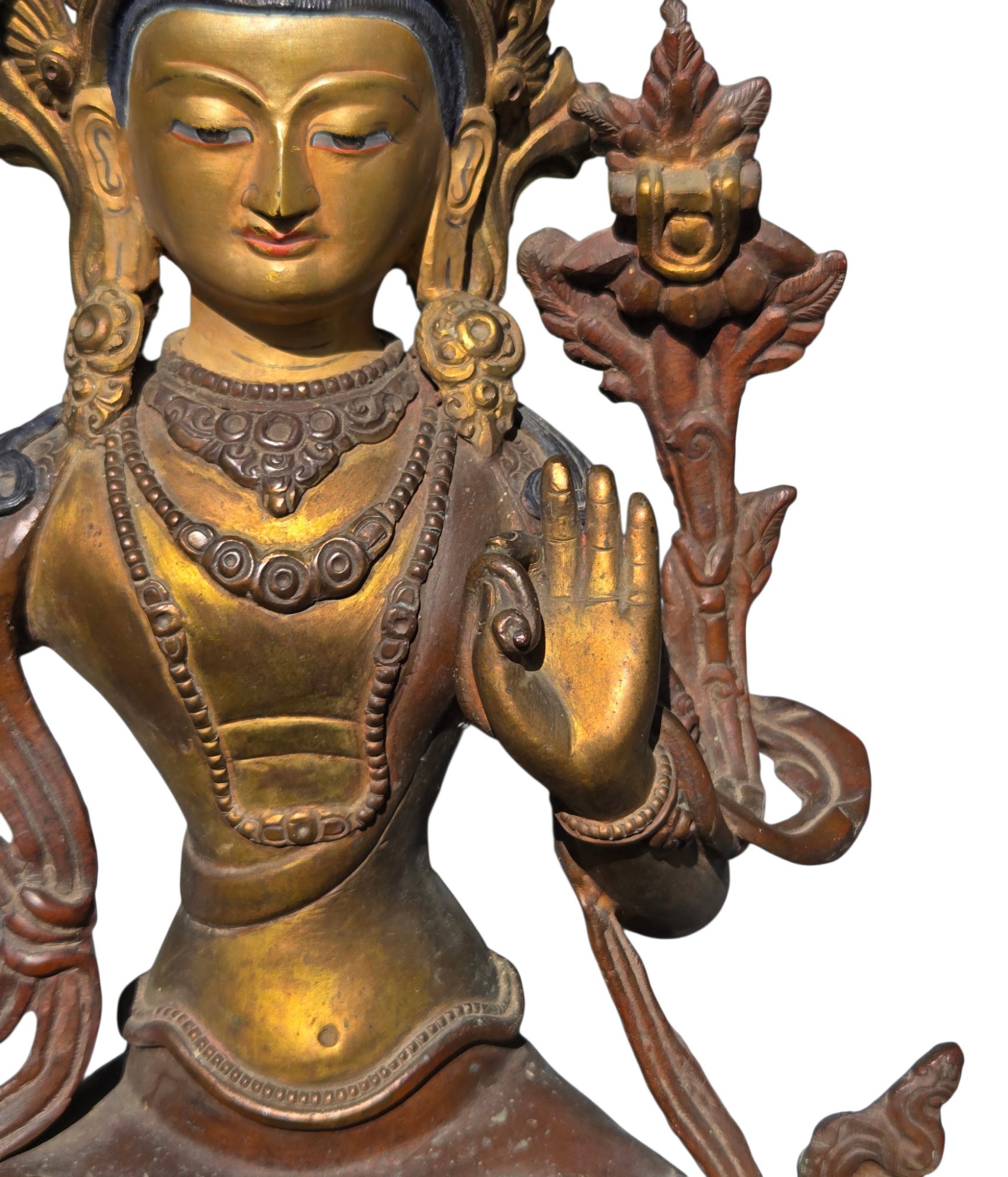
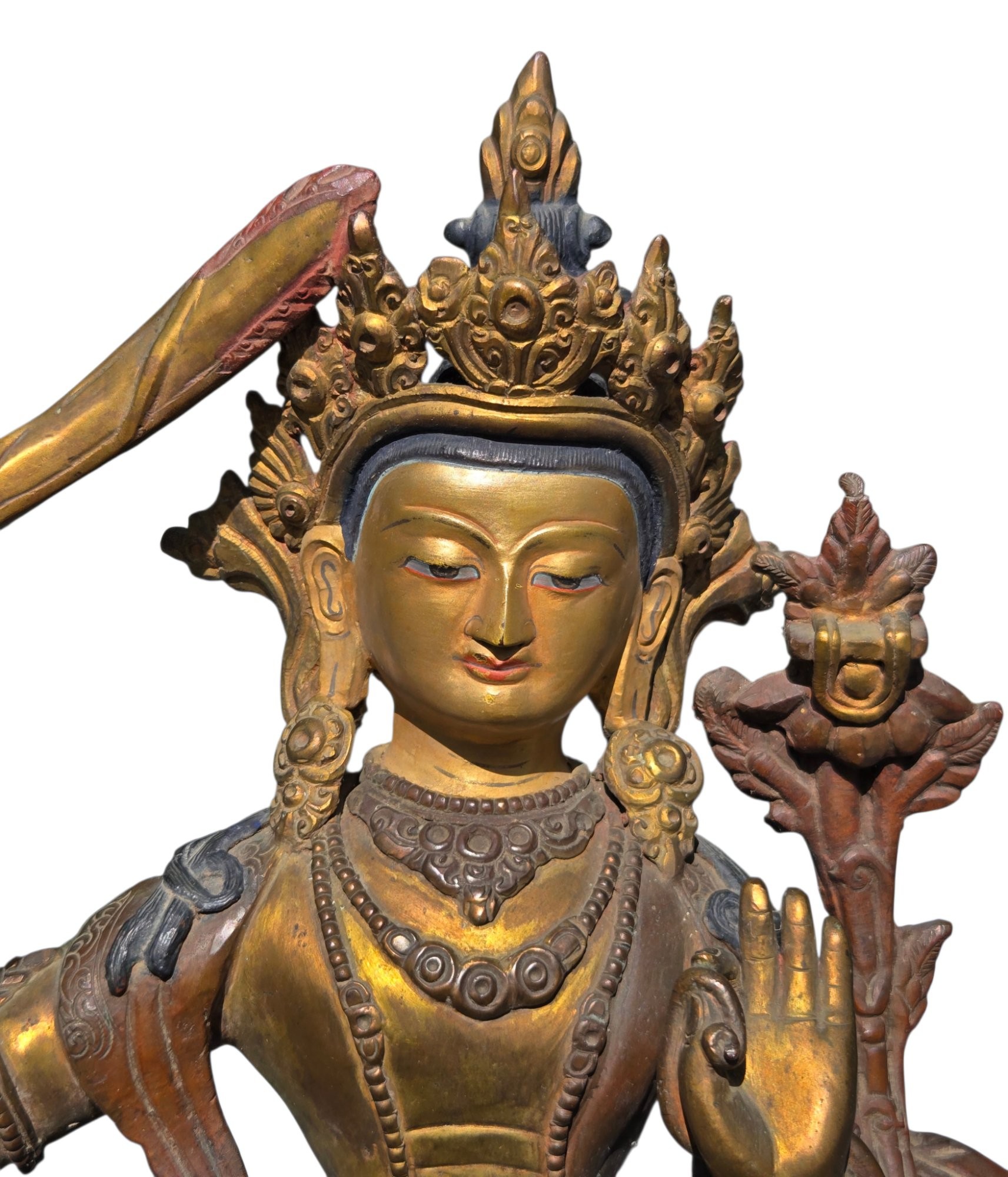
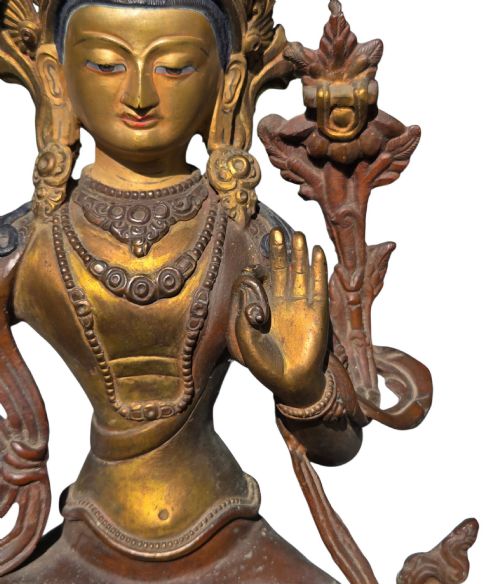
Attributes: In his raised right hand, he wields the flaming sword (khadga) of wisdom, symbolizing the sharp intellect that cuts through ignorance and delusion. His left hand is held at the heart in vitarka mudra (the gesture of teaching), delicately clutching the stem of a blooming lotus that rises to support the sacred text of the Prajnaparamita Sutra.
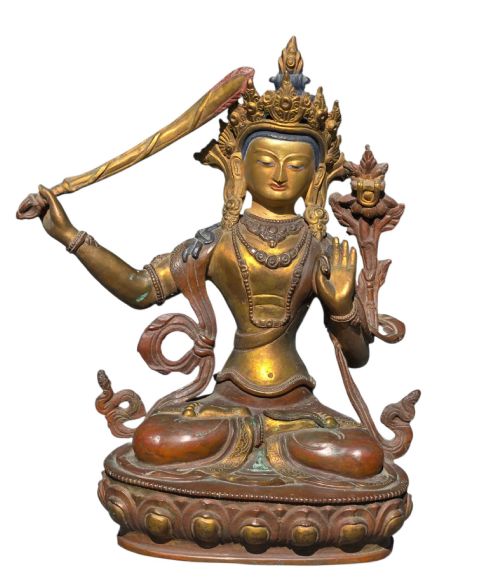
Attire & Adornments: He is adorned in elaborate bodhisattva regalia, including an intricate tripartite crown framing the serene, downcast face, multi-strand beaded necklaces, armbands, and flowing celestial scarves (dhoti) that sweep dynamically around his torso and arms.
Coloring, Gilding & Age-Related Pat patina
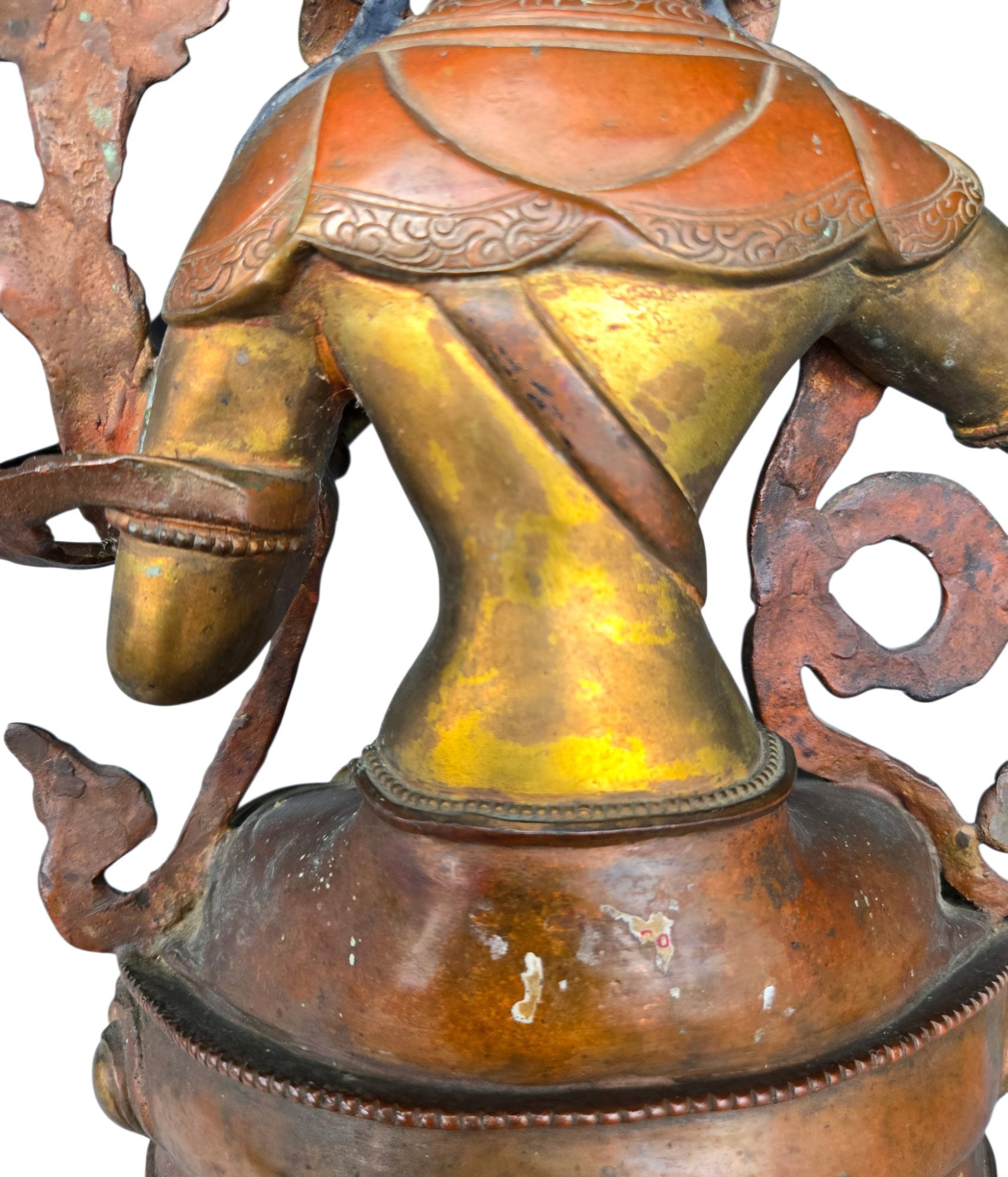
The Alloy & Surface: Cast in a heavy, thick-walled copper-rich alloy, the bronze displays a warm, organic coppery undertone.
Fire-Gilding: Rich remnants of original, bright selective fire-gilding cling to the high-relief areas—highlighting the facial features, crown details, and the plump, rounded petals of the lotus throne—while contrasting beautifully against the darker, exposed bronze body.
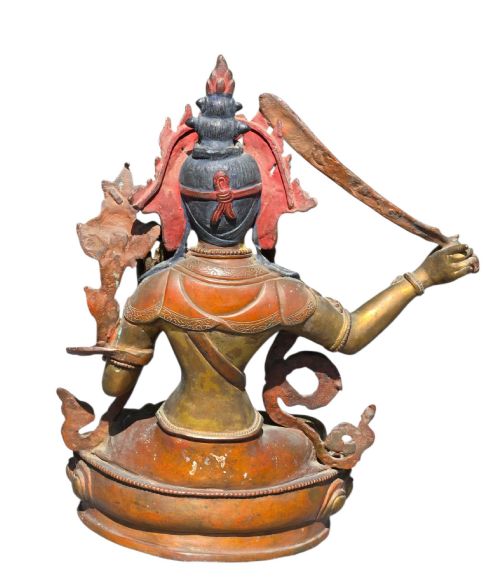
Polychromy: The hair (tarani topknot) preserves significant traces of its original cold-painted azurite-blue mineral pigment, alongside subtle touches of traditional hand-applied pigment on the face, marking genuine ritual finishing.
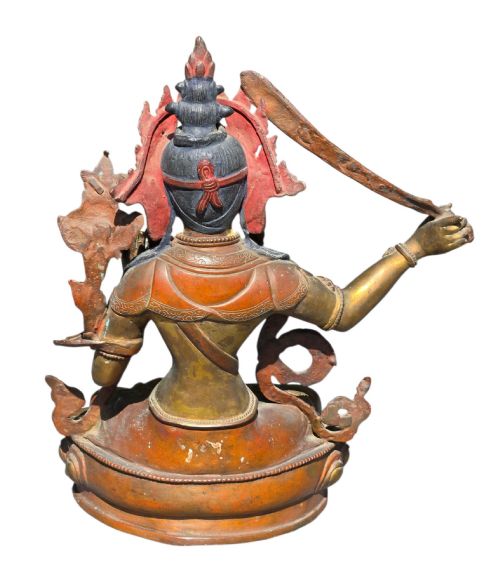
Patination: The surface tells a clear story of age and atmospheric exposure, featuring natural oxidation, soft high-point rubbing from generations of handling, and stable integration of deep coppery-brown tones with subtle verdigris accents tucked into the recesses.
The Base & Ritual Construction
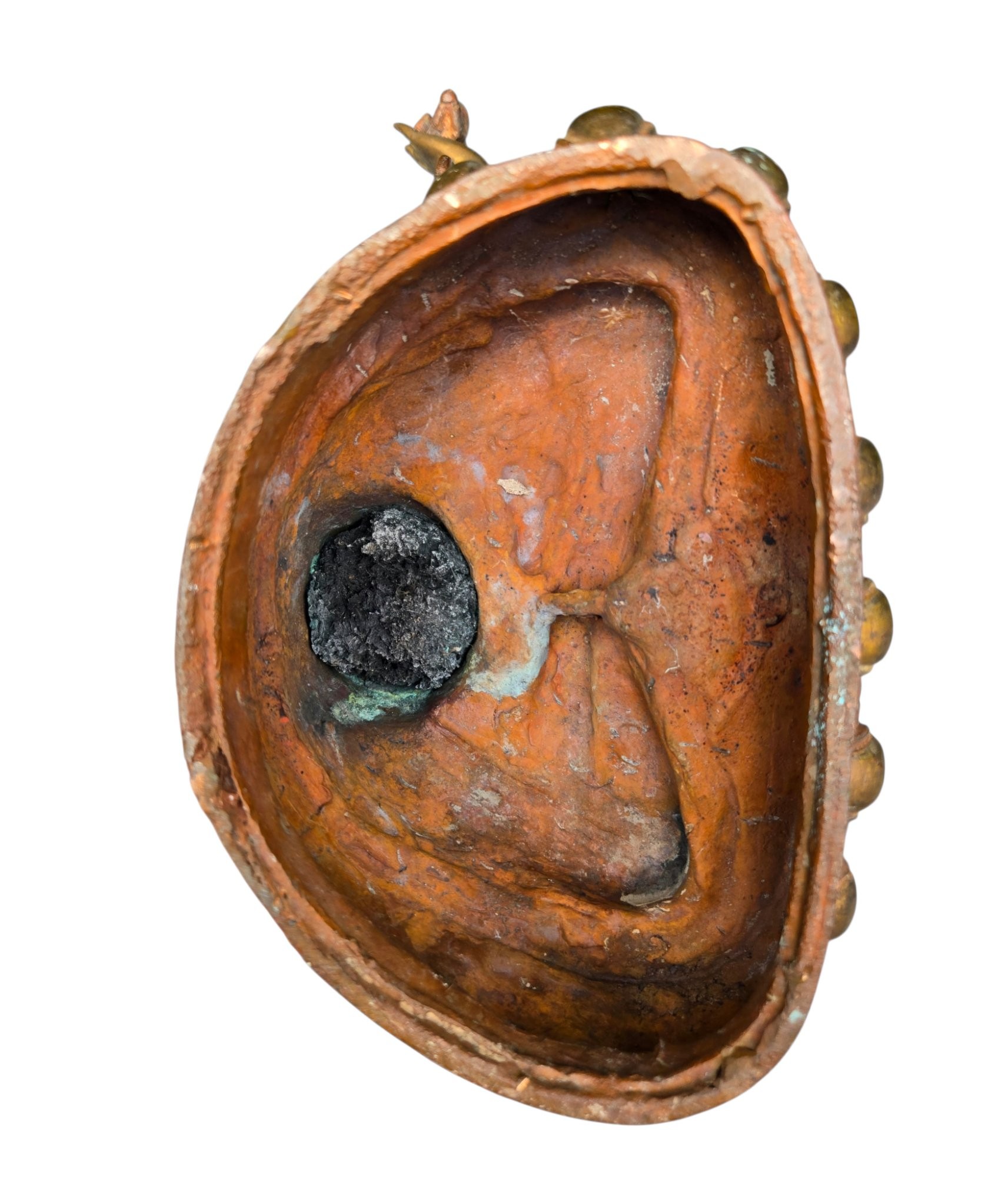
The Open Base & Interior: Viewed from the underside, the hollow-cast interior reveals traditional lost-wax casting textures, undulating structural contours, and natural oxidizing.
The Consecration Core (Zung): Crucially, the central aperture retains its original, untouched fibrous ritual packing (comprising rolled mantras and sacred materials), confirming that the interior has never been modernly gutted or altered.
The Seating Rim: The lower rim of the lotus base shows a flattened, organic seating edge with micro-abrasions and a smooth, unforced contour. It completely lacks modern machine tool marks, saw kerfs, or harsh filing, corroborating its genuine antiquity.
A museum-quality devotional bronze offering exceptional visual presence, untouched ritual contents, and a deeply atmospheric surface for the discerning collector.
Dimensions: Height: approx. 37 cm | Width: approx. 22.5 cm
Weight: Substantial and heavy
Period: Mid-to-Late 18th (Qing Dynasty, Qianlong period)
Provenance: Private Collection, London
Sandbanks Antiques has dated this Gilt Bronze Manjushri Statue to the 18th Century.
Specialising in antique silver, gold boxes, gold coins and objects de vertu. Rare fine-quality imperial chinese porcelain, jades, cloisonné
You can view the stock and full dealer information on the Sandbanks Antiques Profile Page
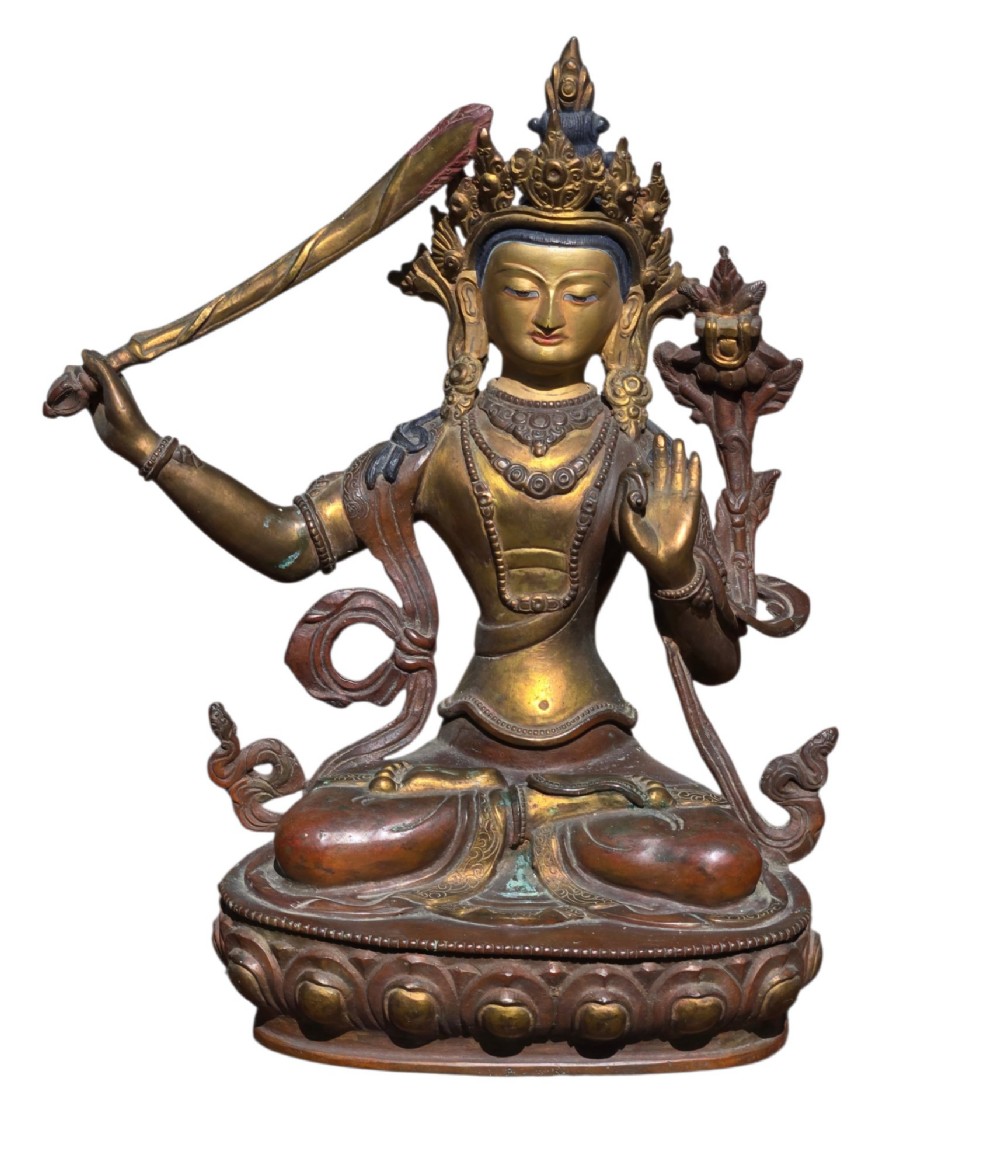
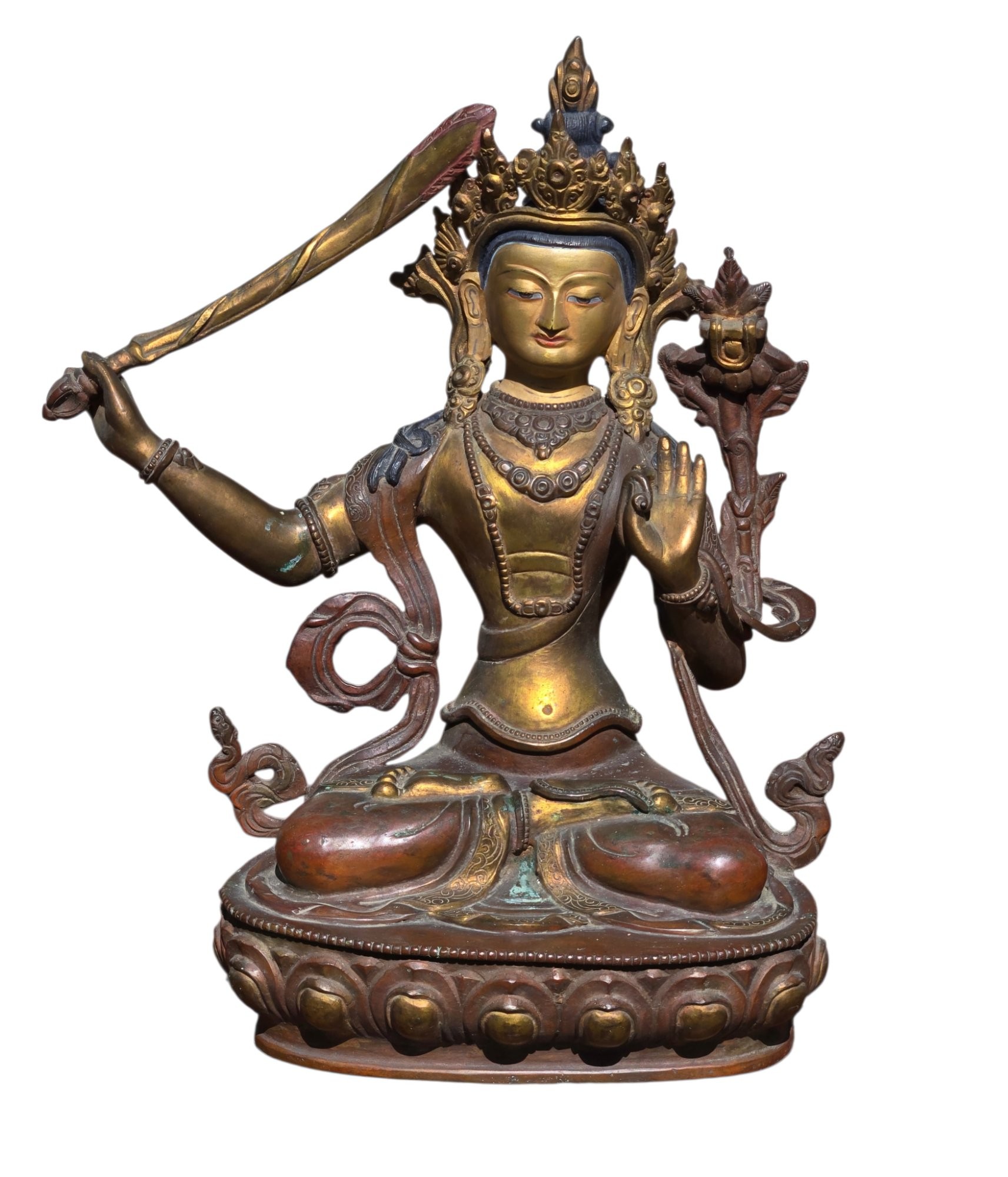
Large Antique Sino-tibetan Gilt-bronze Bodhisattva Manjushri, C. 1750-1780