CKB Ltd Emporium & Collectables has dated this Tibetan Bronze Avalokiteshvara Statue to the 1920s.
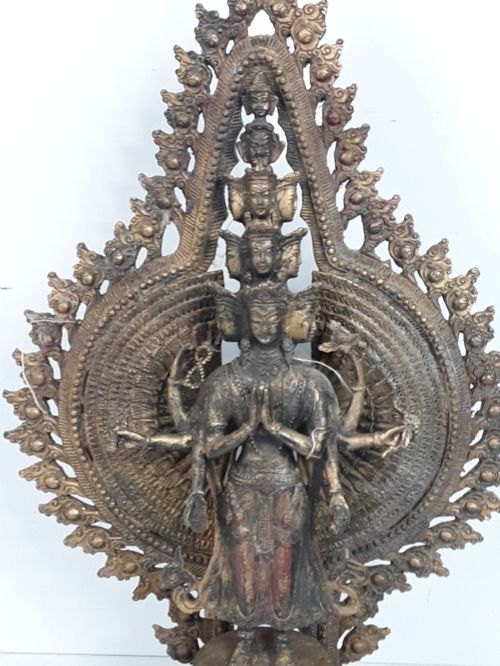
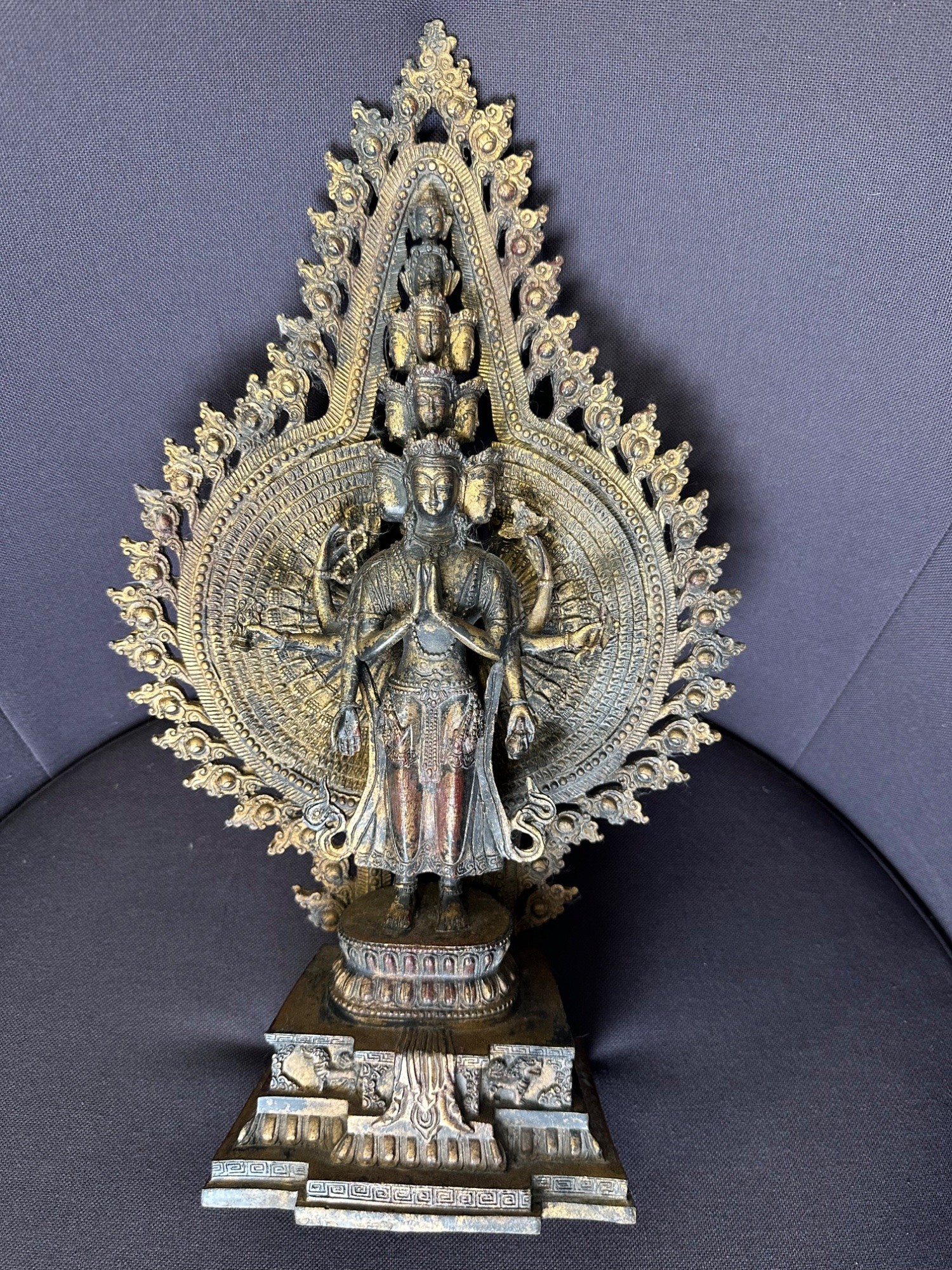
Dating from the early 20th century, probably circa 1920–1940, this substantial devotional sculpture stands approximately 40cm high, measures approximately 24cm wide and weighs an impressive 2.387kg.
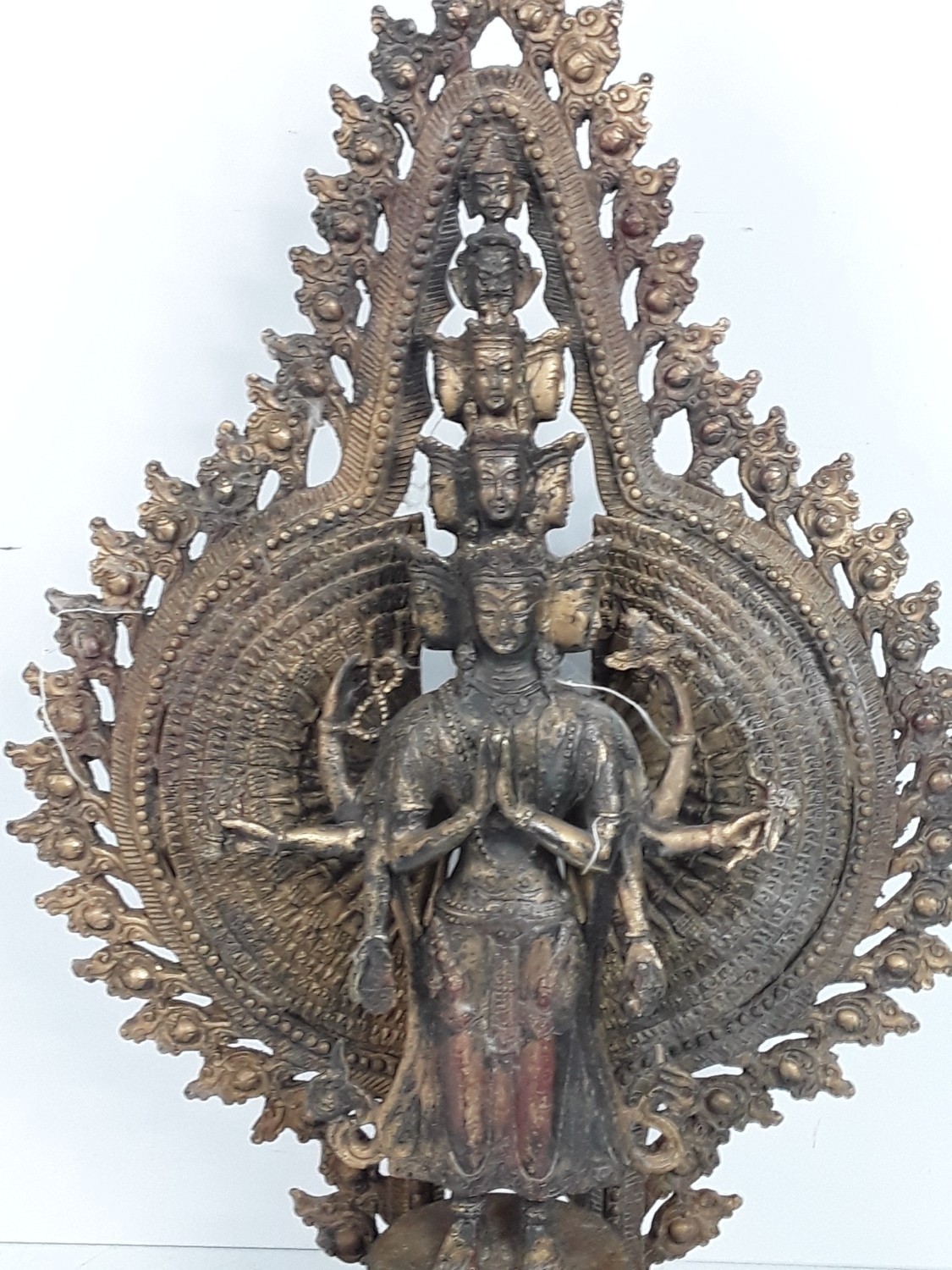
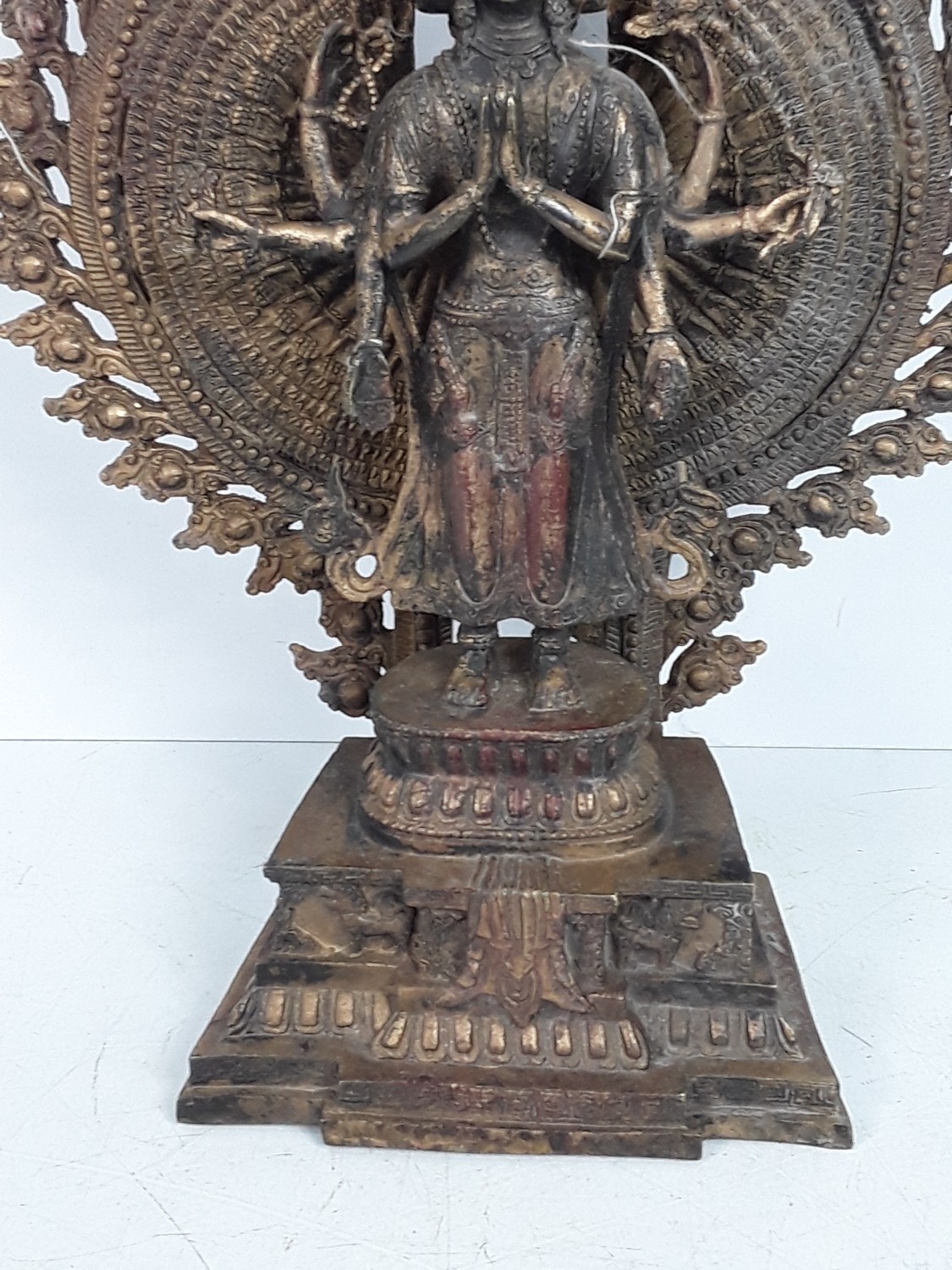
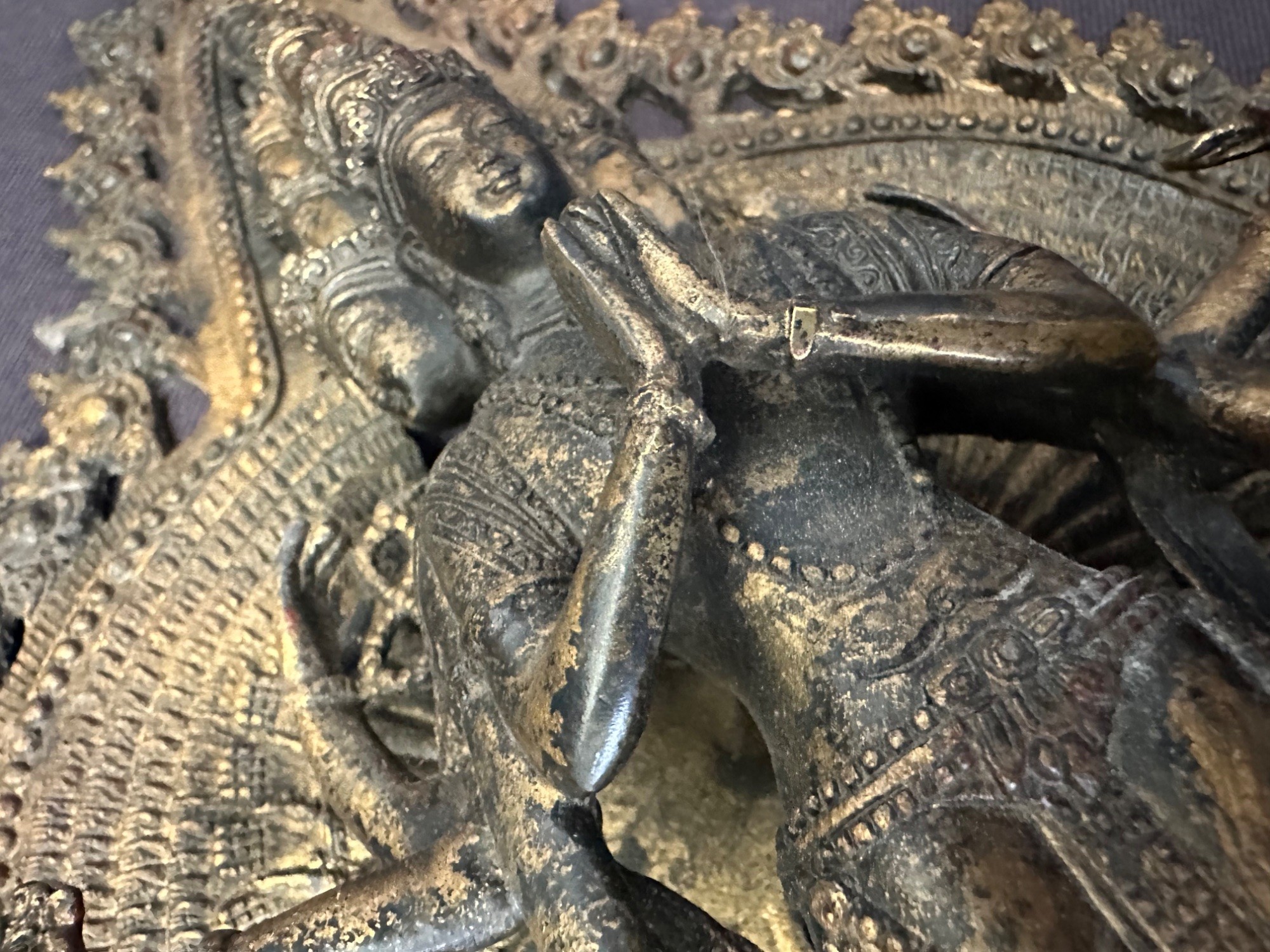
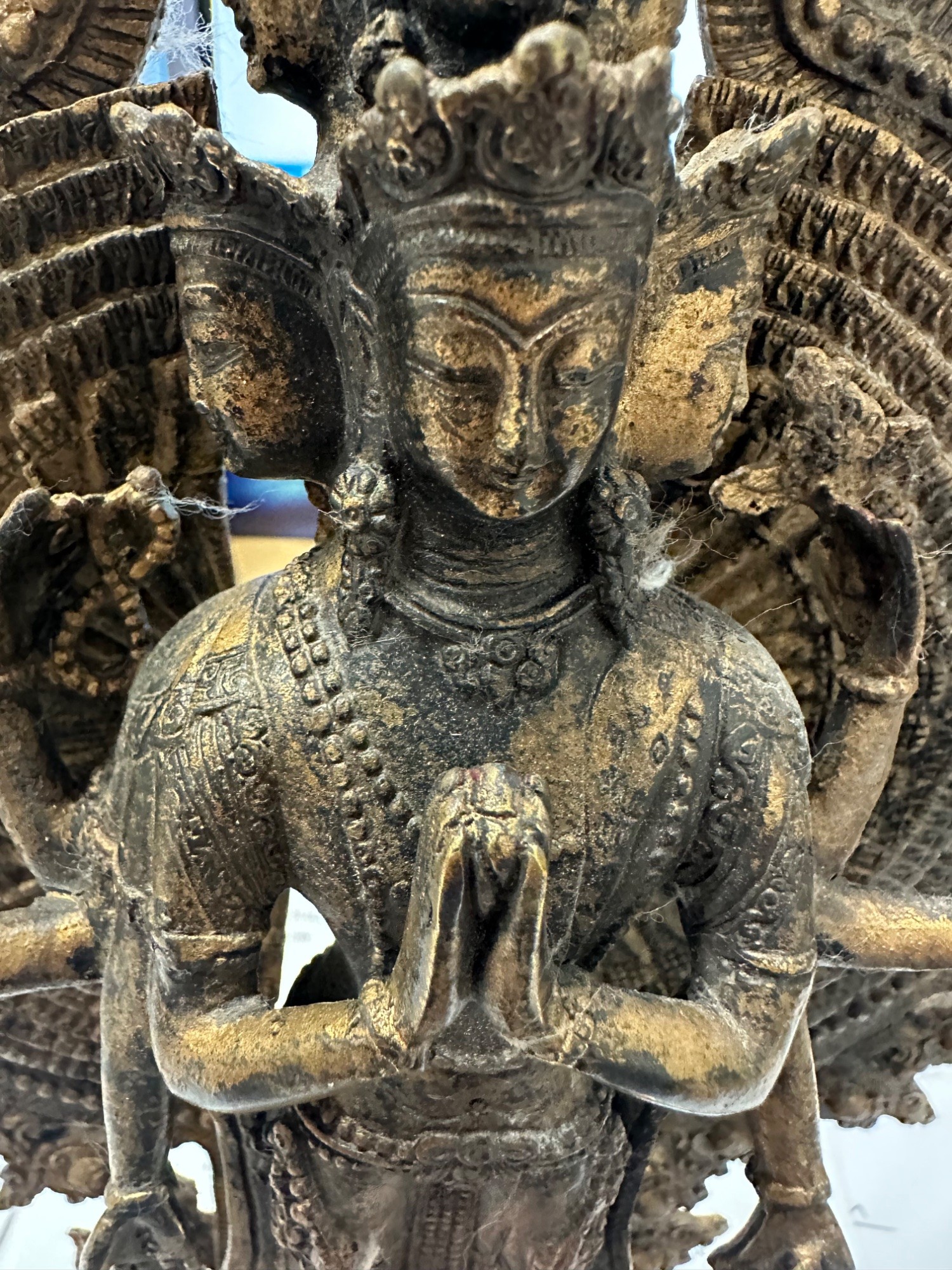
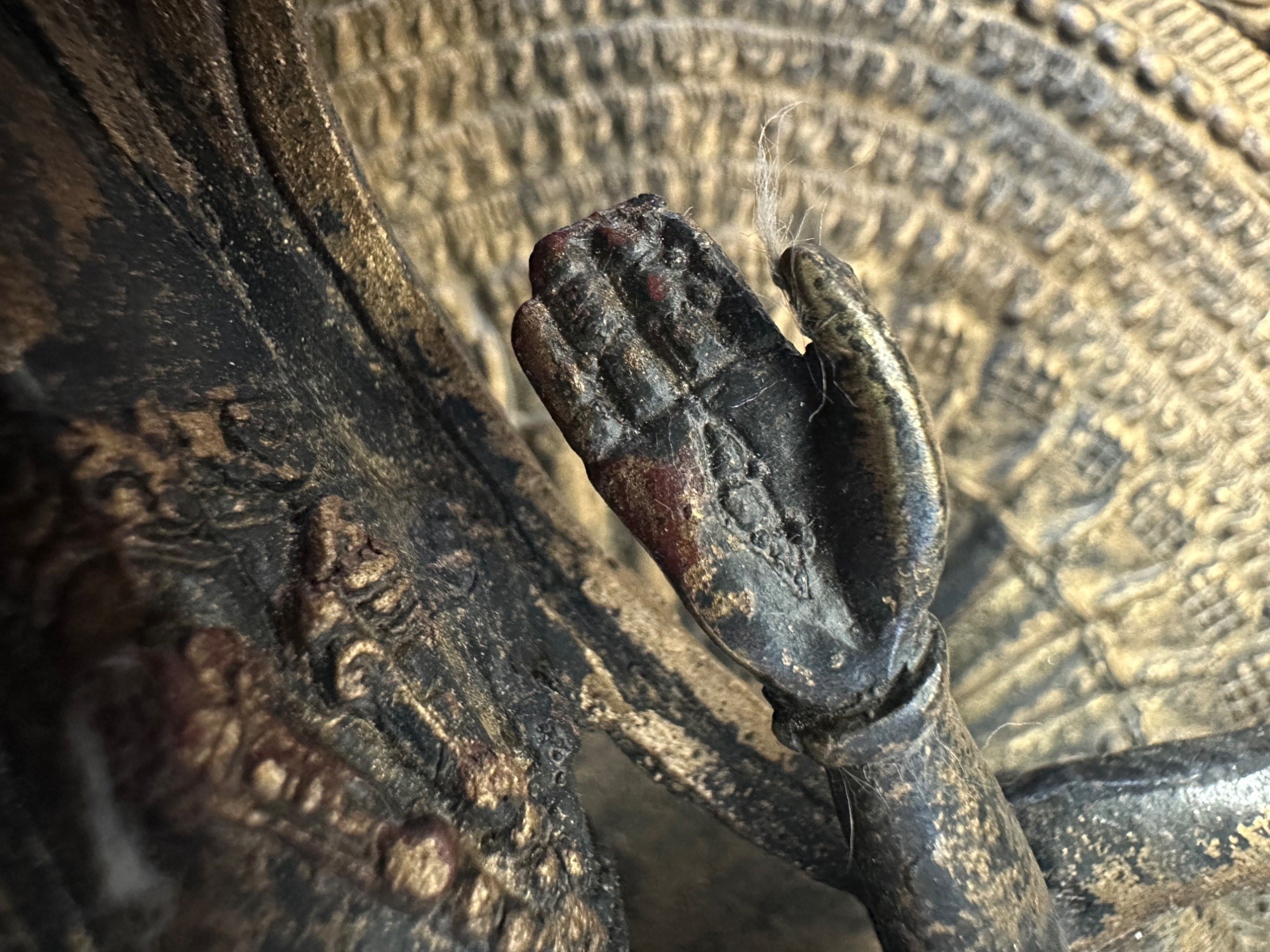
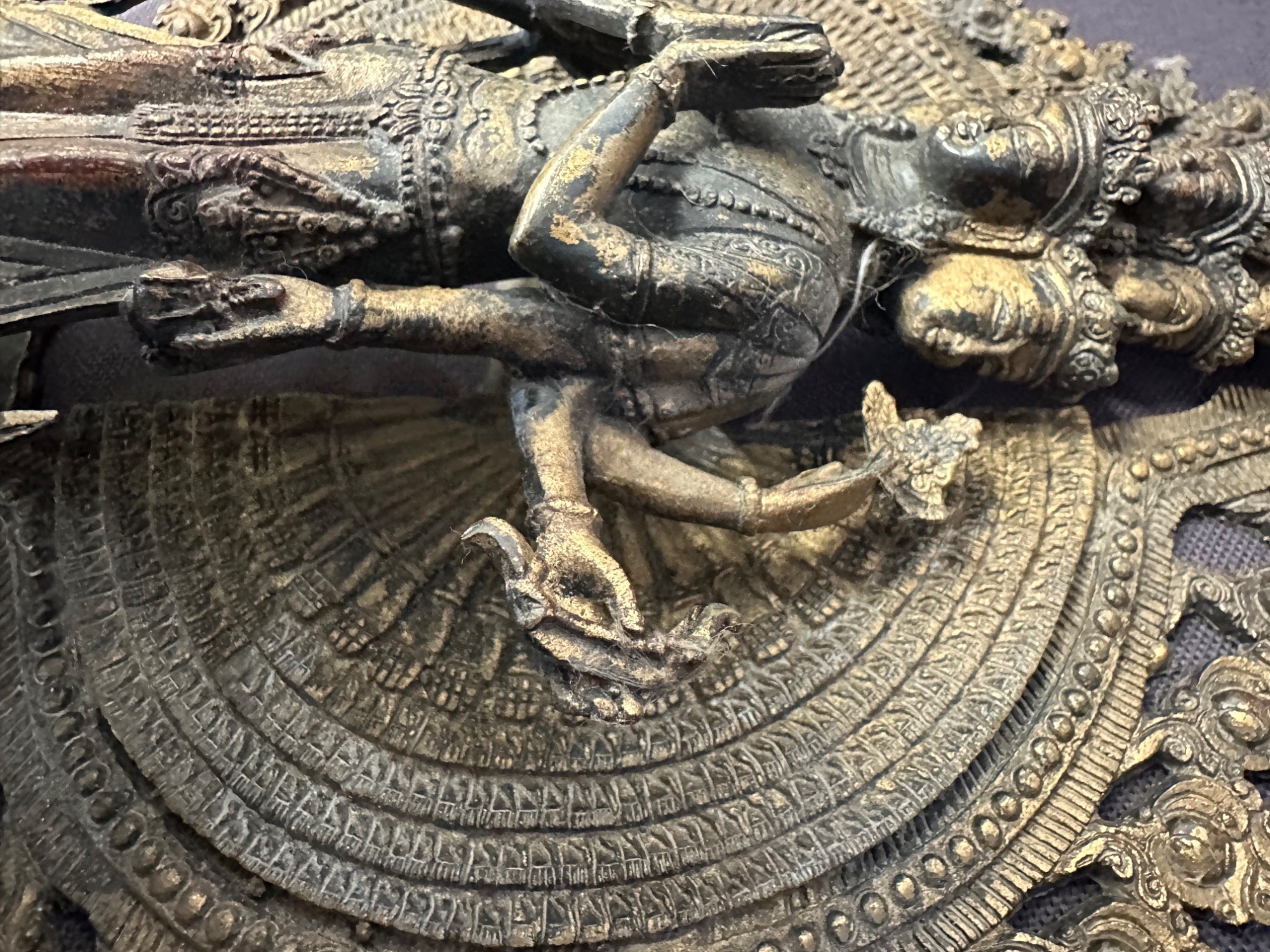
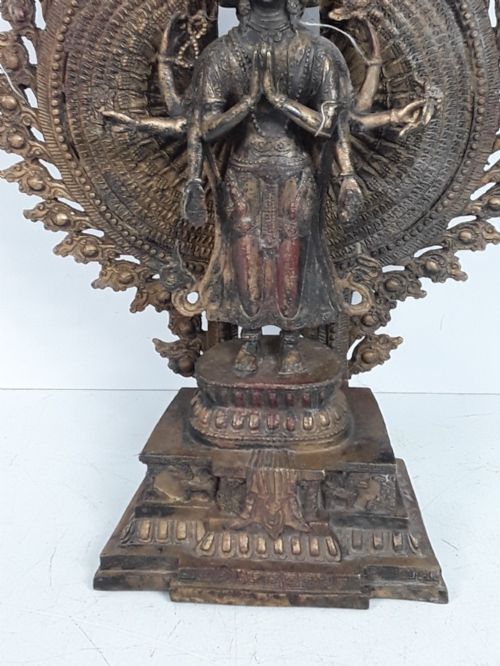
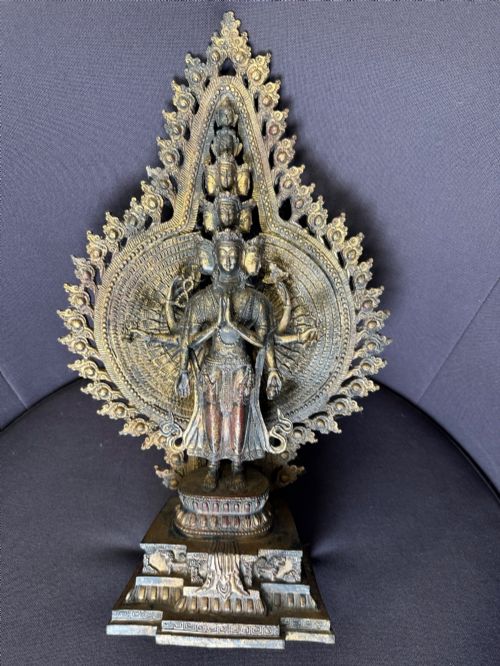
Avalokiteshvara is represented in his spectacular eleven-headed, multi-armed manifestation. The principal hands are held together before the chest in anjali mudra, the gesture of prayer and reverence, while numerous subsidiary arms radiate around the figure displaying symbolic gestures and holding ritual attributes.
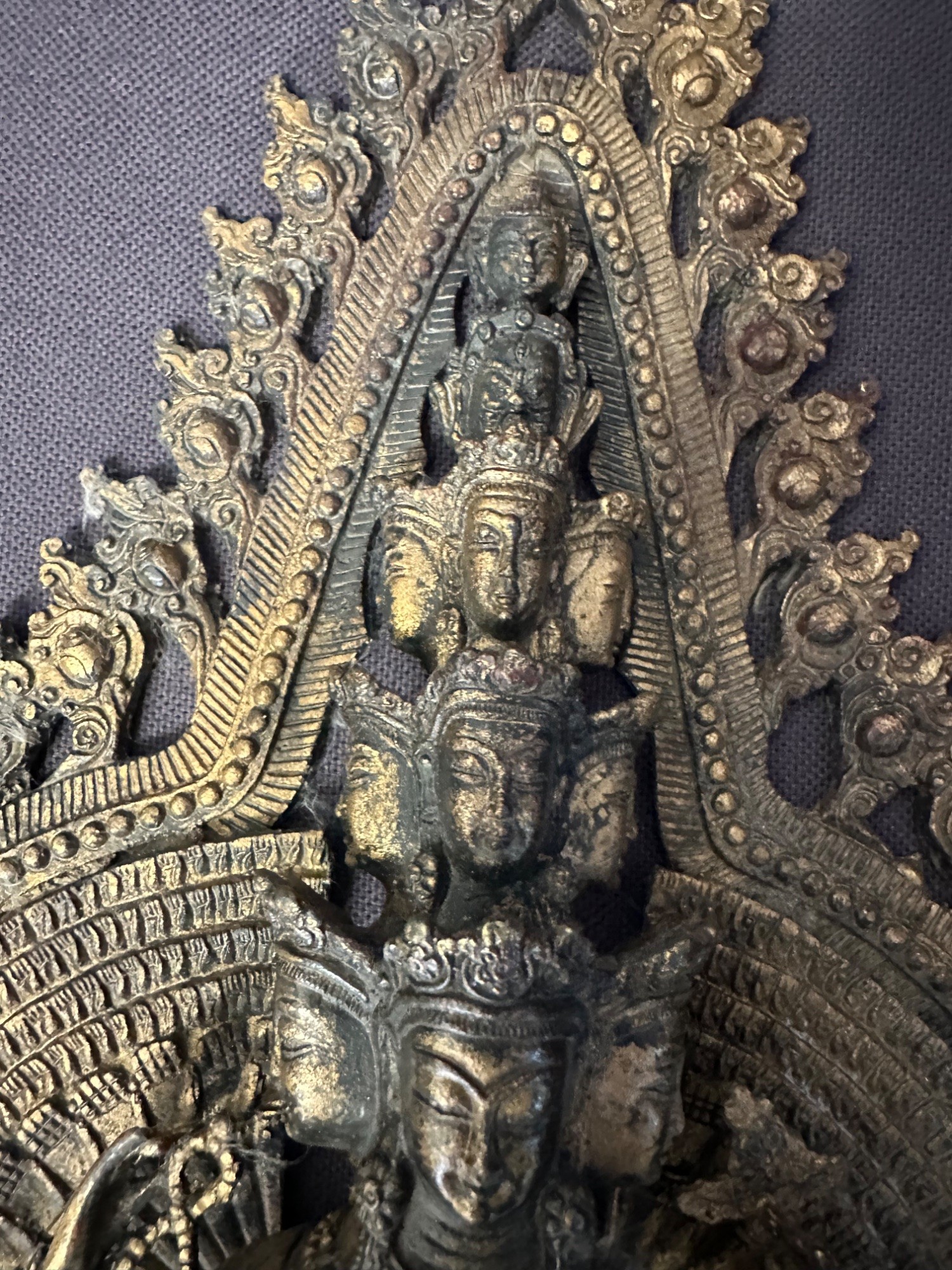
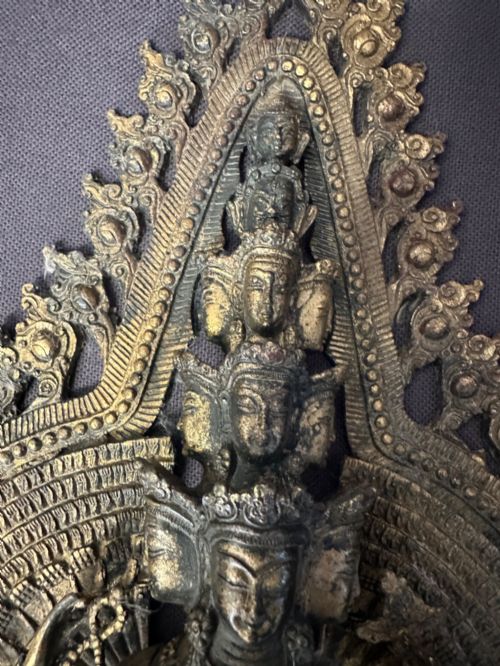
Above the principal crowned head rises the characteristic sequence of additional heads associated with this important manifestation of Avalokiteshvara.
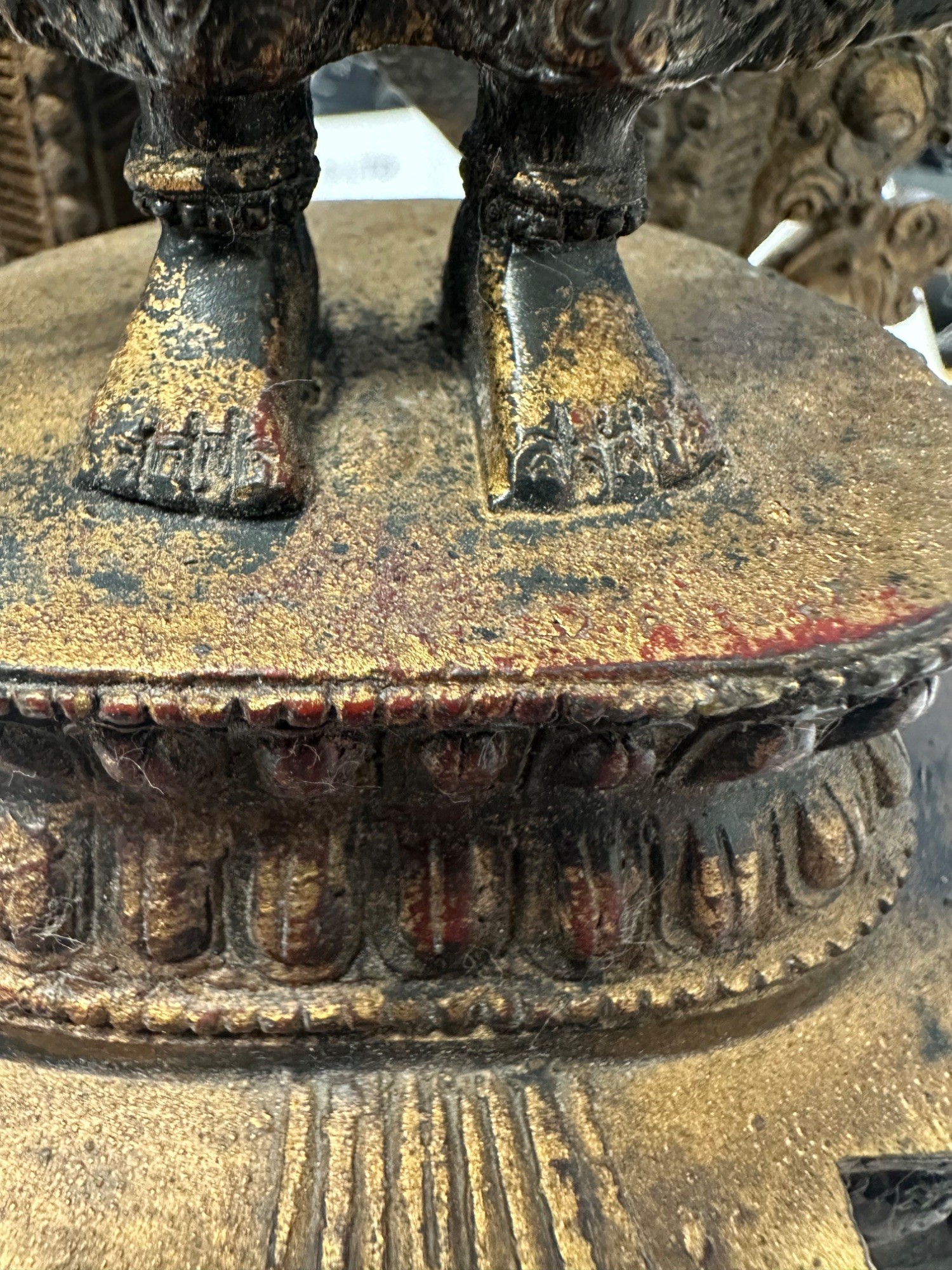
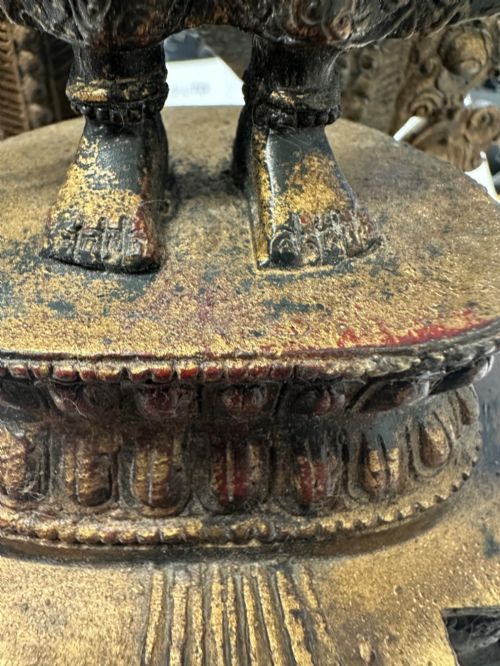
The deity stands upon a lotus pedestal raised on an elaborate stepped architectural base, decorated with geometric, foliate and Buddhist-inspired ornament.
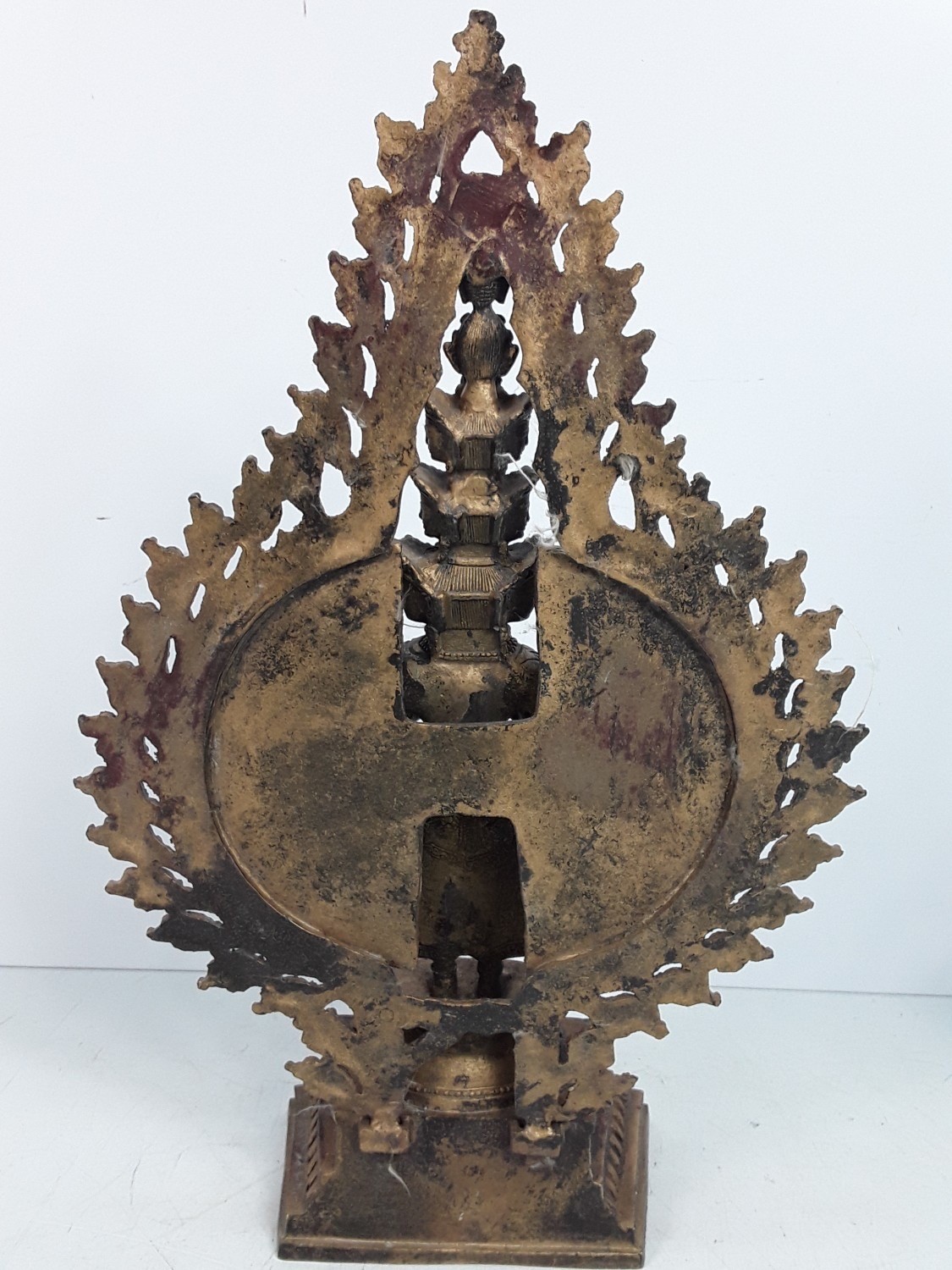
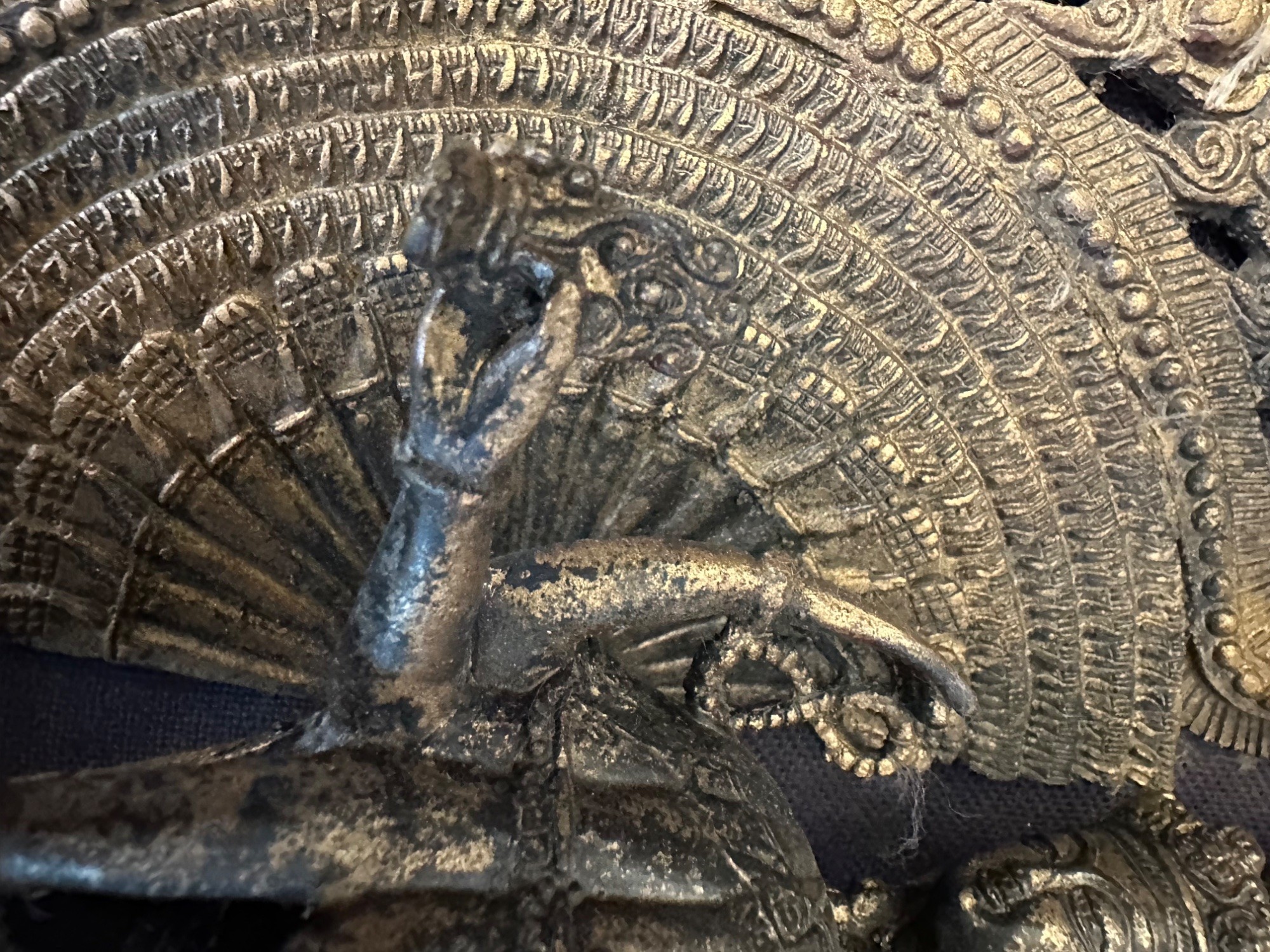
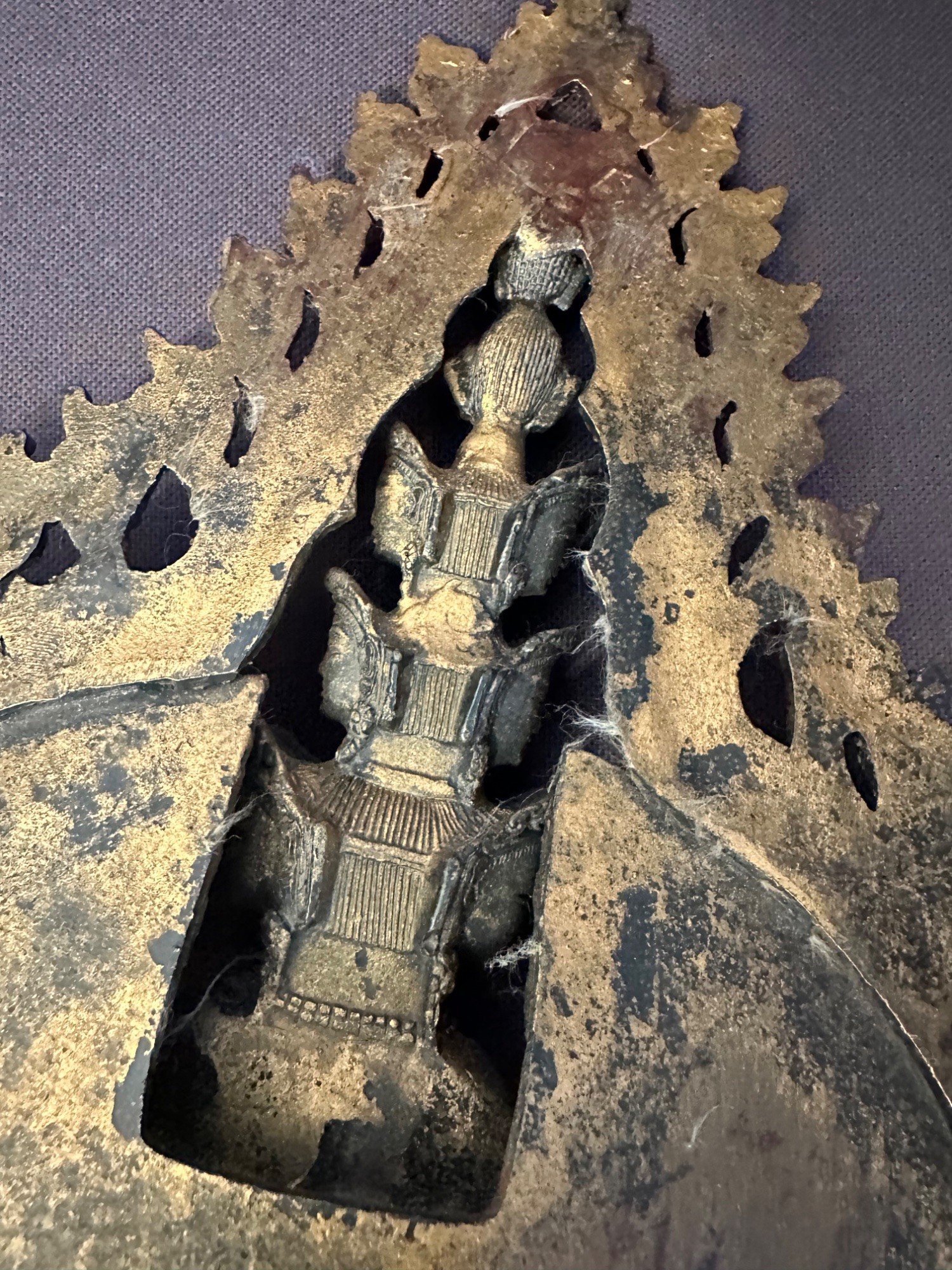
Particularly striking is the enormous separately cast mandorla or aureole surrounding the figure. Multiple radiating bands of hands and finely patterned ornament terminate in an elaborate pierced outer border of scrolling flame and foliate forms, producing an exceptionally dramatic and imposing composition.
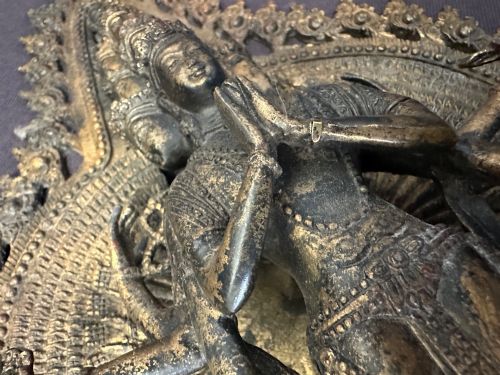
The bronze retains extensive traces of its original gold-coloured surface decoration together with remnants of red pigment, particularly around the robes, lotus pedestal and architectural base. These surviving surface treatments contrast attractively with the naturally darkened and worn bronze.
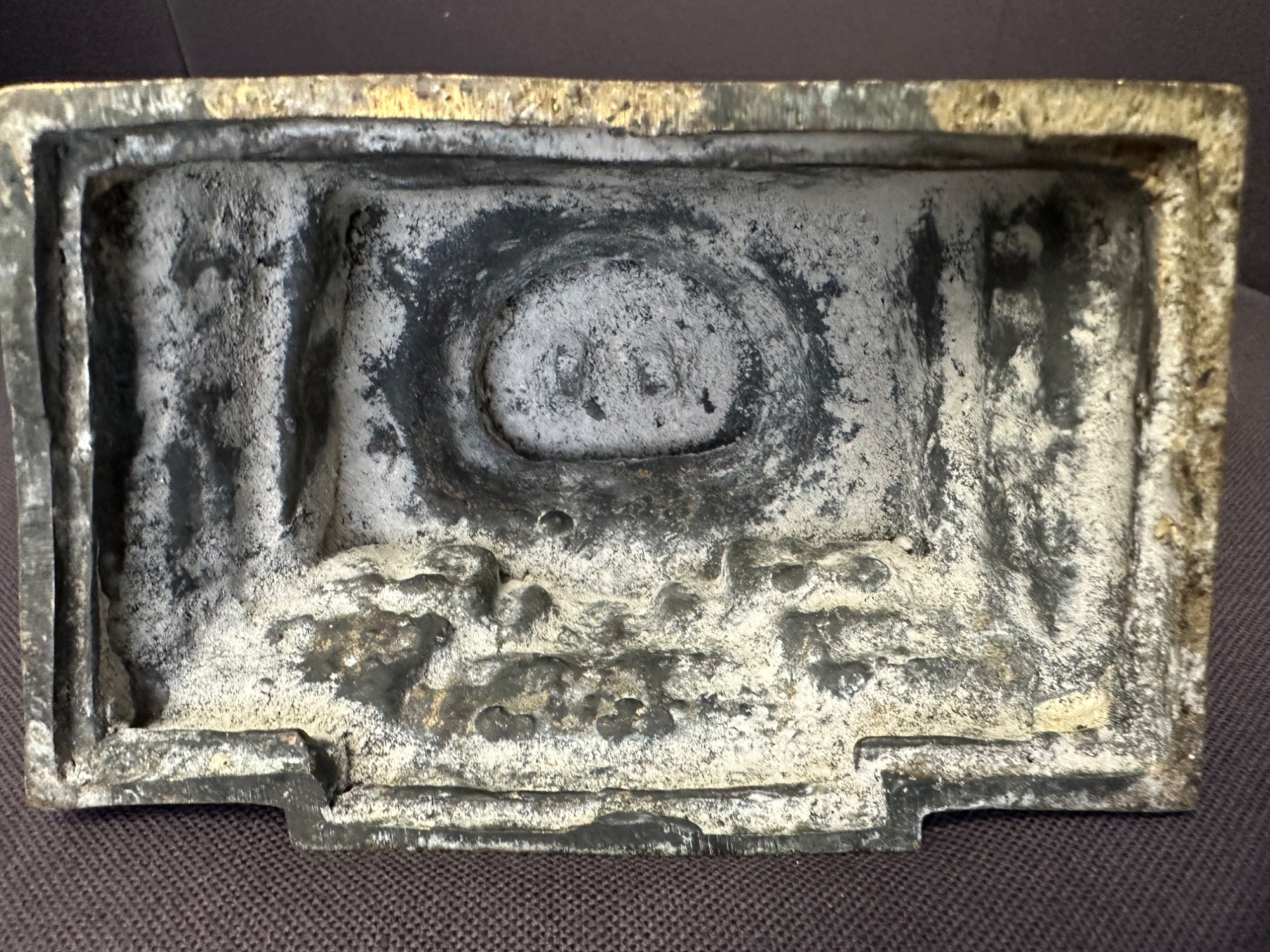
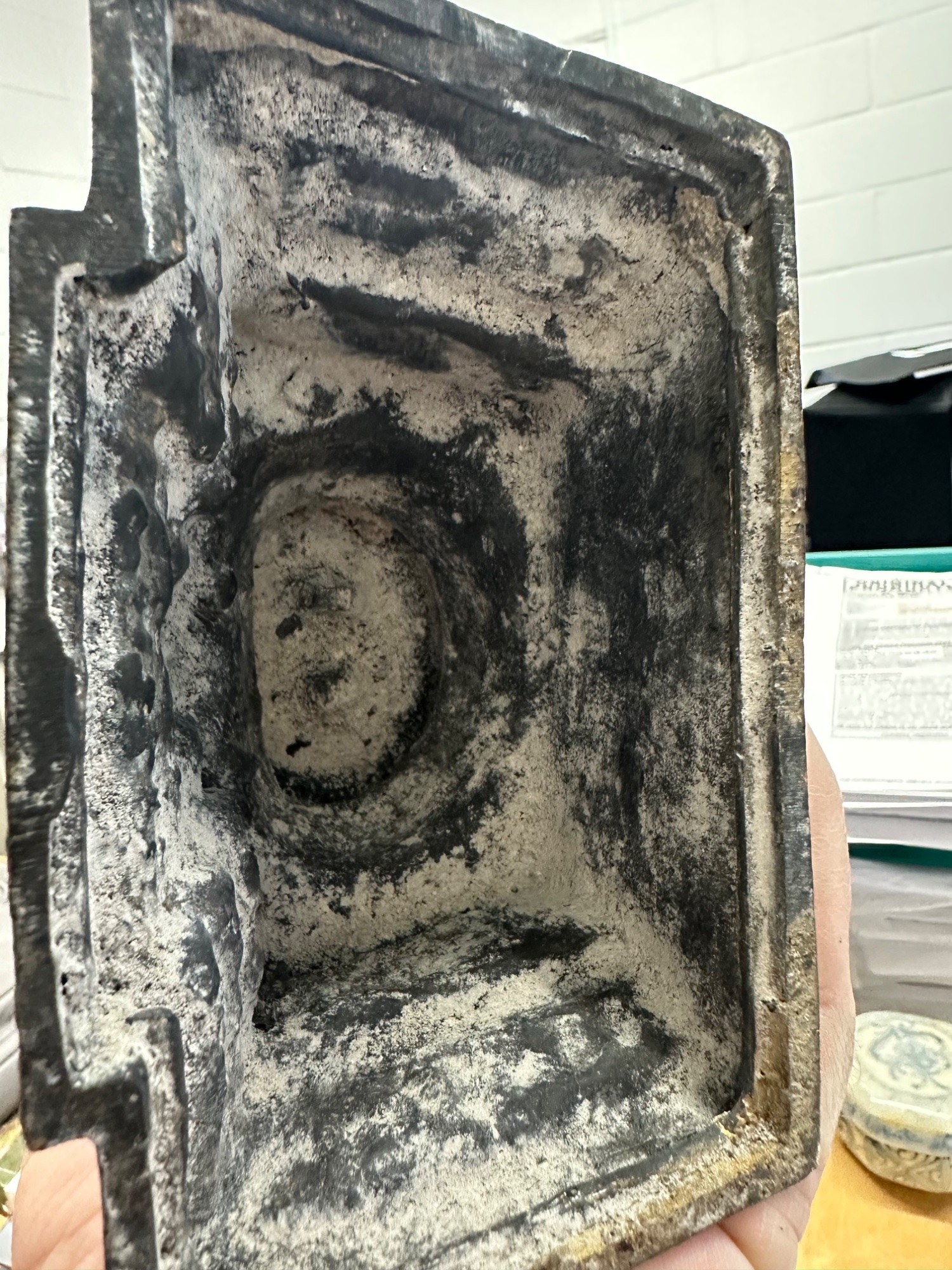
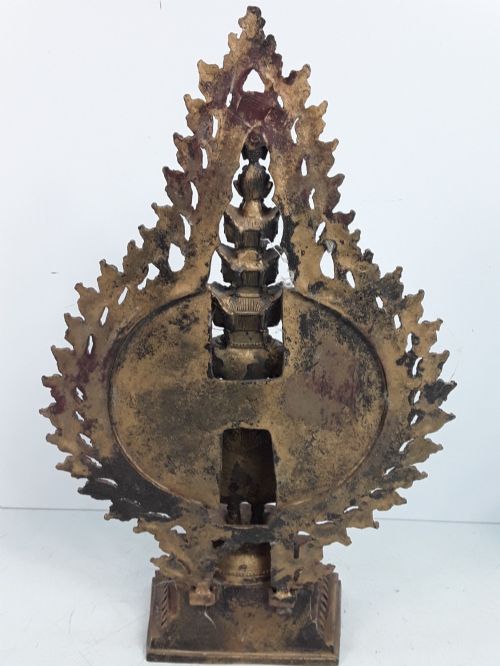
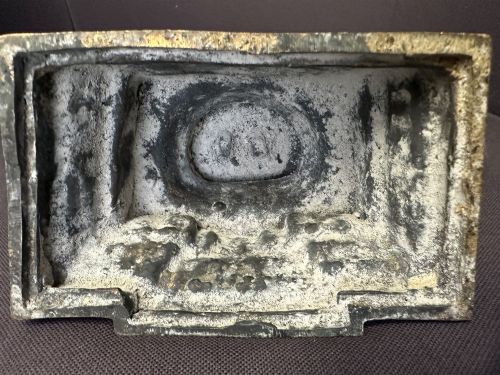
The sculpture is of complex multi-part construction, with the principal figure, subsidiary arms and attributes, aureole and architectural base assembled to form the complete composition. The reverse is considerably less finished than the richly decorated devotional front, while the hollow architectural base remains open underneath.
The precise workshop of manufacture is unknown. The sculpture belongs firmly within the Tibetan/Himalayan Buddhist artistic tradition, while aspects of its manufacture are also consistent with Nepalese workshops producing Buddhist images for Tibetan patrons. It is therefore conservatively catalogued as Tibet/Nepal, early 20th century, rather than attributed to a specific workshop.
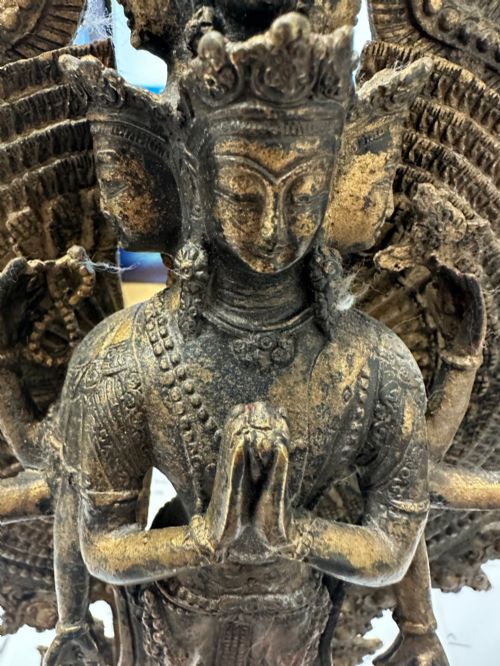
A highly decorative and imposing example of Himalayan Buddhist bronze sculpture, its substantial scale and extraordinary multi-armed composition giving the piece considerable display presence.
Subject: Eleven-Headed Avalokiteshvara / Chenrezig
Origin: Tibet / Nepal, Himalayan Buddhist tradition
Period: Early 20th century
Date: Circa 1920–1940
Material: Bronze / copper alloy with traces of gilt-coloured surface decoration and pigment
Height: Approx. 40cm
Width: Approx. 24cm
Weight: Approx. 2,387g
Condition: Good antique condition overall with age-related surface wear, rubbing, scratches, casting irregularities, darkened patination and accumulated surface deposits. There are losses and wear to the original gilt-coloured and painted decoration, together with minor irregularities to some of the subsidiary elements consistent with the complex multi-part construction. The reverse and open underside display comparatively rough original workshop finishing. Please examine all photographs carefully as they form an important part of the description.
CKB Ltd Emporium & Collectables has dated this Tibetan Bronze Avalokiteshvara Statue to the 1920s.
Fine chinese & asian antiques, bronzes, jade, buddhist art & collectables
You can view the stock and full dealer information on the CKB Ltd Emporium & Collectables Profile Page
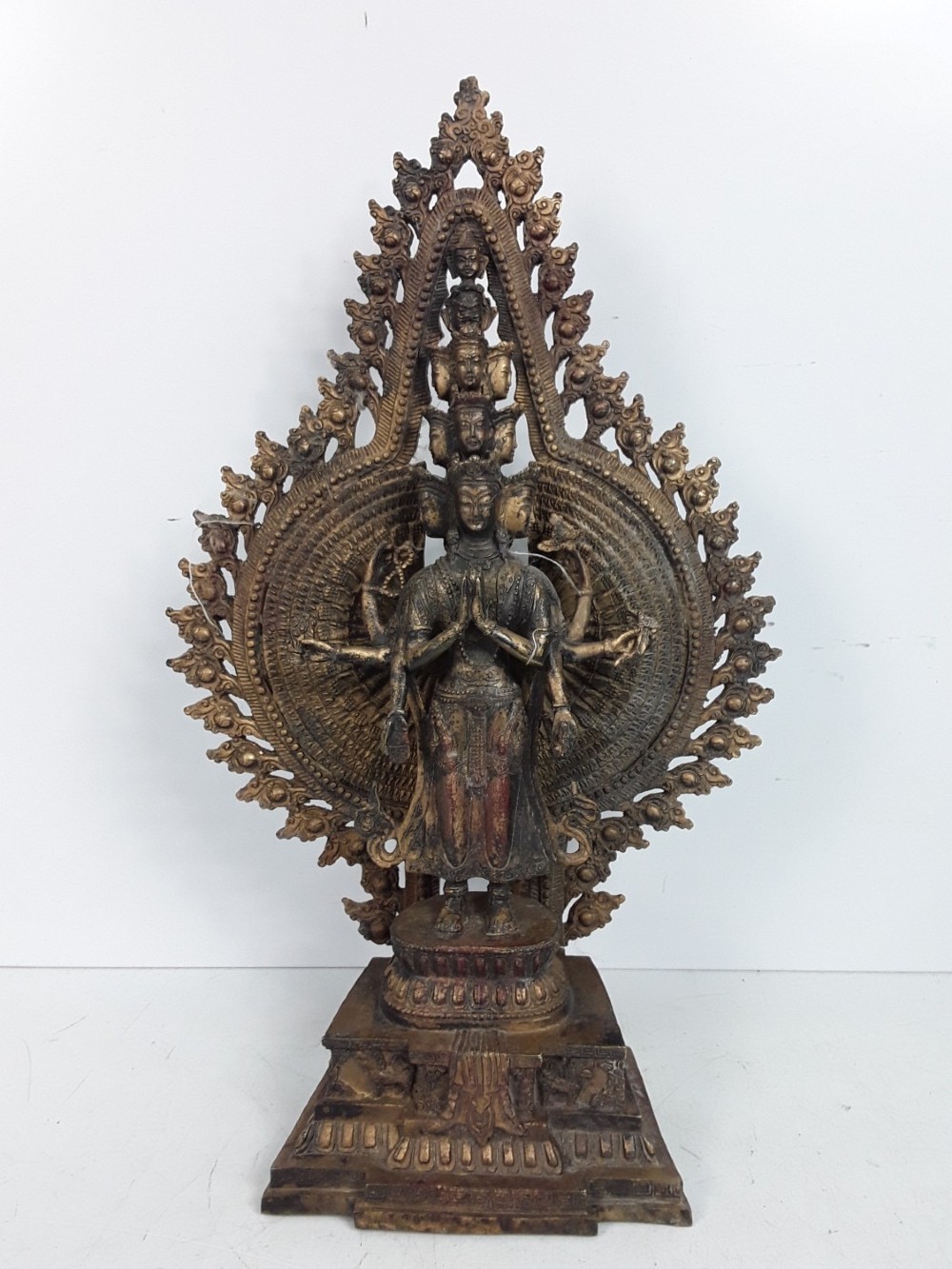
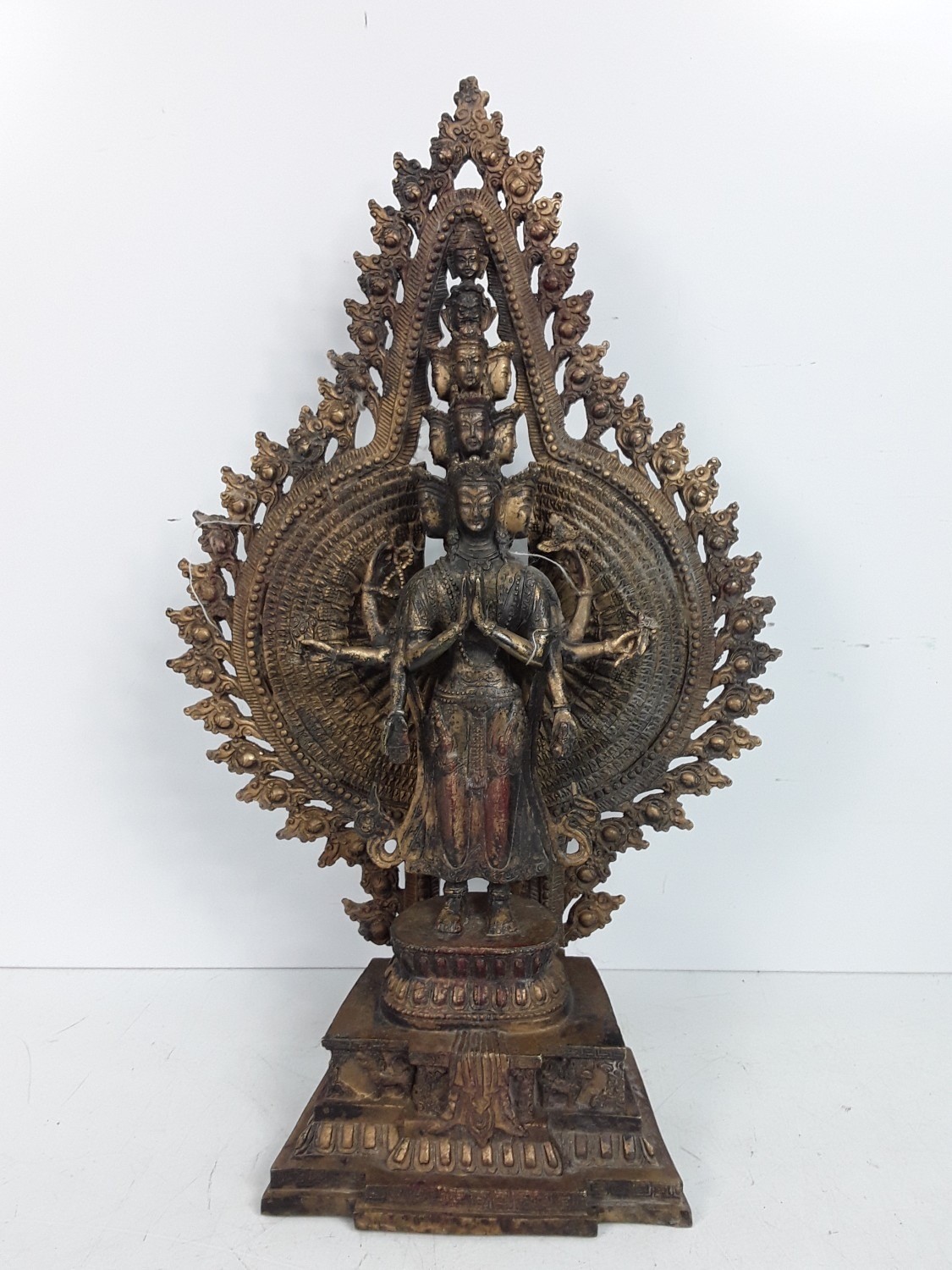
Large Tibetan Bronze Eleven-headed Avalokiteshvara Chenrezig C.1920