
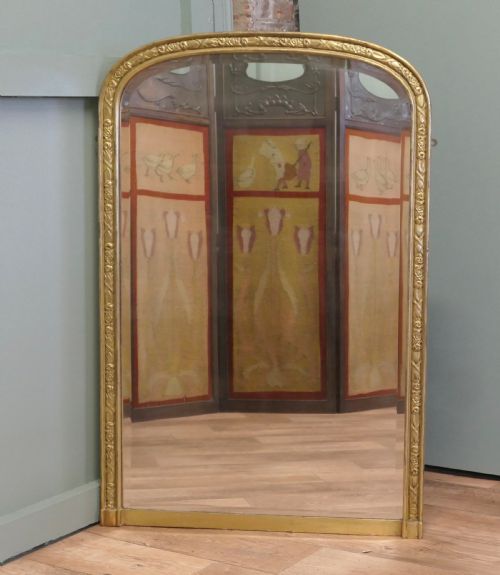
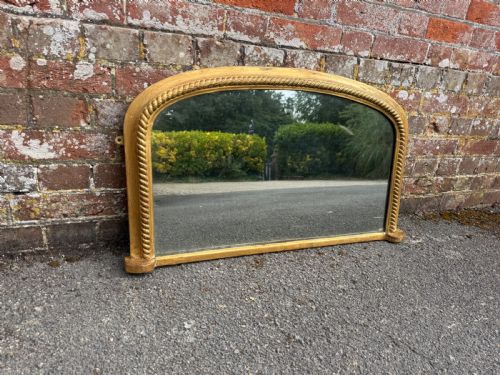
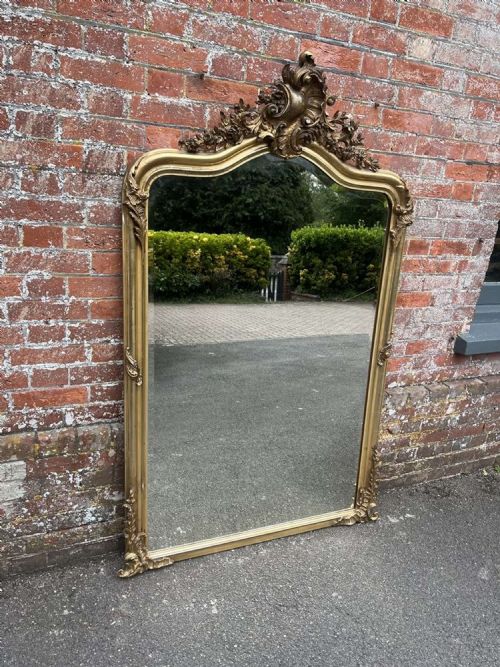
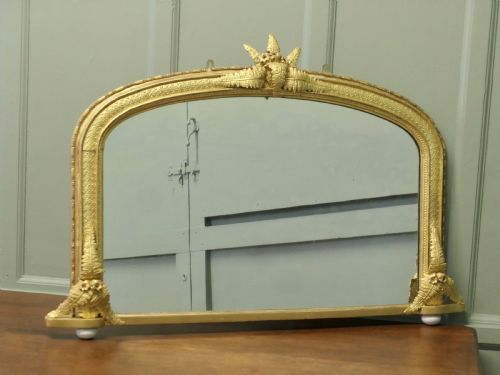
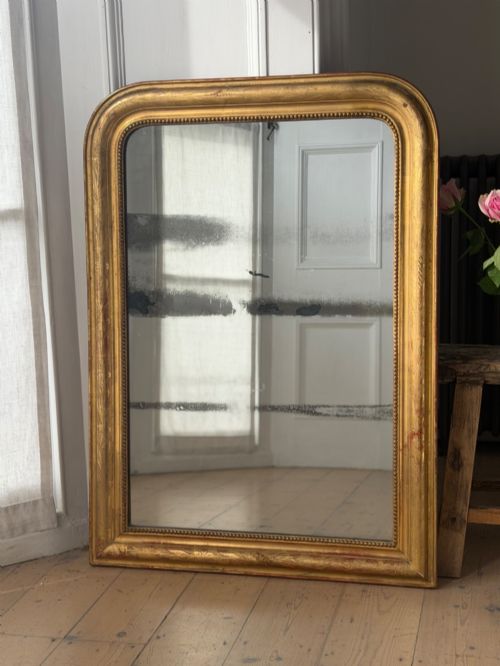
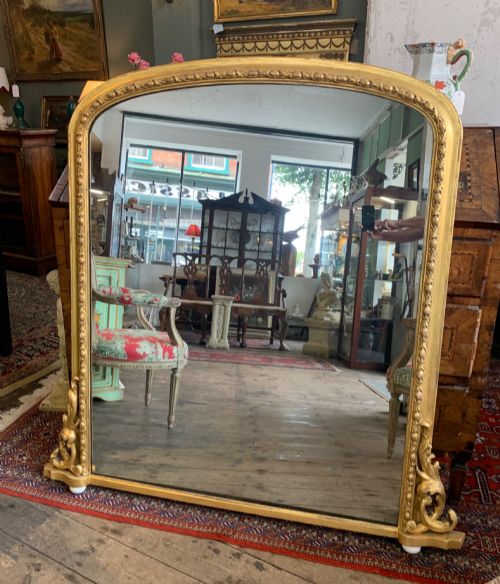
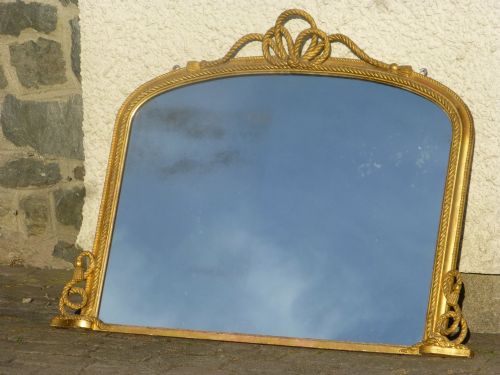
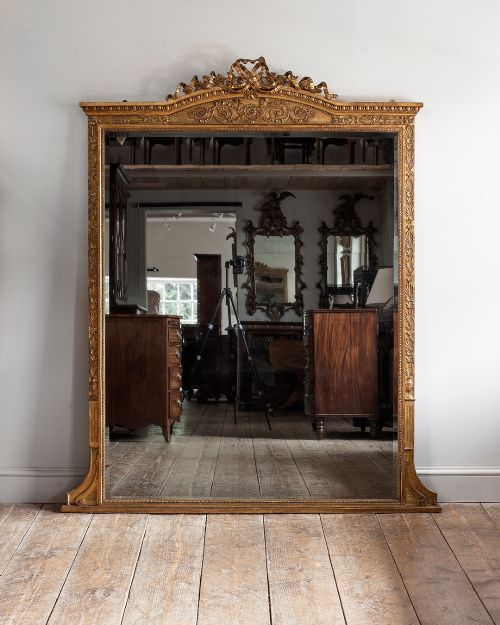
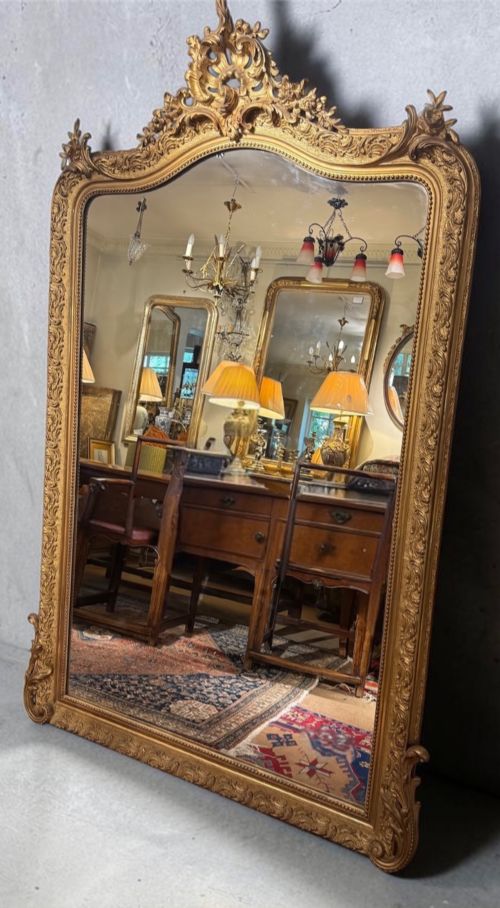
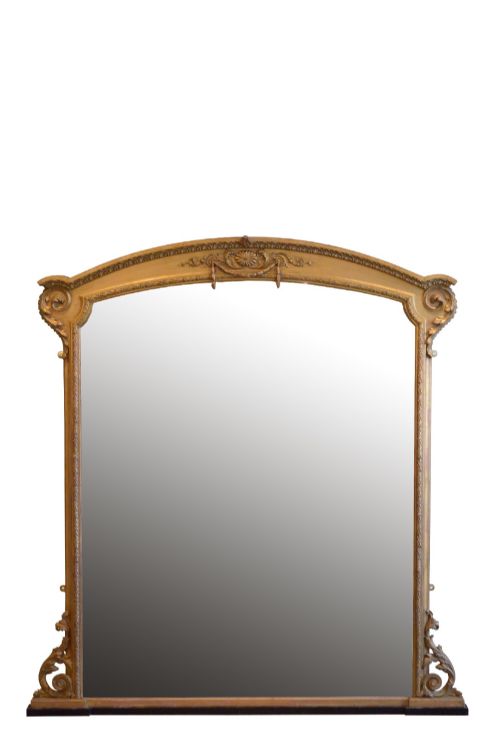
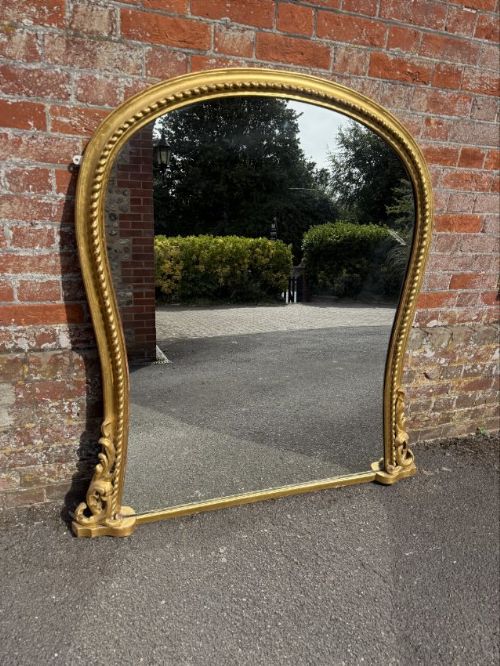


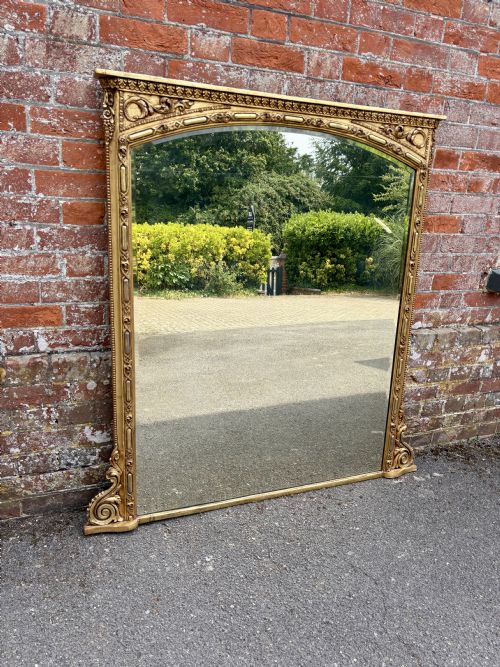
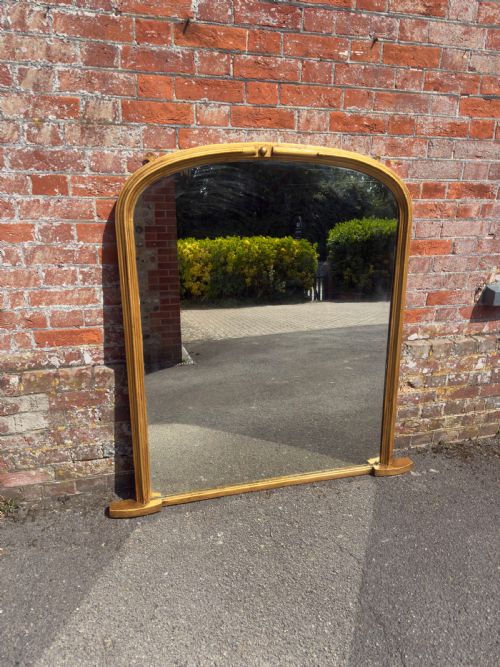
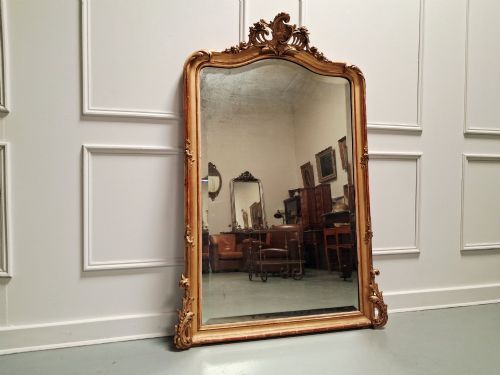
Large Arched Mantle Mirror
A large arched mantle mirror brings architectural scale and reflected light to a period room, grounding the fireplace with nineteenth-century presence.
What they are
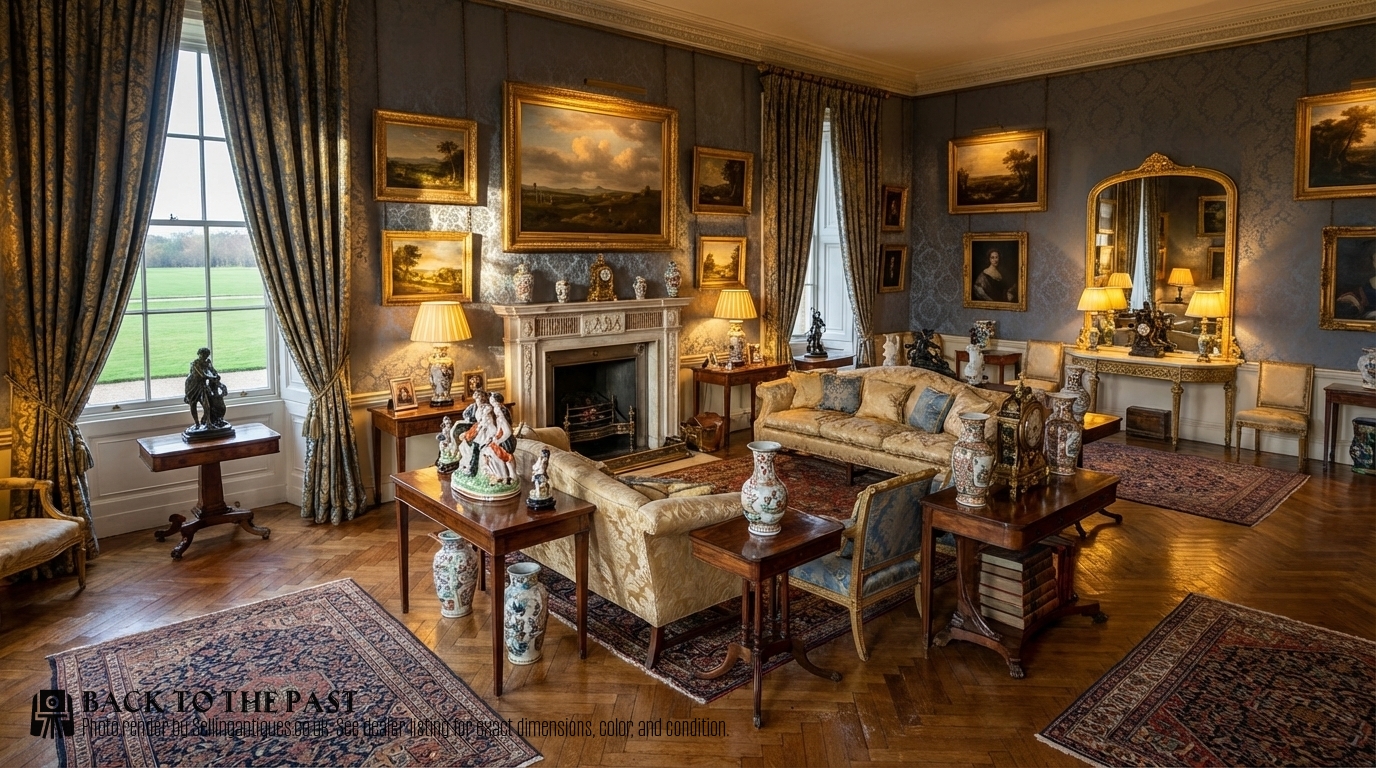
When you search for a large arched mantle mirror, you encounter substantial overmantel mirrors designed to sit directly above a fireplace breast. These pieces dominate the chimney breast, drawing the eye upward with their characteristic curved crowns and wide proportions.
The version you are most likely to meet on this page originates in the nineteenth century, spanning the Victorian era from the 1860s through to the 1880s. These are predominantly English pieces constructed as overmantel mirrors, wall mirrors, and general mirrors for principal reception rooms.
Makers shaped these frames from timber to create imposing focal points that reflected candlelight and daylight deep into Victorian drawing rooms. Their scale requires a sturdy wall and a substantial mantelpiece to support their considerable physical presence.
How they were made
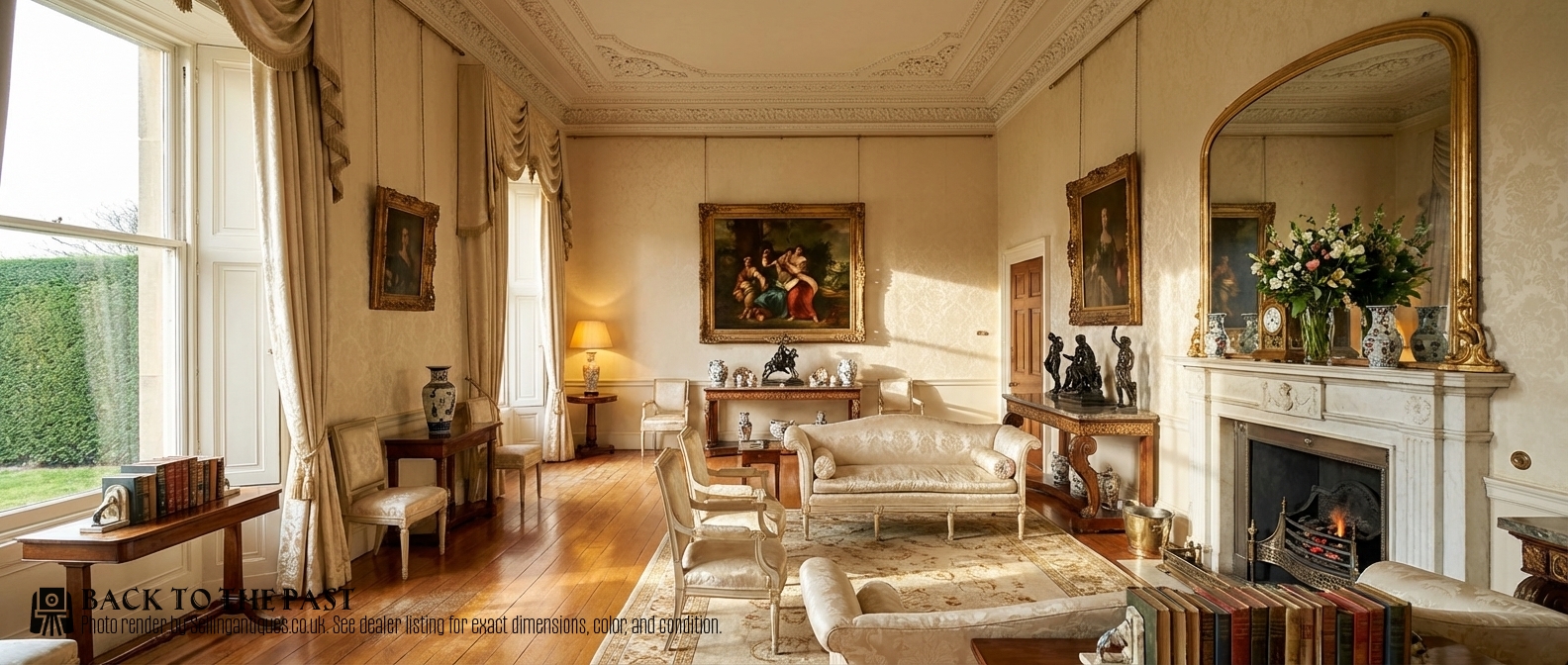
Craftsmen built the structural foundations of these frames using carved wood, applying layers of gesso to smooth the surfaces and build up decorative relief details. Moulded composition was also utilised alongside carved wood to form intricate scrollwork and architectural motifs along the arched top.
Finishers applied gold leaf, silver leaf, or paint over the prepared gesso and wood substrates, creating the bright metallic surfaces seen on Victorian examples. Some frames received overpainting or distressing during their long histories, altering the original appearance of the gilt wood.
Retail Price Guide 2026
Typical UK retail prices for large arched mantle mirror, calculated from the Sellingantiques database of over a million retail prices indexed since 2003. This retail price guide relies exclusively on Sellingantiques data; no external sources or auction records are used, so the figures do not describe the wider market.
Some Victorian mirrors carry the faint ghost of coal smoke trapped in their carved crevices from decades beside open fires.
What varies in quality
The distinction between a standard mirror and a finer example rests in the depth and crispness of the carved wood and gesso ornamentation. Deeply modelled decoration and carefully applied gold leaf or silver leaf indicate higher workshop standards than simpler moulded compositions.
Original surfaces command greater regard from collectors, particularly where the gilt wood or silvered finish survives without heavy intervention or unsympathetic overpainting. The integrity of the arched timber frame and the clarity of the underlying construction define the enduring character of each piece.
The Large Arched Mantle Mirror Glossary
- Overmantel mirror
- A large looking glass specifically designed to hang or stand on the mantelpiece above a fireplace. These frames often feature arched tops to follow the curve of Victorian ceiling lines.
- Gesso
- A plaster-like mixture applied to wooden frame bases to provide a smooth surface for gilding or painting. It allows craftsmen to model sharp decorative details.
- Giltwood
- Timber coated with thin sheets of gold leaf over a prepared ground. It provides a brilliant metallic sheen that catches ambient room light.
- Moulded composition
- A paste mixture pressed into moulds to form repeatable decorative ornaments quickly. It was widely used on Victorian frames as a cheaper alternative to hand carving.
- Silver leaf
- Thin metal beaten into extremely fine sheets and applied to frames for a silvery finish. It tarnishes differently than gold leaf over the decades.
Frequently Asked Questions
How do I hang a heavy overmantel mirror safely?
These large pieces require secure fixings anchored directly into structural wall studs or masonry rather than plaster alone. Their substantial weight demands professional installation brackets.
Position the base firmly on the mantel shelf to take part of the downward load while wall anchors secure the top against tipping.
Where should I place an arched mirror?
The traditional placement is centrally above a fireplace mantel where the arched top echoes architectural hearth lines. This position reflects light from opposite windows back into the room.
They also function effectively on large blank walls in hallways or dining rooms when given adequate clearance.
How do I clean nineteenth-century gilt frames?
Dust the carved wood and gesso surfaces gently with a very soft dry brush to prevent damaging delicate raised ornaments. Avoid using liquid cleaners or commercial polishes near the gilt surface.
Glass panels can be cleaned with a mild glass cleaner applied to a cloth rather than sprayed directly, protecting the surrounding frame from moisture.
Are these mirrors genuinely Victorian?
The pieces recorded here date from the nineteenth century, including the 1860s, 1870s, and 1880s periods. Construction methods involving carved wood, gesso, and gilt leaf align with Victorian workshop practices.
Examining the backboards, fixings, and silvering provides context for dating each individual looking glass accurately.