
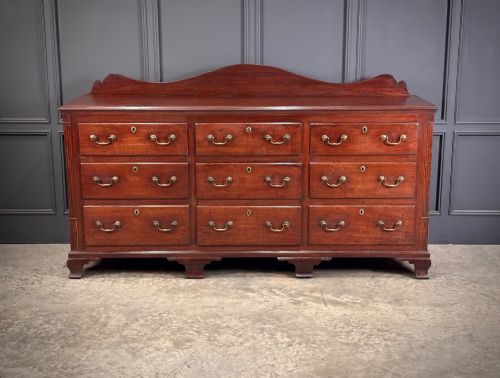
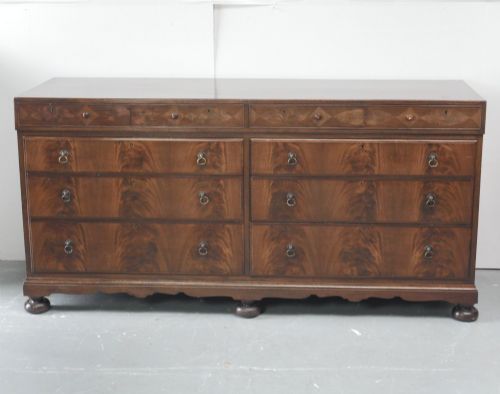
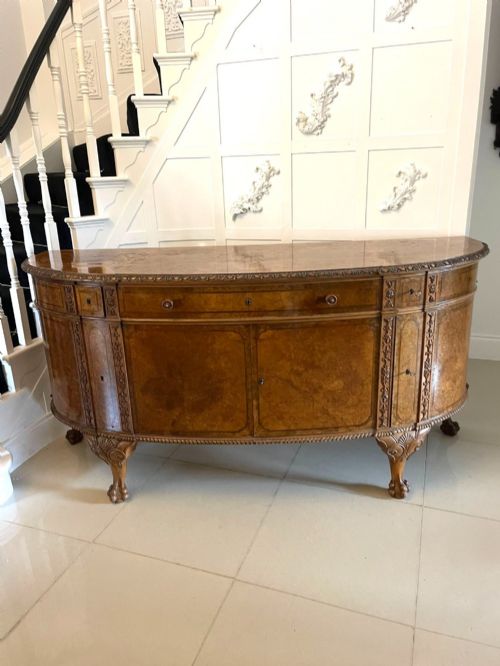
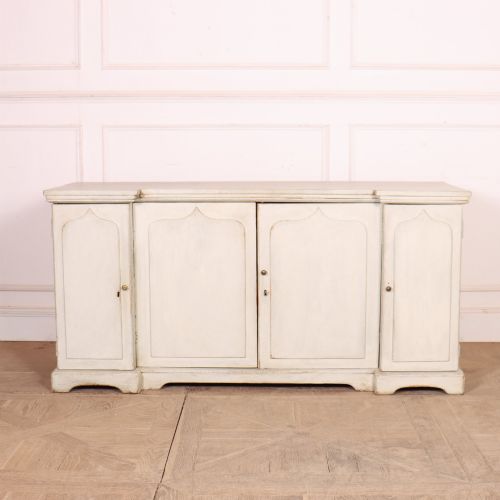
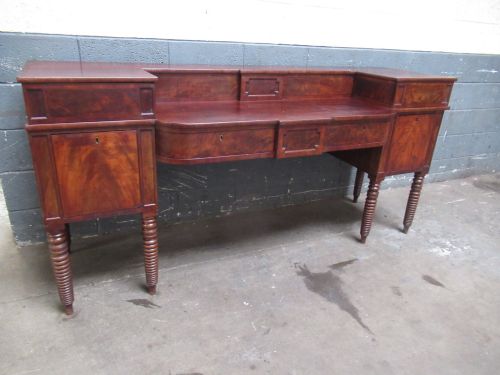
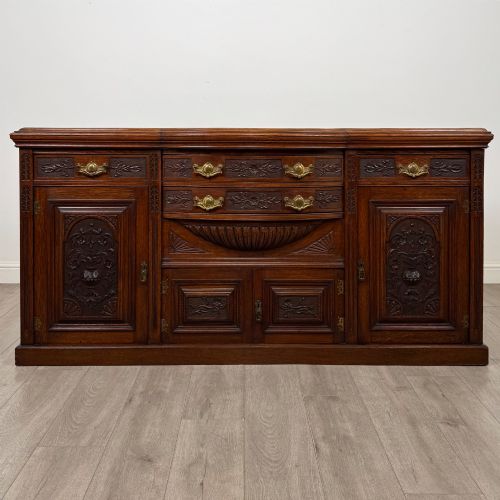
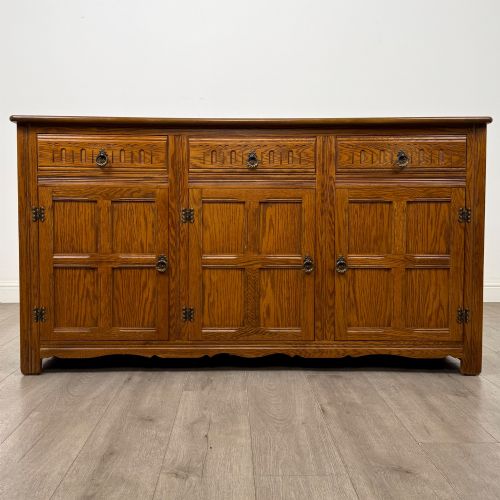
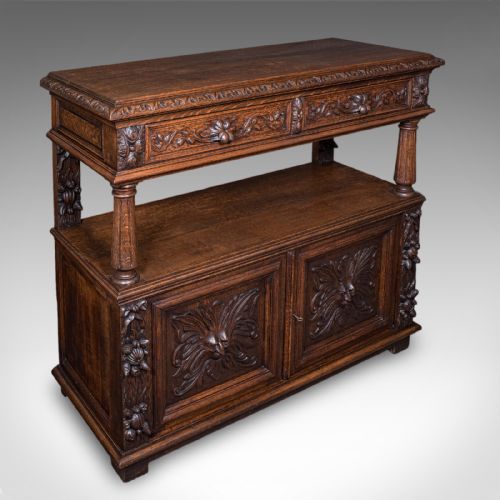
Large Sideboard
A large antique sideboard anchors a dining room or hall with substantial timber presence, offering generous storage alongside centuries of architectural cabinetmaking.
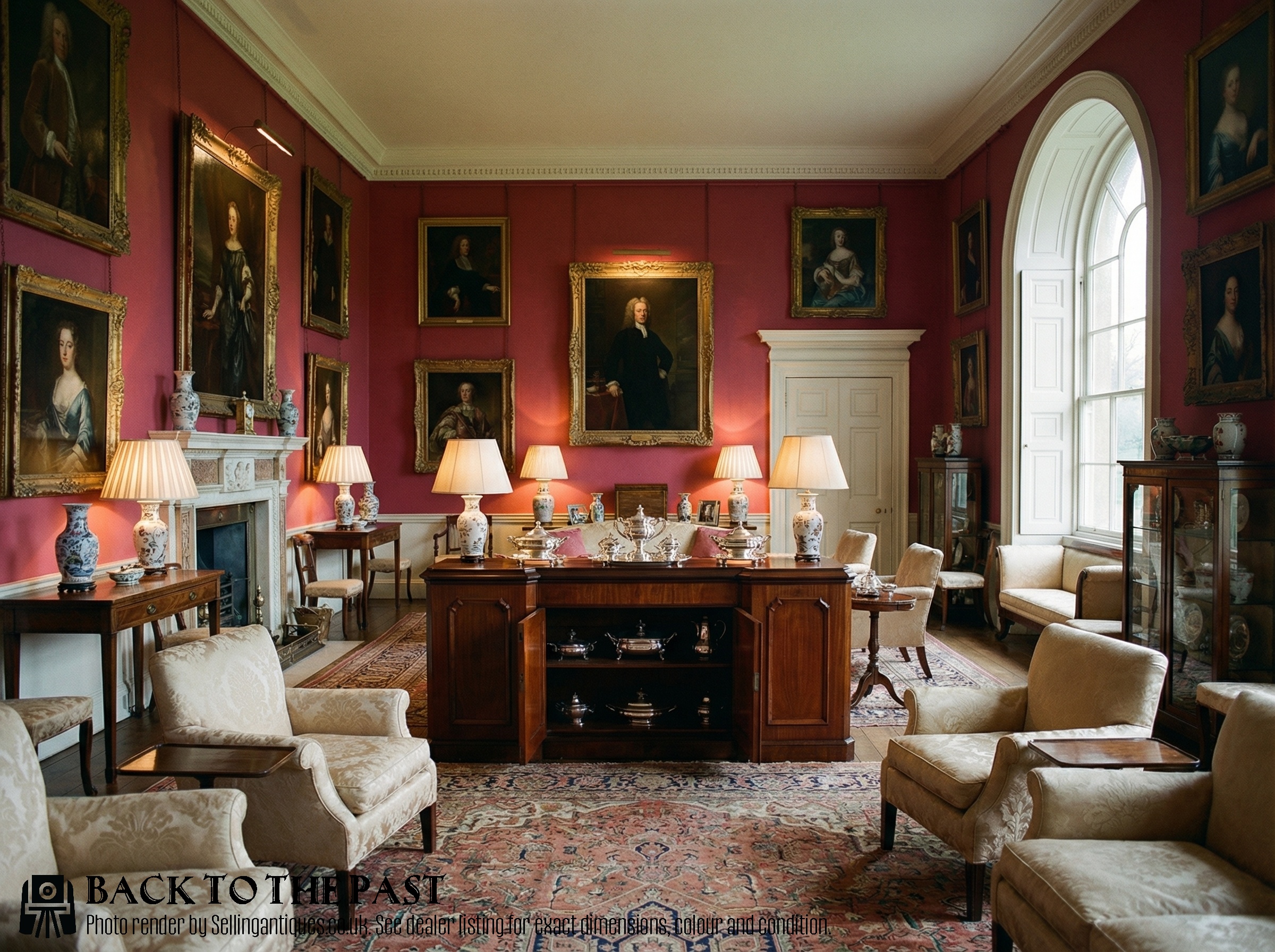
Large Sideboard
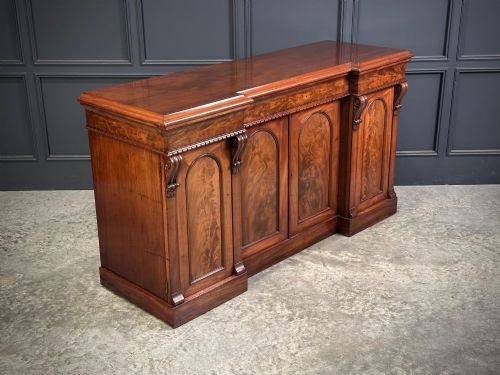
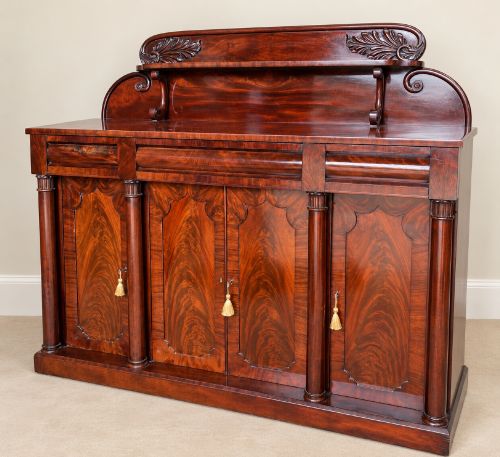
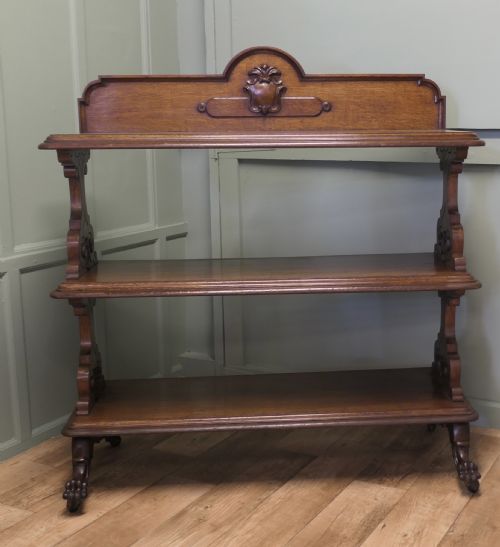
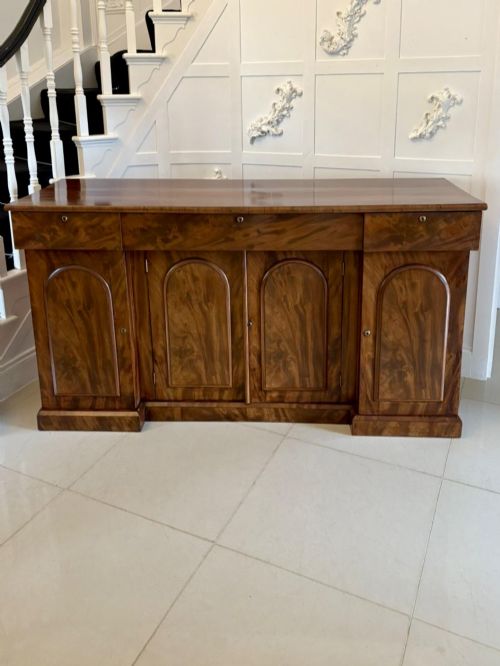
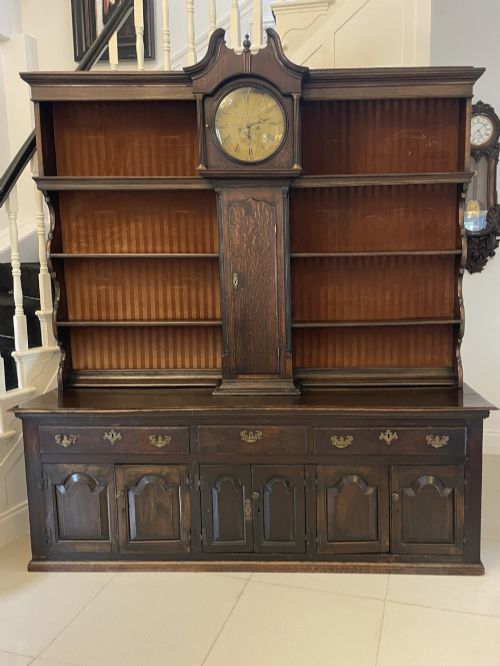
A large antique sideboard spans several periods and regional forms, appearing most frequently as heavy Victorian mahogany or oak case furniture alongside Georgian mahogany serving tables and 18th-century country dressers.
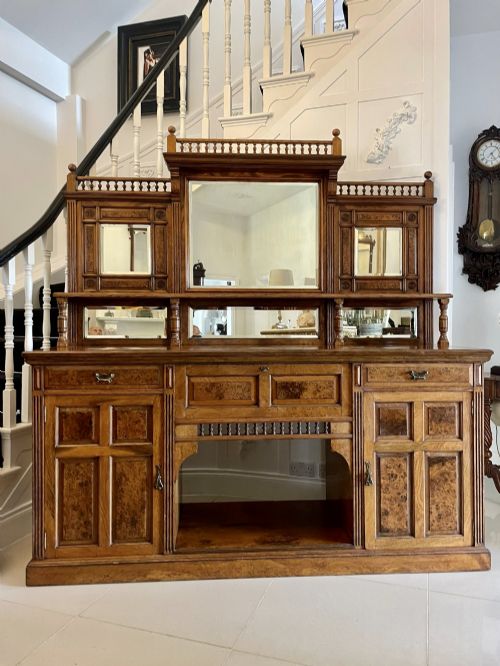
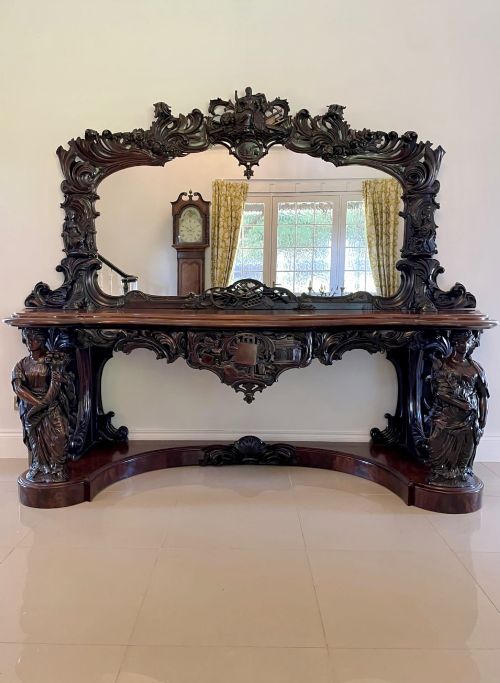
Buyers seeking this phrase encounter formats ranging from mirror-back display buffets and breakfront servers to pedestal credenzas mounted in ormolu, all built to command a principal room.
The selection bridges formal urban dining pieces in figured timbers with robust country house furniture fashioned from solid oak and pine.
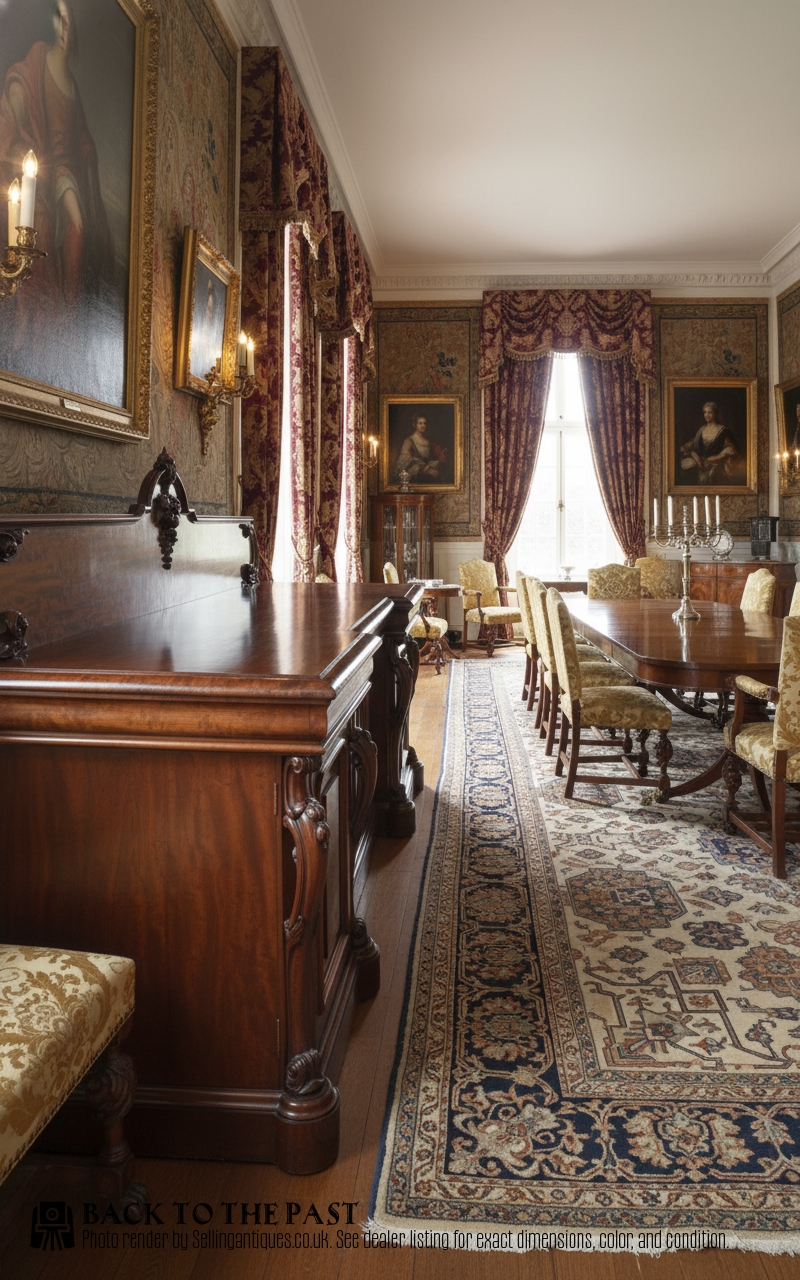
How they were made
Cabinetmakers utilised dense native and imported timbers, pairing structural oak or pine carcases with decorative surface veneers such as flame mahogany, burr walnut and satinwood.
Construction techniques combine traditional hand-cut dovetails for drawers with mortise and tenon joinery for heavy framework, often embellished by hand-carved mouldings, brass gallery rails and applied ormolu mounts.
Large Sideboard Retail Price Guide 2026
Typical asking prices for large sideboard among the pieces listed under this phrase on Sellingantiques today, from the lower quarter to the upper quarter. They describe what is for sale here now, not the wider market.
One extraordinary pine bank of drawers provides thirty separate compartments for the most dedicated collector of small curiosities.
What varies in quality
The selection of timber grain defines the visual hierarchy, with book-matched flame mahogany or intricate burr walnut elevating a piece far above standard utilitarian boards.
Execution of carved enrichment, structural weight and the presence of maker-stamped hardware or documented workshop attribution separate standard regional production from exhibition-grade examples.

Whytock And Reid·James Deakin·Gillows
The Large Sideboard Glossary
- Credenza
- A low dining or reception cabinet, often featuring glass doors or gilt metal mounts popular in Victorian drawing rooms.
- Dresser base
- A robust lower storage unit fitted with drawers and cupboards, originating from country houses without upper plate racks.
- Breakfront
- A cabinet design where the central section projects forward from the flanking wings, creating architectural depth.
- Mirror-back
- An upright superstructure incorporating a plate glass mirror supported by carved wooden framing above the main sideboard surface.
- Ormolu
- Gilded bronze decorative mounts applied to formal 19th-century cabinetwork for visual contrast.
Large Sideboard: Frequently Asked Questions
Where did these sideboards stand?
These large serving pieces stood principally against dining room walls to hold silver, linen and glassware during grand meals.
In country houses and town residences alike, they functioned as the central station for food preparation and display before service.
How do I care for antique timber?
Keep wooden furniture away from direct heat sources and sudden temperature shifts to prevent timber splitting and veneer lifting.
Apply traditional wax polish sparingly and buff with a soft cloth to maintain the natural lustre of the aged surface.
How do I date an oak sideboard?
Examine the timber characteristics, construction methods and drawer linings to determine the likely period of manufacture.
Hand-sawn marks, irregular dovetails and secondary woods like pine or oak indicate earlier hand-built construction rather than later factory output.