



Large Overmantel
A large antique overmantel anchors a room with scale, reflecting light and framing period architecture above a fireplace.
Large Overmantel
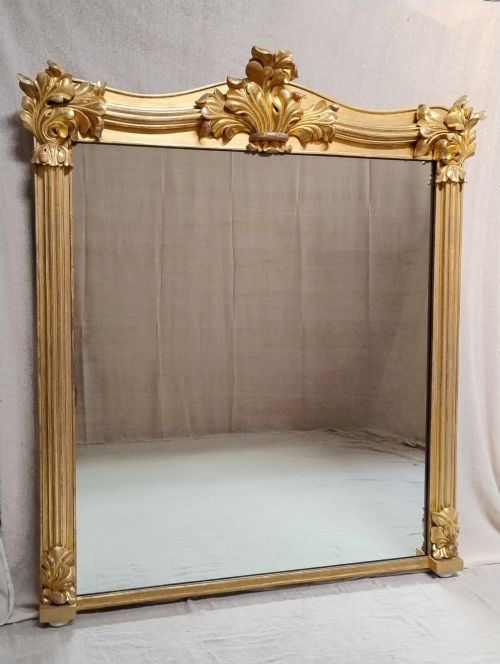
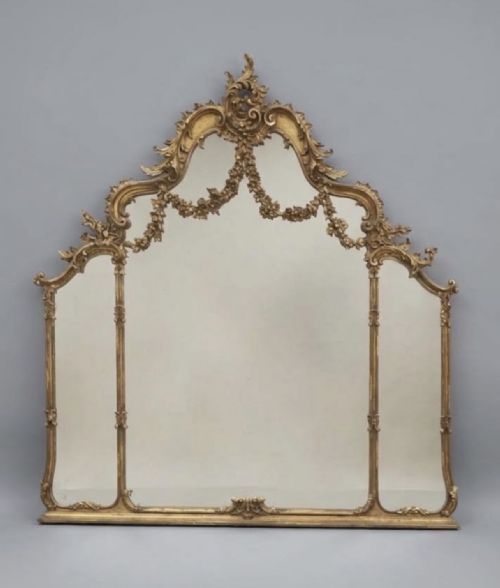
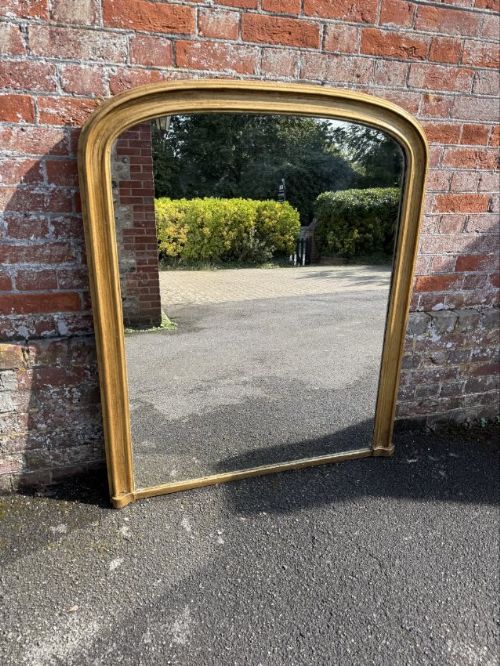
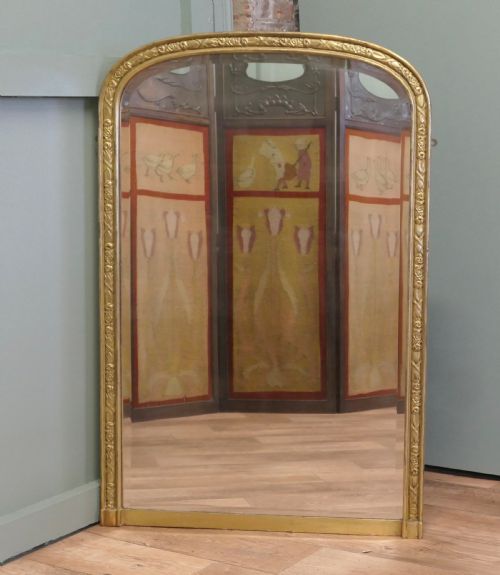
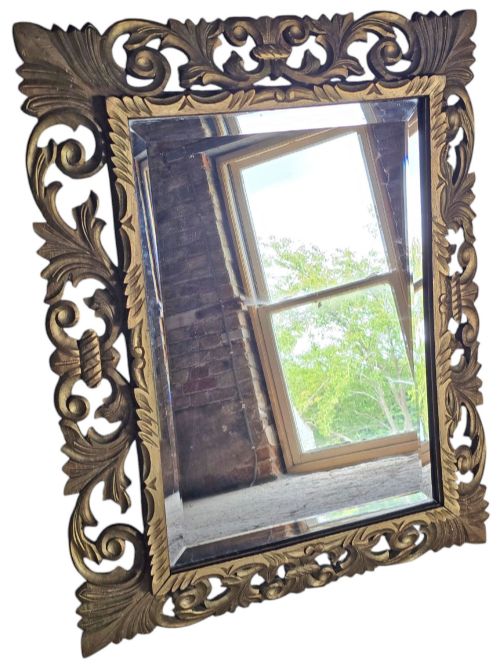
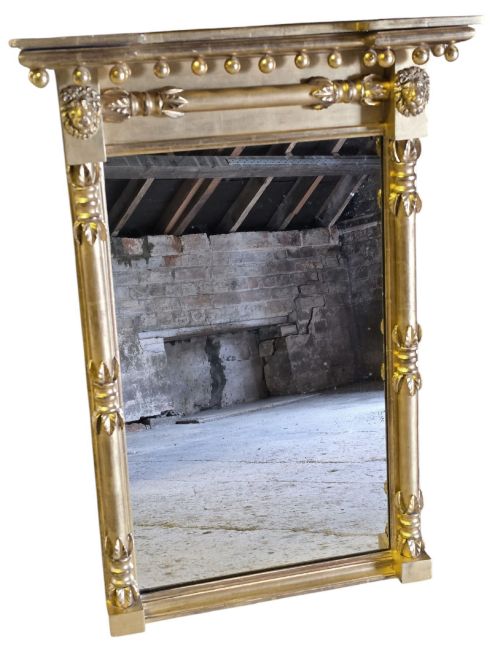
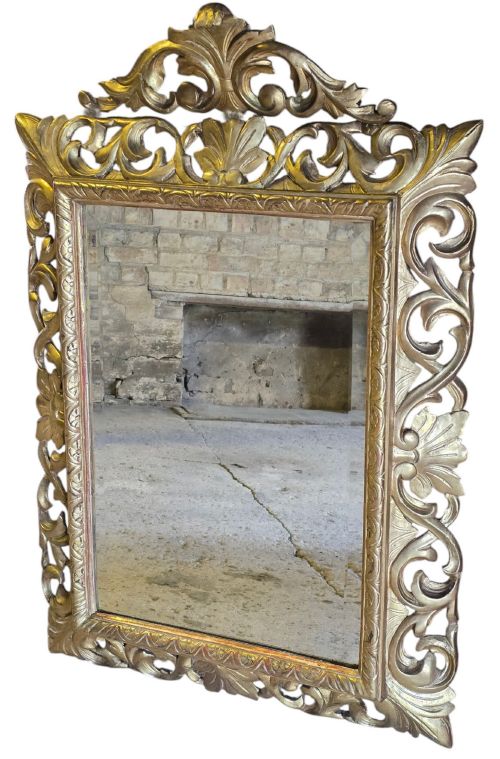
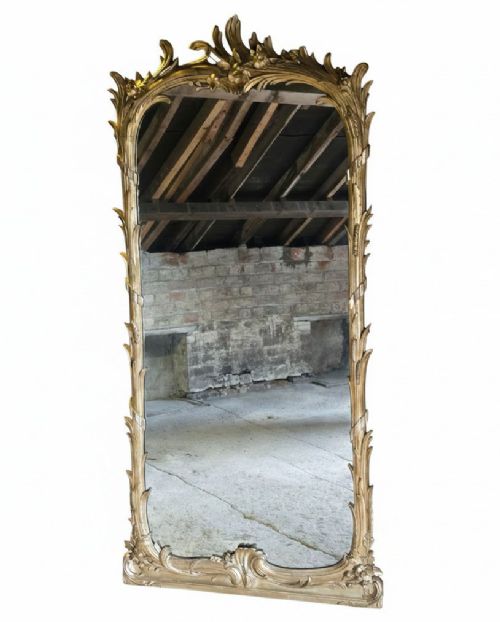
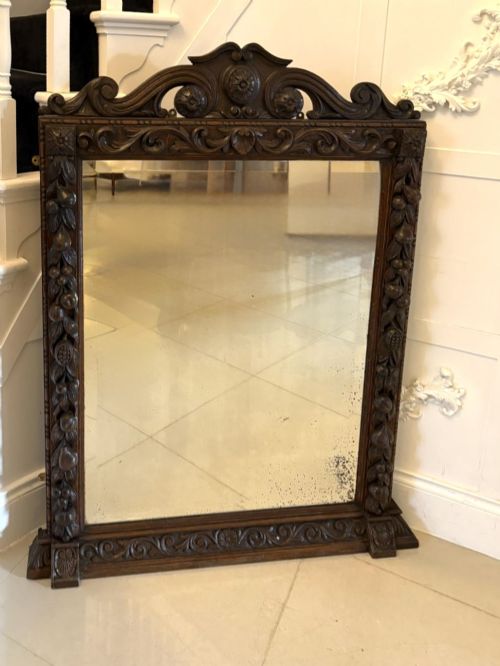
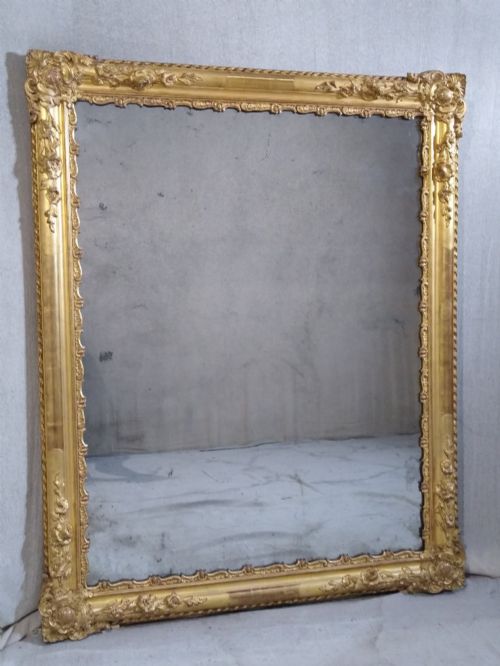
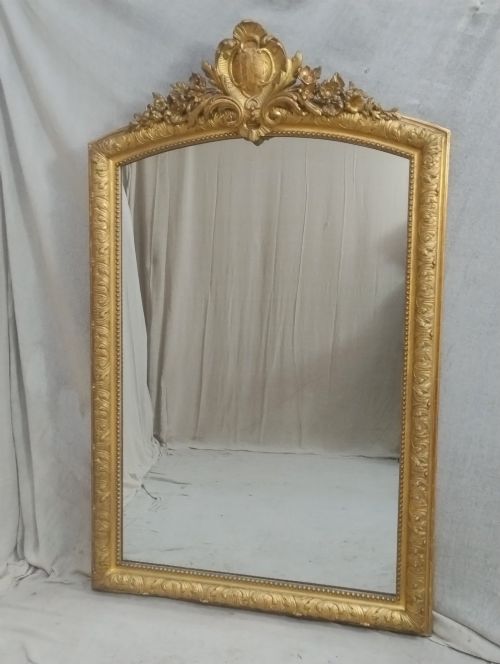
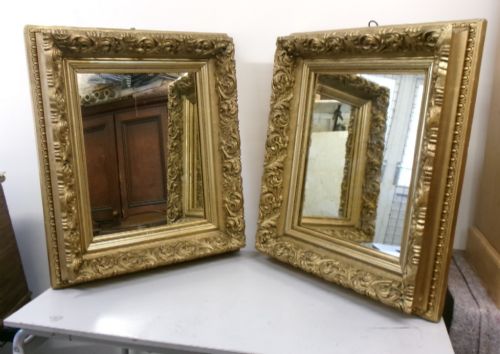
A large antique overmantel serves primarily as a monumental wall mirror designed to hang above a mantelpiece or fireplace. The selection spans English and French examples dating from the eighteenth century through the early twentieth century, encompassing Victorian, Regency, and Louis Philippe periods.
Most pieces encountered here take the form of substantial rectangular, arched, or shaped-top wall mirrors. These items utilise heavy wooden frames ornamented with carved details, rope twists, or floral motifs designed to create a strong visual statement in a room.
Materials and construction methods
Makers constructed the structural frames from solid timbers such as oak, walnut, or pine, applying carved wood details directly to the substrate. Many frames incorporate applied composition or gesso ornamentations moulded into intricate scrolls, leaves, and classical revival motifs.
Finishes typically involve layers of gold leaf or giltwood applied over gesso, alongside painted wood surfaces in monochrome tones or olive green. Mirror plates consist of heavy glass, occasionally displaying period characteristics such as foxing or mercury backing on earlier examples.
The listings on this site encompass periods from the 18th century through to the 1920s, featuring glass, gesso, giltwood, and carved oak.
Distinctions in construction and detail
Quality rests upon the depth and crispness of the hand-carved woodwork versus the repetitiveness of moulded composition ornaments. Superior frames display sharp relief in the gesso and clean joinery at the corners, while lesser examples show softer moulded details.
The preservation of the original gilding and the clarity or character of the heavy mirror glass separate standard specimens from exceptional ones. Intact original backing boards and undisturbed frame construction also contribute to a higher tier of craftsmanship.
The Large Overmantel Glossary
- Gesso
- A plaster-like mixture applied to wooden frames as a smooth base for gilding or painting. Artisans carved intricate decorative motifs directly into this dried surface.
- Giltwood
- Timber that has been coated with thin sheets of gold leaf or gold paint. This technique gives the frame a rich metallic lustre.
- Composition
- A moulded mixture of whiting, resin, glue, and linseed oil pressed into decorative shapes. It offered a quicker alternative to hand-carving ornate frame details.
- Foxing
- Age-related spots and discoloration appearing within the mirror glass plate. This chemical process causes dark or mottled patches behind the reflective surface.
- Pier mirror
- A tall mirror specifically proportioned to hang on the wall space between two windows. These pieces often share stylistic traits with overmantel mirrors.
Large Overmantel: Frequently Asked Questions
Where should an overmantel mirror hang?
These mirrors traditionally hang on the chimney breast directly above a fireplace mantel to reflect light and fill vertical wall space.
They also function effectively as leaner mirrors placed directly on the floor against a blank wall in a hallway or drawing room.
How do I identify a Victorian overmantel?
Victorian examples frequently feature heavy walnut or carved gilt wood frames with robust proportions and dark wood tones.
They often incorporate arched tops and substantial gesso ornamentation characteristic of mid to late nineteenth-century design.
What is a Louis Philippe mirror?
A Louis Philippe mirror originates from the French nineteenth-century period and is typically recognised by its rounded upper corners.
These pieces combine understated classical elegance with subtle beaded or floral gesso detailing on gilt or painted frames.
Can these heavy mirrors hang safely?
Due to their substantial weight and large scale, these mirrors require professional installation using appropriate wall anchors and brackets.
Many examples include sturdy original wooden backing boards and heavy-duty hanging hardware suited to bear the load.