
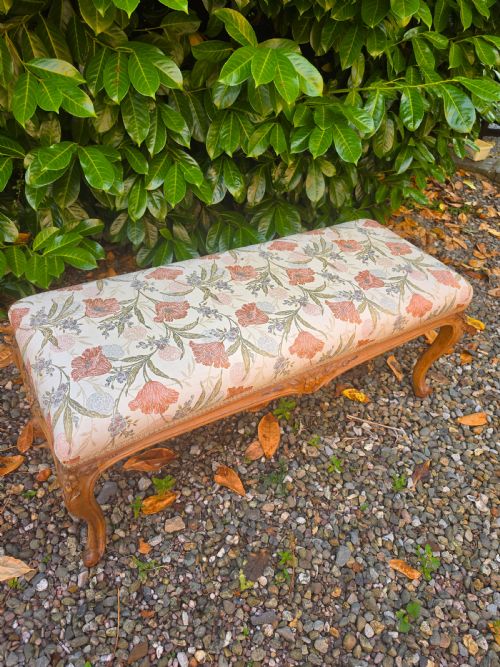
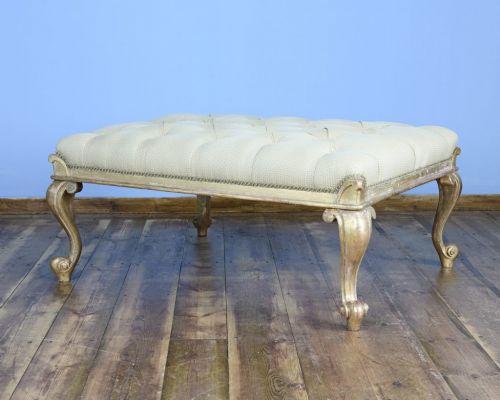

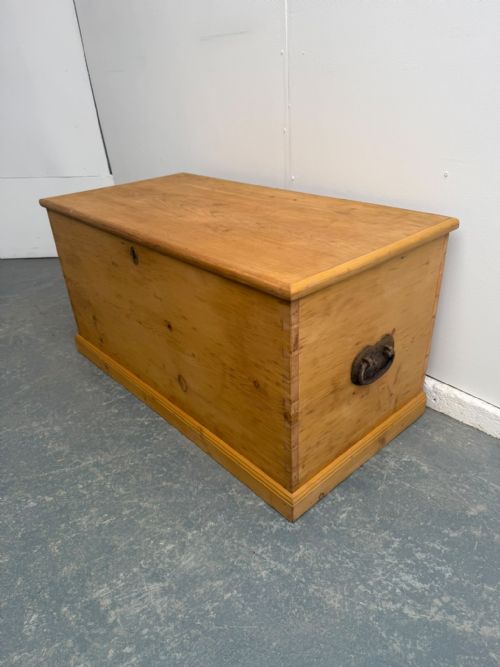
Large Ottoman
A large antique ottoman brings ground-level scale and practical volume to a room, offering deep seating or storage.
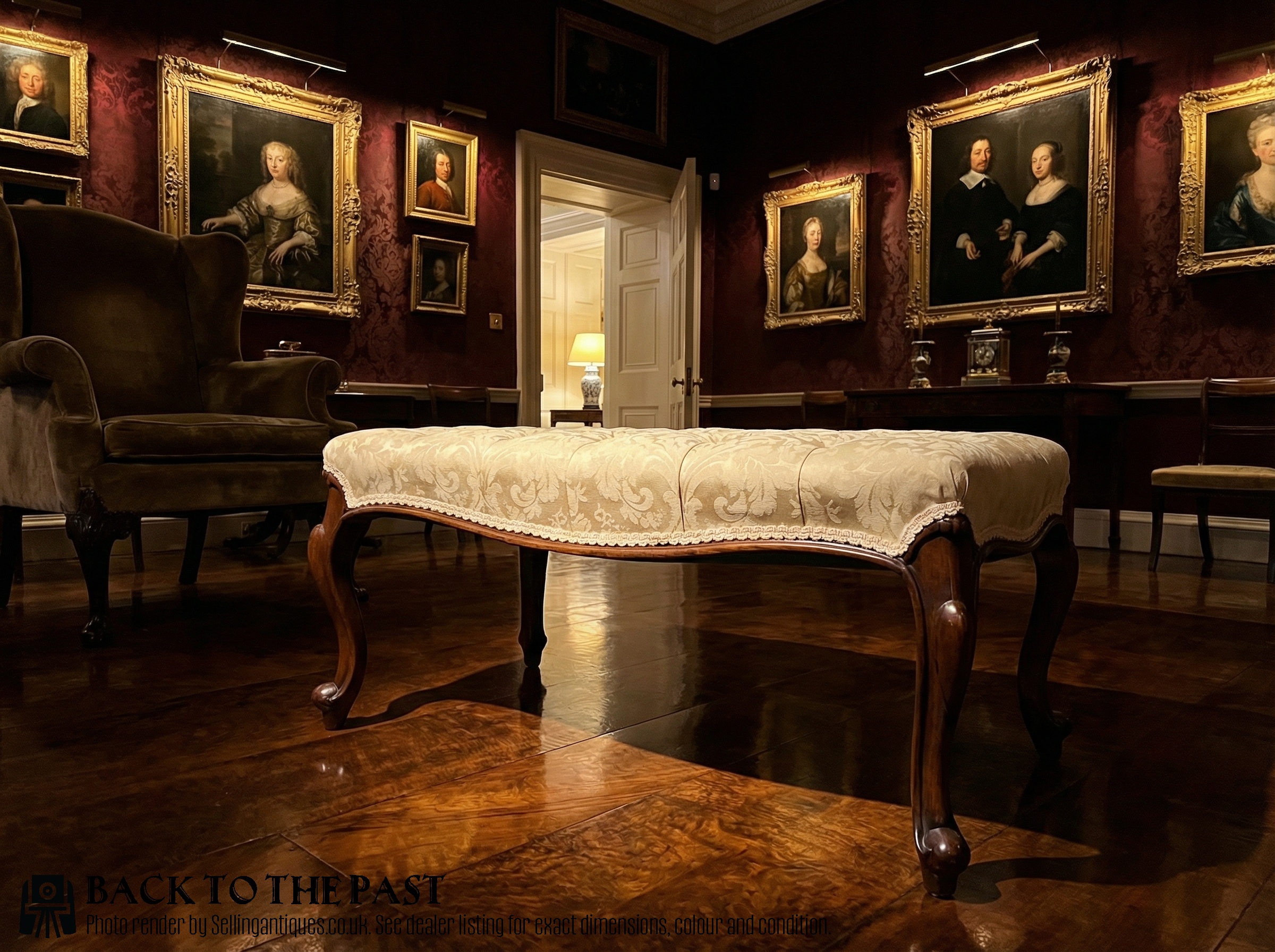
Large Ottoman
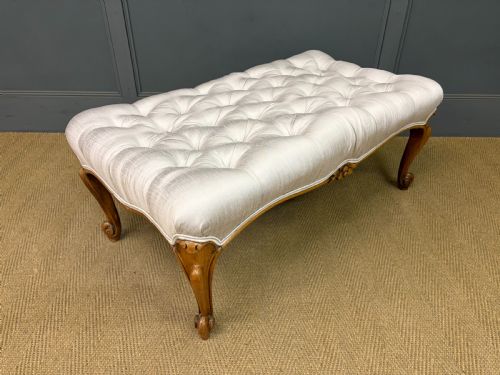
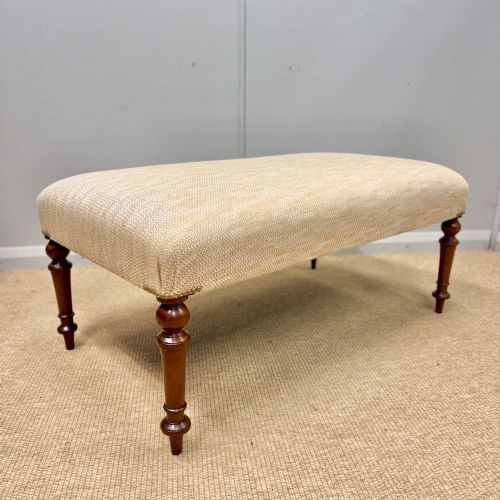
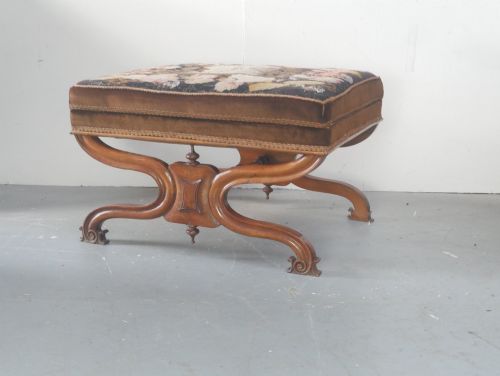
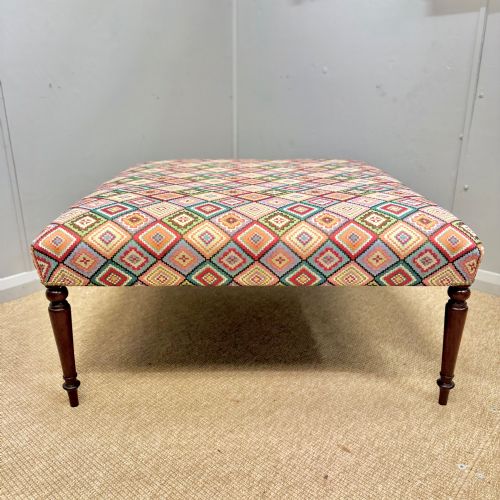
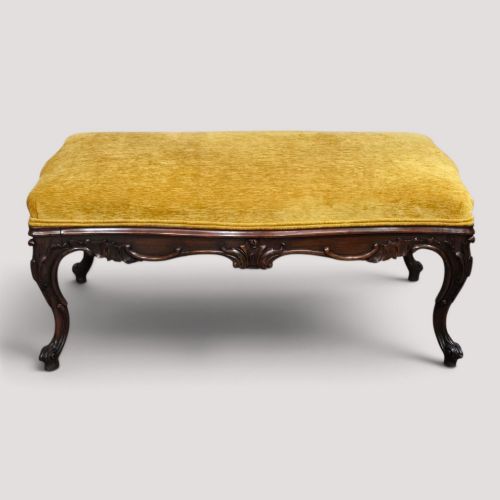
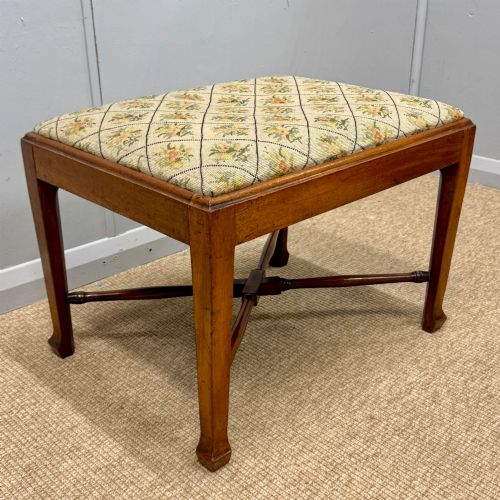
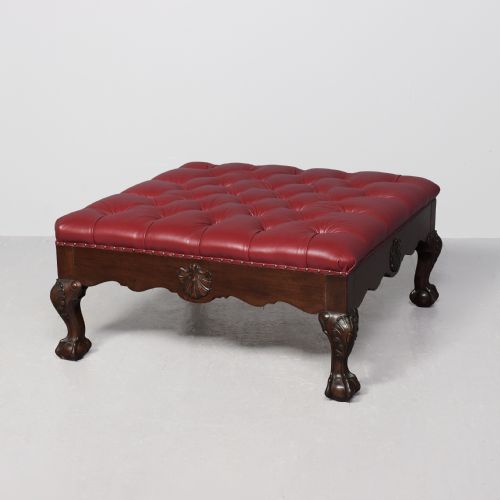
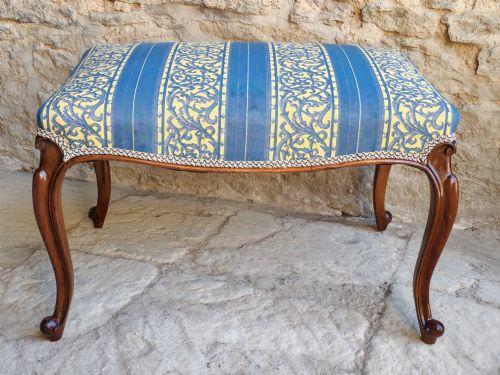
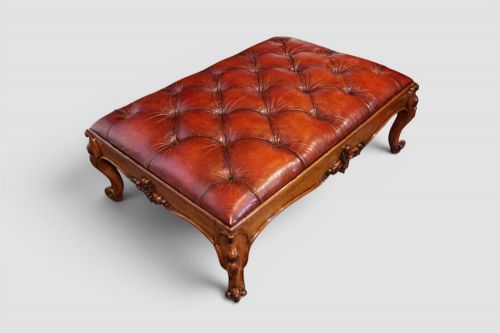
A large antique ottoman serves as a substantial centrepiece in a room, combining the height of a seat with the expansive proportions of a footstool or storage chest. When searching for a large antique ottoman, buyers encounter pieces primarily from the nineteenth century, including Victorian walnut and rosewood frames alongside Regency and William IV examples.
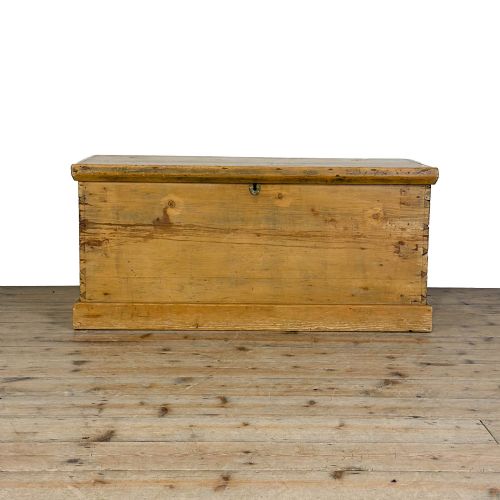
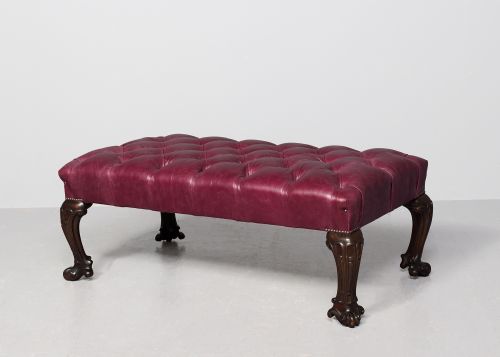
The selection ranges from buttoned leather coffee table stools and upholstered pine storage chests to low footstools on brass castors and grand scale carved giltwood frames. Many items double as trunks or blanket boxes, lined with felt or left as bare timber, providing concealed utility beneath padded tops.
Origin and regional styles diversify the selection, spanning English country house mahogany, Scottish baronial forms, French revival walnut, and Anglo-Indian designs. Buyers also find flat-woven Ushak carpets catalogued under related search terms, though the core of the furniture selection remains timber-framed and upholstered seating.
How they were made
Frames rely on dense native and imported hardwoods like mahogany, rosewood, walnut, and pine, joined with traditional carpentry methods and supported by turned or cabriole legs. Many nineteenth-century examples incorporate original brass castors to ease movement across heavy carpets.
Upholstery techniques involve hand-dyed leather, wool, cotton, and crewel work, secured over horsehair or similar stuffing with deep buttoning. Storage variants feature hinged lids, felt linings, and solid timber box construction designed to hold heavy linens or blankets.
A rocking gilt gout stool from the late nineteenth century offers a sympathetic remedy for tired feet.
What varies in quality
Quality rests in the timber selection and the integrity of the carving, distinguishing heavy country house mahogany and rosewood frames from simpler pine storage trunks. Crispness in carved details, such as parcel gilding or cabriole legs, separates standard workshop production from exceptional pieces.
The survival of original surface finishes, hand-dyed leather, and maker stamps dictates the standing of an item. Frames retaining their original castors, sound internal stuffing, and uncompromised structural joints hold greater fidelity to their period of origin.
Hallett & Sons·LOIDRAULT FRERES PARIS
The Large Ottoman Glossary
- Ottoman
- A low, upholstered seat or couch without arms or a back, frequently adapted with a hinged lid for storage. It evolved from Near Eastern seating forms into a staple of nineteenth-century European domestic interiors.
- Mule chest
- A storage chest featuring one or more drawers at the base beneath a primary lift-up lid compartment. These pieces bridge the gap between traditional blanket boxes and modern drawer storage.
- Cabriole leg
- A furniture leg that curves out gracefully and tapers inward to a foot, typical of finer period seating. It draws inspiration from animal limbs and was revived during the Victorian era.
- Ushak carpet
- A knotted Turkish rug originating from the town of Ushak, known for large-scale floral motifs and soft wool palettes. They frequently complement period furniture in large reception rooms.
- Parcel gilt
- Wood or metal partially covered with gold leaf or a gilt finish to highlight specific carved details. This treatment emphasises decorative mouldings on high-status nineteenth-century frames.
Large Ottoman: Frequently Asked Questions
How were large antique ottomans used?
These pieces served multiple functions in nineteenth-century interiors, acting as resting places for feet, extra seating for large gatherings, and concealed storage for heavy linens and blankets. Versions with flat wooden tops or firm leather upholstery frequently doubled as centre tables or informal coffee tables.
In country houses and grand drawing rooms, their generous scale allowed multiple people to sit at once. The inclusion of internal compartments in trunk and box variants provided practical domestic utility out of sight.
Where should I place an ottoman?
A large ottoman works best in spacious settings such as a drawing room, library, or large bedroom where its physical presence anchors the surrounding furniture. Placing one in the centre of a room creates a functional focal point that breaks up open floor space.
They also pair effectively at the foot of a large bed or positioned opposite a principal sofa. Ensuring adequate clearance around the piece allows easy access to storage lids and seating.
How do I tell Victorian from Regency?
Regency pieces, dating from the early nineteenth century, typically exhibit cleaner classical lines, refined rosewood or mahogany timbers, and restraint in ornament. They often reflect classical Greek and Roman influences through sabre legs or subtle brass mounts.
Victorian items, spanning the later decades of the nineteenth century, tend toward heavier proportions, darker walnut or pine, deep buttoning, and exuberant carving. Revival styles during the Victorian era also reintroduced earlier motifs like cabriole legs and elaborate gilt finishes.
Are storage ottomans sturdy enough for daily seating?
Period storage ottomans and mule chests feature solid timber carcases and heavy-duty frame construction built to withstand regular weight. The internal box structure often reinforces the outer upholstered or wooden shell against shifting loads.
While antique seating requires mindful treatment, nineteenth-century examples were engineered for robust household use. Sound joints and intact internal bracing ensure they remain fully functional for everyday sitting.